Overview
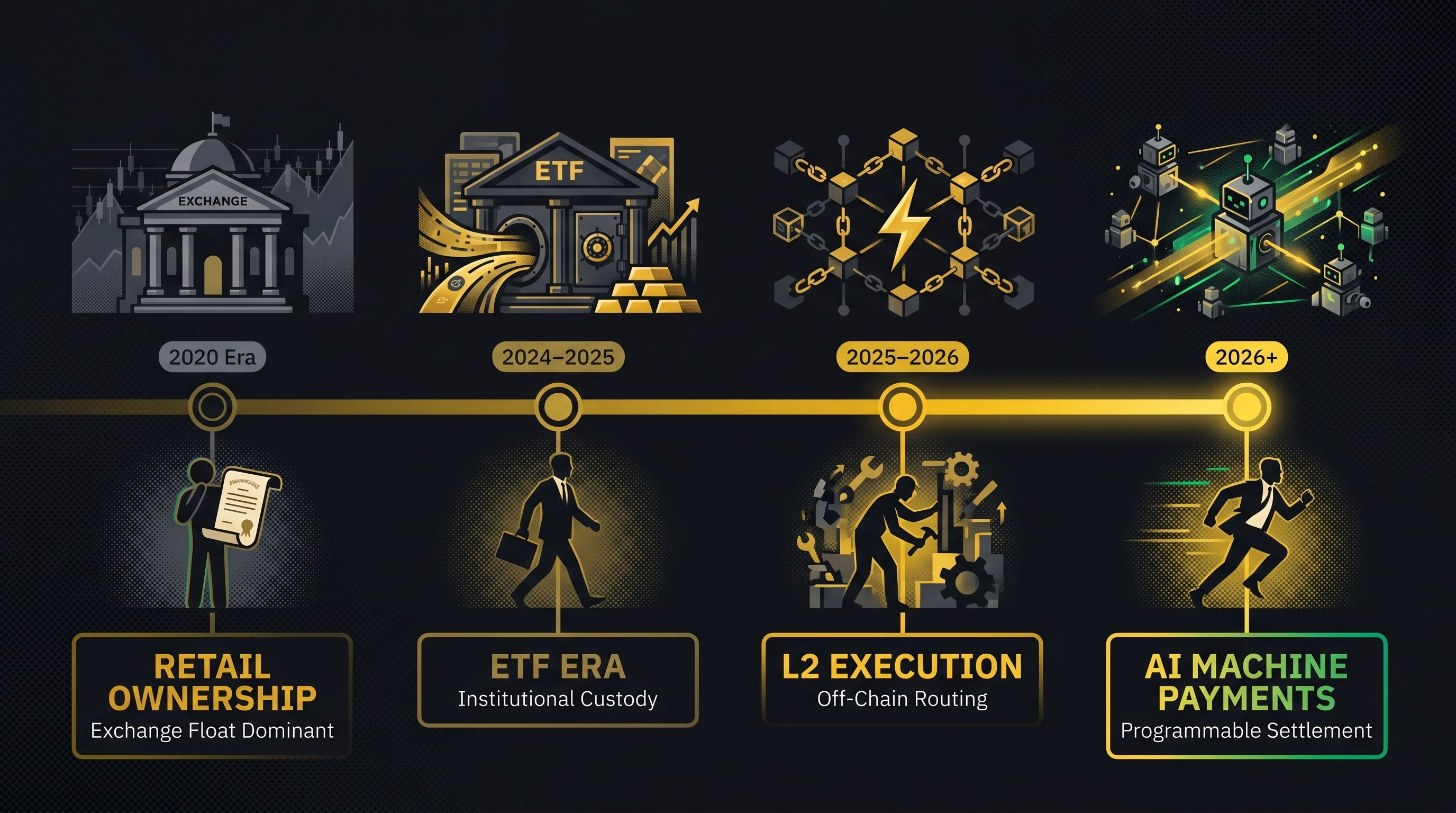
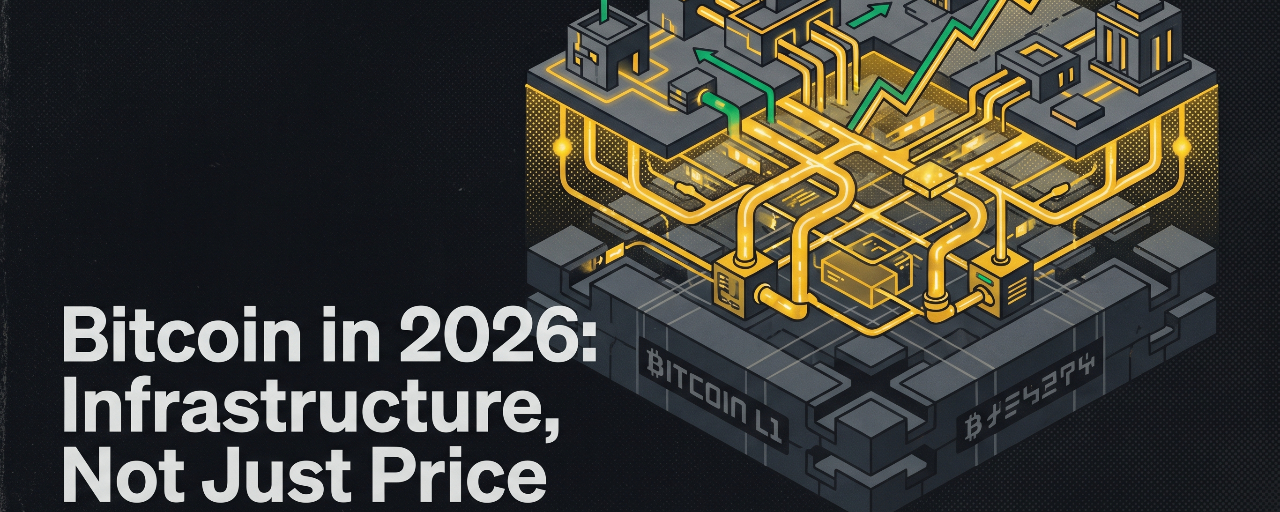
By mid‑2026, Bitcoin looks less like a speculative chart and more like a maturing piece of financial infrastructure, shaped by ETF-driven institutional demand, Layer 2 scaling, and professional custody. The core shift is that price action increasingly reflects changes in plumbing under the hood—who holds coins, how value moves off‑chain, and how Bitcoin plugs into broader tokenization and AI-agent economies.
ETF Era and Market Structure
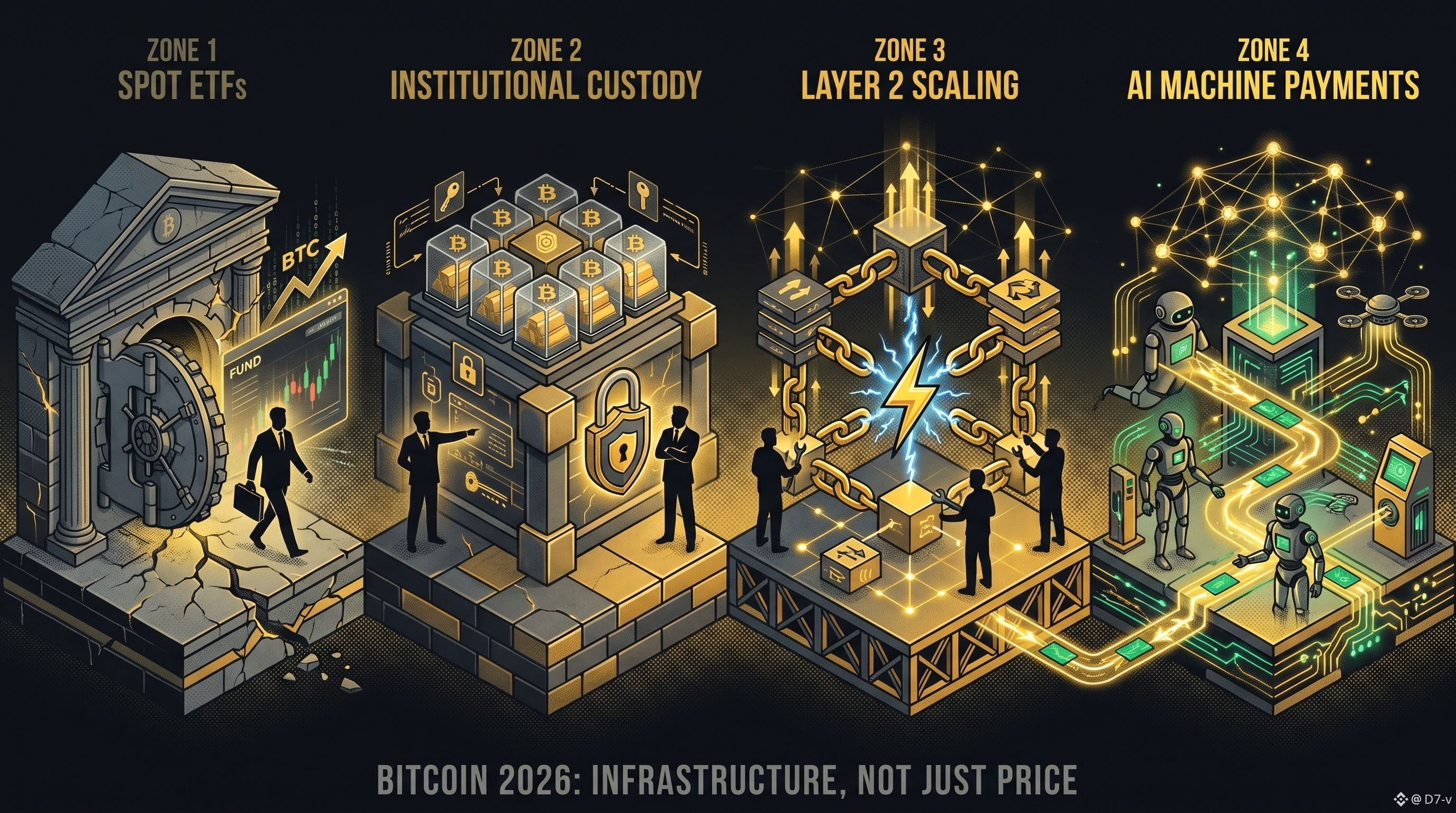
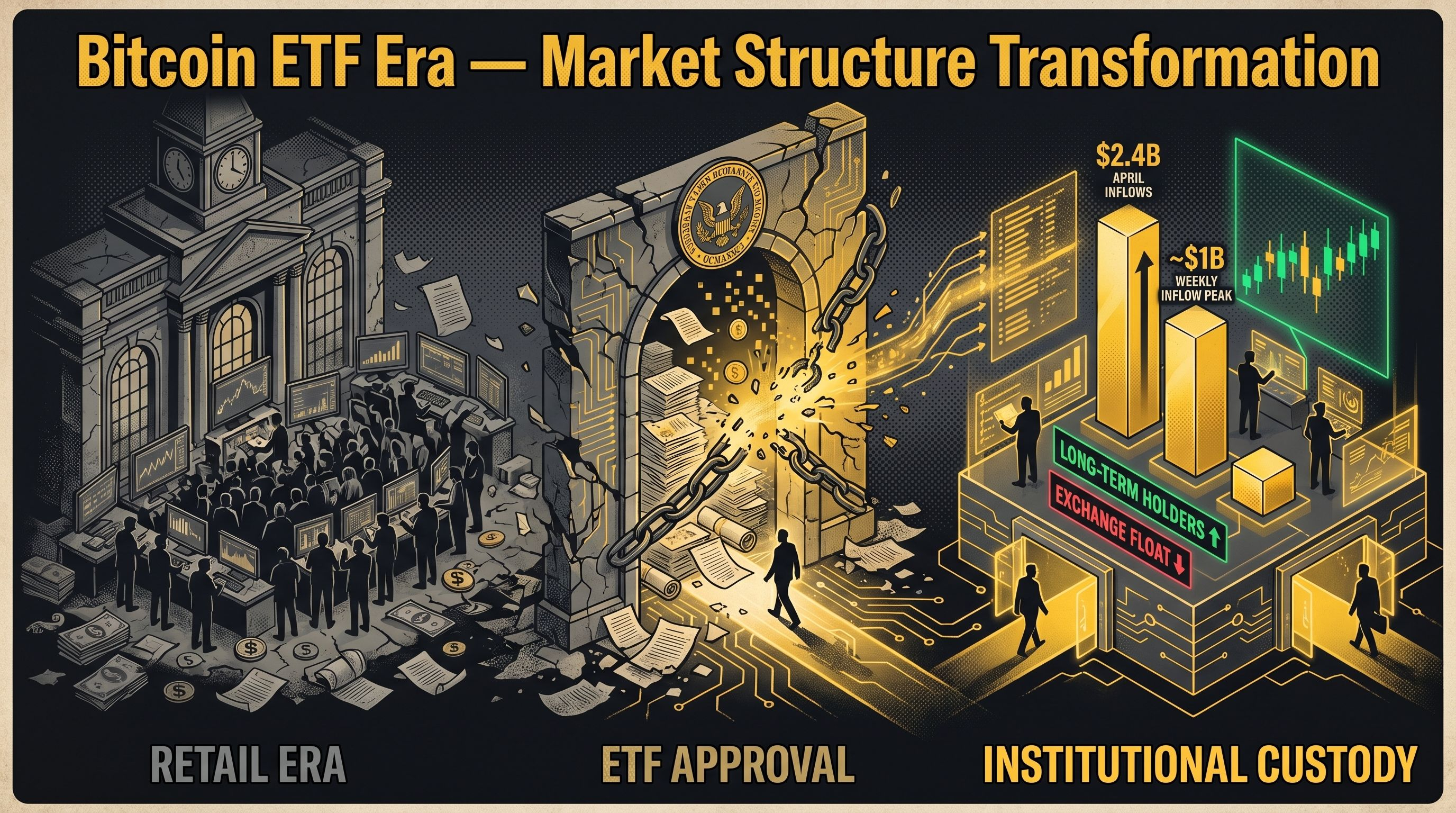
The launch and rapid growth of spot Bitcoin ETFs has reconfigured who actually owns and controls large blocks of BTC. US-listed spot products alone have seen multi‑billion‑dollar net inflows in 2026, including roughly 2.4 billion in April and close to 1 billion during a strong inflow week in late April.
These vehicles concentrate coins in specialist custodians and reduce available float on exchanges, contributing to a contraction of liquid supply and a higher share of coins held by long-term entities. ETF flows also tie Bitcoin more tightly to macro cycles, as allocators rebalance alongside equities, rates, and gold, rather than retail speculation alone.
Custody and Institutional Pipes
Institutional adoption is not just about buying via ETFs; it depends on industrial‑grade custody, collateralization, and integration with traditional market rails. ETF providers and prime brokers increasingly rely on regulated trust companies and bank‑like custodians, which standardize segregation, insurance, and auditing practices for large pools of BTC.
This professionalization enables Bitcoin to be used as collateral in traditional financing and derivatives structures, treating it more like a macro asset than a retail trading chip. It also gives corporates and sovereign entities a compliant way to hold BTC on balance sheets or in reserve portfolios, reinforcing its emerging role as “digital gold” and a geopolitical hedge.
Bitcoin Layer 2 Landscape
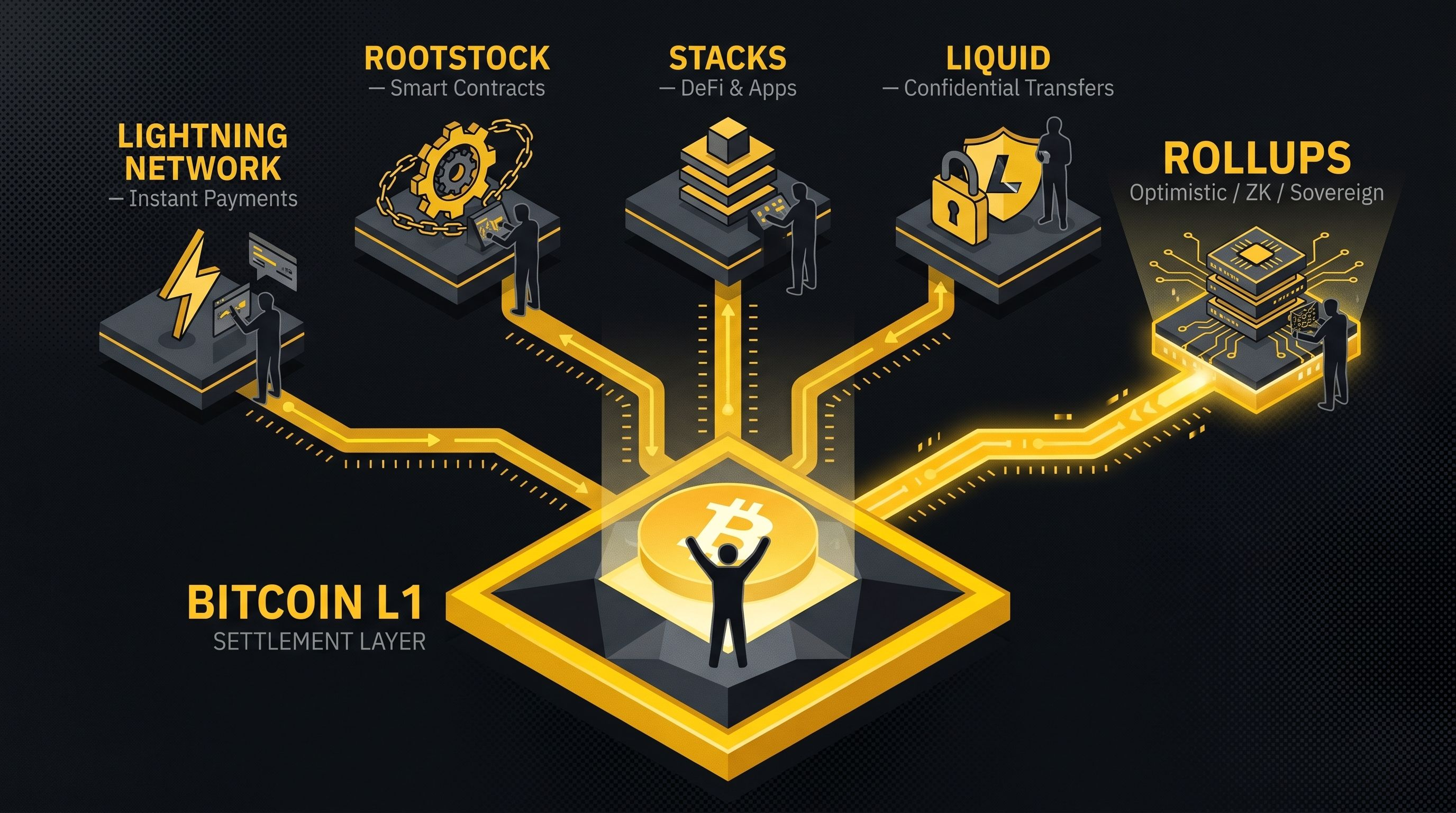
Scaling Bitcoin beyond its constrained base layer has become a multi‑track effort involving payment channels, sidechains, EVM‑compatible platforms, and emerging rollup designs. Major production L2s and sidechains include the Lightning Network for payments, Rootstock and Stacks for smart‑contract programmability, and federated sidechains like Liquid for faster, confidential transfers.
New research and prototypes around Bitcoin rollups—both smart‑contract‑validated and sovereign designs that use a base chain mainly for data availability—aim to bring Ethereum‑style batching and programmability while preserving Bitcoin’s settlement assurances. Together, these layers reposition Bitcoin from a single‑purpose L1 into the base of a broader modular stack where most user activity happens off‑chain but ultimately settles back to BTC.
Lightning Network: From Micropayments to Rail
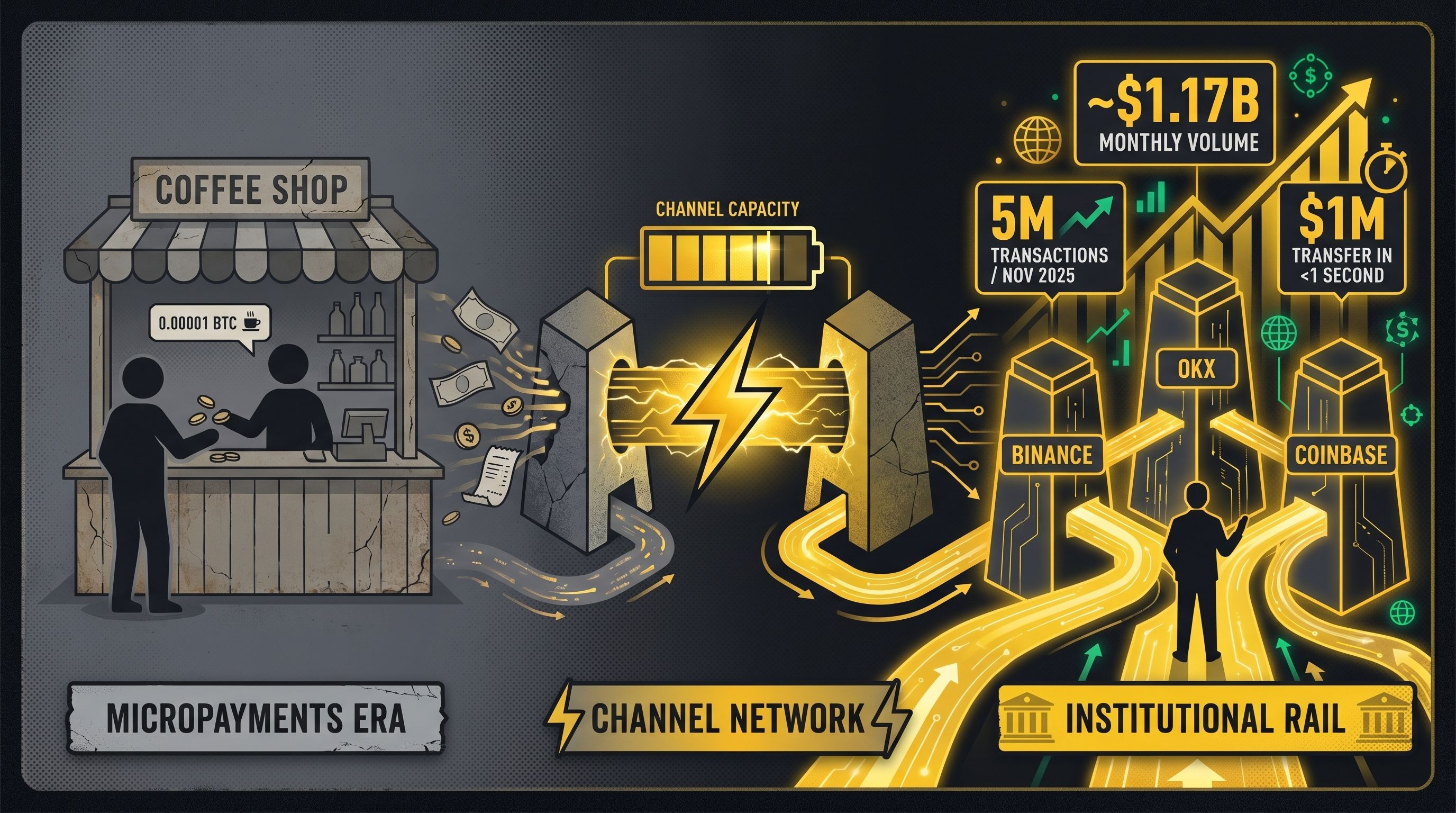
The Lightning Network has quietly evolved from a niche channel for experimental micro‑payments into a live rail for higher‑value transfers and institutional flows. Network capacity reached record levels around late 2023 and 2025, with several thousand BTC locked to facilitate routing, even as public metrics like visible node and channel counts fluctuate.
Monthly routed volume has grown into the billion‑dollar range, with estimates of roughly 1.17 billion in November 2025 across about five million transactions, driven increasingly by exchange settlements and enterprise flows rather than coffee‑sized payments. Large test transactions—such as a 1 million transfer sent in under a second between institutional counterparties—demonstrate that Lightning can support meaningful liquidity movement, not just tips and micro‑subscriptions.
Lightning Adoption on Exchanges and Wallets
Lightning’s adoption profile is uneven but deepening where it is enabled. Only a small single‑digit percentage of centralized exchanges had integrated Lightning as of 2023, but those that did—including major platforms like Binance, OKX, and later Coinbase—reported rising shares of BTC withdrawals and payments moving over this channel.
Payments processors and custodial services report similar patterns, with some enterprise wallets and platforms routing a large fraction, sometimes the majority, of their Bitcoin transactions via Lightning once support is live. This suggests that friction is more about integration and UX than demand: where Lightning is presented as a default option, users and businesses quickly adopt it for speed and lower costs.
Stablecoins and Assets on Lightning
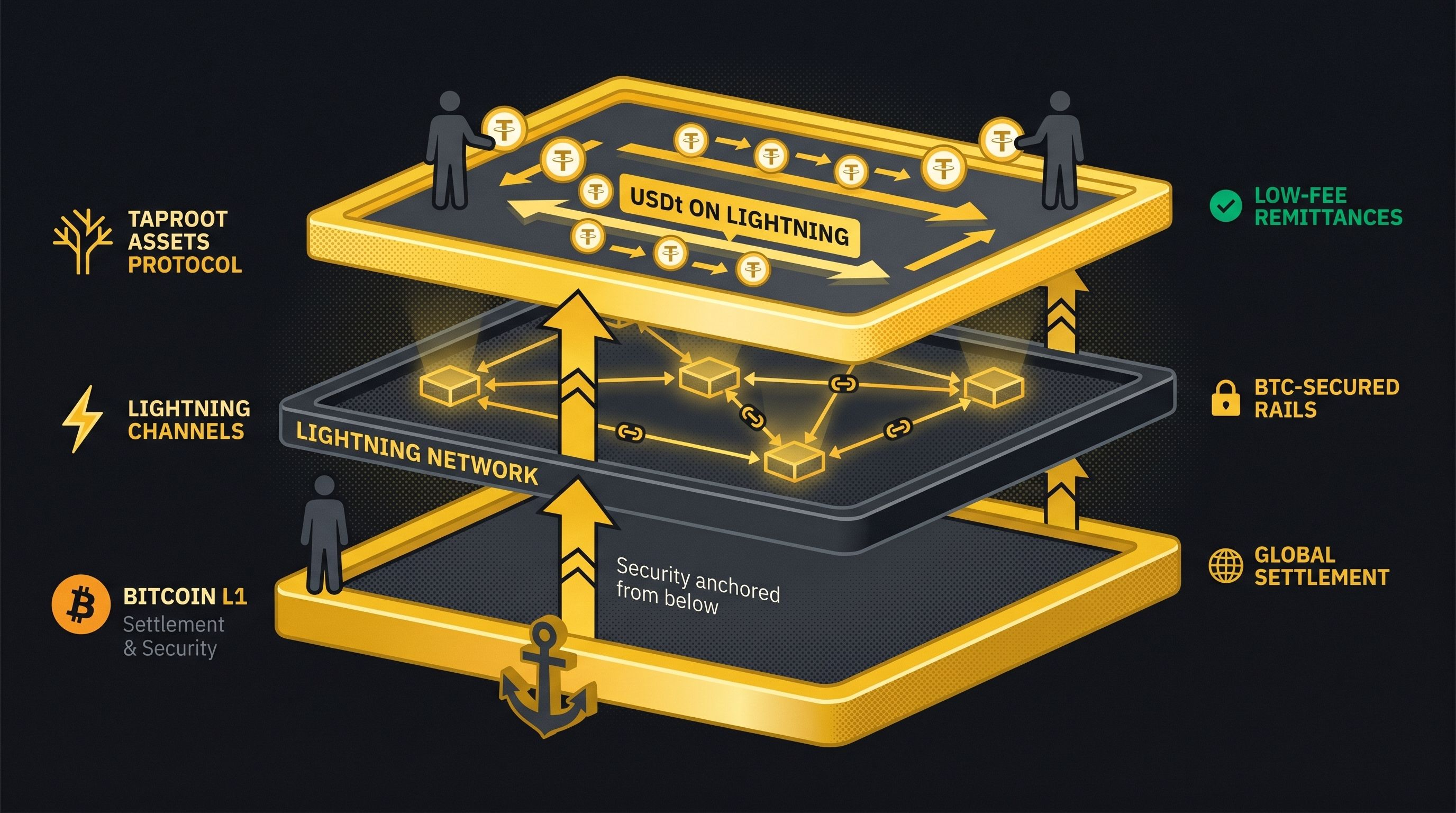
A notable 2025–2026 shift is the emergence of non‑BTC assets on Bitcoin’s payment layers, particularly dollar‑denominated stablecoins. Tether’s rollout of USDt over Lightning via Taproot Assets in collaboration with Lightning Labs allows users to send stablecoins using the same channels and infrastructure as BTC.
This decouples Lightning’s utility from Bitcoin‑denominated capacity metrics, since channels can route value without necessarily locking large amounts of BTC, and it opens the door to low‑fee remittances and merchant payments in familiar currencies secured by Bitcoin. It also aligns Lightning with broader trends of stablecoins emerging as preferred settlement media in crypto commerce and cross‑border payments.
Bitcoin Rollups and Sovereign Designs
While Ethereum pioneered Optimistic and ZK rollups validated via smart contracts on a settlement L1, Bitcoin’s ecosystem has gravitated toward designs that use it primarily for data availability while handling execution and often consensus off‑chain. Sovereign rollups, for example, publish transaction data to a base chain but let their own nodes determine the correct chain, inheriting aspects of security and censorship resistance without fully depending on L1 settlement logic.
This model reflects Bitcoin’s more conservative scripting environment and the desire for scalable systems that cannot be easily disrupted by changes in a host chain’s consensus rules. In practice, it points toward a future where specialized execution environments—DeFi, gaming, or AI‑agent platforms—anchor state to Bitcoin’s durability while retaining sovereignty over upgrades and governance.
Bitcoin as Settlement and DA Layer
In the emerging modular blockchain paradigm, base layers specialize in security, consensus, and data availability while offloading execution to higher layers. Bitcoin is increasingly framed this way, with L2s and rollups leveraging it as the canonical record for high‑value, infrequent settlement rather than the venue for every retail transaction.
This mirrors how high‑value payment systems like RTGS operate beneath card networks and neobanks: users interact with faster, cheaper front‑ends while final net settlement happens on a slower but more secure core. For Bitcoin, that means block space is reserved for large batched commitments from L2s, channel openings and closings, and vault‑like movements, rather than day‑to‑day payments.
AI Agents and Machine Payments
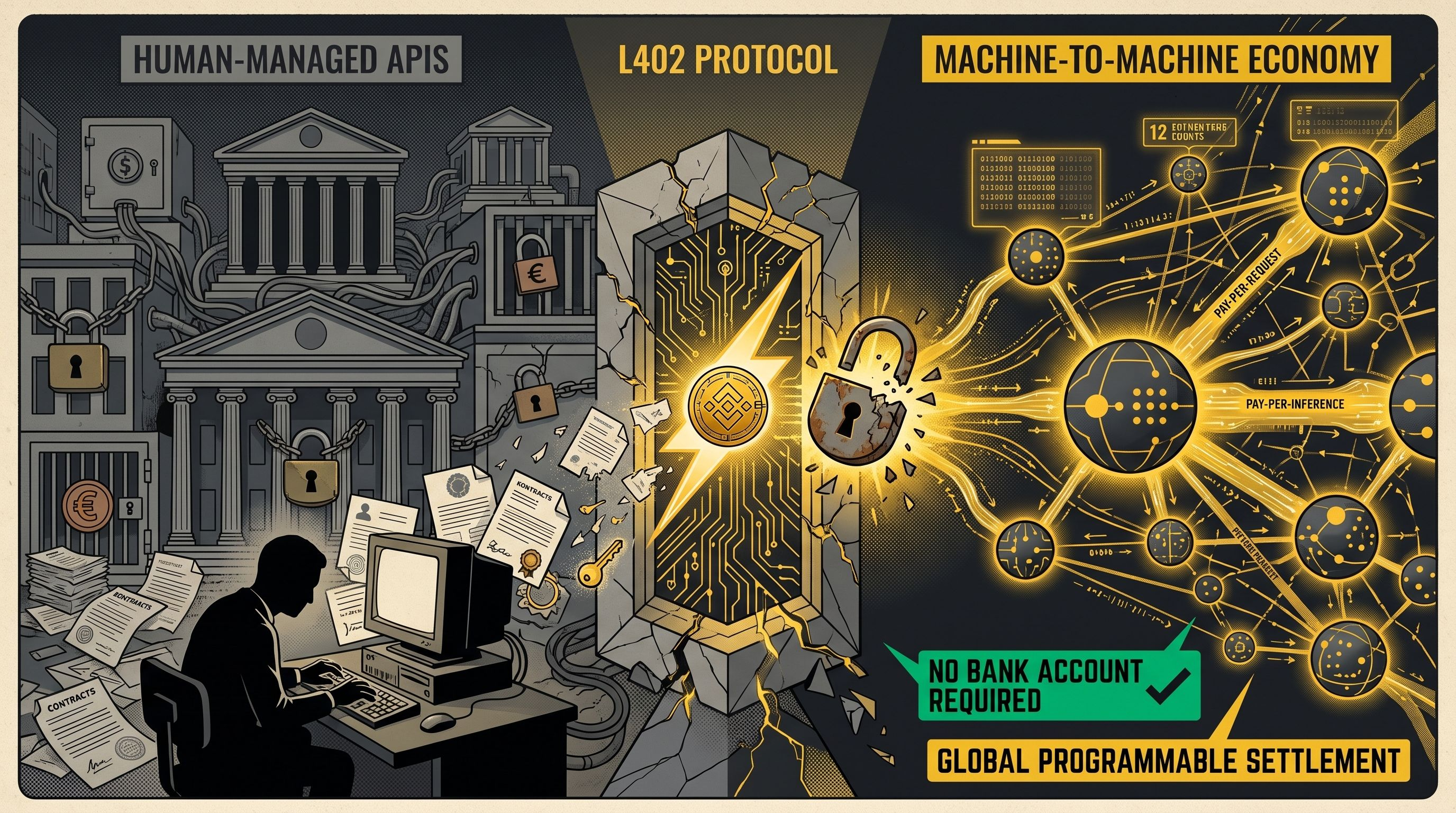
A forward‑looking but increasingly concrete trend is the use of Bitcoin L2s, especially Lightning, for automated payments by AI agents and machine clients. Specifications like L402 enable pay‑per‑request APIs using Lightning‑native authentication and micropayments, allowing agents to pay per inference or data query without human‑managed accounts.
Industry analyses foresee a “machine‑to‑machine” economy where autonomous systems settle for bandwidth, compute, or information in real time, and Bitcoin‑anchored payment rails offer global, programmatic settlement without traditional banking friction. This ties Bitcoin’s infrastructure story directly into the broader AI build‑out, positioning it not just as a store of value but as a default settlement layer for digital agents.
Governance, Regulation, and Risk
Infrastructure maturation brings governance and regulatory questions to the forefront, even for Bitcoin’s relatively ossified base protocol. As more economic activity migrates to L2s and sidechains, their upgrade processes, validator or federation structures, and potential capture points become systemic risks that must be monitored.
On the regulatory side, clearer frameworks for digital assets in major jurisdictions—including regimes like MiCA in Europe and evolving securities and commodities guidance elsewhere—make it easier for institutions to hold and use BTC through compliant wrappers while preserving direct access for permissionless users. Long‑term, challenges such as potential quantum threats, concentration of custodial power, and the incentives of ETF issuers versus native holders will shape how “infrastructure‑like” Bitcoin can safely become.
What Has Actually Changed Under the Hood
Compared with earlier cycles, several under‑the‑hood changes stand out in 2026.
Ownership has shifted toward institutions, ETFs, and long‑term custodial arrangements, reducing exchange float and tying BTC more closely to macro allocation decisions.
Transaction execution has migrated off L1 into a mix of Lightning, sidechains, and emerging rollups, with base‑layer usage skewing toward settlement and anchoring rather than everyday payments.
Payment and application layers increasingly support non‑BTC assets, stablecoins, and tokenized instruments riding on Bitcoin‑secured rails.
New use cases centered on automation and AI agents are beginning to treat Bitcoin rails as programmable infrastructure for machine payments and service metering, not just human speculation.
Taken together, these shifts mean that “Bitcoin in 2026” is as much about invisible plumbing—custody standards, ETF syndicates, L2 routing graphs, and data‑availability commitments—as about price spikes on a chart.