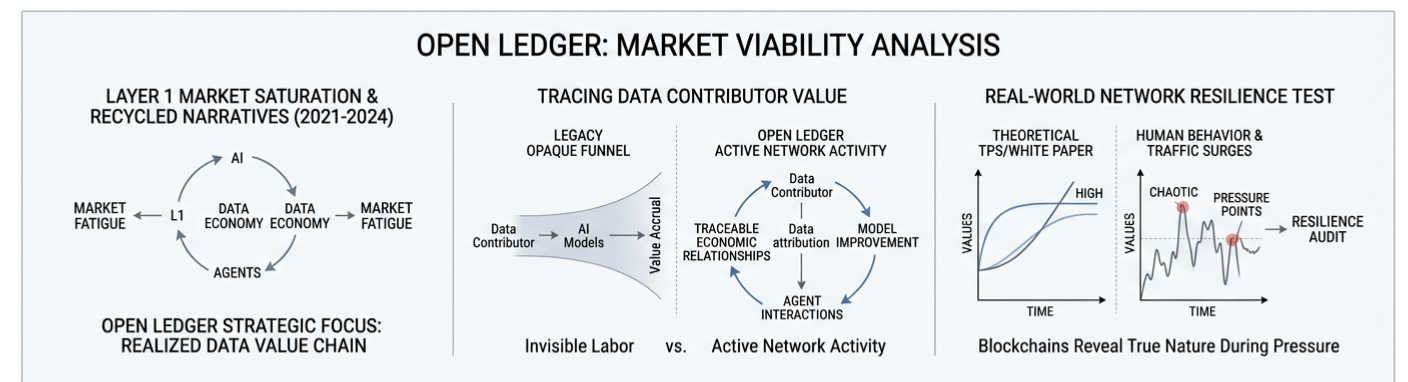
The first thing that hit me about Open Ledger wasn’t excitement. Honestly, it was exhaustion. Not because the project looked bad, but because after enough years in the crypto trenches your brain starts reacting to certain combinations of words the same way your body reacts to a fire alarm battery chirping at three in the morning. AI. Layer One. Data economy. Agents. Decentralized infrastructure. Somewhere along the line every new chain started sounding like it was assembled from the same recycled pitch deck fragments floating around the venture capital ecosystem since 2021. So I opened it with that exact mindset already sitting in the background. I was half-curious and half expecting another attempt to wrap ordinary, uninspiring infrastructure inside fashionable vocabulary.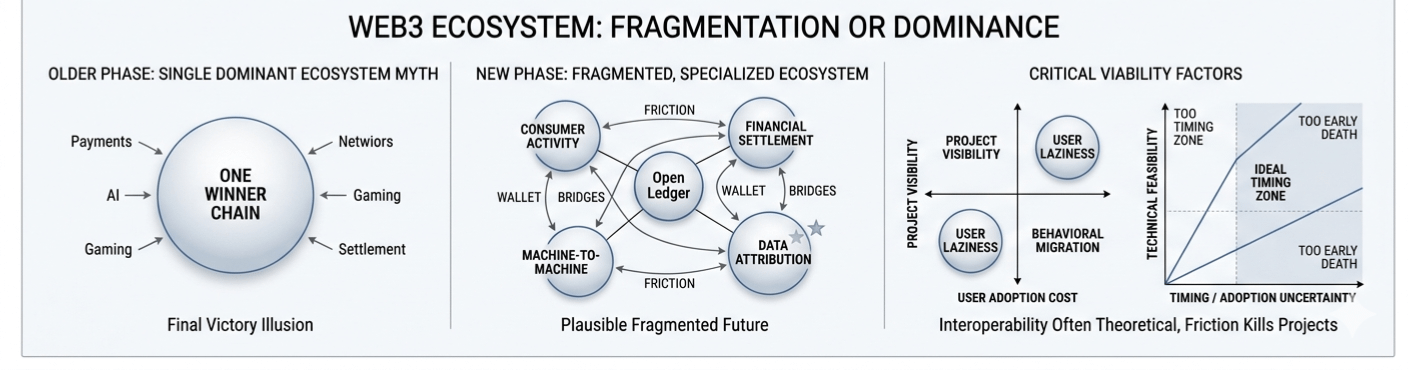
But after sitting with it for a while, I don’t think Open Ledger is really trying to sell itself as the future of everything in the incredibly loud way a lot of newer chains do. At least, that is not how it feels underneath the branding. It seems far more focused on a narrower observation that crypto people have quietly known for years but still haven't solved cleanly. Data has value, models have value, inference has value, but the actual humans feeding those systems usually disappear somewhere deep inside the corporate machinery. That part feels remarkably real to me.
The strange thing about crypto now is that we already have chains for almost every imaginable purpose under the sun. We have fast chains, cheap chains, modular chains, and parallelized chains. There are entire networks optimized for gaming, AI, payments, social apps, storage, privacy, and identity. We have watched entire developer ecosystems build themselves around shaving a few milliseconds off execution time while pretending the real problem plaguing adoption is purely technical. And maybe sometimes it actually is a technical hurdle. But a vast majority of failures happen much later down the road. They happen after launch, after the benchmark screenshots circulate on social media, and long after the millions of transactions per second in theory phase loses its novelty.
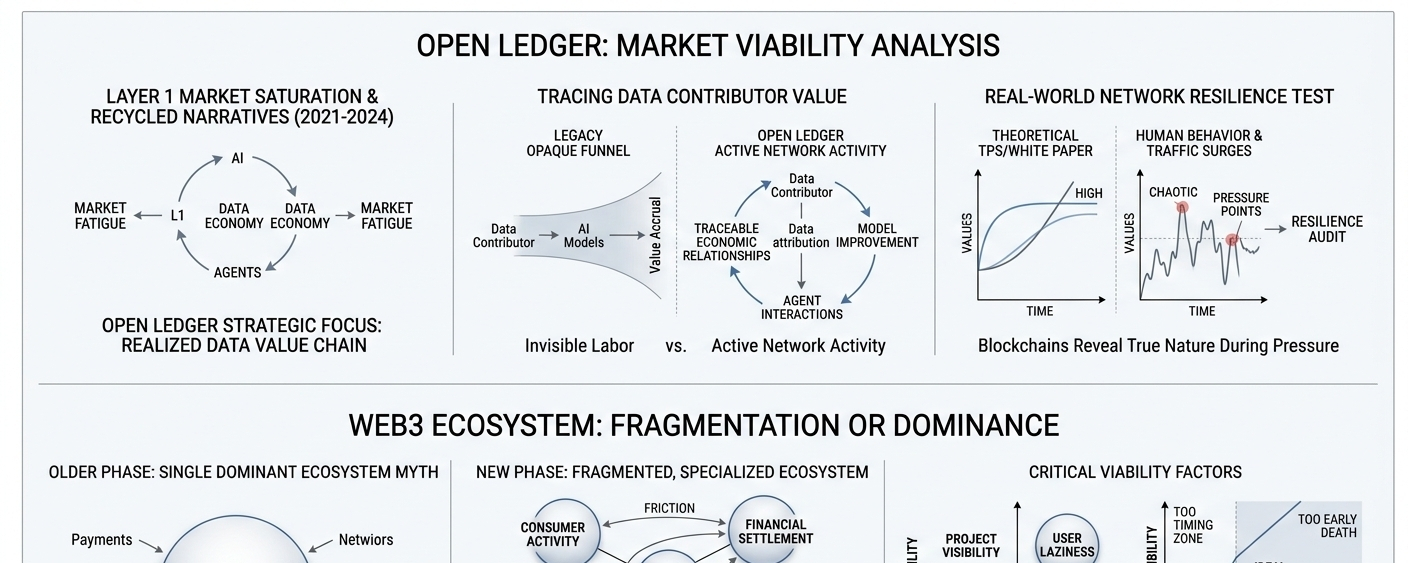
Blockchains usually don’t reveal their true nature during pitch presentations. They reveal themselves when actual humans arrive all at once and start behaving unpredictably. That is the real audit. It is not whitepapers that prove a network. It is traffic. You can see it even with networks people genuinely like using. Solana is probably the cleanest example of this dynamic playing out in real time. When network conditions are good, it feels almost weirdly smooth. It is fast enough that you stop thinking about the chain itself, which honestly matters far more than crypto purists like to admit. Most users do not care about complex architecture diagrams. They care whether the application responds immediately or makes them wait while pretending decentralization is a charming personality trait.
But then the pressure shows up. You get meme coin stampedes, intense bot congestion, and traffic surges nobody planned for. Suddenly, the entire conversation shifts from technical elegance to basic resilience. That doesn’t mean Solana failed. It just means reality arrived. Every chain eventually meets reality. That is the exact part newer Layer One narratives still struggle to grasp. They speak as if high throughput is a permanent state of being instead of a temporary condition tested by chaotic crowd behavior. Open Ledger enters that volatile environment carrying artificial intelligence attached to its core identity, which is both incredibly useful and deeply dangerous right now. It is useful because there is clearly massive demand forming around AI infrastructure. It is dangerous because the market has become completely numb to the terminology itself. People hear the phrase AI blockchain and immediately start filtering for empty abstraction. Fairly so, honestly.
Still, I think Open Ledger notices something others awkwardly dance around. Most AI systems today operate like massive extraction machines. Data goes in, models improve, and value accumulates somewhere far away from the people contributing the actual inputs. Crypto has spent years talking about ownership, but when AI arrived, a lot of those high ideals suddenly became strangely flexible. Open Ledger at least appears to take that systemic imbalance seriously. The foundational idea that datasets, model contributions, and agent interactions should have traceable economic relationships feels far more grounded than another generic attempt to become the fastest chain on the block.
That said, the difficult part of the equation is obvious. Even if the design makes perfect sense conceptually, ecosystems are incredibly stubborn. Liquidity is stubborn. Users are incredibly stubborn. People love to say they want decentralization and sovereign ownership until you actually ask them to leave the platforms where their audience, money, and daily habits already exist. That specific friction kills far more projects than bad engineering ever does. Because moving infrastructure is not just a technical migration. It is a behavioral migration. Entire industries fail at that. Crypto especially underestimates how lazy normal users are, and honestly they should be lazy. Most people do not wake up wanting to bridge assets across multiple ecosystems just to participate in experimental data economies. The experience has to become so completely natural that the user barely notices they switched contexts at all.
I am not fully convinced anyone has solved that user experience paradox yet. And maybe that is why I find Open Ledger more interesting when it says less. The quieter parts of the thesis make far more sense than the louder parts. Underneath the AI language, there seems to be a genuine attempt to treat data contribution as actual network activity instead of invisible labor. That is at least a coherent direction. But every design choice creates its own blind spots. If Open Ledger focuses too heavily on specialization, it risks becoming infrastructure people acknowledge intellectually but never actively use. If it broadens its scope too much, it becomes another general-purpose chain fighting for attention in a market already overflowing with alternatives. Somewhere in there is probably the delicate balance they are aiming for.
I also wonder whether the future actually belongs to one dominant ecosystem anymore. Crypto spent years behaving like there would eventually be a final winner, one chain absorbing everything and one settlement layer becoming the center of gravity for the entire internet economy. I am much less sure about that now. What seems far more plausible is a fragmented environment where different systems handle different types of pressure. You might have one chain optimized for consumer activity, another for financial settlement, another for machine-to-machine interactions, and another entirely for data attribution. This wont happen because fragmentation is elegant, but because reality is messy and scaling human behavior usually creates specialization whether people want it or not.
The problem is that interoperability still often feels more theoretical than lived. In practice, fragmentation creates intense user exhaustion. Too many wallets, too many bridges, and too many trust assumptions hidden behind friendly user interfaces. So when a project like Open Ledger appears, I don’t really evaluate it by asking whether it can win. I think that framing already belongs to an older, simpler phase of crypto thinking. The more useful question is whether it identifies a genuine pressure point early enough to matter later. And I think it might. Not definitely, not cleanly, and certainly not in the dramatic way crypto timelines usually demand. But there is at least a coherent awareness underneath it all. There is an understanding that AI economies probably cannot keep functioning forever as giant opaque funnels where value disappears upward while contributors remain anonymous and disposable.
Whether blockchain is actually the right mechanism to fix that is still highly uncertain. That part remains entirely unresolved for me. But uncertainty is normal now. Honestly, I trust projects slightly more when they leave room for uncertainty instead of pretending inevitability. Open Ledger feels like a project trying to position itself before a larger shift fully arrives rather than reacting after the fact. Sometimes that works. Sometimes the timing destroys you before the market catches up. Crypto history is full of technically reasonable ideas that arrived three years too early and quietly died while worse ideas survived through sheer momentum alone. So I keep landing in the same place with it. I am not convinced, but I am not dismissive either. I am just watching carefully. It might work, or nobody shows up.