Executive overview
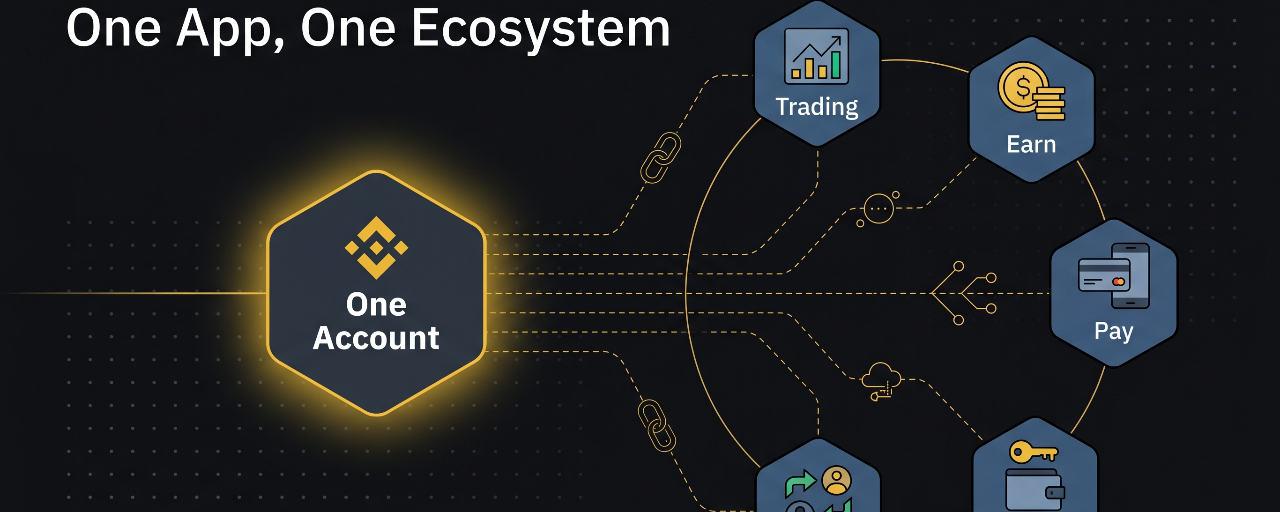
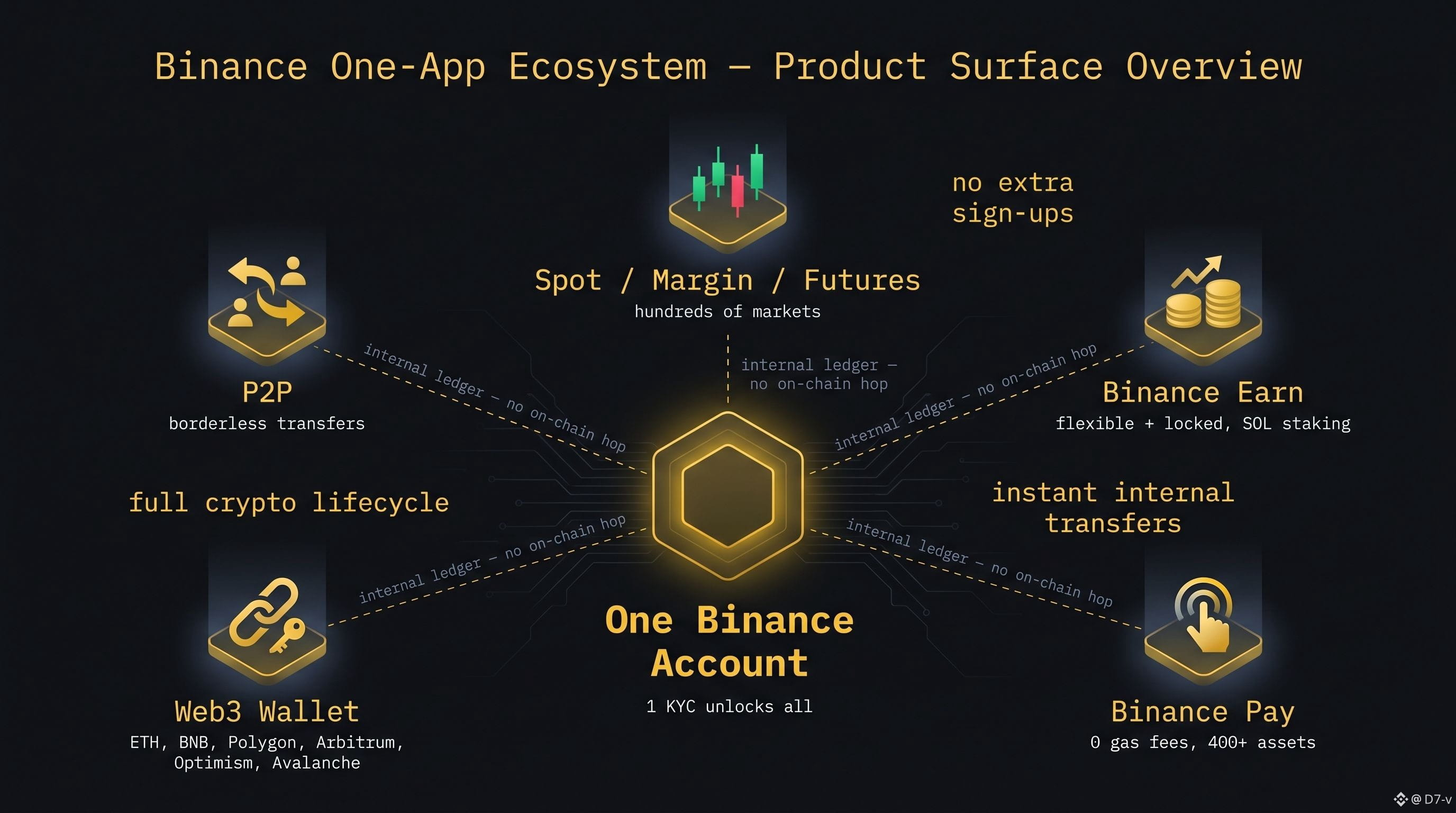
Binance has evolved from a pure trading venue into a multiproduct ecosystem where spot, margin, futures, Earn, Pay, P2P, and a self‑custodial Web3 wallet all live inside a single mobile and web interface. This “one app, one ecosystem” approach reduces the number of logins, KYC flows, and asset transfers users need to perform compared with juggling separate CEX apps, DeFi wallets, and payment tools.
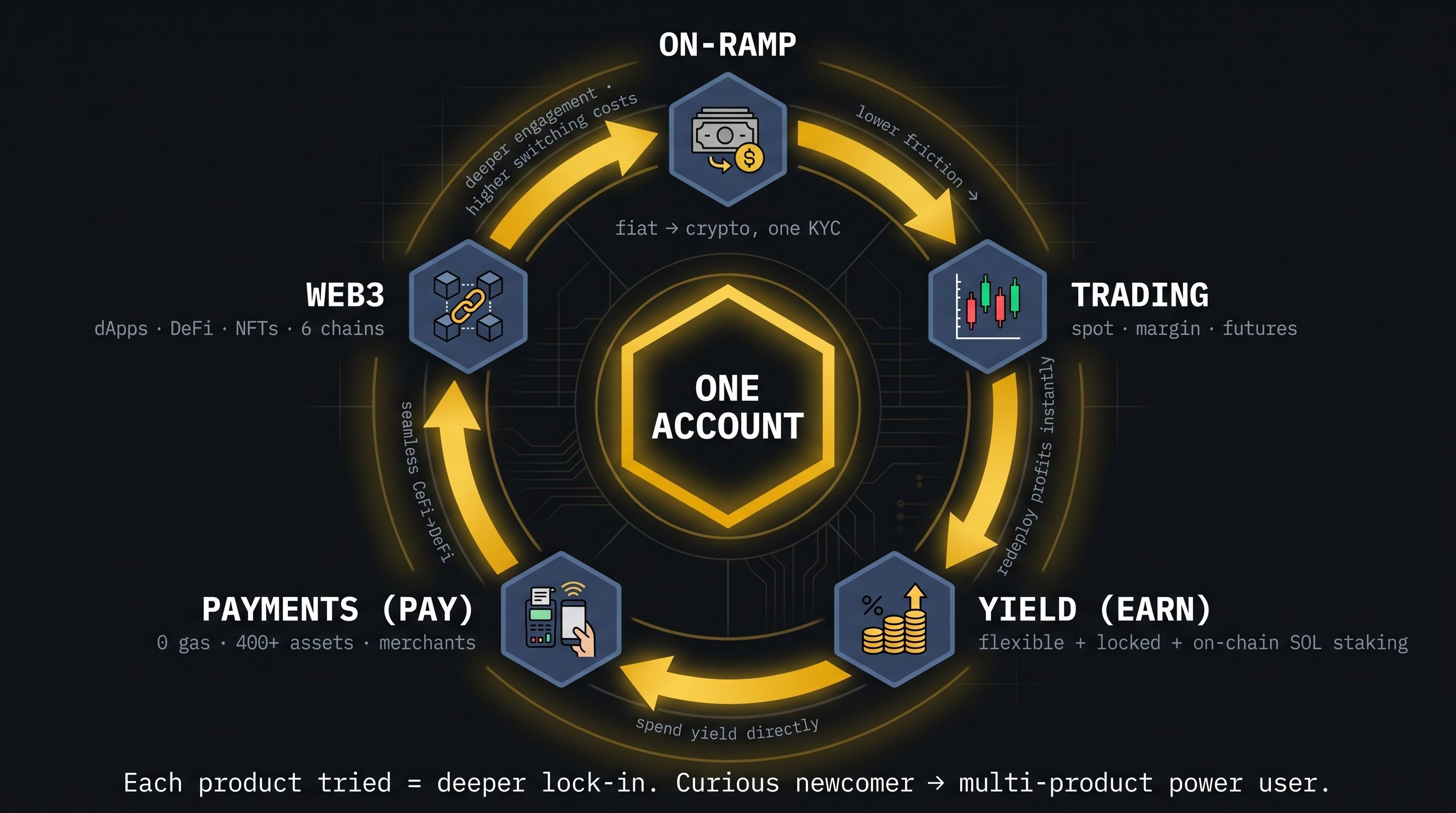
A unified stack matters because it compresses the full crypto journey—fiat on‑ramp, trading, yield, payments, and on‑chain interaction—into one experience that feels closer to a neobank than a fragmented set of dApps. For users, this can mean less friction, lower costs, and fewer operational mistakes; for Binance, it deepens engagement and keeps liquidity circulating inside its own rails.
Binance’s integrated product surface
Core trading (spot, margin, futures)
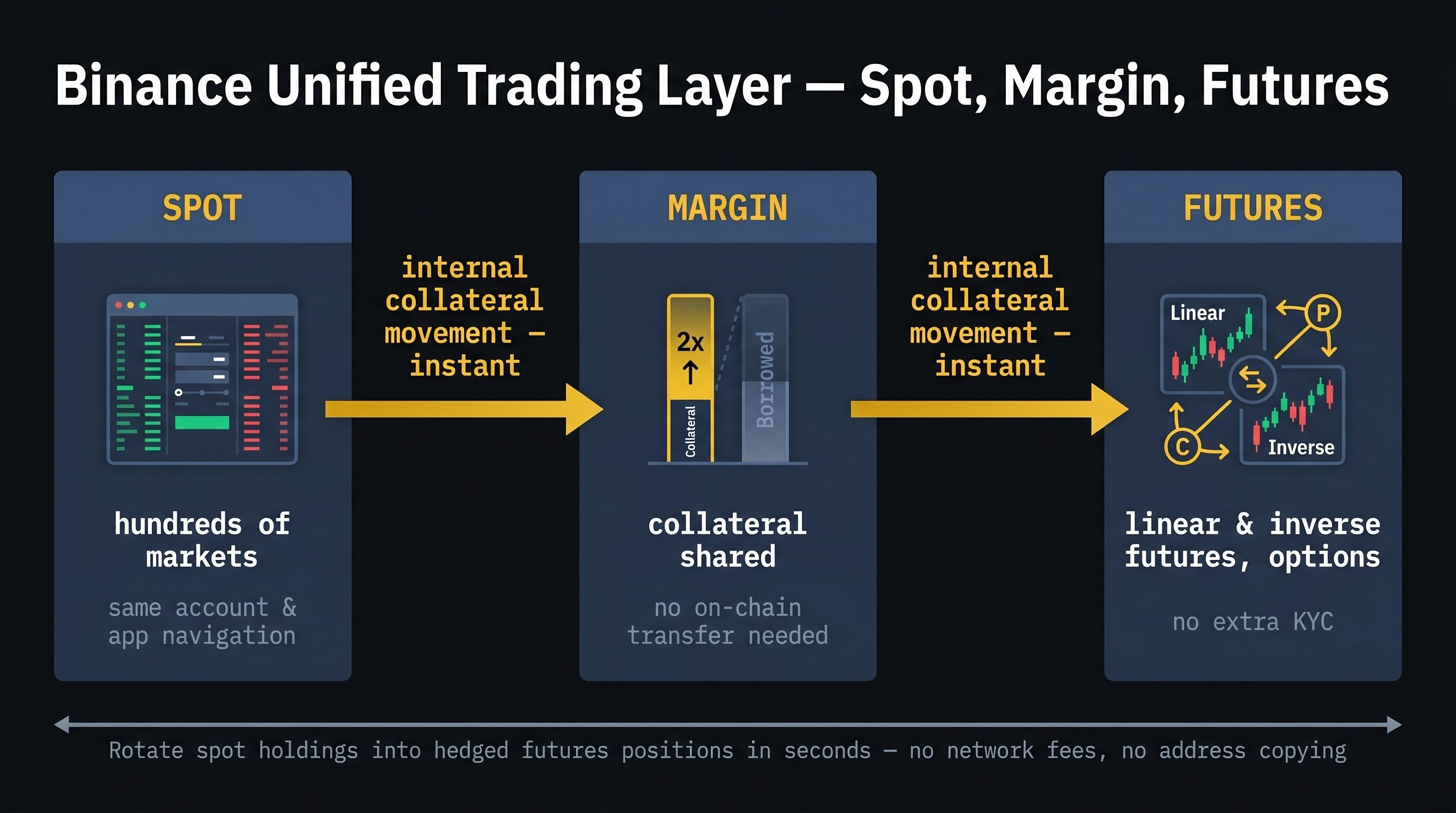
Binance offers spot markets, margin trading, and a comprehensive derivatives suite (linear and inverse futures, options) accessible via the same account and app navigation. Users move collateral between spot and derivatives wallets internally without needing on‑chain transfers, network fees, or additional KYC, enabling fast strategy shifts like rotating from spot holdings into hedged futures positions.
The unified trading layer is backed by deep liquidity across hundreds of markets, which is one reason Binance positions itself as a top venue for active traders. When these trading rails are tightly coupled with Earn, Pay, and Web3, users can redeploy profits or idle balances without leaving the ecosystem.
Binance Earn as native yield layer
Binance Earn aggregates passive‑income products—flexible and locked Simple Earn, staking, and other structured yield offerings—under a single dashboard tied to the same account balances that users trade with. Users can subscribe to Earn products in a few taps, often using funds already held on the exchange, and see positions and rewards directly in the app without moving coins into external DeFi protocols.
On the Web3 side, Binance’s Web3 Wallet Earn integrates multiple on‑chain protocols so users can gain yield on more tokens and networks, including new additions like SOL staking, again without needing a separate wallet app or manual contract interactions. This creates a layered yield experience: custodial Earn for users who prefer simplicity, and in‑app non‑custodial Earn for those who want direct on‑chain exposure.
Binance Pay as embedded payments and off‑chain rail
Binance Pay is a contactless, borderless crypto payment solution built into the same Binance account and app, enabling users to send and receive crypto with no gas fees and to pay at thousands of online and offline merchants. Peer‑to‑peer transfers and merchant payments happen off‑chain within Binance’s system, so they are typically instant and do not incur network fees, while still letting users choose from hundreds of supported assets.
Because Pay is accessed from the Wallets → Pay section in the app and uses the same identity and balances, users can convert trading profits into everyday spending or transfers to friends in a few taps, without withdrawing on‑chain or moving funds to a separate payments app. For merchants and integrators, SDKs and partner platforms such as UniPayment plug directly into Binance Pay, leveraging the existing user base and settlement rails instead of rebuilding their own.
Web3 Wallet embedded inside the CEX
Binance’s Web3 Wallet is a self‑custodial wallet integrated within the Binance app, launched in late 2023 to provide a simple, secure gateway to DeFi and dApps. Users can activate the wallet from the Wallets tab, create it in seconds, and then access dApps, cross‑chain swaps, NFT marketplaces, and on‑chain yield directly from within the same interface they use for centralized trading.
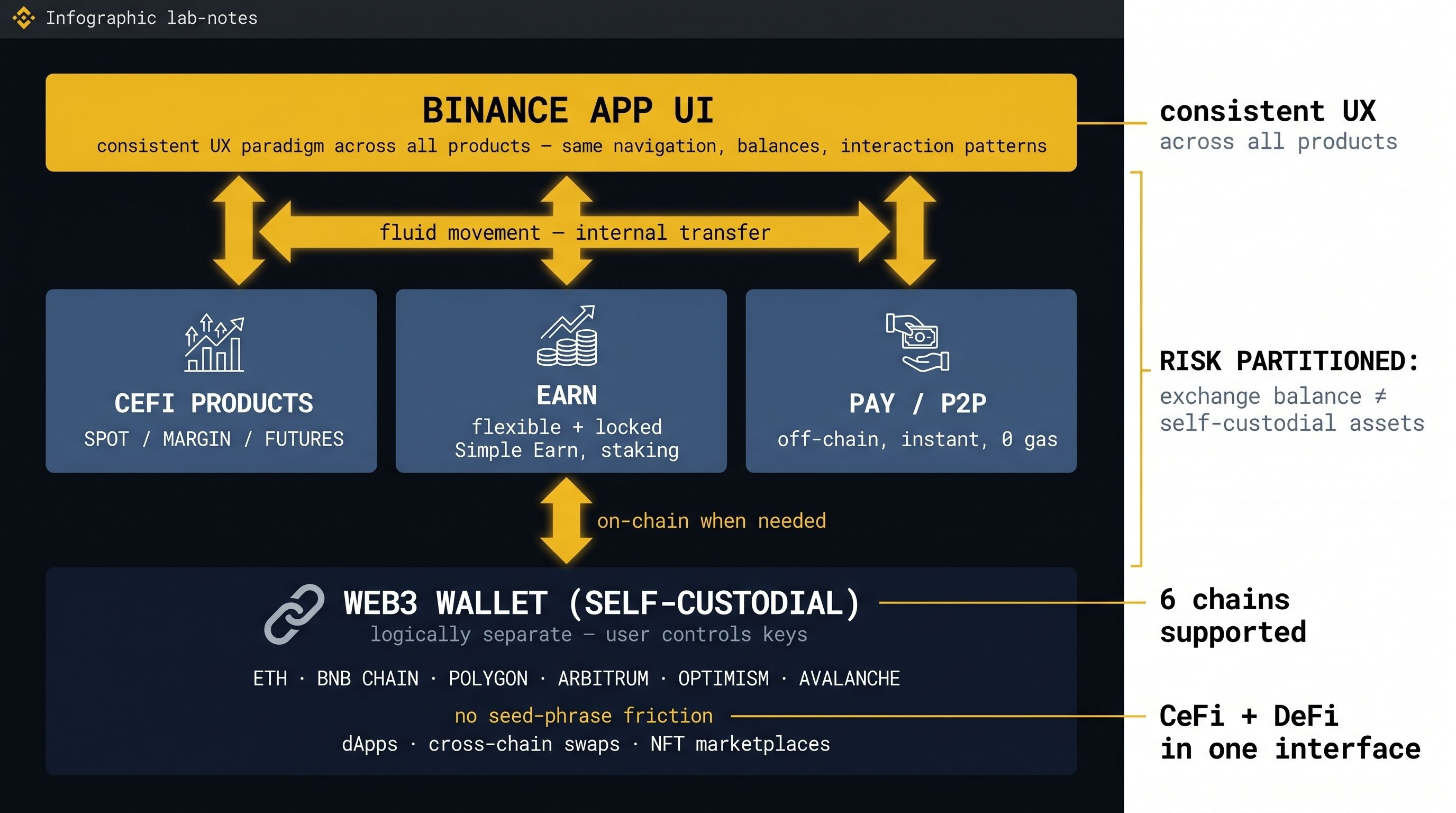
The wallet supports multiple mainstream chains such as Ethereum, BNB Chain, Polygon, Arbitrum, Optimism, and Avalanche, allowing cross‑chain asset management without constantly switching wallets. The design removes seed‑phrase friction through seedless, key‑management approaches while still giving users control over their on‑chain assets, positioning it as a bridge between CeFi and DeFi.
How unification saves time
Fewer logins and KYC flows
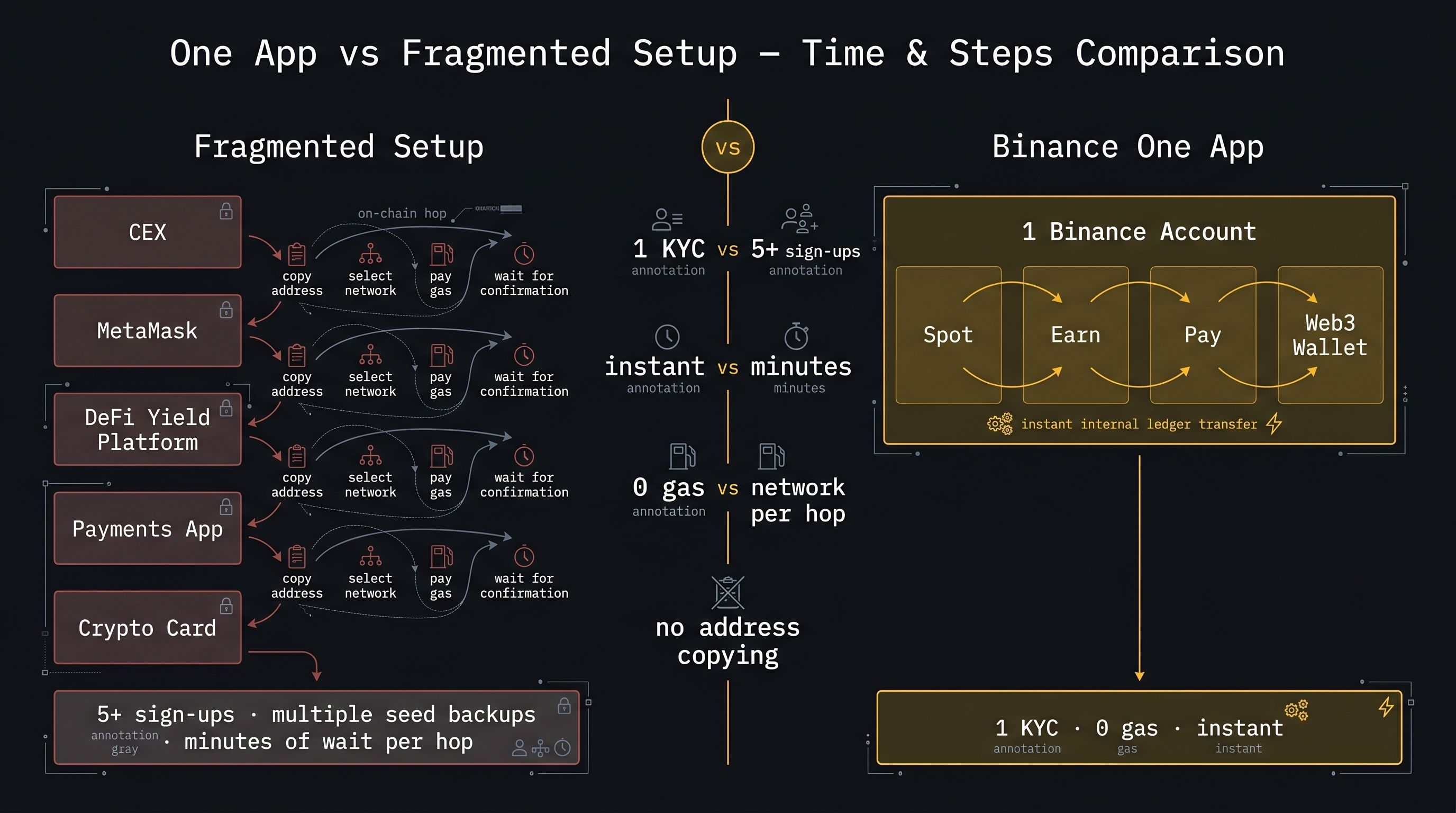
In a fragmented setup, a typical user might maintain separate accounts and KYC processes across: one or more CEXs, a DeFi wallet like MetaMask, one or more yield platforms, and a payments app or crypto card. Each step adds friction—additional sign‑ups, device setups, seed backups, and security practices—that increase time and cognitive load.
Binance collapses many of these surfaces into a single identity: one Binance account underpins spot/futures trading, Earn, Pay, P2P, and the Web3 Wallet, so onboarding once unlocks the full stack. This matters particularly for new users who want to go from fiat to DeFi quickly without learning multiple products and security models.
Instant internal transfers instead of on‑chain hops
Moving funds between standalone apps usually involves on‑chain withdrawals and deposits, which require copying addresses, selecting networks, paying gas, and waiting for confirmations. Each hop introduces latency and risk of user error.
Within Binance, transfers between the exchange wallets and Web3 Wallet, or between spot and derivatives and Earn, can be performed as internal ledger movements that finalize almost instantly. This lets users rebalance from trading into yield, or from CeFi into DeFi, in a more fluid way that aligns with intraday strategies and reduces operational overhead.
How unification saves money
Reduced gas and network fees
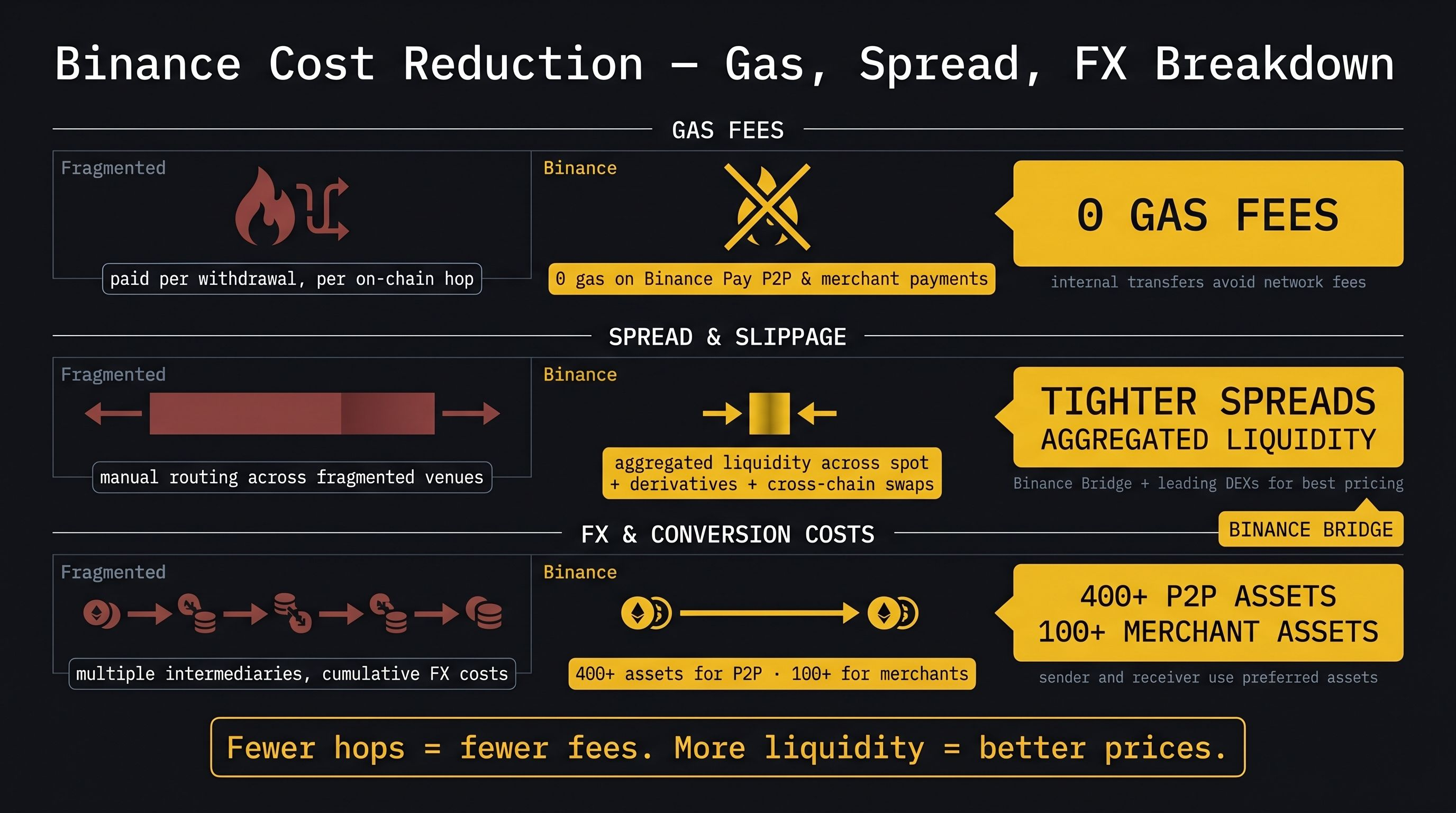
Every external withdrawal or cross‑app move typically incurs blockchain fees and, in some cases, third‑party platform charges. For active users who frequently rotate between trading, DeFi, and payments, these costs compound.
Binance’s architecture keeps more activity on internal rails: Binance Pay transactions are off‑chain, with no gas fees for P2P transfers and merchant payments. Internal transfers to Earn or between wallets generally avoid network fees as well, while Pay Onchain and Web3 Wallet flows are optimized to minimize extra steps when users do need to interact with external Web3 platforms.
Aggregated liquidity and pricing
By concentrating liquidity across spot, derivatives, and cross‑chain swaps inside one venue, Binance can often provide tighter spreads and better execution than a user manually routing small orders across multiple fragmented venues. Web3 Wallet swaps are further enhanced by routing via Binance Bridge and leading DEXs to seek best pricing and low slippage across networks.
For payments, leveraging Binance’s large user base and supported asset list (over 400 cryptocurrencies for P2P and 100+ for merchants) increases the chance that both sender and receiver can operate in their preferred assets without multiple conversions. This can reduce cumulative FX and spread costs compared with hopping through several intermediaries.
How unification reduces complexity and risk
Single UX paradigm across CeFi and DeFi
Different apps and wallets often use inconsistent terminology, transaction flows, and risk prompts, which can confuse users—especially when mixing custodial and non‑custodial environments. Binance’s integrated app normalizes these patterns: navigation, balances, and most interaction paradigms stay familiar even as users move from spot to futures, from Earn to Pay, or from exchange to Web3 Wallet.
A consistent UX reduces the likelihood of errors such as sending assets to the wrong network, misunderstanding margin usage, or mis‑signing transactions in unfamiliar wallets. Embedded education and guided flows further help users progress from beginner to advanced use cases without switching tools.
Fewer moving parts, fewer failure points
When a user cobbles together multiple services, each brings its own security posture, support model, and operational risk—ranging from smart contract vulnerabilities in DeFi protocols to poor withdrawal processes or insolvency risks at smaller platforms. Although Binance itself is a single point of platform risk, consolidating activity means fewer counterparties to vet and monitor.
Binance’s Web3 Wallet design attempts to partition risk by keeping self‑custodial assets logically separate from exchange balances while still tightly integrated in the app, giving users options across the custody spectrum without requiring them to manage multiple vendors. For many users, this is a more manageable complexity profile than juggling several custodians plus independent wallets and dApps.
Trade‑offs and considerations
Centralization vs. optionality
The main trade‑off of one‑app dominance is reliance on a single ecosystem: regulatory issues, platform outages, or policy changes at Binance can have outsized impact on users whose activity is concentrated there. From a decentralization‑maximalist perspective, relying on a CEX‑centric stack, even with a Web3 Wallet embedded, is less trust‑minimized than using independent wallets and protocols.
Binance partly addresses this by making the Web3 Wallet non‑custodial and supporting a broad range of external dApps and chains, so users can still move assets out and interact with the wider ecosystem when they want. Nonetheless, there is a strategic and regulatory concentration risk that sophisticated users should account for by diversifying across platforms.
Regional availability and compliance
Some Binance products and features—including specific Earn offerings and the Web3 Wallet—are not available in every jurisdiction, which can limit how fully certain users benefit from the all‑in‑one design. In restricted regions, users may still need a multi‑platform setup with local exchanges and separate wallets.
As regulations evolve, Binance’s integrated model may actually make compliance easier for users because KYC, transaction monitoring, and reporting are consolidated in one place rather than spread across many apps. However, it also means compliance events (such as account suspensions) can simultaneously affect trading, yield, payments, and Web3 access.
Why the all‑in‑one approach is strategically strong
By embedding the full crypto lifecycle—on‑ramp, trading, yield, payments, and Web3 access—into a single interface, Binance shortens the path from “curious newcomer” to “multi‑product power user.” Each additional product a user tries (Earn, Pay, Web3 Wallet) deepens their engagement and increases switching costs, which is strategically valuable in a competitive exchange landscape.
At the same time, users benefit from lower friction, lower incidental costs, and a simpler mental model of their crypto stack compared with assembling a do‑it‑yourself architecture of separate wallets, DeFi dashboards, and payment tools. For many retail and even semi‑professional traders, that balance of convenience and optionality is why a one‑app, one‑ecosystem model like Binance’s is compelling.