
I didn0t expect a bridge to become one of the most interesting parts of OpenLedger.
If you did ask me what mattered most inside the ecosystem I would have probably pointed toward attribution AI agents or the broader vision around decentralized intelligence. A bridge would have been somewhere near the bottom of that list.
Thatz no longer how I look at it.
The reason isn0t because bridges suddenly became exciting. If anything bridges are 1 of the least glamorous parts of crypto. Most people only think about them when they need to move assets from one network to another. Once the transfer is complete the bridge disappears into the background.
But more I think about where OpenLedger is trying to go the harder it becomes to treat the bridge as background component.
I keep coming back to simple question
What happen if AI stop being something people use & starts becoming something that participates?
Not in the sci-fi sense.
I mean economically.
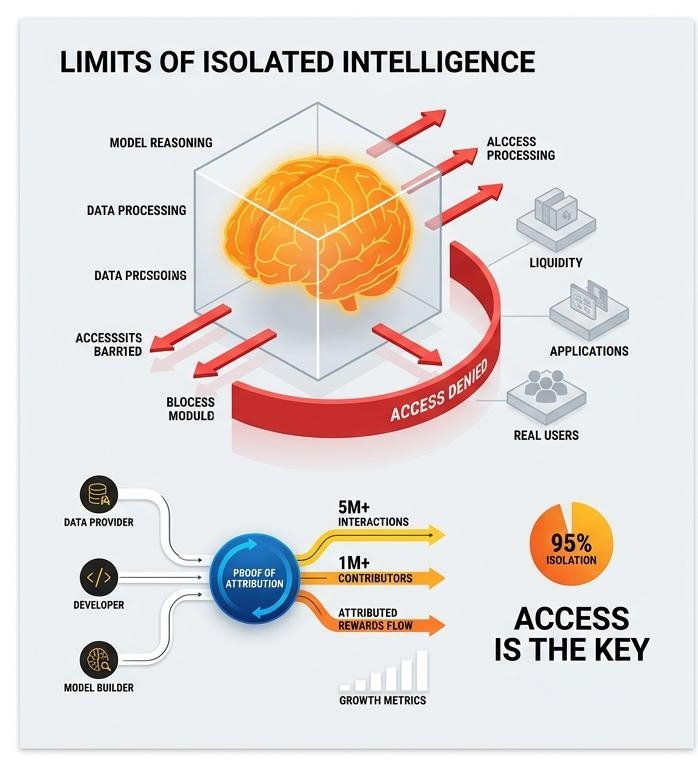
Most conversations around AI focus on intelligence itself. Better models / Better reasoning / Better outputs. But intelligence without access still has limits. An AI system can generate insights all day long but eventually those insights need to interact with real environments / real applications / real liquidity & real users.
Thatz where things start getting interesting.
OpenLedger often get described as an AI infrastructure project but I increasingly think itz experimenting with something broader. The protocol isn0t only trying to improve intelligence. Itz trying to create economic rails around intelligence.
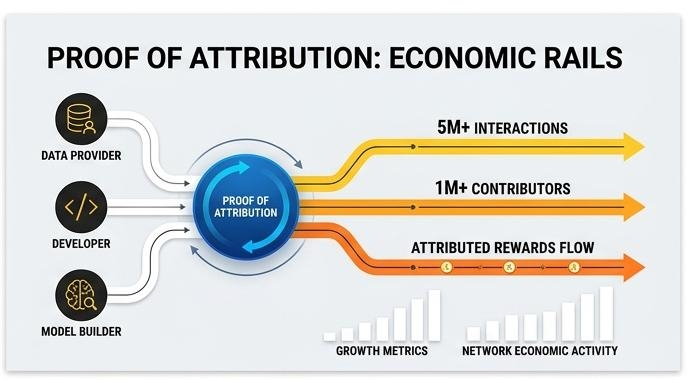
Proof of Attribution is a good example.
The concept sounds simple on paper track who contributed value & make those contributions economically visible. Yet that idea changes the incentives completely. Data providers developers model builders & users stop being disconnected participants. They become part of the same economic system.
The network has already attracted millions of registered users & contributors while processing a huge volume of attributed interactions. Whether those numbers continue growing is something time will answer but they suggest that attribution is becoming more than a theoretical concept. Itz becoming operational infrastructure.
& operational infrastructure needs access to larger ecosystems.
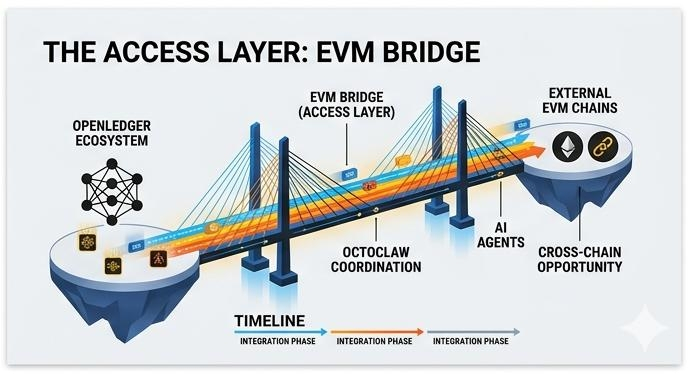
Thatz why my attention keeps drifting back to the EVM Bridge.
Most people naturally focus on assets moving between networks. I find myself thinking about participation instead.
Every blockchain ecosystem develops its own users liquidity applications & opportunities. Connecting those environments isn0t only about moving tokens. Itz about allowing activity to flow where it otherwise couldn0t.
For OpenLedger that matters because AI economies don0t benefit from isolation.
A model trained in one environment may need data from another. An application built in one ecosystem may require liquidity from somewhere else. An autonomous workflow may need to interact with multiple networks before completing a task.
The larger the intelligence network becomes the more important connectivity becomes.
Thatz also why OctoClaw changed my perspective.
When it 1st launched I view it primarily as an automation product. Research Workflow execution Agent coordination.
Useful features.
But eventually another thought occurred to me.
An agent limited to a single environment is still operating inside boundaries created by that environment.
An agent capable of interacting across ecosystems begins operating inside a much larger economic landscape.
Thatz a completely different level of flexibility.
Suddenly the bridge stops looking like a transfer tool and starts looking like an access layer.
The same idea applies to AI-powered wallet experiences & natural-language execution systems that OpenLedger has been exploring. If users eventually rely on AI to navigate blockchain environments these systems need access to wherever liquidity, applications &opportunities exist.
Nobody want to manually think about network boundaries forever.
Users care about outcomes.
Infrastructure exists to make those outcomes possible.
What fascinates me most is that OpenLedger seems to be approaching a problem many projects aren0t focused on yet.
Most AI projects are trying to build smarter intelligence.
Most blockchain projects are trying to build faster transactions.
OpenLedger appears to be exploring what happens when intelligence itself becomes an active participant inside economic systems.
That shift changes how you think about everything.
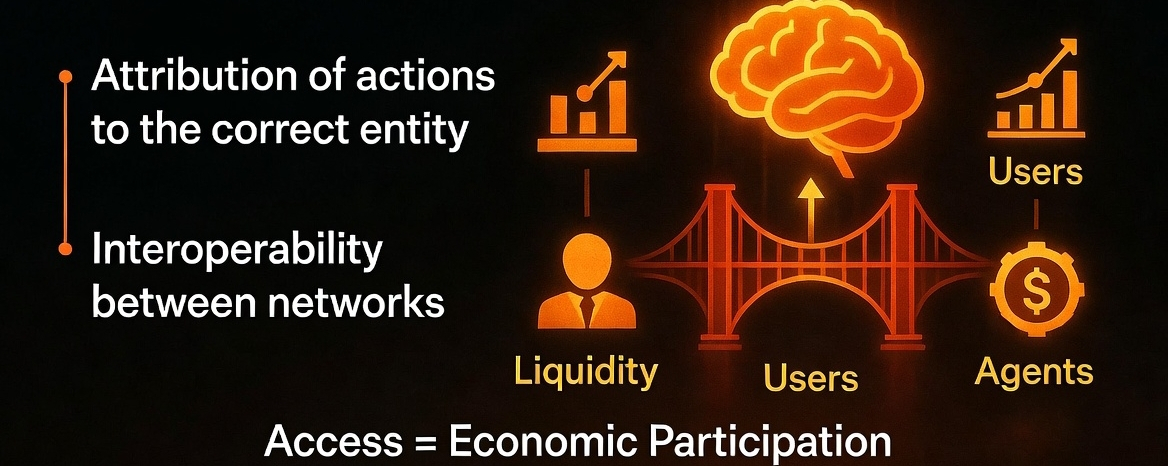
Attribution matters because contribution needs ownership.
Liquidity matters because activity needs capital.
Interoperability matters because participation needs access.
And bridges matter because economies rarely grow in isolation.
Maybe AI agents remain advanced tools rather than economic participants. Thatz entirely possible.
Maybe users never think about bridges attribution layers or execution infrastructure at all.
Thatz possible too.
But if intelligence becomes something that can coordinate, transact &create value across decentralized environments then the infrastructure connecting those environments becomes far more important than most people realize today.
Thatz why I didnot really see OpenLedger's EVM Bridge as a bridge anymore.
The more I follow the project the more it looks like an attempt to connect intelligence with opportunity.
And if OpenLedger's broader vision plays out that connection may end up being more valuable than moving assets alone ever was.
What do U think about it? Feel Free to share UR opinions & experience....
Note:- NFA ~ DYOR