Lately, I’ve been thinking a lot about OpenLedger and why it grabbed my attention so quickly.
The idea feels incredibly relevant right now.
We’re living through a moment where artificial intelligence is advancing at an astonishing pace, yet the people whose data helps make that progress possible rarely benefit from it directly. So when I first came across the idea of a blockchain built around monetizing data, AI models, and autonomous agents, I immediately understood why people were excited.
At first glance, it feels fair.
Maybe even long overdue.
Every day, we create value online without giving it much thought. We share opinions, answer questions, post content, leave reviews, and interact with platforms in countless ways. All of those actions generate data, and that data has become one of the most valuable resources in the digital economy.
Companies have known this for years.
Most of us have simply been participating in the system without seeing much of the upside.
That’s why OpenLedger made such a strong first impression on me.
The vision is easy to support. It imagines a future where people have greater ownership over what they create and where the economic benefits of AI aren’t concentrated in the hands of a few powerful organizations. Instead, individuals could finally have an opportunity to share in the value they help generate.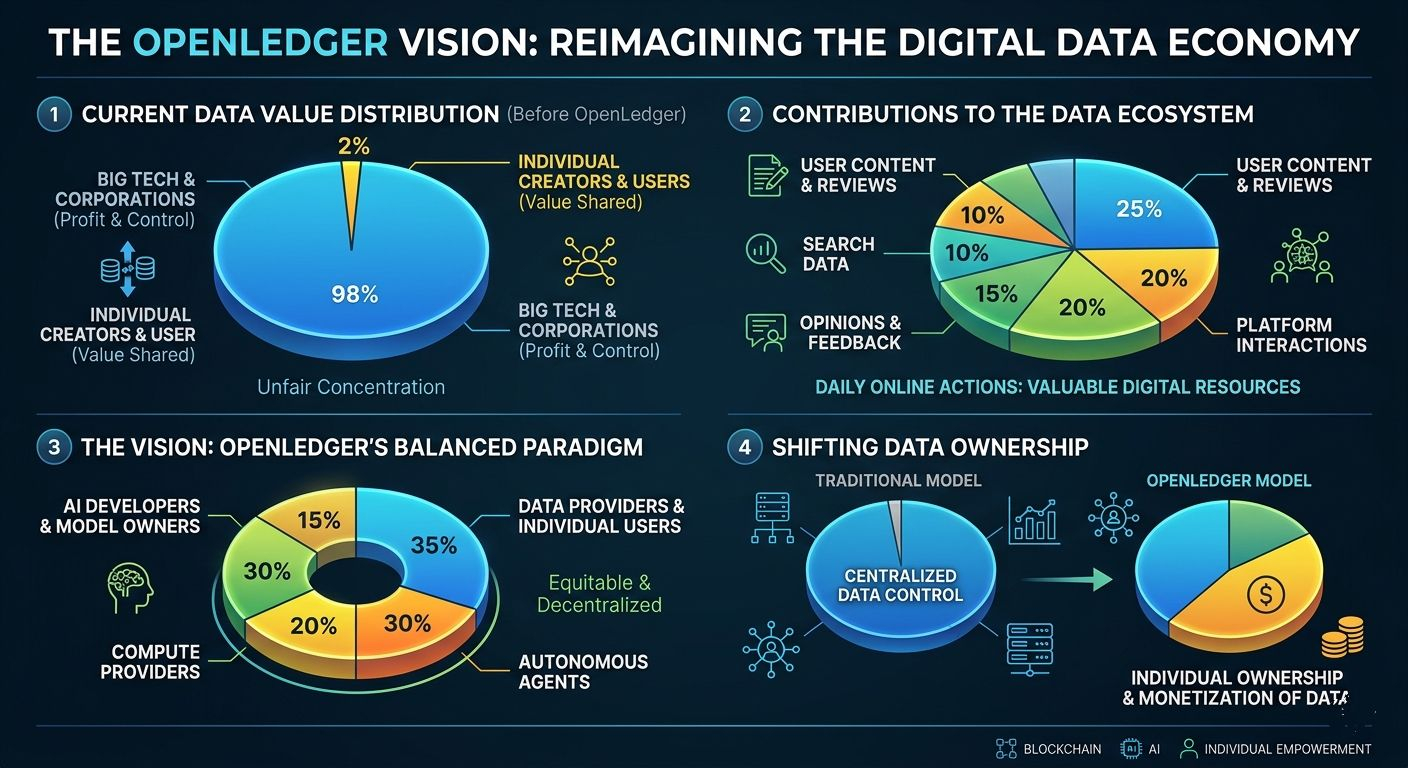
It’s an appealing idea.
The kind of idea that makes you wonder why it hasn’t happened sooner.
But the more I thought about it, the more my excitement started mixing with uncertainty.
Not because the technology seems impossible.
Not because the ambition isn’t admirable.
What kept bothering me was something much simpler.
I’m not convinced people always understand what they’re giving up when they agree to monetize their data.
That’s where the questions began.
There’s a huge difference between being paid for something and truly understanding what it might be worth in the future. Most people can recognize the value of money they receive today. Far fewer can estimate the long-term value of the information they’re handing over.
And when that information is tied to our identities, habits, interests, and personal lives, the uncertainty becomes impossible to ignore.
I keep coming back to the same question:
What happens when every part of our digital lives starts looking like a financial asset?
What happens when our conversations, preferences, behaviors, and experiences become things that can be packaged, priced, and monetized?
The answer isn't as straightforward as it first appears.
OpenLedger often talks about unlocking liquidity, and I understand why that sounds attractive. Liquidity suggests freedom. Flexibility. Opportunity.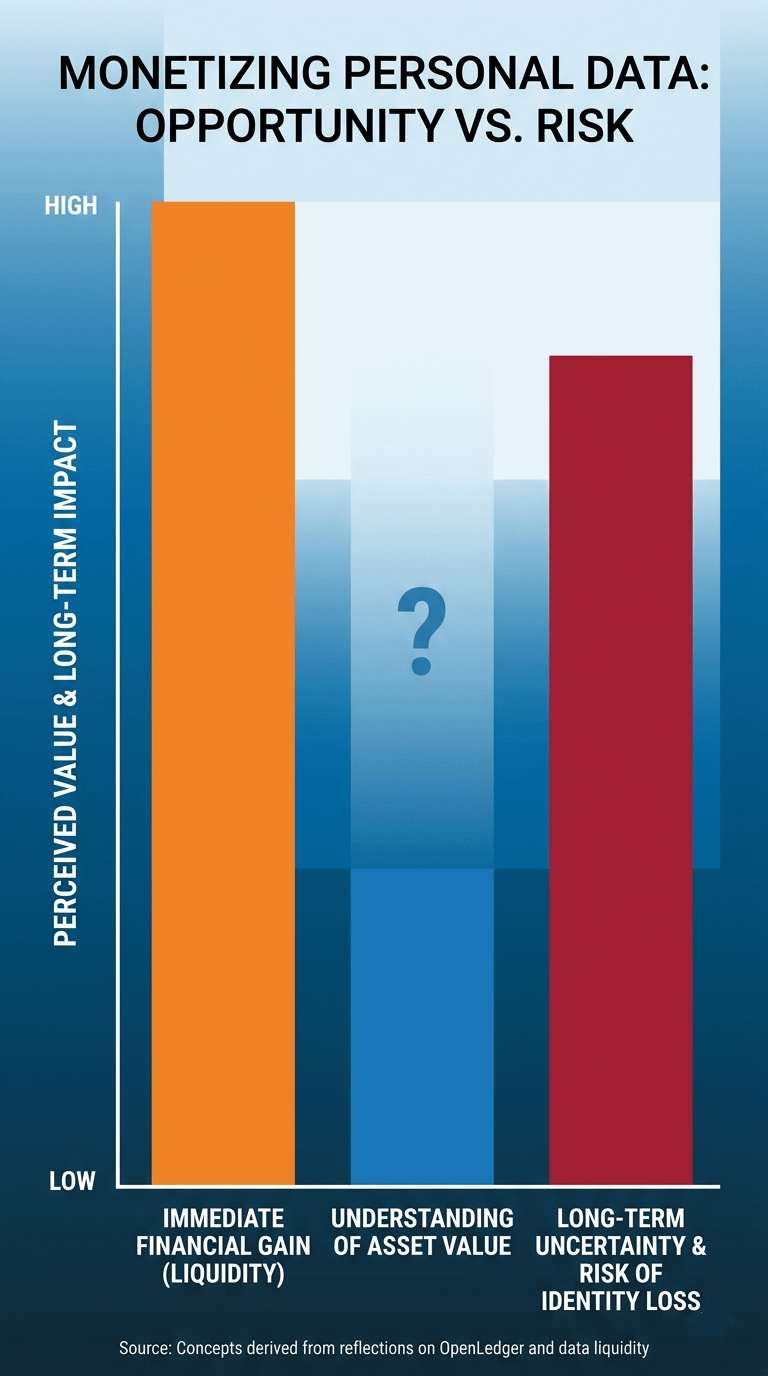
But liquidity isn't automatically a good thing.
Sometimes it simply makes it easier to sell something before fully understanding its value.
That thought has stayed with me.
The promise is ownership.
The risk is permanence.
In theory, people gain more control over their data. In practice, most people aren't spending their evenings reading lengthy terms of service or trying to predict how today's decisions might affect them ten years from now. Human nature tends to focus on immediate rewards because they're tangible. Future consequences are much harder to visualize.
Someone may willingly monetize certain information today because the benefit feels meaningful right now.
Years later, they may discover implications they never anticipated.
By then, there may be no way to undo the decision.
And that leads me to another concern.
If something goes wrong, who is actually responsible?
The more decentralized a system becomes, the harder that question can be to answer.
If an AI model trained on monetized data causes harm, where does accountability live? Is it with the platform? The developers? The contributors? The organizations using the model?
Everyone can point to someone else.
Everyone can claim they were only one small piece of a much larger process.
That uncertainty worries me.
Some of the most powerful technologies in history have emerged at the exact moment responsibility became hardest to define.
I also find myself thinking less about ideal outcomes and more about ordinary people.
Not the success stories highlighted in presentations.
Not the individuals earning significant rewards.
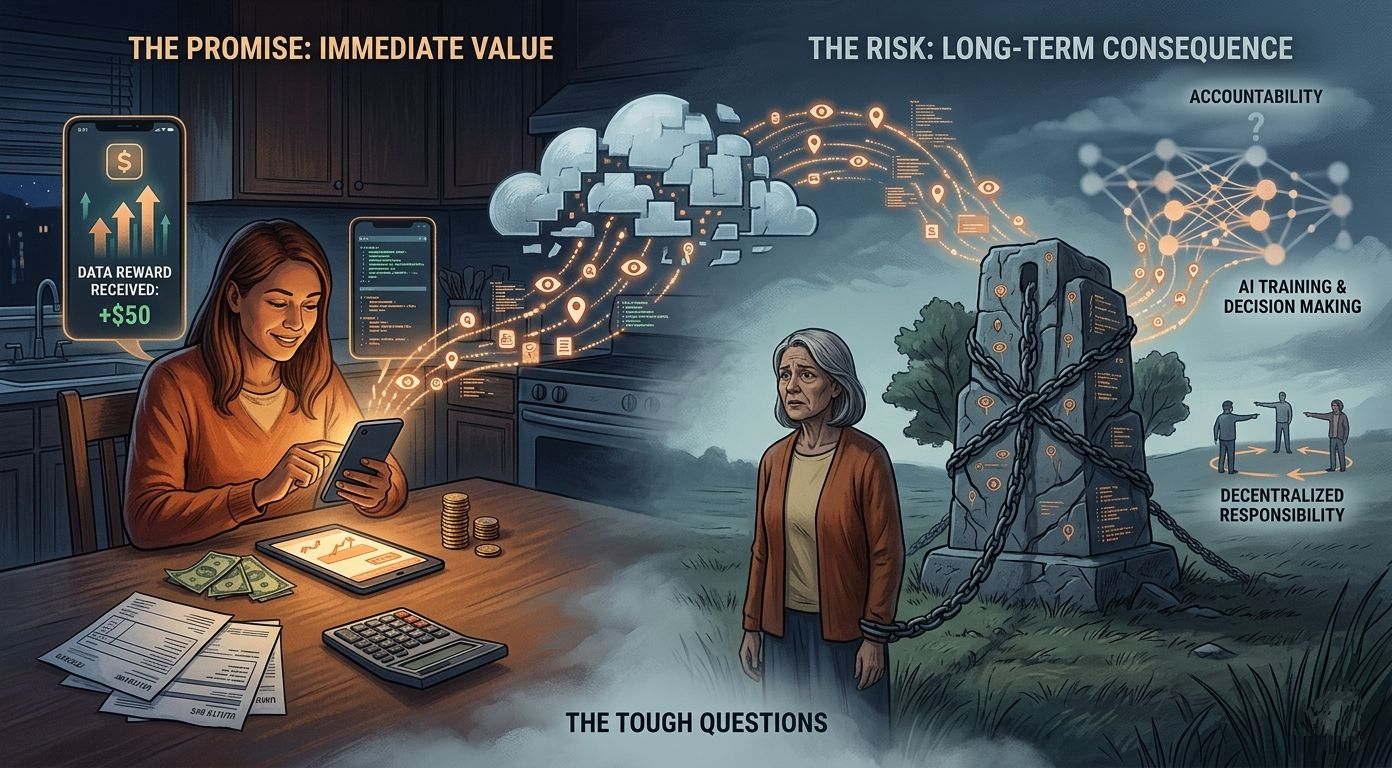
I think about someone struggling to cover monthly expenses who sees an opportunity to make money today and understandably focuses on the immediate benefit. I think about people being asked to evaluate risks that even experts can't fully predict.
From a conference stage, these systems sound empowering.
From a kitchen table, where financial pressure shapes real decisions, the situation can feel very different.
What happens when a choice can't truly be reversed?
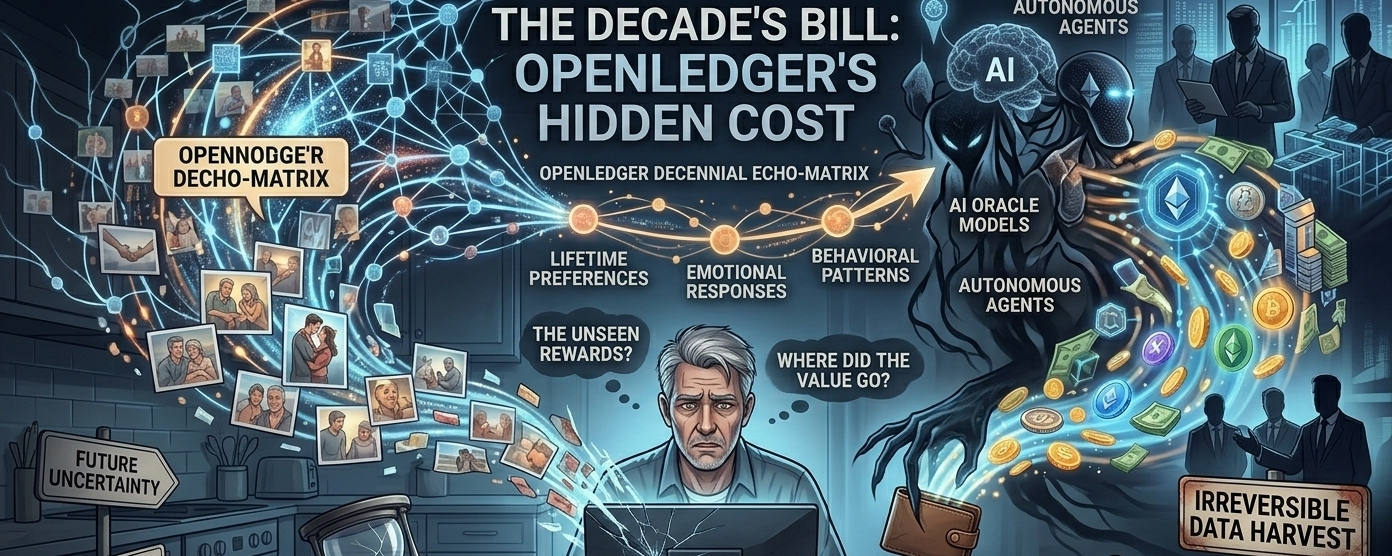
What happens when data connected to someone's life continues generating value for others long after they wish they had never shared it?
What happens when the rewards arrive immediately, but the consequences take years to appear?
The more I reflect on OpenLedger, the more I see a tension at the center of the idea.
Its greatest strength may also be its greatest weakness.
The same mechanism designed to unlock value from information may also encourage people to place a price on things whose true value can never be fully measured.
Because once information becomes an asset, it also becomes a target.
And history has shown us repeatedly that wherever valuable incentives exist, exploitation eventually follows.
That doesn't mean the vision is flawed.
Far from it.
I still find the concept fascinating.
I still understand why so many people are excited about it.
And part of me genuinely hopes projects like OpenLedger succeed in creating a fairer and more balanced digital economy.
But admiration and confidence are not the same thing.
The ideas that sound most promising are often the ones that deserve the toughest questions.
And in the end, I keep coming back to one that I can't seem to shake:
If people are being paid for their data today, how will we know years from now whether they were fairly compensated—or whether they simply sold something they could never truly get back?