
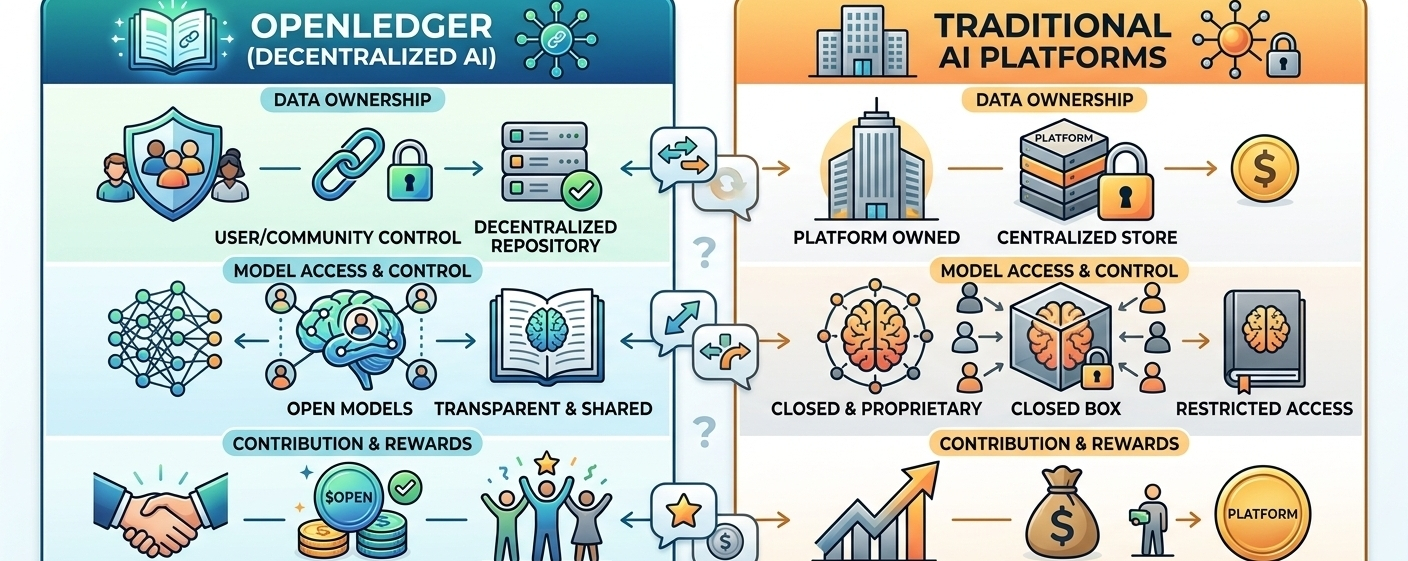
I used to think AI platforms were mostly about model quality or speed. But while using OpenLedger over the past few weeks, I noticed something else entirely.
At first, nothing felt unusual. The interface was smooth, outputs were consistent, and onboarding wasn’t harder than traditional systems. It almost felt like there was no real difference at the surface level.
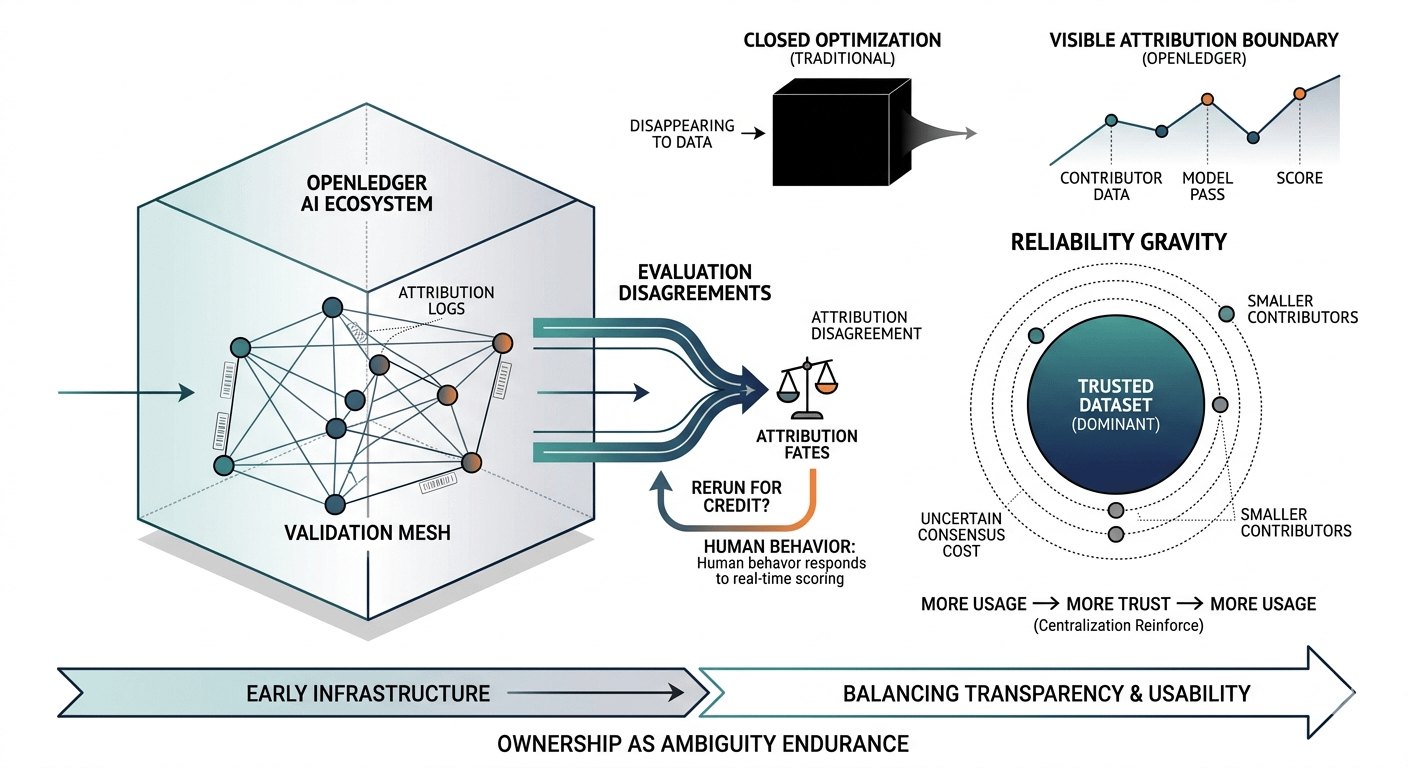
The shift happened when I realized ownership wasn’t abstract anymore. It surfaced inside small disagreements during evaluation flows, where routing and scoring didn’t align cleanly across model passes and contributor datasets.
In traditional AI platforms, these inconsistencies disappear into a closed optimization loop. Data goes in, models improve, and value redistribution stays hidden. OpenLedger makes that boundary visible, and that visibility quietly changes how people behave. Attribution is no longer background logic it becomes something people react to in real time.
I noticed validators rerunning batches not because something broke, but because scoring stability started affecting downstream credit. Even choosing not to rerun became a stance, since repeated evaluation itself can shift contribution weight depending on system state.
But this openness introduces friction. When attribution depends on probabilistic consensus, uncertainty becomes costly. Smaller contributors feel it first, especially when larger datasets gain more exposure and gradually dominate validation simply through interaction density rather than pure quality.
That starts to resemble a broader pattern in AI infrastructure. Centralization doesn’t vanish in open systems; it returns as reliability gravity. The more a dataset is trusted, the more it is used, and the more it is used, the more trust it accumulates again.
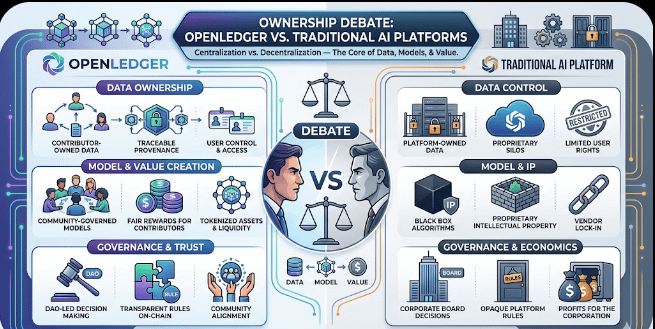
I’m not fully sure where this leads. Maybe it’s just early infrastructure struggling to balance transparency with usability. Or maybe ownership in AI was never about access at all, but about who can endure ambiguity long enough to stay visible inside the system.
Maybe this is just the early shape of something we don’t fully understand yet.