
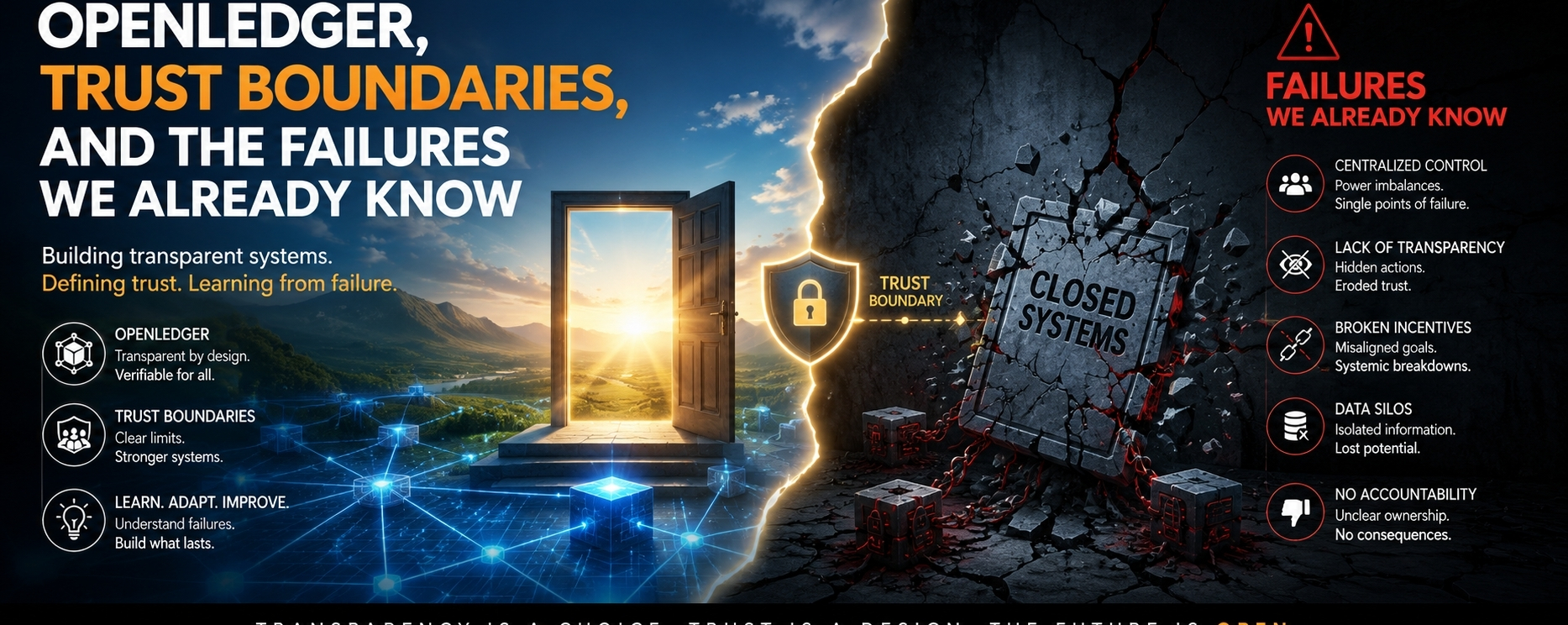
I keep a record of what usually fails first in systems like this, and it is rarely throughput.
Not the blocks. Not the latency. Not the TPS number repeated in investor decks, conference panels, and late-night market commentary. The failures that matter tend to arrive through a smaller door. A compromised key. An unnecessary permission. A wallet approval signed at 2 a.m. because someone was exhausted and the interface looked familiar enough.
I have sat through enough risk reviews to know the pattern. The incident starts as a minor anomaly. A notification. A delayed response. An alert that appears routine until it isn't. Then comes the investigation. The audit trail. The uncomfortable meeting where everyone discovers that the system behaved exactly as designed, and that was the problem.
Risk committees understand this instinctively. Auditors do too. Every serious security review eventually circles back to the same conclusion: performance matters, but authority matters more. Systems rarely collapse because blocks were too slow. They fail because the wrong person could do the wrong thing at the wrong time with the wrong level of access.
That is why I find OpenLedger interesting.
At first glance, it is easy to describe it as a high-performance SVM-based Layer 1 built for the emerging economy of data, models, and autonomous agents. It aims to unlock liquidity around intelligence itself, creating infrastructure where data contributors, model builders, and agents can participate in a shared economic system.
The headline numbers are easy to discuss. They always are.
The harder question is what happens when those systems leave the whiteboard and encounter reality.
Reality is where permissions become political. Reality is where wallet approvals become debates. Reality is where security teams ask questions that nobody wants to answer because the answers slow things down.
Can an agent spend indefinitely?
Who can revoke access?
How long does authority persist?
What happens when credentials leak?
Those questions are not glamorous, but they are usually the difference between a functioning network and a postmortem.
The obsession with speed often creates a strange blind spot. People measure how quickly a transaction can be executed while ignoring how broadly authority can spread. Yet authority is what attackers seek. Once permissions become excessive, speed simply accelerates the consequences.
OpenLedger appears to approach the problem from a different direction. Rather than assuming every interaction requires endless user signatures or unrestricted approvals, it introduces OpenLedger Sessions: enforced, time-bound and scope-bound delegation.
That distinction matters.
A session is not permanent trust. It is not an open-ended grant of authority. It exists within boundaries that are defined in advance and constrained by design. The permission expires. The scope remains limited. The delegation is explicit rather than assumed.
I think that is where the industry is quietly heading.
“Scoped delegation + fewer signatures is the next wave of on-chain UX.”
Not because convenience is the goal, but because security and usability increasingly point toward the same answer. Endless approval prompts do not automatically create safety. They often create fatigue. Fatigue produces mistakes. Mistakes create incidents.
The most secure workflow is frequently the one that reduces opportunities for human error while maintaining clear limits on authority.
That philosophy extends beyond access control. OpenLedger's architecture separates high-speed execution from a more conservative settlement layer. Modular execution allows activity to move quickly where speed is useful, while settlement remains focused on verification, finality, and system integrity.
I prefer this approach to the idea that every layer must optimize for the same objective simultaneously. Different components can carry different responsibilities. Execution can pursue performance. Settlement can pursue certainty. The separation introduces discipline into the architecture.
Even EVM compatibility feels most valuable when viewed through that lens. Not as a defining feature, and certainly not as a destination, but as a reduction in tooling friction. Developers already have workflows, infrastructure, and operational habits. Lowering migration costs helps adoption, but it does not replace sound security design.
The same principle applies to the native token. I do not think of it primarily as a speculative instrument. Within the network, it functions as security fuel. Staking is less a reward mechanism than an acceptance of responsibility. Participants help secure the system and absorb the obligations that come with that role.
Of course, none of this eliminates risk.
Nothing does.
Bridges remain a concern. Cross-chain movement continues to create attack surfaces that are difficult to ignore. History has demonstrated repeatedly that value tends to accumulate faster than security assumptions can be validated. The lesson appears every cycle, and somehow still surprises people.
Trust doesn’t degrade politely—it snaps.
One day a bridge is treated as infrastructure. The next day it becomes an incident report.
That reality is why I have become skeptical of narratives built entirely around speed. Speed is useful. Performance is useful. Fast systems create opportunities that slower systems cannot.
But safety is a different discipline.
Safety is the ability to constrain authority before authority becomes a liability. It is the ability to limit exposure before exposure becomes loss. It is the ability to define boundaries that continue functioning even when people are tired, distracted, rushed, or wrong.
The systems that endure are rarely the ones that say "yes" the fastest.
They are the ones that know when to say "no."
When I look at OpenLedger, that is the question I find most interesting. Not how quickly it moves, but how deliberately it limits what can move, who can move it, and for how long.
Because predictable failures are rarely caused by slow blocks.
They are caused by permissions that outlive their purpose, keys that gain too much authority, and trust that extends beyond its useful boundaries.
A fast ledger is impressive.
A fast ledger that can say "no" is how predictable failure gets prevented.
