
I Ever used to think the AI and blockchain narrative was mostly about infrastructure. New chains would emerge claiming to support artificial intelligence, and the conversation would quickly revolve around throughput, scalability, or token incentives. The assumption seemed straightforward: build faster rails, attract developers, and value would eventually follow. Over time, that view started to feel incomplete.
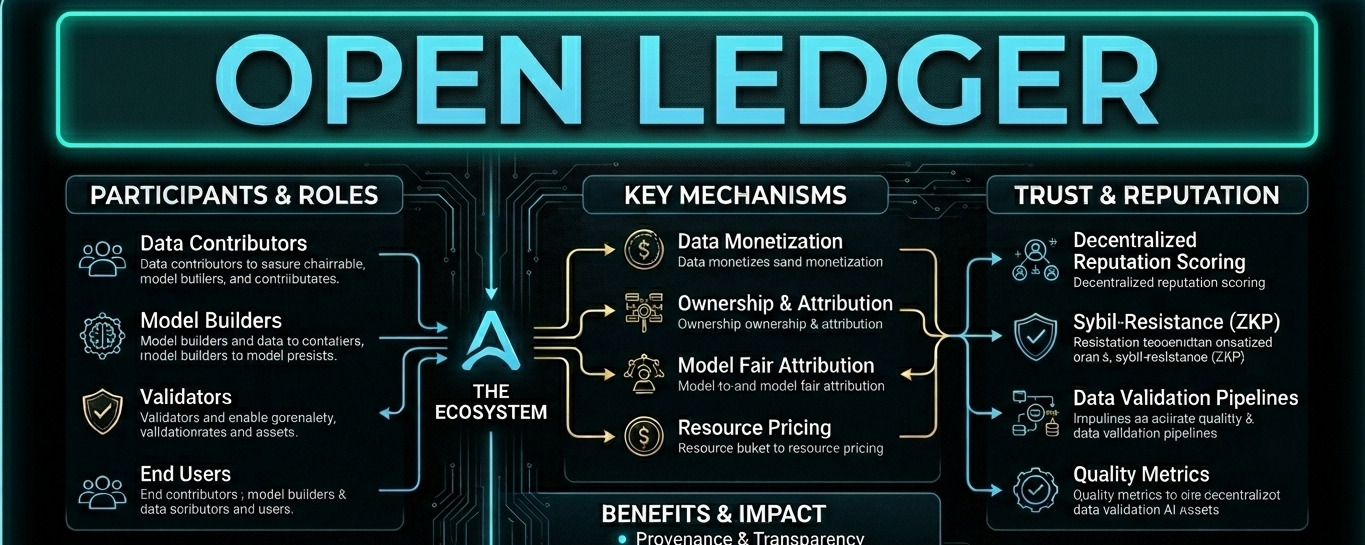
What changed my perspective was spending more time studying how data, models, and AI agents actually create value. The bottleneck often is not computation alone. It is ownership, attribution, and incentives. Valuable datasets are scattered across individuals and organizations, while AI models frequently rely on contributions that are difficult to track or reward. That led me to pay closer attention to OpenLedger, a project positioning itself as an AI-focused blockchain designed to help monetize data, models, and agents.
My initial assumption was that tokenizing AI-related assets would simply create another speculative layer. However, the deeper question appears to be whether blockchain infrastructure can help coordinate economic relationships between contributors and consumers of AI resources. If participants can prove ownership, usage, or contribution, then markets may emerge around resources that were previously difficult to price.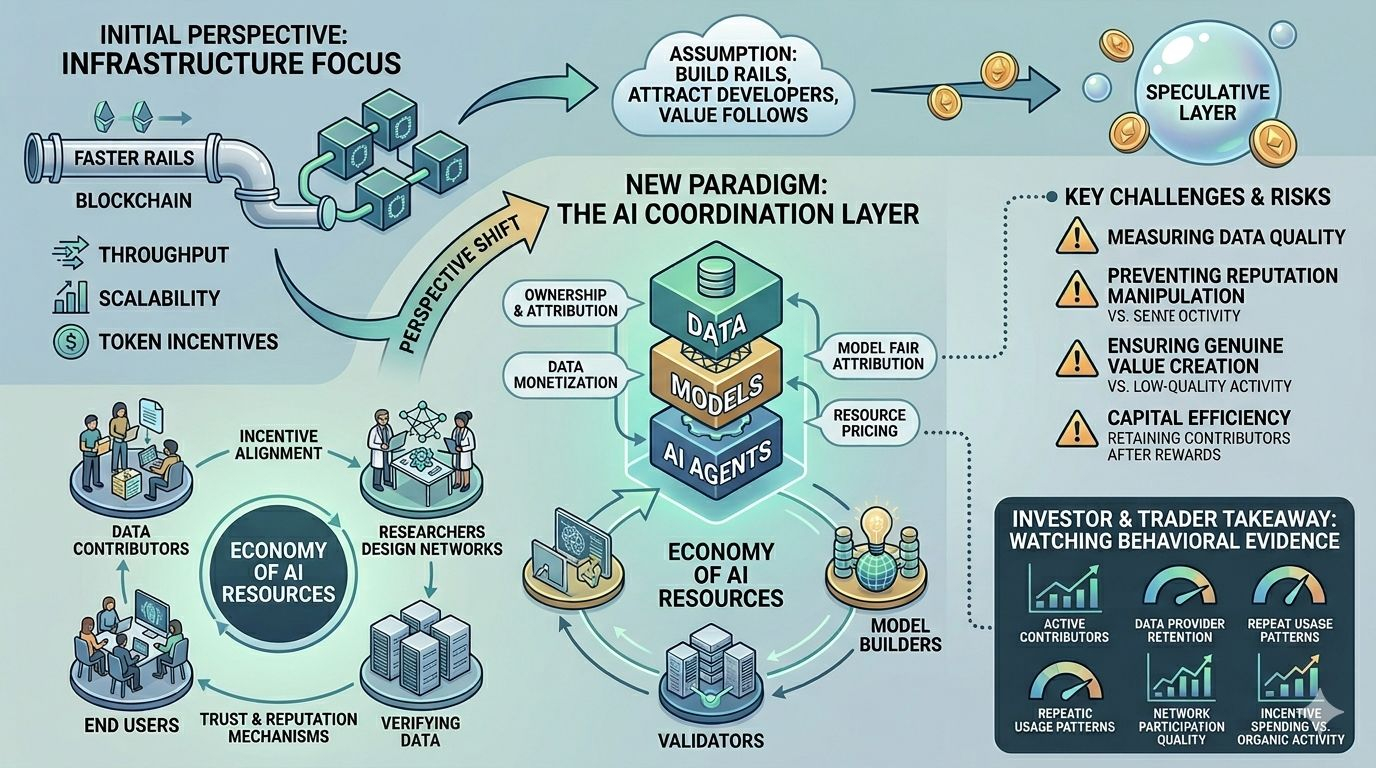
The more I observed the sector, the more I realized that liquidity alone is not the most important variable. Sustainable networks depend on trust and reputation. Data providers need confidence that their contributions are recognized. Developers need confidence that models are fairly attributed. Users need confidence that outputs originate from credible sources. Without those mechanisms, liquidity can arrive quickly but disappear just as fast.
What I think many market participants may be overlooking is the challenge of coordination. Most discussions focus on AI demand growth, yet demand alone does not guarantee durable value creation. The harder problem is aligning incentives among multiple stakeholders who may never directly know each other. Data contributors, model builders, validators, and end users all participate in different ways. A network that successfully coordinates these groups could potentially build stronger network effects than one relying solely on speculative capital.
At the same time, there are meaningful risks. Public information confirms OpenLedger's focus on AI-related assets and data monetization, but the long-term effectiveness of these mechanisms remains difficult to verify. Measuring the quality of contributed data is challenging. Preventing manipulation of reputation systems is challenging. Ensuring that incentives reward genuine value creation rather than low-quality activity is also challenging. These issues are not unique to OpenLedger; they are common across much of the decentralized AI sector.
Another factor worth considering is capital efficiency. If incentives attract contributors but fail to retain productive participants after rewards decline, network growth may prove temporary. Sustainable ecosystems typically emerge when economic activity continues even as subsidies become less important.
From my perspective as an investor and trader, the most useful takeaway is not to focus exclusively on narratives. Instead, I watch behavioral evidence. Metrics such as active contributors, data-provider retention, repeat usage patterns, network participation quality, and the relationship between incentive spending and organic activity may reveal more than headline announcements. Those indicators can help determine whether coordination, trust, and economic value are genuinely forming or whether activity is primarily driven by short-term incentives.