

What if the future of AI is not determined by who builds the smartest modeOpenLedger who creates the most transparent data ecosystem?
Most discussions around AI focus on model performance, compute resources, and new technological breakthroughs. While those factors are important, they often overlook a foundational question: where does the data come from, and how is value distributed among those who contribute it?
As AI continues to expand, data transparency and attribution may become some of the most critical layers of future AI infrastructure.
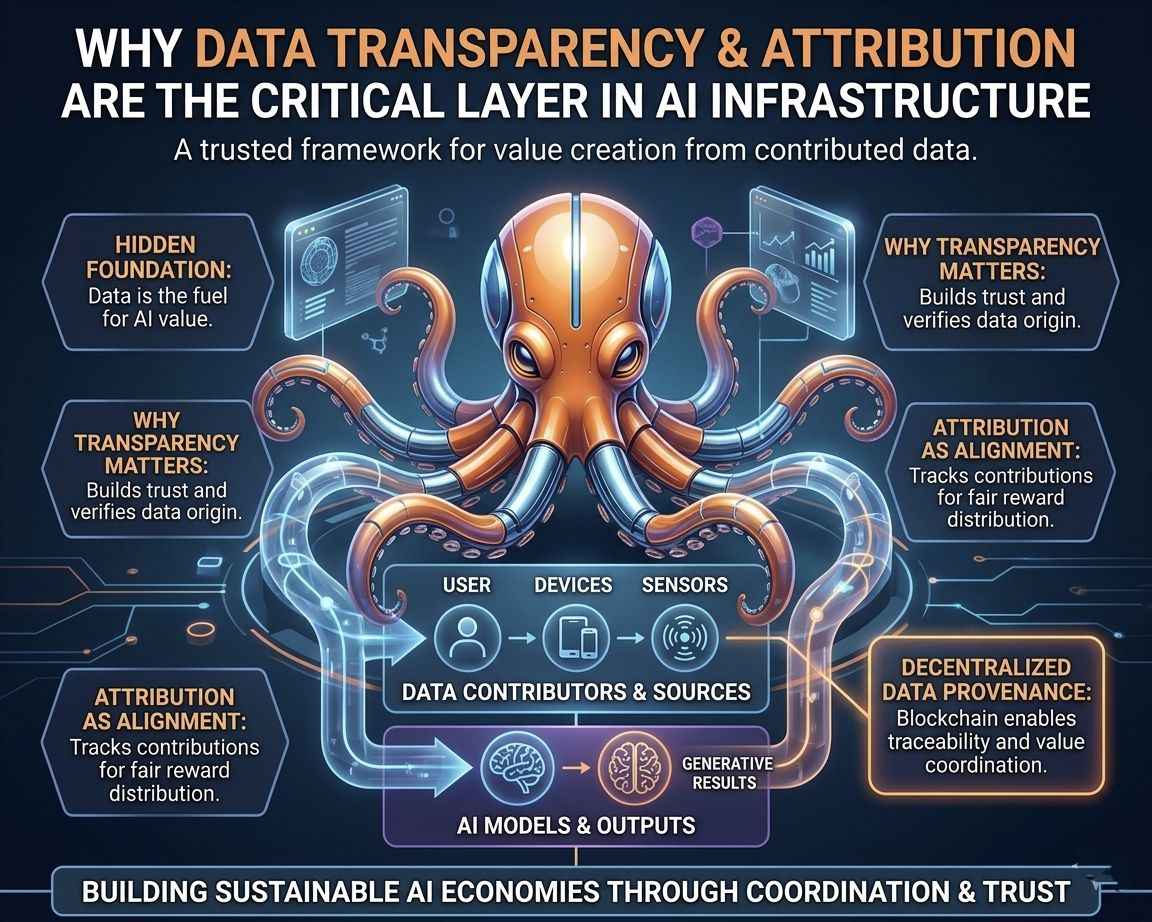
The Hidden Foundation of AI
Every AI system depends on data. Models can only learn, improve, and generate value because vast amounts of information are collected, organized, and processed behind the scenes.
Yet in many cases, contributors have little visibility into how their data is used or how value is created from it. This creates a growing discussion around attribution, accountability, and participation within AI ecosystems.
This is one reason why projects such as @OpenLedger are attracting attention. Rather than focusing only on AI outputs, the ecosystem explores how decentralized infrastructure can help create more transparent relationships between data, contributors, and AI systems.
Through concepts such as Datanets, attribution mechanisms, and blockchain-based verification, $OPEN is positioned within a broader conversation about how AI economies could evolve.
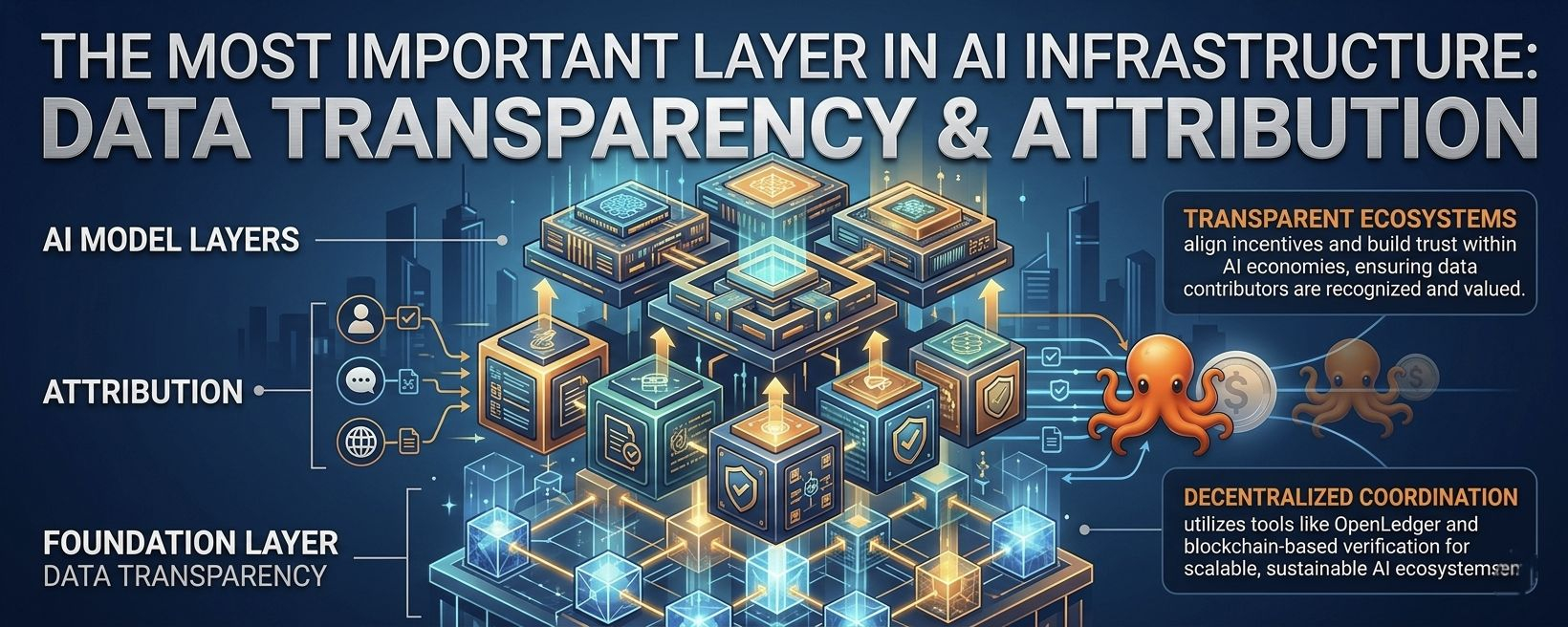
Why Transparency Matters
One important observation is that trust becomes increasingly valuable as AI systems become more integrated into everyday economic activity.
Users, developers, and organizations may want clearer visibility into where data originates, how it is verified, and how contributors are recognized.
Another insight is that attribution could become an essential coordination layer. As AI ecosystems grow more complex, tracking contributions may become just as important as improving model intelligence itself.
Without transparent attribution systems, it becomes difficult to align incentives across large-scale AI networks.
Market and Industry Relevance
The convergence of AI and blockchain is creating new discussions around ownership, verification, and value distribution.
While blockchain alone does not solve every challenge in AI, it offers tools that can support transparency and traceability. This is why decentralized AI infrastructure is becoming an increasingly important narrative across the industry.
Projects focused on data coordination may ultimately play a significant role in enabling sustainable AI ecosystems.
Looking Ahead
In my view, the next phase of AI development may depend on more than better models. It may depend on creating systems that can coordinate data, attribution, incentives, and participation in a fair and transparent way.
The long-term opportunity is not simply building smarter AI. It is building infrastructure that allows intelligence, contributors, and value creation to coexist within a trusted framework.
Conclusion
As AI adoption accelerates, data transparency and attribution may become foundational requirements rather than optional features.
The question is no longer just how intelligent AI can become.
The bigger question may be: who should receive recognition and value when AI systems create economic outcomes from contributed data?
What do you think will matter more in the future: model intelligence, or the infrastructure that coordinates data ownership, attribution, and participation?