Remember the last time you had to wire money between a crypto exchange and a brokerage account? The waiting. The fees. The maddening realization that by the time your funds settled, the opportunity you spotted had already moved on.
That friction — the invisible tax on every serious investor's time and capital — is finally getting dismantled. And Binance, the platform that already reshaped how the world thinks about crypto, is the one doing it.
With over 7,000 U.S. stocks and ETFs now available directly inside the Binance app — alongside spot, futures, Earn, Pay, and a full Web3 Wallet — the long-promised "financial super app" isn't a concept anymore. It's a login screen you probably already have.
The Problem Nobody Talked About Enough
Ask any serious retail investor how many financial apps they have on their phone. The answer is rarely "one."
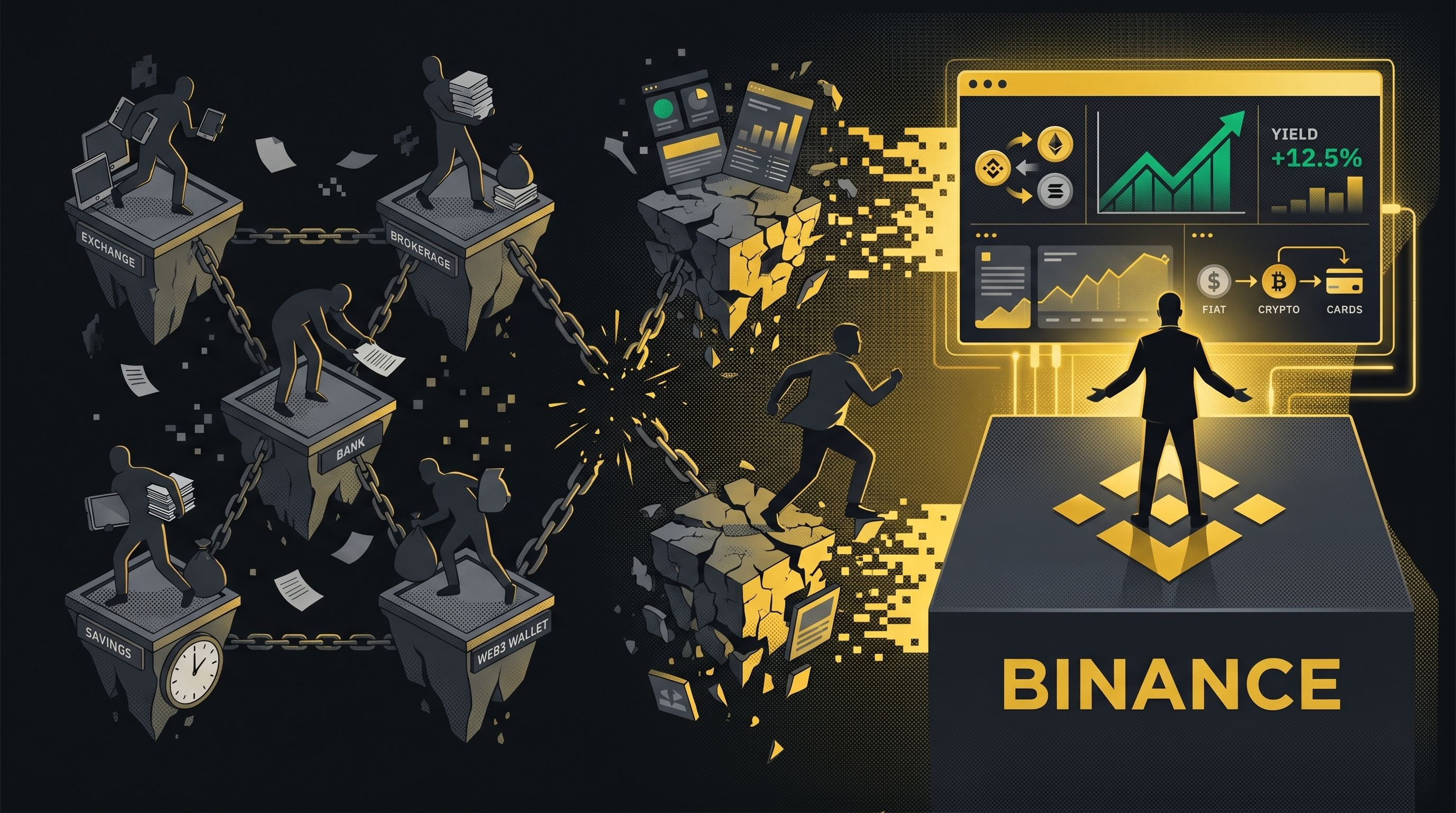
There's the crypto exchange for BTC and ETH. The brokerage for Apple and Tesla. The savings app for yield. The payments app for day-to-day stuff. Maybe a Web3 wallet for DeFi. Each with its own KYC process, its own funding mechanism, its own UI logic, its own delays when you want to move money around.
This isn't investing — it's logistics management. And the cognitive overhead is real. You don't just lose time and fees when you move funds between platforms. You lose decision quality. By the time everything settles, the market has moved, your conviction has cooled, or you've simply given up on the idea.
The financial industry has known this is a problem for years. But solving it meant bridging two worlds — traditional finance and crypto — that have historically refused to talk to each other.
What Binance Just Built (And Why It's Different)
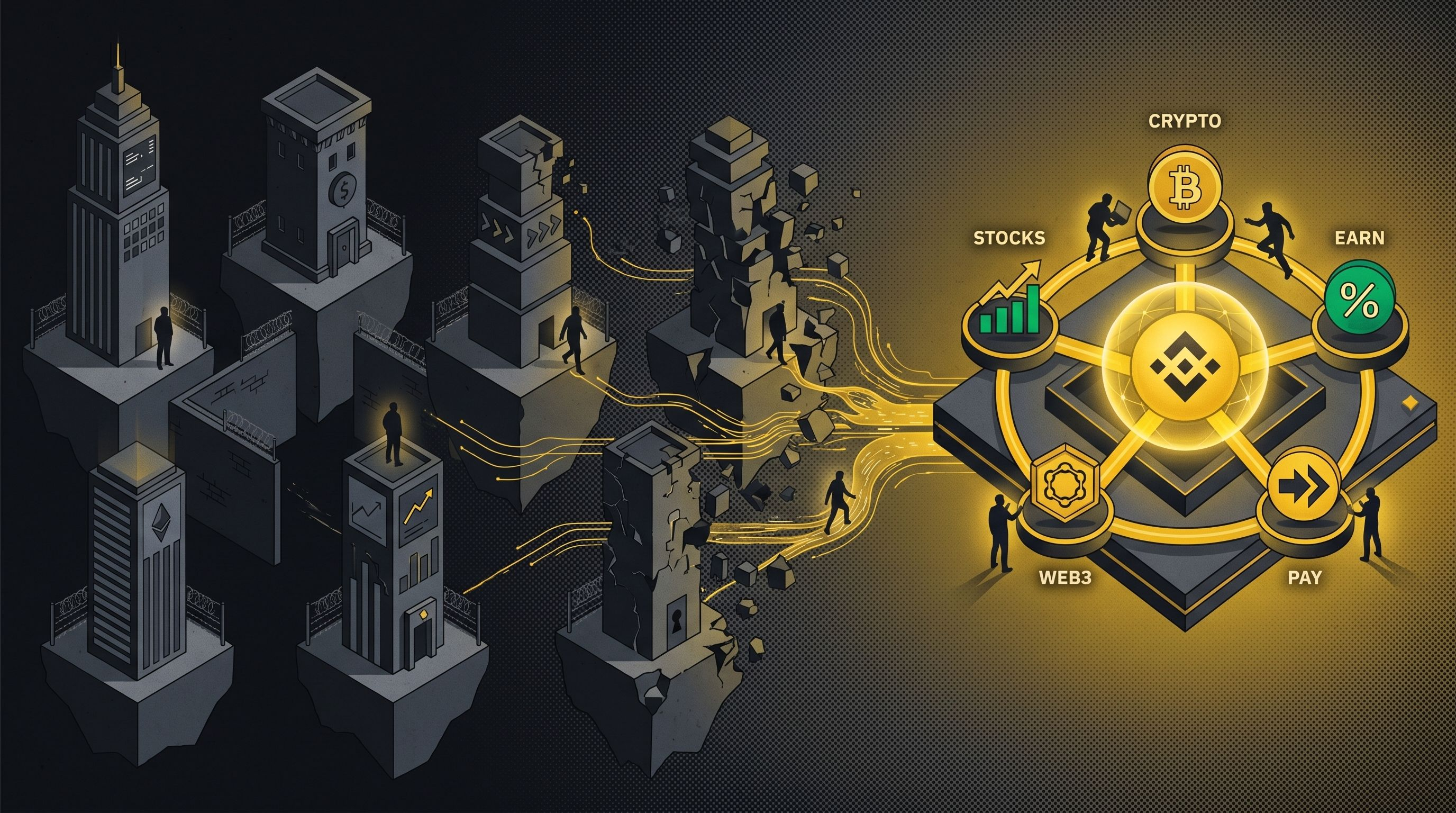
Binance's new Stocks Trading feature isn't just a feature bolt-on. It's the structural keystone of a multi-asset investment hub that now spans:
Crypto spot and derivatives — BTC, ETH, altcoins, perpetual futures
Earn products — flexible and locked savings, staking, liquidity farming
Binance Pay — payments and transfers in crypto
Web3 Wallet — on-chain DeFi access, NFTs, dApp integration
7,000+ U.S. stocks and ETFs — Apple, NVIDIA, Tesla, S&P 500 ETFs, and thousands more
All in one account. One login. One portfolio view.
The mechanics matter here. Stocks trading on Binance is powered through Nest Trading Limited, which routes orders through Alpaca Securities LLC for execution, clearing, and custody. When you buy Apple or an S&P 500 ETF, you're the beneficial owner of those shares — eligible for dividends, subject to corporate actions, with your position held in proper custody under regulated brokerage infrastructure.
This isn't smoke and mirrors. It's a real brokerage flow, plugged into a crypto-first interface that 300 million users already know.
The Numbers That Make This Accessible
Here's where Binance's positioning gets interesting for everyday investors, not just institutional ones:
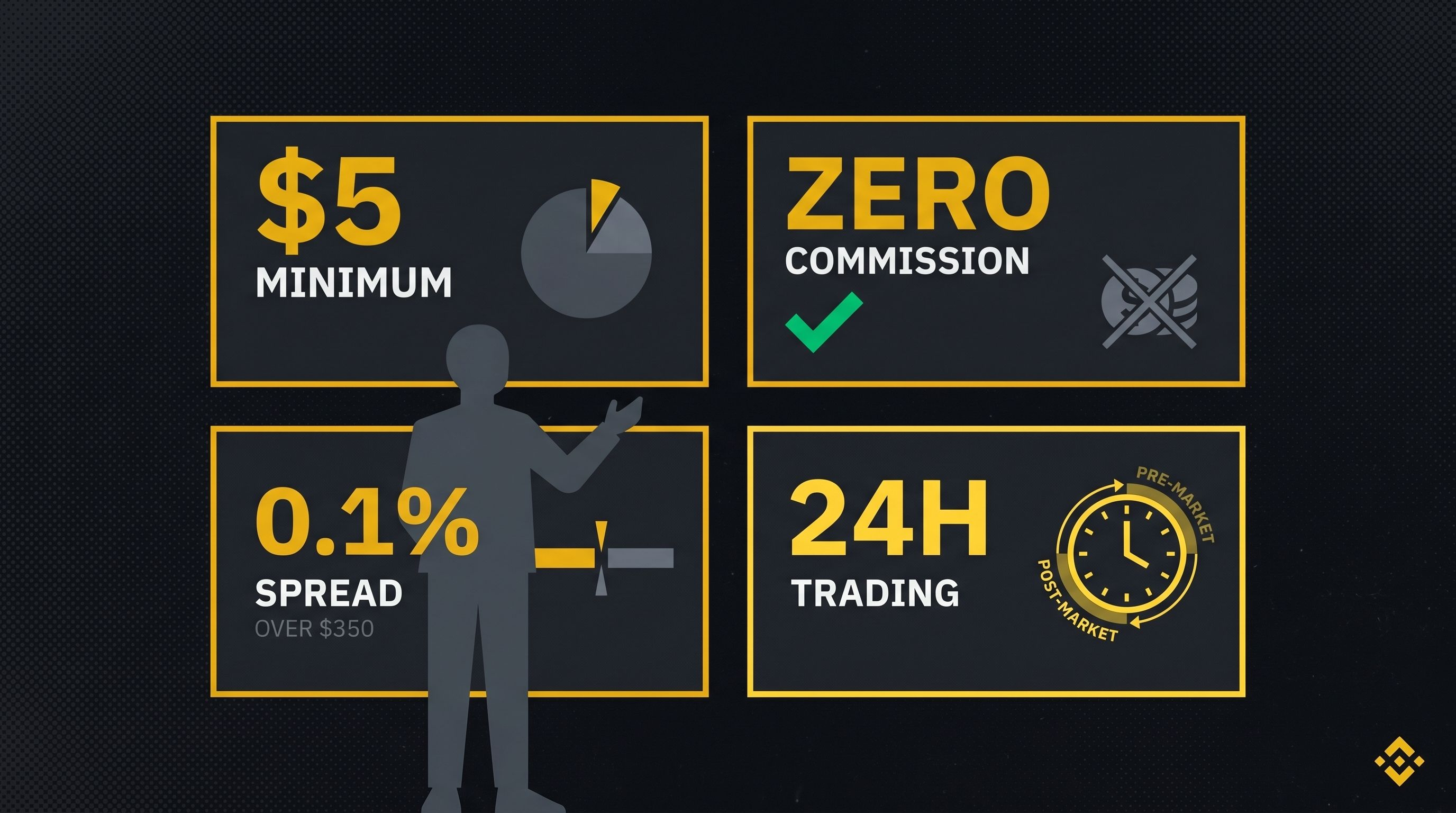
Start from just $5. Fractional shares mean you don't need to buy a full share of NVIDIA at $130+ or Amazon at $200+. You can get meaningful exposure to world-class companies with whatever you have available.
Zero commission on stock trades. For orders under $350, there's a flat $0.35 platform fee. Over $350, a 0.1% spread applies. No account maintenance fees, no inactivity fees, no custody charges. For context, many traditional brokers bundle in hidden costs elsewhere — here the model is clean and transparent.
Settlement in USDC. Fund your stock trades from USDC, USDT, BNB, or other supported assets, which get auto-converted at order submission. Any leftover USDC goes straight back to your Funding Account. Your capital stays liquid and integrated, not siloed in a separate account.
Up to 24-hour trading on selected stocks. Crypto users are wired for 24/7 markets. Binance meets them there — selected stocks support overnight, pre-market, and post-market sessions, meaning you can react to earnings surprises or macro news without waiting for 9:30 AM Eastern.
What One Portfolio Actually Looks Like Now
Let's make this concrete. Imagine a crypto-native investor — let's call her Maya — living in Southeast Asia.
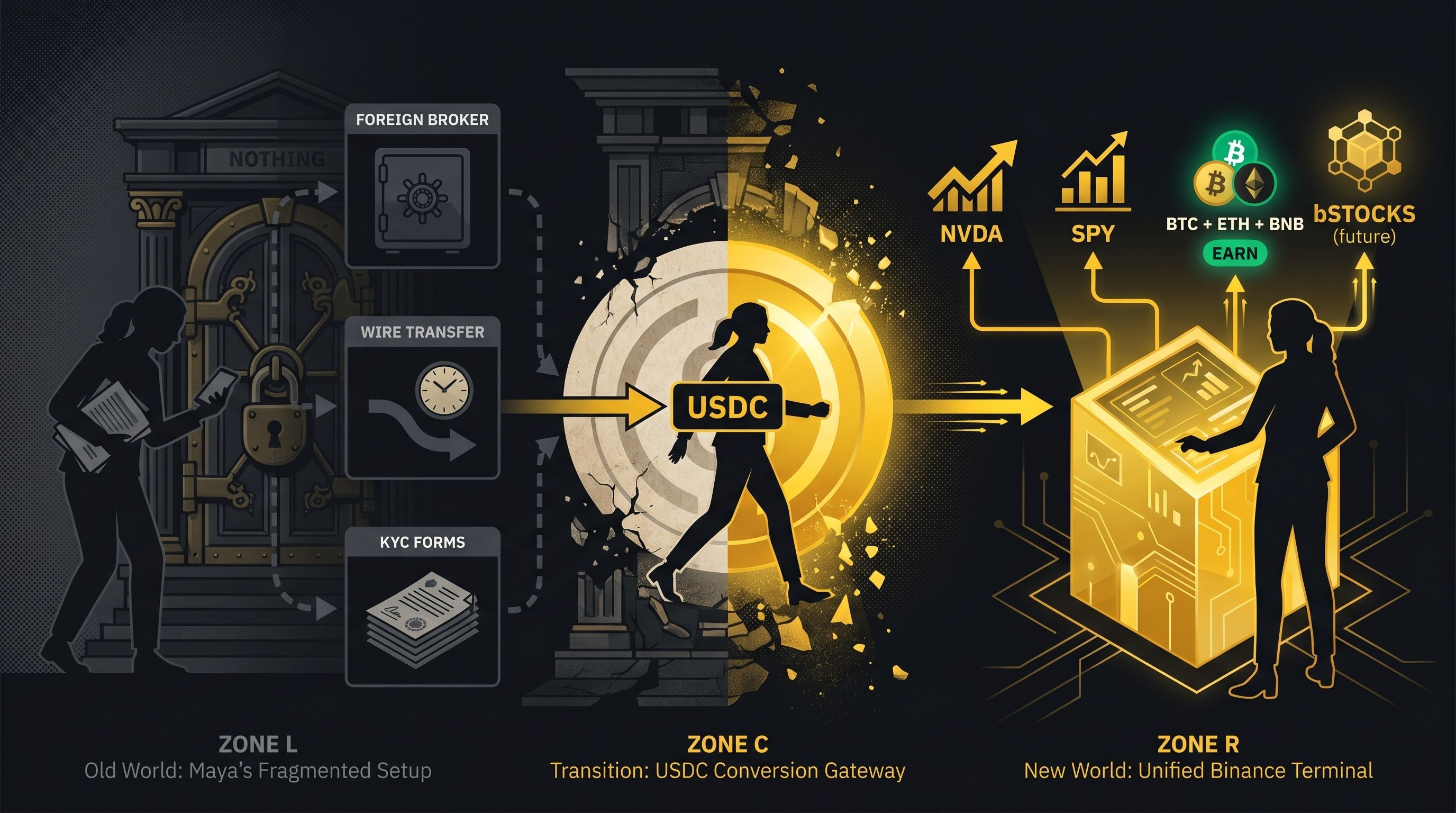
Maya got into crypto in 2021. She holds BTC as a long-term store of value, some ETH for DeFi exposure, and BNB because she uses Binance regularly. She's always wanted U.S. equity exposure — NVIDIA for the AI trade, an S&P 500 ETF for broad market upside — but opening a foreign brokerage account meant paperwork, wire transfers, and a whole new learning curve.
With Binance Stocks, Maya's workflow looks completely different:
She converts a portion of her USDC (from Earn) into stock positions — NVDA and SPY — directly from the Binance app.
She keeps the rest earning yield in Binance Earn while she's not trading.
When a macro event hits — say, a surprise Fed decision — she can move between BTC, stablecoins, and her equity positions in minutes, not days.
Eventually, when bStocks launches — Binance's upcoming tokenized securities product — she'll be able to convert those equity positions into on-chain representations, potentially usable as collateral or within DeFi protocols.
This isn't a hypothetical future. This is happening now, for users who meet eligibility requirements in supported regions.
bStocks: The On-Chain Bridge Nobody Is Talking About Enough
Of everything in Binance's announcement, bStocks might be the most underappreciated development.
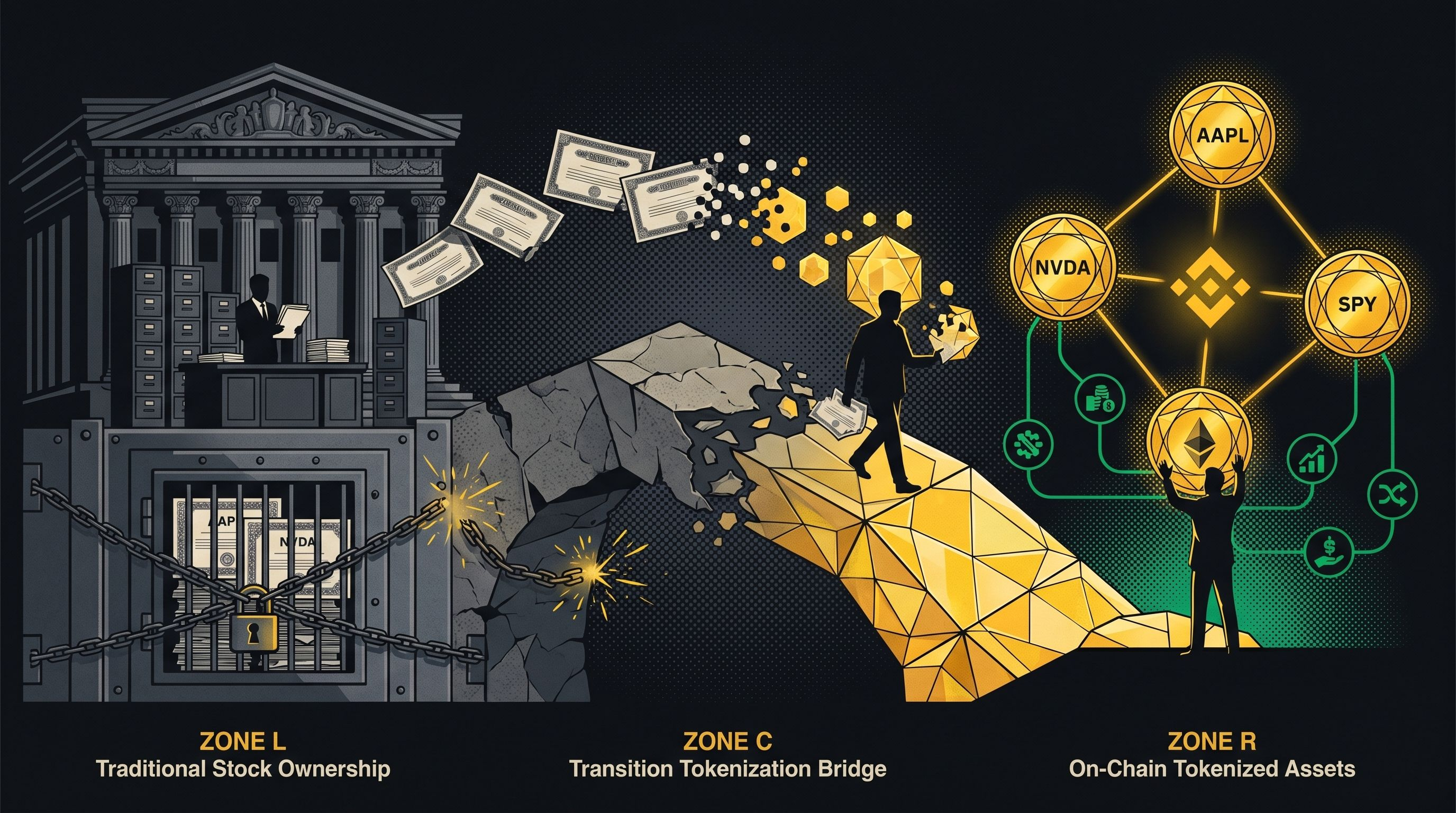
When bStocks launches, users will be able to convert their equity holdings into tokenized certificates representing those financial instruments on-chain. These are not the underlying stocks themselves — they're structured products designed to track the value of the reference asset — but they represent a meaningful convergence: traditional equity positions, expressed as blockchain-native tokens.
For the broader thesis of real-world asset tokenization (RWA), this is a real signal. The path from "I own Apple shares" to "I hold a blockchain-native representation of Apple exposure that can interact with Web3" is getting shorter. And Binance — which already operates one of the most active Web3 Wallet ecosystems — is positioned to be the infrastructure layer where that conversion happens at scale.
For investors who care about where TradFi and DeFi are heading, bStocks is worth watching closely.
Why This Matters for Crypto-Native Investors Specifically
There's a specific user cohort for whom this is especially transformative: people who entered investing through crypto, not through traditional brokerages.
In many emerging markets — across Southeast Asia, Africa, Latin America — crypto was the first genuinely accessible investment product. Low minimums. No traditional bank account required in many cases. Global access. For millions of people, Binance is their financial institution.
For that cohort, the traditional path to U.S. equities has been full of friction: foreign brokerage accounts, currency conversion costs, regulatory hurdles, unfamiliar interfaces. Binance Stocks changes the calculus. If you're already on Binance, you already have access to 7,000+ U.S. stocks, starting from $5, with no commission, in an interface you know.
The result is that the distinction between "crypto investor" and "stock investor" starts to blur. You're just an investor — holding BTC and SPY in the same account, rebalancing between them when it makes sense, earning yield on idle capital in the meantime.
That's not a small shift. That's a fundamental change in how investing works for a new generation of global users.
What You Should Know Before Diving In
The super-app vision is compelling — but it's worth being clear-eyed about the constraints:
Regional availability is real. Not all features are available in all jurisdictions. Stock trading eligibility depends on your location, and some regions may face regulatory restrictions. Always check what's available where you are.
USDC is your settlement currency. If you're funding from BNB or USDT, you'll face auto-conversion, which introduces some FX timing risk at the moment of the trade.
Binance doesn't custody the stocks. The brokerage partners (via Alpaca Securities) do. This is standard practice, but it's worth understanding the structure: your crypto stays on Binance, your stocks are held off-platform in regulated custody.
Small positions have a sweep rule. If a stock position drops below $5 and sits inactive for 120 days, Binance may liquidate it into USDC. Keep an eye on small fractional positions so you're not caught off guard.
Market risk doesn't disappear. Having everything in one app doesn't mean everything goes up. Stocks and crypto can both fall — sometimes together. Diversification helps manage correlation, but it doesn't eliminate volatility.
The Bigger Picture: Why Super Apps Win
The super-app model — pioneered by WeChat and Grab in Asia — succeeds because it reduces switching costs and keeps users in one ecosystem. Once your capital, your trades, your payments, and your identity are all in one place, the bar to leave gets very high.
For Binance, adding stocks isn't just a product feature. It's a retention mechanism, a growth vector into TradFi audiences, and a signal to regulators and institutional partners that Binance is building for the long term — not just riding crypto cycles.
For users, the win is simpler: fewer apps, less friction, faster execution, and a portfolio that actually reflects how modern investors think — across asset classes, time horizons, and risk appetites — without the overhead of managing multiple financial lives on multiple platforms.
The financial super app isn't coming. For 300 million Binance users, it's already here.