Highlights
Crypto market stays cautious ahead of US FOMC amid rising rate hike expectations.
Investor sentiment shifts toward tighter US monetary policy, reducing liquidity outlook.
Fed likely to hold rates short-term, but future tightening concerns remain.
The US Federal Open Market Committee (FOMC) interest rate decision is among the top events to watch this week in the broader financial sector, let alone the crypto market. This comes as the red-hot inflation has sparked discussions over the potential next move of the US Federal Reserve with its monetary policy plans.
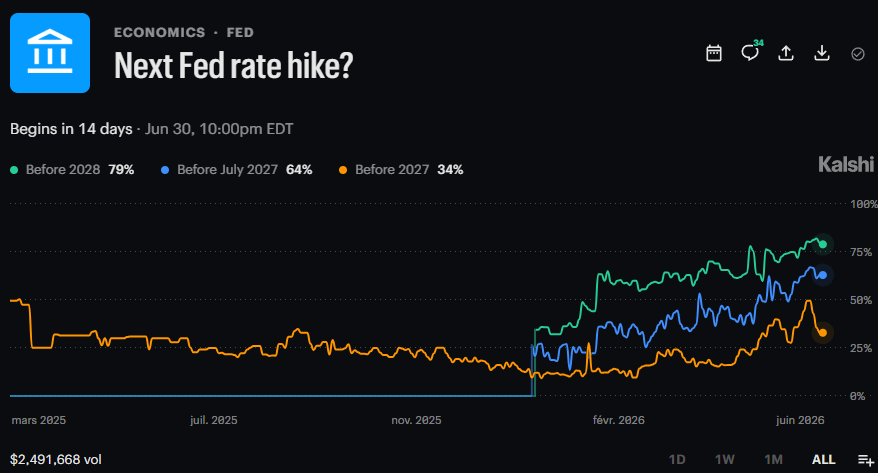
The US-Iran tensions have bumped up the oil prices in recent months, which have also contributed to the overall prices. In addition, the latest market data also suggests that the market is pricing towards a potential Fed rate hike in the next 12 months, which has further dampened the market sentiment.
US FOMC in Focus as Market Bets on Fed Rate Hike
The crypto market is reacting cautiously as expectations of a US Fed rate hike gain momentum. Recent surveys indicate that investor sentiment has shifted sharply in favor of tighter US monetary policy.
A Bank of America fund manager survey suggests that nearly 40% of participants now expect at least one rate hike within the next year. This marks a sharp rise from 16% in the previous month.
US Inflation Data Fuels Crypto Market Concerns
The recent inflation data has further complicated the crypto market outlook for the US Fed rate decision. The US Consumer Price Index (CPI) rose 0.5% in May compared to the previous month, meeting market expectations.
On a yearly basis, inflation climbed 4.2%, up from 3.8% in April. This increase highlights persistent price pressures in the economy. Notably, the higher inflation has historically pressured the crypto market, as investors often move away from riskier assets when borrowing costs rise.
Simultaneously, Global central banks are also tightening monetary policy, adding to market uncertainty. The Bank of Japan recently raised its interest rate by 25 basis points to 1%, marking its highest level in over three decades.