
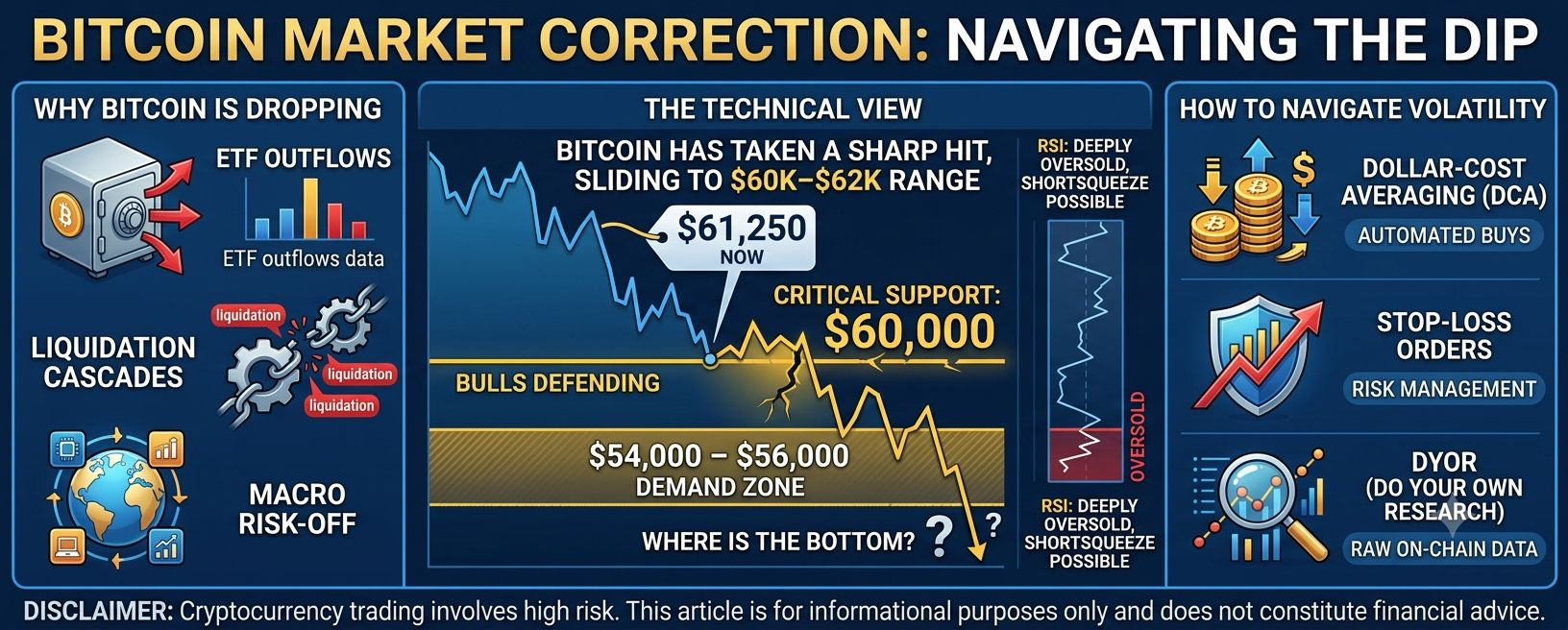
Bitcoin has taken a sharp hit, sliding into the $60,000–$62,000 range. This correction puts the
leading cryptocurrency roughly 50% below its 2025 peak. Crypto Twitter and trading floors are
buzzing with one question: Where is the bottom?
Here is a breakdown of what is driving this market dip and how to navigate the volatility.
Why is Bitcoin Dropping?
The current market downturn is driven by three major factors:
● ETF Outflows: Institutional investors are pulling capital out of U.S. spot Bitcoin ETFs,
putting heavy selling pressure on the spot market.
● Liquidation Cascades: As Bitcoin broke through key support levels, over a billion dollars
in leveraged long positions were forcefully liquidated in the futures markets.
● Macro Risk-Off: Rising macroeconomic tensions and a correction in global tech stocks
have caused capital to rotate out of high-risk crypto assets.
The Technical View
Bulls are currently fighting to defend the critical $60,000 psychological floor.
● If this support breaks, the next major historical demand zone sits between $54,000 and
$56,000.
● On the bullish side, the daily Relative Strength Index (RSI) shows that Bitcoin is deeply
oversold, which frequently sets the stage for a short-squeeze bounce.
How to Navigate the Volatility
Volatility is an inherent part of the crypto ecosystem. Experienced traders use this time to
manage risk rather than panic:
● Dollar-Cost Averaging (DCA): Instead of timing the absolute bottom, traders use
automated DCA to buy smaller amounts at regular intervals.
● Risk Management: If you are trading on leverage, always use strict stop-loss orders to
protect your capital from sudden liquidations.
● DYOR: Market dips are filled with noise. Rely on raw on-chain data and factual research
rather than emotional social media posts.
Disclaimer: Cryptocurrency trading involves high risk. This article is for informational purposes