

A token can also be beyond a price ticker and that is what Walrus is building and utility layer based on. The indigenous WAL token serves as the economic foundary of the network. WAL users pay to have their data stored over a set time and this system is designed to ensure that storage costs remain constant in fiat terms, ensuring that long term users are not affected by token price fluctuations.
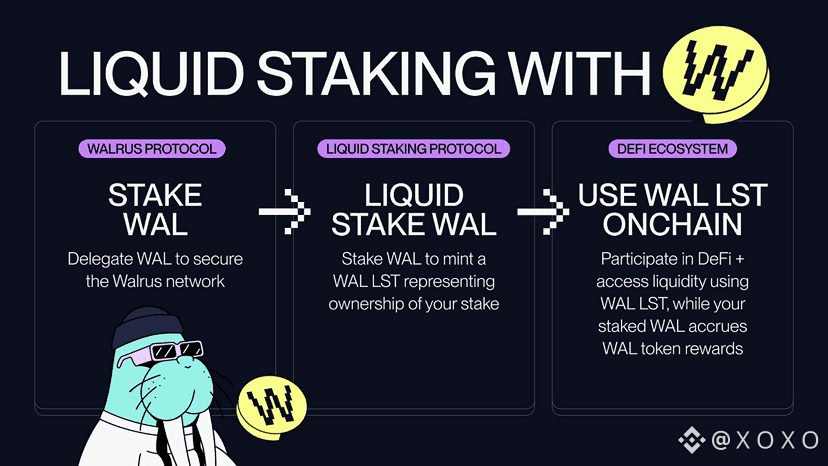
In addition, token holders have an opportunity to stake WAL to contribute to the security of a network and receive rewards. Staking helps create resilience in the network, and with the scale of the protocol, the rewards are supposed to keep increasing accordingly such that incentives are now aligned with long term incentives to participate in it, and not to speculate in the short term.
WAL is also involved in governance and enables the stakeholders to voice their opinions in the protocol decision makings. By doing so, the utility is grounded on use as well as stewardship, an aspect that is difficult to strike a balance in most projects.
I would say that the utility based protocols service (in this case storage token) should be more a matter of price speculation rather than a long term ecosystem health in this situation.