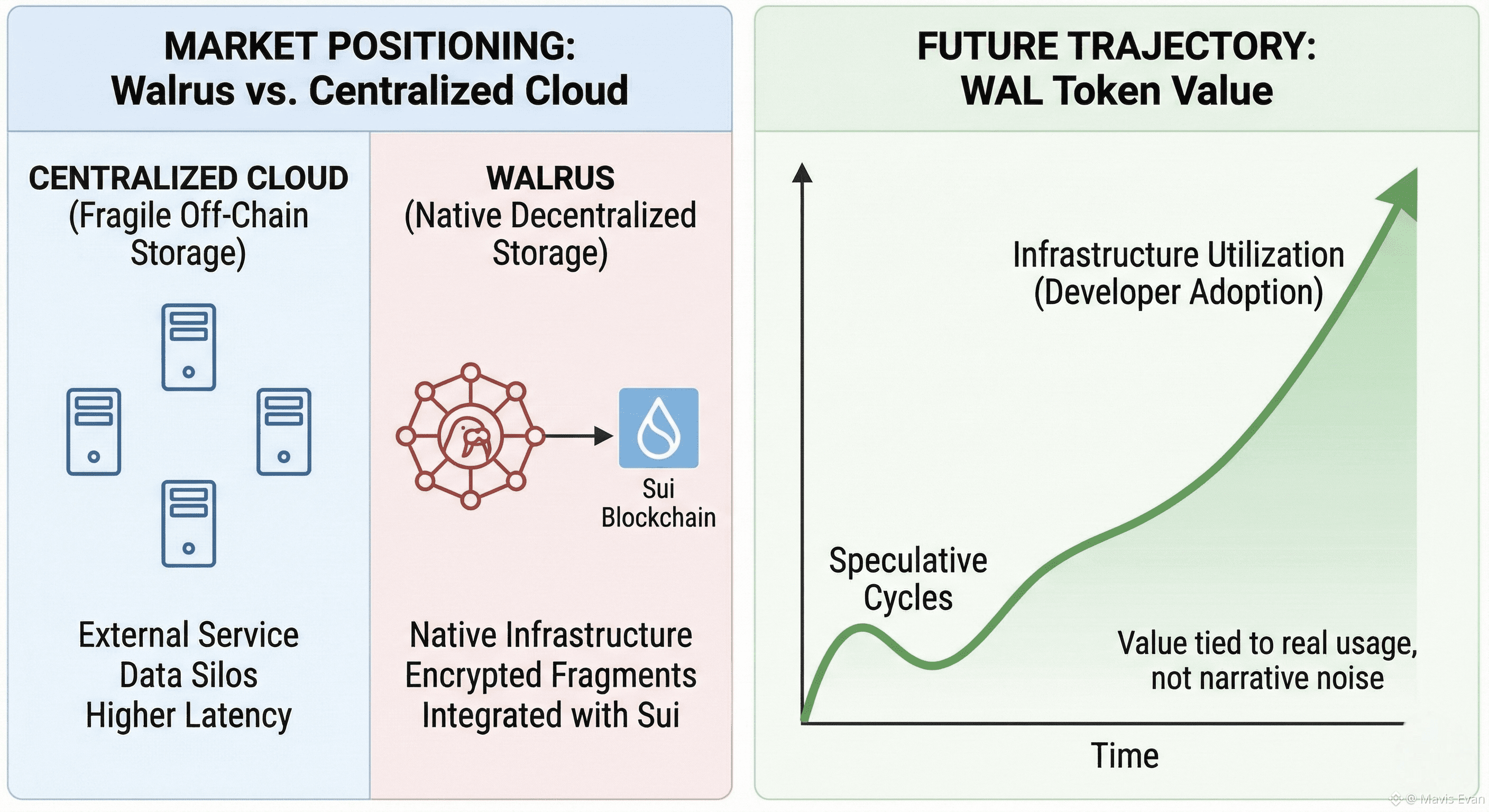
@Walrus 🦭/acc enters the market at a moment when blockchains are struggling with a structural mismatch between execution speed and data availability. High-throughput chains like Sui can process transactions in parallel, yet they still rely on fragile off-chain storage layers for large files and private state. That gap is becoming more visible as applications shift toward encrypted social data, AI-driven workflows, and enterprise coordination. Walrus is relevant now because it treats storage and privacy as native infrastructure rather than external services.
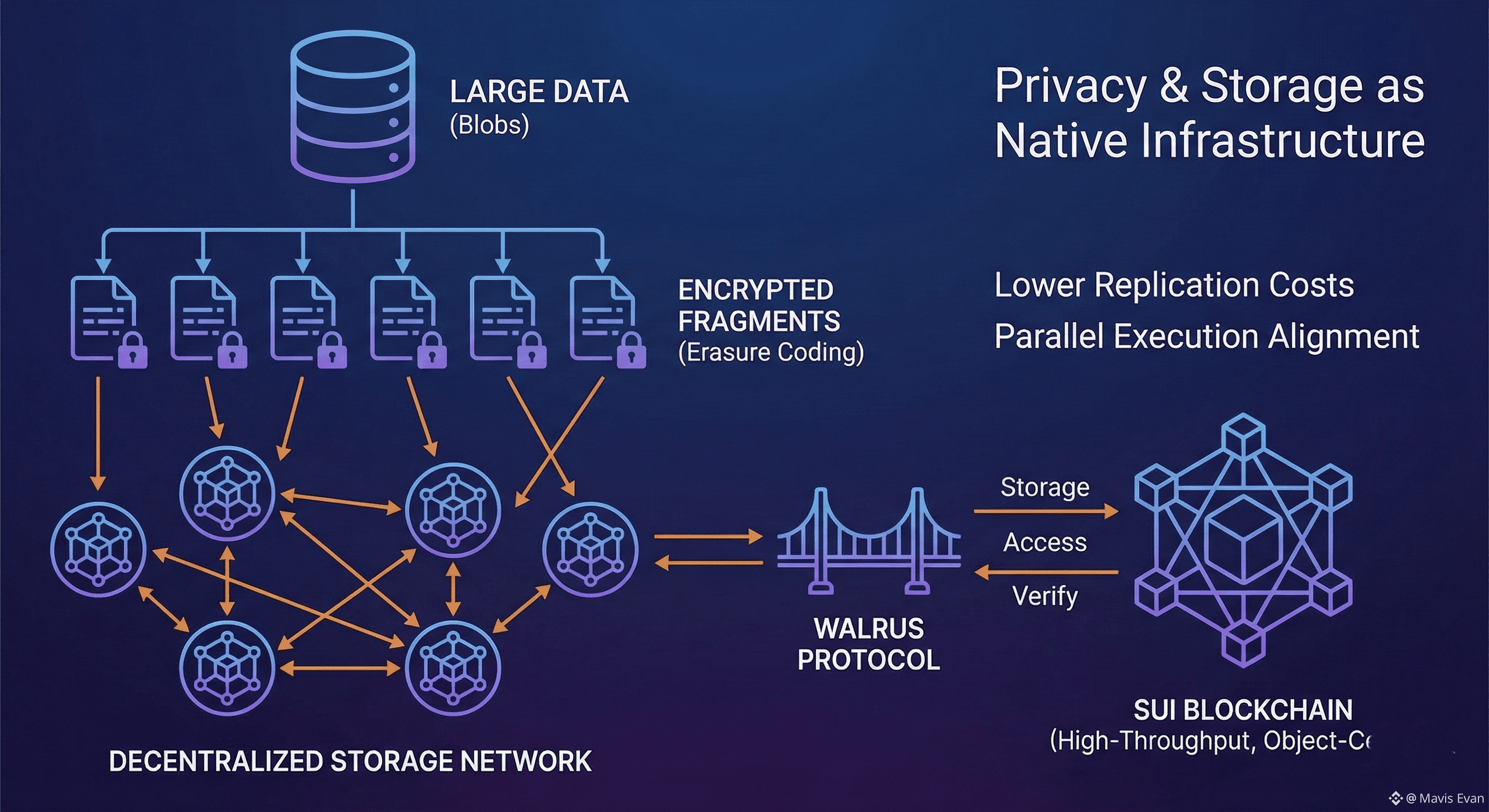
At the protocol level, Walrus uses erasure coding to break large files into fragments that are distributed across a decentralized network, reducing single-point failure while lowering replication costs. Blob storage allows data to be handled as composable objects aligned with Sui’s object-centric model, which limits bottlenecks during parallel execution. WAL functions as the settlement layer for storage allocation, access permissions, and staking, creating economic pressure to keep data available and verifiable. Privacy is not bolted on. It is embedded into how blobs are addressed, retrieved, and authorized, enabling applications to operate on encrypted datasets without leaking metadata.
On-chain behavior should naturally concentrate WAL supply in long-term staking contracts rather than idle wallets, since nodes are economically rewarded for maintaining coded fragments. As storage demand grows, transaction counts are likely to skew toward write and retrieval operations rather than simple token transfers, shifting fee distribution toward infrastructure usage. Wallet growth is expected to track developer onboarding more than retail speculation because WAL is required to interact with the storage layer. Validator performance metrics become meaningful signals here since downtime directly degrades blob availability. Over time, rising storage commitments should compress liquid supply, reducing velocity while increasing network stickiness.
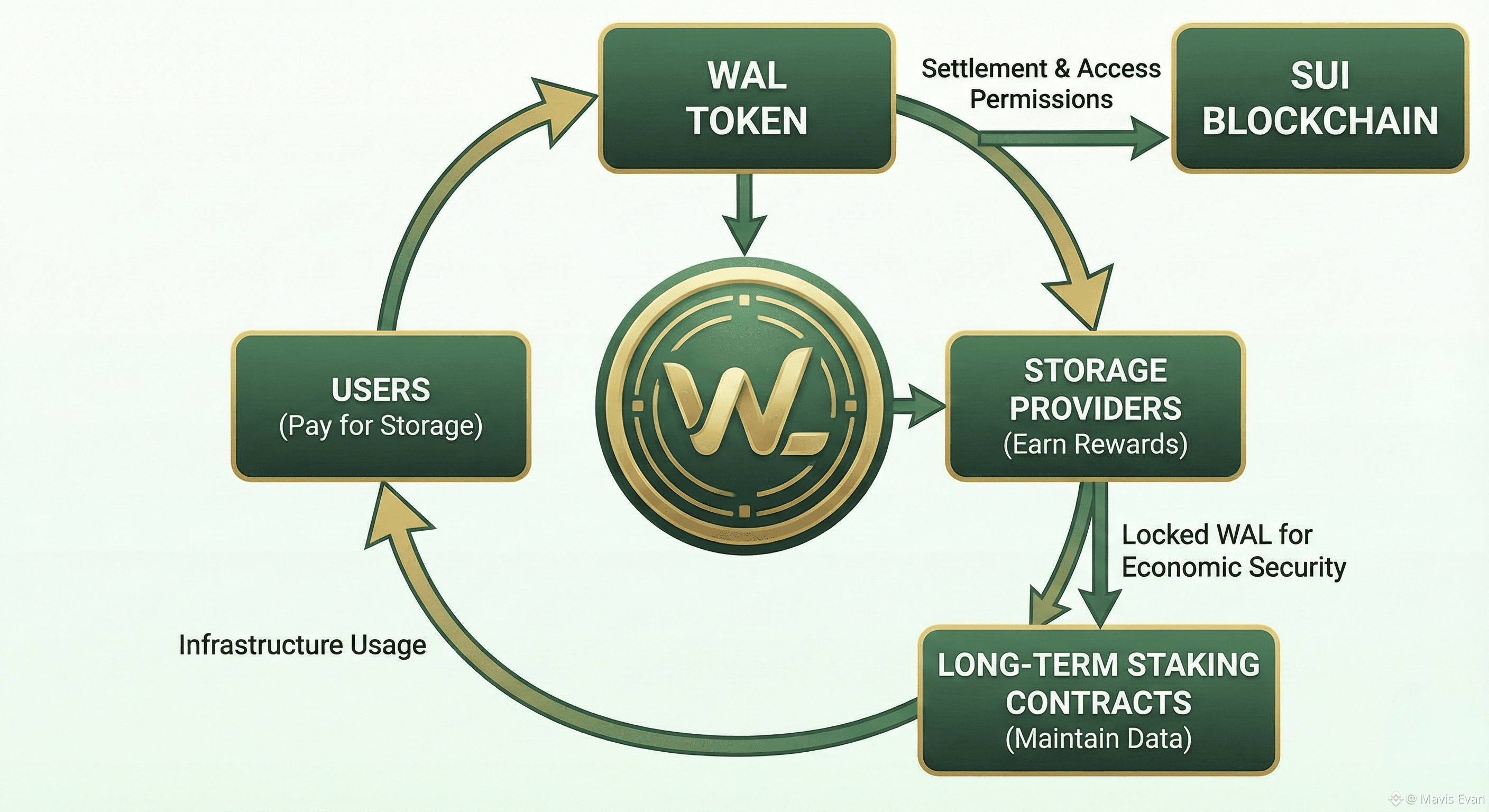
For traders, this creates a token whose value is tied to infrastructure utilization rather than narrative cycles. Liquidity providers are exposed to more stable demand patterns if application storage grows steadily. Developers gain a native alternative to centralized cloud services that integrates cleanly with Sui’s execution environment, which shortens the path from prototype to production.
The main risks sit in complexity and adoption. Erasure coding and distributed blob management increase technical surface area, while real demand for private decentralized storage remains unproven at scale.
In the near term, WAL’s trajectory will depend on whether developers treat Walrus as a core dependency rather than a peripheral tool. If integration deepens, the token should begin to reflect infrastructure usage rather than market noise.