
@Walrus 🦭/acc :Data is often treated as something temporary: uploaded, consumed, and forgotten. But in reality, data is memory. It holds agreements, creativity, identity, and history. As more of this memory moves on-chain, the question is no longer just how fast or cheap storage can be, but how durable and trustworthy it truly is. This is where Walrus enters the conversation.
approaches decentralized storage with a different mindset. Instead of optimizing purely for convenience, it focuses on persistence and reliability in environments where data loss is not acceptable. In a decentralized world, storage is not a background service—it is part of the core infrastructure. If it fails, everything built on top of it becomes fragile.
Walrus treats storage as a shared responsibility across the network. Data is distributed in a way that prioritizes availability and integrity, even under adverse conditions. This matters for applications that need guarantees over long periods of time, such as on-chain archives, media assets, governance records, and historical state data. Temporary solutions cannot support permanent systems.
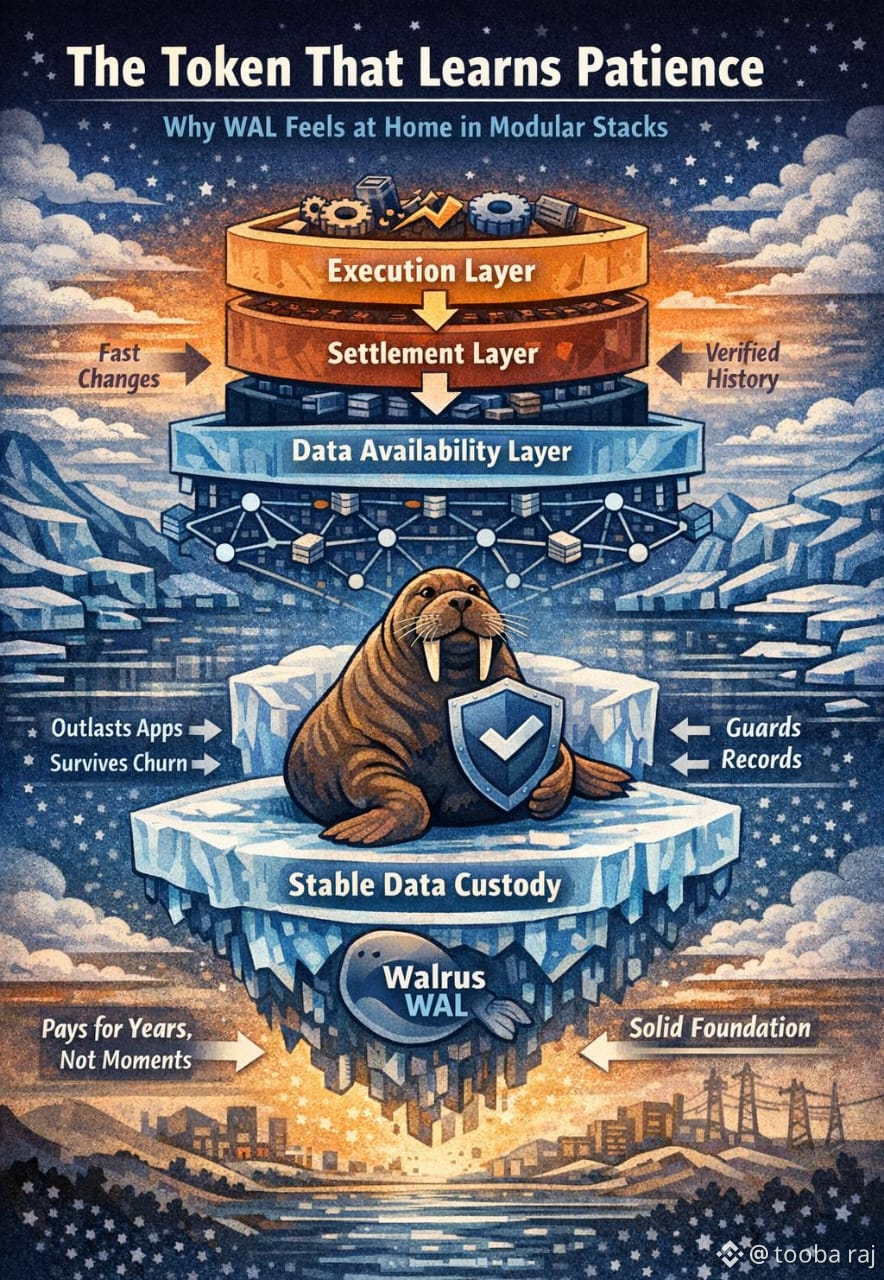
The role of $WAL is closely tied to this responsibility model. It aligns incentives so that participants are rewarded for maintaining data over time, not just for short-term activity. This creates a storage layer that is less about speculation and more about stewardship.
In a space obsessed with speed and scale, #Walrus quietly addresses a deeper problem: how to make decentralized memory last. Without reliable storage, decentralization remains theoretical. Walrus focuses on the unglamorous but essential work of ensuring that what is written today can still be accessed tomorrow.