Blockchains spend most of their time competing on execution speed. Faster transactions, lower fees, higher throughput. That focus makes sense early on, but it slowly stops addressing the real problem. As applications mature, execution is no longer the bottleneck. Data is.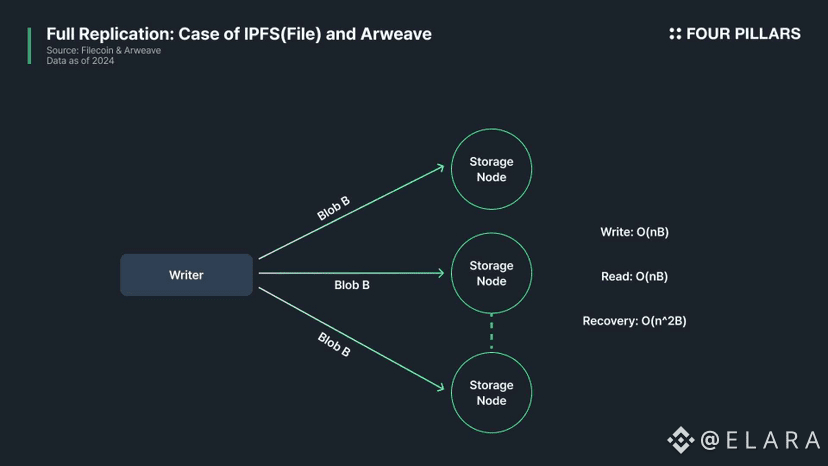
Every meaningful application produces data that needs to live beyond a single transaction. User state, assets, metadata, history, media, and application logic all accumulate over time. Forcing that data onchain is expensive. Keeping it offchain in centralized systems breaks decentralization. Walrus exists because this tension does not resolve itself.
Walrus is built as a decentralized storage protocol that treats persistence as infrastructure, not an add-on. Instead of asking blockchains to store everything, it gives applications a way to store large data sets in a decentralized network while keeping verifiable references onchain. This separation matters once systems grow beyond experiments.
Being built on $SUI Sui shapes how Walrus operates. Sui’s object-based model allows storage references and metadata to be handled efficiently without forcing every operation through heavy global consensus. That makes storage interactions practical rather than painful, especially as usage scales.
Walrus uses erasure coding to split data into fragments distributed across independent nodes. The system does not rely on every node being perfect. Data can be recovered even if parts of the network fail. This reduces storage overhead while maintaining reliability, which is a realistic tradeoff for decentralized environments.
What stands out is that Walrus does not try to compete with execution layers or cloud providers directly. It fills a gap that becomes obvious once decentralized applications start behaving like real products. Storage stops being optional. It becomes foundational.
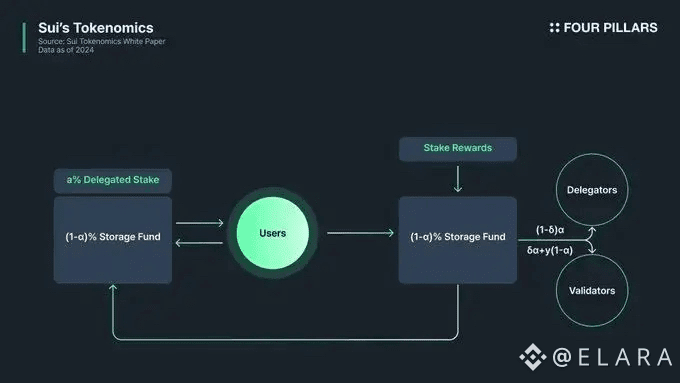
The WAL token plays a functional role in this system. Storage is paid for. Nodes are incentivized. Commitments are enforced economically. This ties network health to real usage instead of abstract governance promises.
Walrus is not chasing a narrative. It is preparing for a phase of Web3 where data volume, not transaction count, becomes the dominant constraint.