
In many blockchain ecosystems, tokens exist primarily as narrative vehicles. Their utility is vague, their role loosely defined, and their value driven largely by attention. That approach works in speculative environments. It breaks down when infrastructure must support real economic activity.
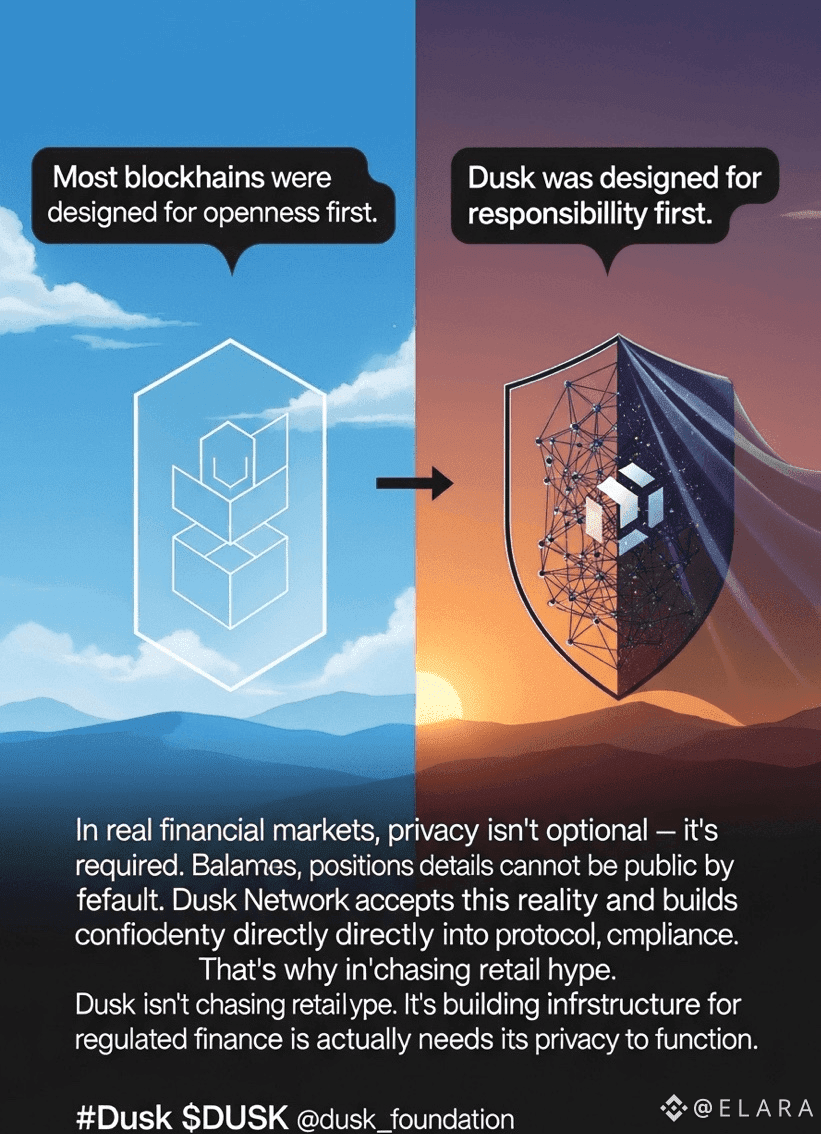
The DUSK token is designed differently because the network it supports is designed differently.
Dusk is built for regulated finance, where infrastructure must be reliable, auditable, and accountable. Tokens in this context are not marketing tools. They are operational components that secure the system and align incentives.
Staking is the first pillar of this design. Validators stake DUSK to participate in consensus and secure the network. This creates economic consequences for incorrect behavior. Reliability is rewarded. Failure is penalized. This is essential for a system where settlement must be final and mistakes are costly.
Fees form the second pillar. DUSK is used to pay for confidential execution and settlement. This ties token usage directly to network activity. As more regulated transactions move onchain, demand for execution grows organically. The token’s relevance increases with usage rather than hype.
Governance is the third pillar. In regulated environments, protocol changes cannot be arbitrary. Governance must balance adaptability with stability. DUSK holders participate in shaping a system meant to support financial infrastructure, not experimental playgrounds.
What is important here is what DUSK is not designed to do. It is not meant to drive speculation through narratives. It is not positioned as a meme or attention asset. Its value proposition is tied to infrastructure adoption.
As more real financial activity moves onchain, tokens linked to compliance ready systems will matter more than those tied to speculative ecosystems. Dusk is positioning itself for that phase.
The DUSK token reflects the network’s broader philosophy. Function over noise. Responsibility over hype. Infrastructure over theater.
