


Walrus Protocol stands at the forefront of decentralized storage innovation, quickly emerging as a core infrastructure layer for Web3, AI, and high‑performance decentralized applications. Built on the high‑throughput Sui blockchain, Walrus aims to solve decentralized storage challenges that traditional networks have yet to overcome: programmability, scalability, real‑world adoption, and integration with AI and multi‑chain ecosystems.
Mainnet Launch and Community Momentum
Walrus officially launched its mainnet on March 27, 2025, marking a major transition from development to production‑ready infrastructure. This launch followed a substantial $140 million private token sale, led by major investors including Standard Crypto, a16z Crypto, Electric Capital, and Franklin Templeton Digital Assets. This fundraising effort valued the protocol ecosystem at approximately $2 billion — a clear signal of institutional confidence in Walrus’s potential.
Alongside mainnet, the project rolled out community‑focused mechanisms including soulbound NFT airdrops that entitled early adopters to claim WAL tokens at launch. The airdrop program served not only as a distribution method but also as a way to cultivate a strong grassroots base ahead of ecosystem expansion.
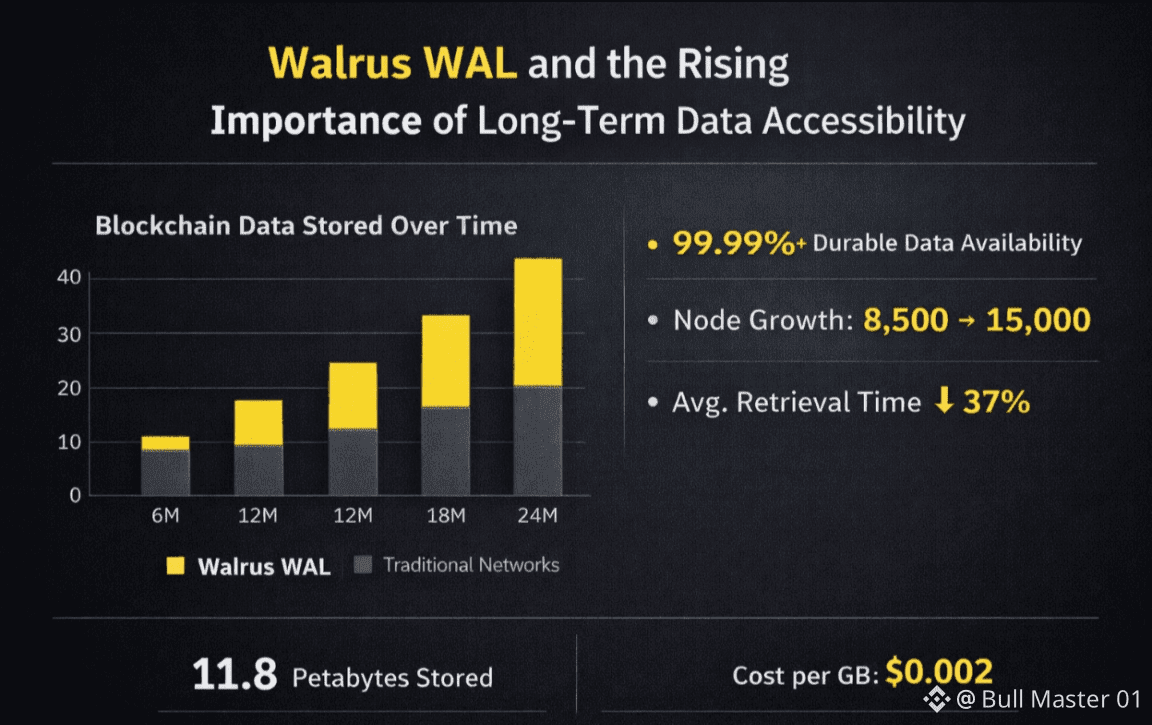
Walrus’s tokenomics design focused heavily on community participation and ecosystem growth. Recent disclosures show that over 60% of WAL tokens were earmarked for community reserves, airdrops, developer support, incentive programs, and storage subsidies — reinforcing the protocol’s commitment to decentralized and inclusive growth.
Partnerships and Strategic Integrations
Walrus’s real‑world utility is being demonstrated through a growing array of strategic partnerships that span gaming, edge computing, AI, and decentralized networking:
Claynosaurz Mainnet Partner: As part of its launch day ecosystem expansion, Walrus announced a partnership with Claynosaurz—an entertainment and digital collectible brand. Claynosaurz will leverage Walrus’s programmable storage to deliver dynamic user experiences while storing complex media assets.
Swarm Network AI Integration: Walrus integrated with Swarm Network to provide verifiable, decentralized storage for AI evaluation and fact‑checking agents. This integration supports storing fact check datasets, agent logs, and reasoning artifacts—critical for transparent AI workflows.
FLock.io AI Training Collaboration: FLock.io partnered with Walrus to power privacy‑preserving decentralized AI model training, using Walrus’s infrastructure to securely store and share sensitive datasets for federated AI development.
Pipe Network Edge Delivery: Walrus integrated with Pipe Network’s decentralized content‑delivery layer, tapping into over 280,000 edge nodes to drastically reduce latency and improve global data access speeds across chains.
Veea Inc. Edge Support: A strategic partnership with Veea Inc. brings Walrus storage into high‑performance edge computing environments, enabling low‑latency storage and transport for latency‑sensitive applications.
Together, these collaborations underscore Walrus’s positioning as a multi‑use storage backbone that serves not just Web3 but also emerging AI and decentralized edge computing environments.
Ecosystem Growth and Technical Advancements
Key technical milestones have also advanced Walrus’s capabilities:
Decentralization at Scale: Recent protocol upgrades introduced dynamic sharding and enhanced node incentives to support decentralization as usage grows. These upgrades address how Walrus manages heavy workloads while preserving decentralization, crucial for handling large collections of AI and media data.
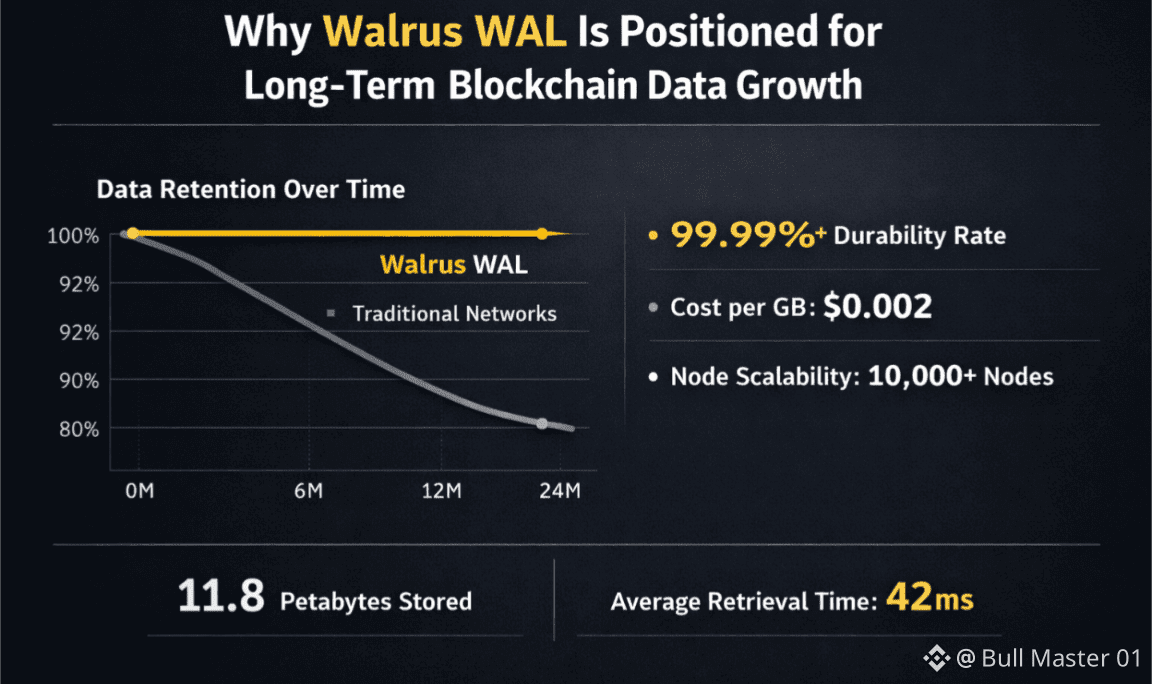
Red Stuff Encoding: Walrus rolled out a two‑dimensional erasure coding scheme called Red Stuff, which significantly improves data resilience and reduces storage costs for large file sets. The protocol now achieves reliable storage recovery even when a meaningful percentage of nodes are offline, lowering both costs and risks for users.
Latency Optimization: Integration with decentralized CDN networks has improved edge latency, enabling data read/write speeds competitive with centralized providers. This low latency (<50 ms in many regions) is critical for interactive applications such as gaming, AI, and real‑time data services.
Developers benefit from robust tools and growing SDKs across multiple platforms. One community‑built SDK allows developers to use Walrus storage through Flutter applications, enabling decentralized storage integration into mobile apps with AES‑GCM encryption and future streaming functionality.
AI, On‑Chain Agents, and Complex Use Cases
Walrus’s role is expanding beyond simple storage. It is now underpinning on‑chain AI agents and other advanced decentralized computation systems:
Talus On‑Chain Agents: Talus, a platform for building autonomous AI agents that execute workflows on‑chain, uses Walrus to ensure agents have access to large data sets required for decision‑making and task execution. This capability is foundational for next‑generation decentralized AI tools.
Swarm Network Verifiable AI: As mentioned, Swarm Network’s integration showcases how Walrus supports AI data transparency and auditability, making it part of decentralized fact‑checking and trust systems.
These developments reflect an ecosystem where storage, computation, and AI logic converge, enabling applications that were previously not feasible on decentralized platforms due to data volume and performance constraints.
Price Action and Community Sentiment
Since its mainnet launch and exchange listings on platforms like Kraken, Bybit, KuCoin, MEXC, and Gate, WAL has experienced significant trading activity, sometimes breaking technical resistance levels. Community discussions suggest combinations of exchange campaigns and ecosystem developments have contributed to rally phases.
While token price alone is not a measure of success, the continued listing expansion and incorporation into developer ecosystems signal increasing utility demand, which is ultimately more relevant for long‑term infrastructure tokens.
Looking Ahead: 2026 and Beyond
2026 appears set to be a year of scale and integration for Walrus Protocol:
Expanded Multi‑Chain Support: With integrations like Pipe Network, Walrus is improving support for multichain storage access beyond just Sui.
AI and Institutional Adoption: Partnerships like FLock.io and Swarm suggest the protocol is becoming a key base layer for decentralized AI systems.
Infrastructure Enhancements: Ongoing upgrades targeting decentralization scaling, data redundancy, and delivery performance aim to support enterprise‑level workloads and AI automation.
Summary: Walrus Protocol is no longer just a decentralized storage idea — it is a rapidly growing infrastructure stack powering AI, gaming, media, edge computing, and on‑chain agents. With major partnerships, continuous upgrades, and a vibrant community ecosystem, Walrus stands poised to become a foundational layer in Web3’s data future.