

If you’ve traded long enough, you develop a nose for the projects that don’t need to shout. Dusk is one of those. It’s been quietly building a blockchain aimed at a very specific corner of crypto: finance that needs privacy, but also needs to play nice with compliance. That combination sounds contradictory until you look at what they’re actually shipping and why traders have started paying attention again.
Dusk’s core bet is that “privacy” doesn’t have to mean “unusable in regulated markets.” In plain terms, they’re using zero-knowledge proofs cryptography that lets you prove something is true without revealing the underlying data to keep sensitive details hidden while still allowing systems to verify transactions. Think of it like showing a bouncer a wristband that proves you’re allowed in, without handing over your entire ID. Dusk frames this around institutional-grade finance and tokenized assets, where confidentiality is often a requirement, not a feature.
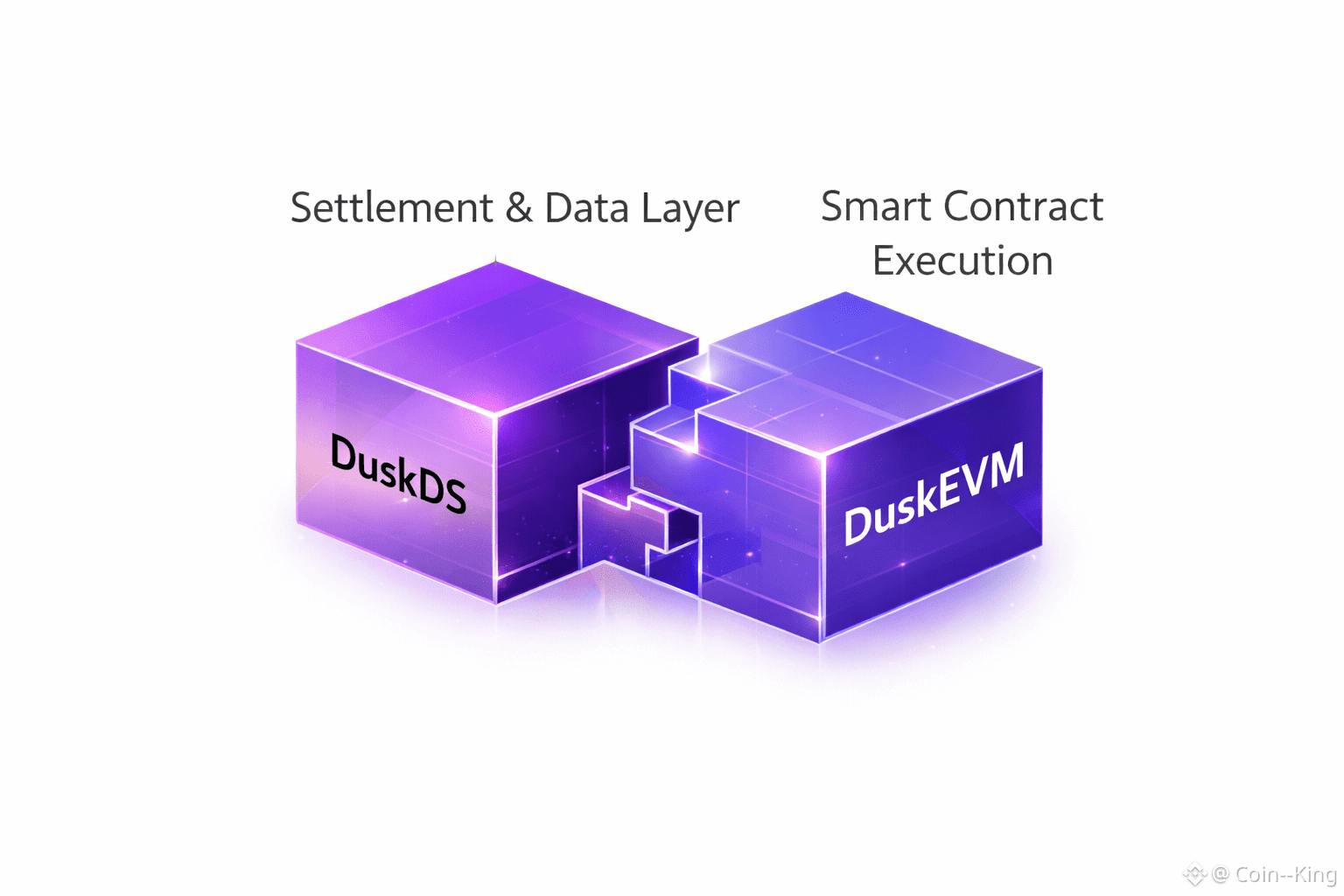
What’s interesting is how the network is structured. Dusk has leaned into a modular design: DuskDS is the settlement and data layer (where consensus, finality, and the base transaction model live), and DuskEVM is an Ethereum-compatible execution environment for smart contracts. For developers, that means you can build with familiar EVM patterns while relying on the base layer for settlement guarantees. For traders, modular roadmaps usually mean delays yet in Dusk’s case, it’s also meant a steady cadence of tangible, testable components rather than one giant “mainnet someday” promise.
On the progress side, the dates matter. Dusk publicly confirmed a mainnet target for September 20, 2024, then detailed a phased rollout later that culminated in the network producing its first immutable blocks on January 7, 2025 (after a December 29, 2024 cluster launch in dry-run mode and a series of onramp/genesis steps). That’s the kind of milestone traders tend to underestimate until liquidity and tooling catch up.
From there, the plumbing kept improving. On May 30, 2025, Dusk launched a two way bridge that lets users move native DUSK to BEP20 DUSK on BSC (and not just the one way “into mainnet” flow many chains start with). Then on June 18, 2025, they laid out the evolution to a multilayer architecture, describing a native, trustless bridge between DuskDS and DuskEVM no external custodian narrative, which is exactly what you want if the endgame is “regulated” anything.
The reason it’s trending now is the market finally reacting to that quiet build. Look at the tape in mid-to-late January 2026: CoinGecko’s historical data shows DUSK printing around $0.225 on January 20–21, 2026 with very large reported daily volume (for example, January 20 shows volume in the hundreds of millions), and market cap jumping into the $100M+ range on those same days. That’s not just a sleepy chart drifting upward; that’s attention rotating in.
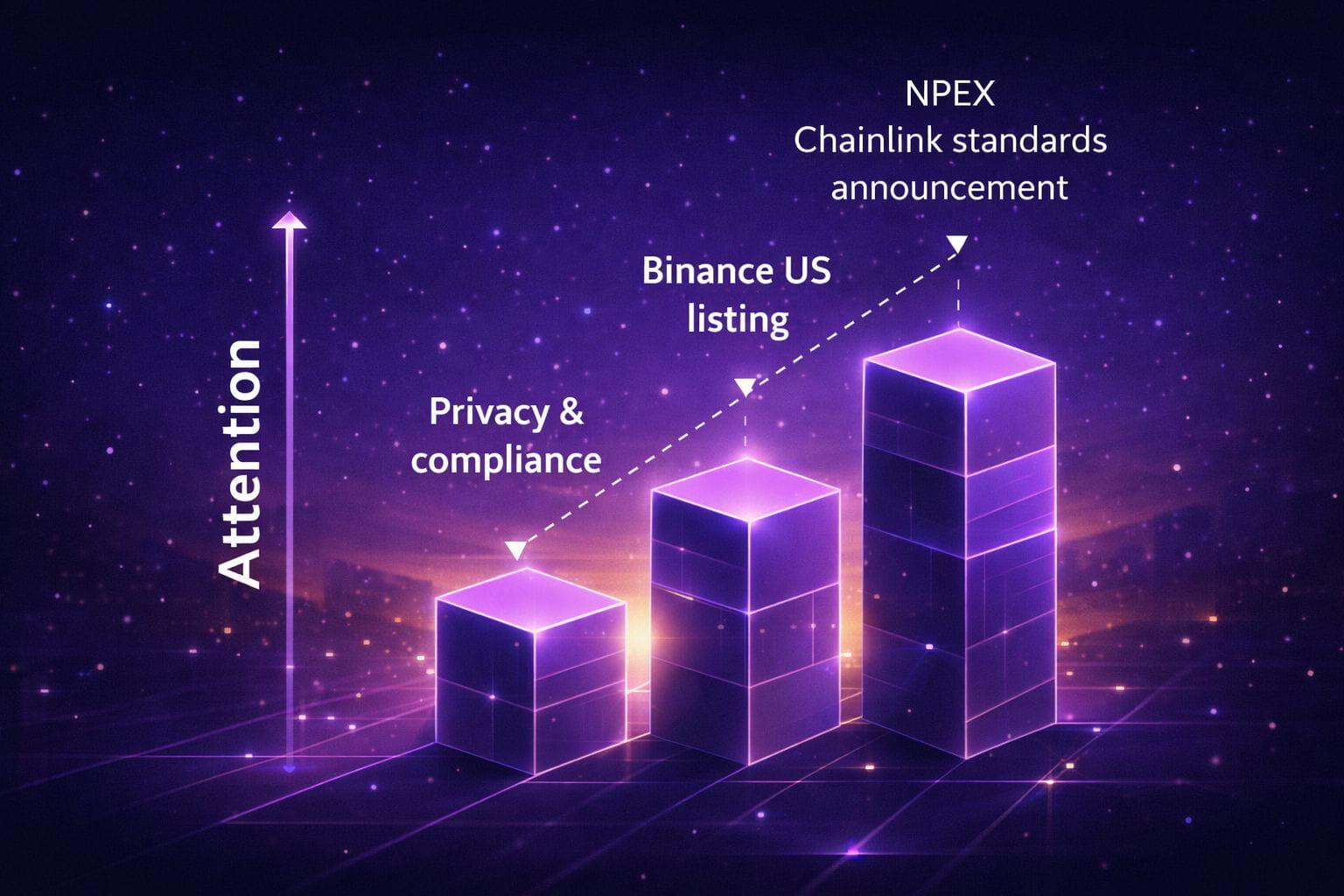
In my experience, attention usually rotates for two reasons: narrative and access. Narrative-wise, “privacy + compliance” is a theme that keeps resurfacing whenever regulators squeeze pure privacy coins and institutions still want confidential settlement. Access-wise, Dusk has been stacking credibility markers that matter to bigger participants, like a Binance US listing (October 22, 2025) and an institutional leaning Chainlink standards announcement with NPEX (November 13, 2025). Even if you’re not trading off headlines, those events widen the funnel for capital that can’t (or won’t) touch smaller venues.
The part I watch next isn’t the story it’s follow through. Dusk’s own docs emphasize fast, deterministic finality (meaning once a block is ratified, it’s final in normal operation no user-facing reorg anxiety), which is great on paper for markets. But adoption shows up in boring places: staking participation, stable node operations through upgrades, and developers actually deploying apps that need confidential flows. If those pieces keep compounding, the “quiet build” becomes a real market structure, not just another alt pump.