
Stablecoins were designed to be the "stable" part of crypto — digital dollars that hold steady at ~$1.00, no wild swings like Bitcoin. ⚖️
But in recent times (especially 2025–2026), many have felt less stable, with depegging (dropping below $1) and heavy dumping (mass sell-offs) happening more often. Here's a simple breakdown of why this is happening, plus real solutions to survive and even thrive. 📉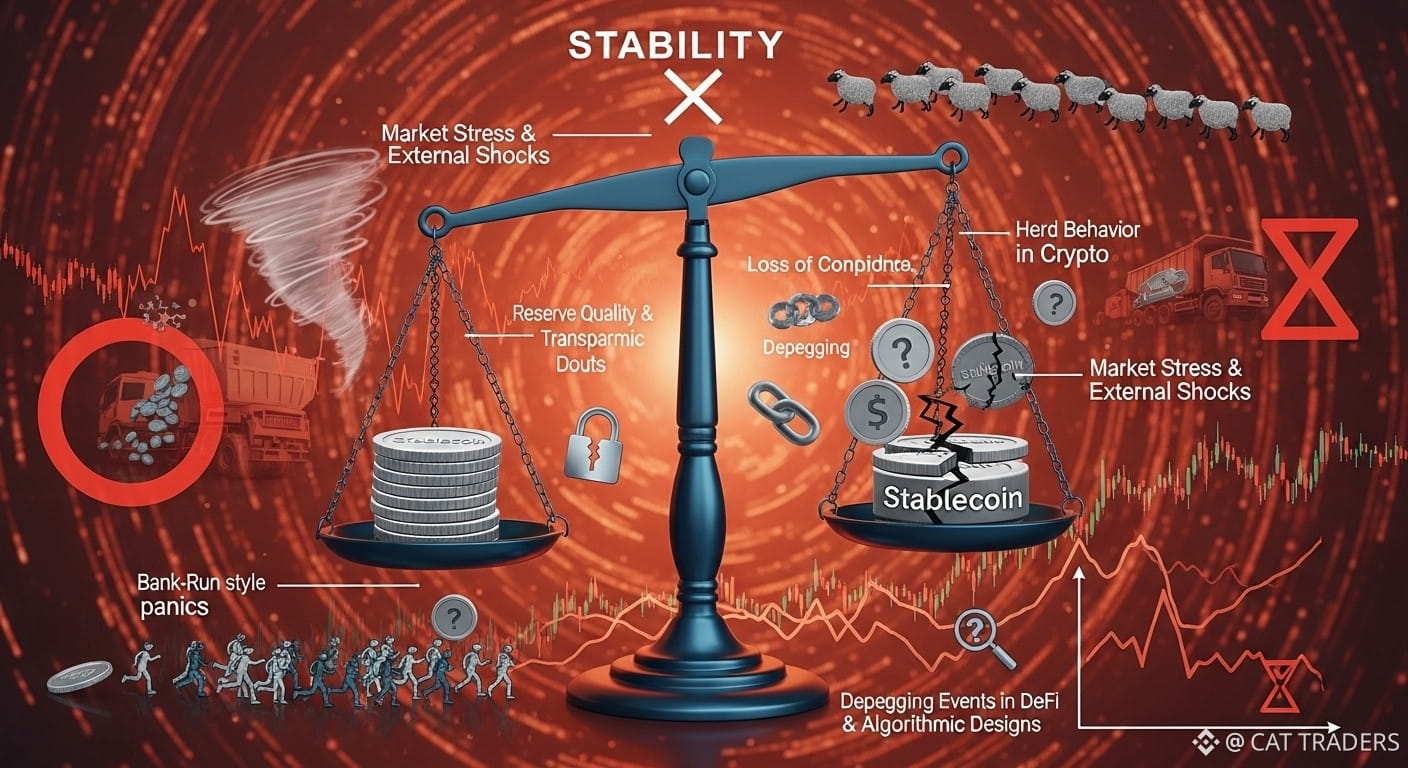
Why Stablecoins Are Losing Their Stability 🚨
Stablecoins aren't failing everywhere, but trust has been tested. Major reasons include:
- Loss of Confidence & Bank-Run Style Panics 😱
People rush to redeem or sell when rumors spread about reserves or backing. Even strong ones like USDC depegged briefly in past events (e.g., tied to bank issues), and newer yield-bearing or DeFi ones faced runs in 2025. When big players hesitate to arbitrage back to $1, the price spirals down.
- Depegging Events in DeFi & Algorithmic Designs 💥
2025 saw multiple DeFi stablecoins break (e.g., several in November alone from exploits, liquidity crunches, or collateral drops). Yield-backed or semi-algorithmic ones (like some that promise high returns) crack under fast market moves or hacks, forcing sales and worsening the dump.
- Market Stress & External Shocks 🌪️
Crypto crashes (e.g., big sell-offs in late 2025 from trade tensions or macro events) hit stablecoins hard. Sudden redemptions force issuers to sell reserves (often US Treasuries), and if liquidity dries up, pegs slip. Larger stablecoin supply (~$300B+) means bigger impacts.
- Reserve Quality & Transparency Doubts 🔍
Some issuers hold riskier assets (beyond pure cash/Treasuries), or face questions about full backing. Regulatory changes (like new US rules in 2025) aim to fix this but create short-term uncertainty. High growth also brings pressure — if yields drop or rules tighten, confidence wavers.
- Herd Behavior in Crypto 🐑
Fear spreads fast on social media and trading platforms. One depeg triggers others, leading to herd dumping — everyone sells at once, pushing prices lower in a feedback loop.
Not all stablecoins dump equally — major fiat-backed ones (USDT, USDC) usually recover fast, while DeFi/experimental ones suffer more.
 # How to Survive & Make It Through (Practical Solutions) 🛡️
You don't have to avoid stablecoins — just use them smarter. Here's how:
- Stick to Proven, Regulated Ones ✅
Choose fully fiat-backed with strong transparency: USDC (Circle — audited, regulated) or USDT (Tether — huge liquidity, massive Treasury holdings). Avoid most algorithmic or high-yield DeFi experiments unless you're risk-tolerant.
- Diversify Your Holdings 🧺
Don't put everything in one stablecoin. Split across USDC, USDT, and even fiat if possible. Use multi-chain options for better liquidity.
- Avoid Over-Exposure in DeFi During Volatility ⚠️
High-yield farms or lending can amplify losses if collateral depegs. Monitor market sentiment — reduce leverage when fear is high (check Fear & Greed Index).
- Use Stablecoins for What They're Good At 💸
Great for trading pairs, cross-border sends, or parking funds short-term. But for long-term savings, consider mixing with real dollars or Treasuries.
- Stay Informed & Have an Exit Plan 📊
Watch issuer reports, on-chain reserves, and news. Set alerts for peg deviations. In a dip, arbitrage opportunities appear (buy low, redeem if possible) — but only if you're experienced.
- Regulatory Tailwinds Ahead 📈
New rules (e.g., US GENIUS Act) push for 1:1 safe backing — this strengthens majors over time and reduces wild risks.
Stablecoins remain essential crypto infrastructure — over $300B in use and growing for payments, not just speculation. The "dumping" phases are painful but often short-lived corrections.
Stay calm, diversify, and focus on quality issuers. Stability returns when trust rebuilds. 🔄
What stablecoin strategy are you using right now? Let's discuss! 🚀 @Binance Announcement
$BNB $XRP $SOL #Stablecoins #MarketSentimentToday #BinanceSquare #TrendingTopic #Fed