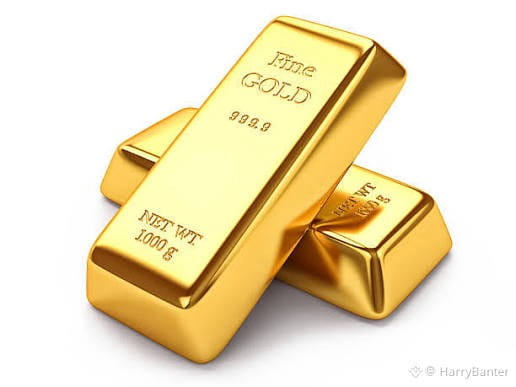
In a world of crypto volatility, stock market swings, and global economic uncertainty, one asset has survived every crisis, recession, war, and currency collapse in history:
Gold.
While technology evolves and financial systems change, gold continues to hold its position as one of the most trusted stores of value on Earth. For modern traders — even those focused on crypto — understanding gold is essential because it reflects global fear, liquidity conditions, inflation expectations, and investor psychology.
Gold is not just a metal. It is financial insurance.
🌍 Why Gold Still Matters Today?
Gold has been trusted for over 5,000 years, and the reason is simple: it has qualities no fiat currency or digital asset can fully replicate.
Gold has limited supply. It cannot be printed by governments. It is globally accepted, highly liquid, and independent of any country’s economy. When trust in financial systems weakens, investors naturally rotate into gold.
Gold tends to perform strongly when:
• Inflation rises
• Currencies weaken
• Geopolitical tensions increase
• Stock markets decline
• Economic uncertainty spreads
Unlike stocks, gold does not depend on corporate earnings. Unlike currencies, it cannot be devalued by central banks. Its value is rooted in scarcity and long-term human trust.
📉 Gold and Inflation Protection
Inflation slowly erodes the purchasing power of money. What you can buy today with $100 may cost much more in the future. Gold historically acts as a hedge against this loss of value.
When central banks print money or keep monetary policy loose, the supply of currency increases. Gold’s supply, however, grows very slowly through mining. This imbalance often supports higher gold prices over time.
That’s why gold demand usually increases during:
• High inflation environments
• Currency devaluation
• Economic instability
Investors turn to gold not to get rich quickly, but to protect wealth from losing value.
💰 What Drives Gold Prices?
Gold does not move randomly. Its price reacts to major macroeconomic forces.
One of the biggest influences is the strength of the US dollar. Gold and the dollar often move in opposite directions. When the dollar weakens, gold becomes cheaper for international buyers, increasing demand. When the dollar strengthens, gold may face short-term pressure.
Interest rates are another key factor. Gold does not generate yield or interest. When rates are high, investors may prefer bonds or savings returns. But when interest rates fall or markets expect rate cuts, gold becomes more attractive because the opportunity cost of holding it decreases.
Fear and uncertainty also play a major role. Gold performs best when investors are worried. Financial crises, wars, political instability, and market crashes typically drive capital into gold as a safe haven.
🟢 Gold and Crypto: Different Roles
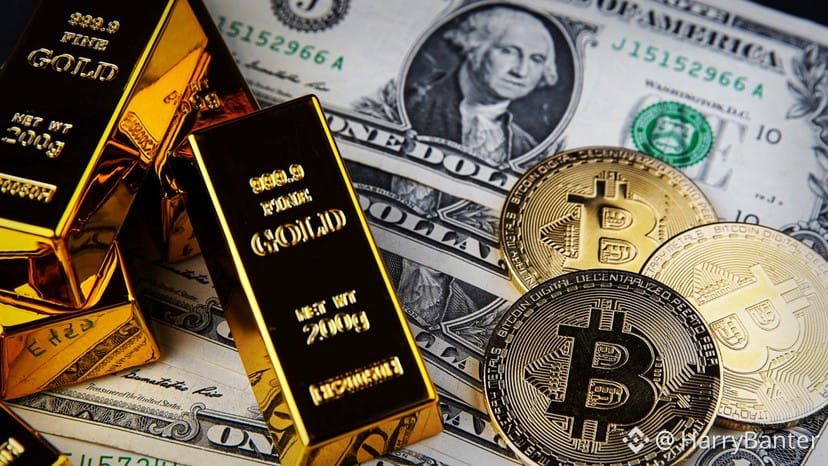
Many traders wonder if Bitcoin is replacing gold. The truth is, they serve different purposes.
Gold is known for stability and long-term preservation of value. Bitcoin offers high growth potential but comes with high volatility. Gold is widely held by central banks and institutions as a reserve asset. Crypto adoption is still expanding and driven more by technology and innovation.
Instead of competing, gold and crypto can complement each other. Gold helps reduce portfolio risk during global instability. Crypto offers higher upside during risk-on market conditions. Smart investors often use gold for protection and crypto for growth.
📊 Why Gold Matters Even for Crypto Traders
Even if you don’t trade gold directly, it provides important signals about market sentiment.
When gold rises sharply, it often indicates fear entering the financial system. This can mean investors are moving away from risk assets like stocks and crypto. When gold falls while stocks and crypto rise, it may signal increasing risk appetite.
Gold helps traders understand whether the market is in “risk-on” or “risk-off” mode. That information can improve decision-making across all asset classes.
🏦 Central Banks and Gold Accumulation
One of the strongest long-term supports for gold is central bank demand. Countries increase gold reserves to diversify away from the US dollar, strengthen national financial security, and reduce exposure to sanctions or currency risks.
When central banks accumulate gold, it signals long-term confidence in gold as a reliable store of value. This structural demand adds stability to the gold market.
🔮 The Future Outlook for Gold
Gold is not designed for explosive short-term gains. Its primary role is wealth preservation. However, current global conditions support ongoing demand.
The world is facing rising debt levels, geopolitical tensions, currency risks, and economic uncertainty. These factors increase the importance of safe-haven assets.
Short-term, gold can still be volatile due to interest rate expectations and dollar movements. Long-term, gold has one of the strongest records of protecting purchasing power across generations.
🧠 The Right Mindset About Gold
Gold should not be compared to hype-driven assets. It should be viewed as stability within a portfolio.
Gold acts like a financial seatbelt. You don’t notice its importance in calm markets, but during crashes and crises, it becomes critical. It is a portfolio stabilizer and insurance against systemic risk.
It’s not about chasing fast profits. It’s about protecting capital when uncertainty rises.
🏁 Final Thoughts
Empires have fallen. Currencies have collapsed. Financial systems have changed. Gold has remained valuable through every era.
For modern traders, gold is not outdated it is foundational. It reflects global capital flows, investor fear, inflation expectations, and monetary conditions.
In a fast-moving financial world driven by innovation and speculation, gold reminds us that some assets stay powerful not because they change, but because they endure.
🟡 Sometimes, the oldest asset is still the smartest one to watch.