

When I first looked at Plasma, a Layer 1 blockchain, I wanted a platform that could handle real payments without the usual blockchain headaches like crazy fees, slow confirmations, and overly complex setups. I'd messed around with a few blockchain networks before, so I knew the deal-iffy finality, wild gas costs, and spotty performance. Plasma stood out because it was built for stablecoins and payments, not just crypto trading.
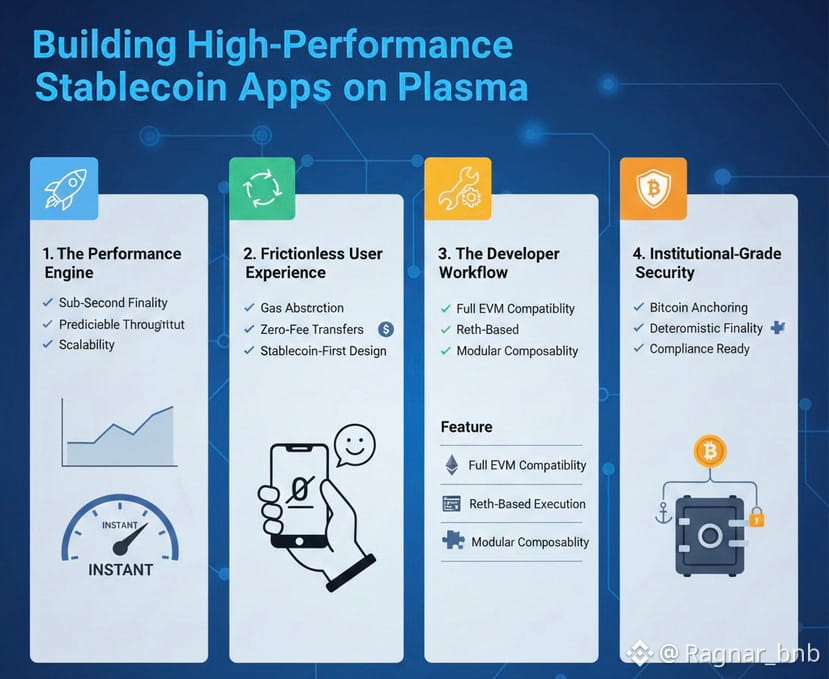
What got me excited about Plasma was the promise of super-fast finality and zero-fee stablecoin transfers. Speed and predictability? Yes, please! Users want payments to feel instant, and businesses need to know when things are settled. Right away when I started testing the network, I was floored by how quick transactions zipped through. Payments confirmed almost instantly, making my apps feel like regular fintech stuff, not some clunky blockchain system.
A huge win was Plasma's full EVM compatibility. Since it uses a Reth-based setup, I could drop in my Solidity smart contracts without rewriting a thing. My tools — development frameworks, testing setups, and auditing flows worked like a charm. This saved me a ton of time and cut down on the risk of bugs from messing with unfamiliar environments.
Another awesome thing was Plasma's gas abstraction model. Usually, folks need native tokens to pay for transactions. Annoying, right? On Plasma, I used paymaster sponsorship and stablecoin-first gas models. Users could send and receive stablecoins without sweating fees or token nonsense. This was gold from a user experience point of view.
As I kept building, I got comfy with PlasmaBFT and its pipelined consensus thing. I didn't need to touch it directly, but its design was a big help. My apps chewed through tons of transactions without a hiccup. Even when I hammered it with fake payment surges, the network stayed responsive. I was confident my apps could grow to handle tons of users.
One of my main gigs on Plasma was a remittance platform for cross-border payments. Old systems take days and cost a fortune. On Plasma, I set up a system where money zipped instantly between users in different places using stablecoins. Quick finality meant recipients got their money ASAP, and zero-fee transfers made even tiny payments worth it.
Security was a big deal, too. When you're dealing with money, you need to trust the infrastructure. Plasma's Bitcoin-anchored security gave me peace of mind. Knowing that state commitments were tied to Bitcoin meant transaction history was safe and sound. This was key when talking to institutional partners and auditors.
Testing and getting things running on Plasma was smoother than I thought. Since it played nice with Ethereum tools, I could use my favorite testing frameworks and simulation setups. I ran automated tests for transaction ordering and all sorts of failure scenarios. This helped me catch problems early and made sure my smart contracts behaved well under pressure.
Another area where Plasma did well was composability. My apps needed to talk to various contracts for escrow, identity checks, and settlement stuff. Plasma's EVM let me build modular systems where different things could talk to each other easily. This made it easy to tweak individual parts without breaking everything.
As more people used my stuff, I started to like Plasma's stability. On many blockchains, things slow down when the network gets busy. On Plasma, things kept humming along, even when traffic peaked. This made planning easy and cut down on customer support headaches from delayed transactions.
Getting institutional partners on board was also easier. Banks and fintech companies are careful when adopting blockchain stuff. Plasma's regulatory compatibility, deterministic finality, and auditability helped me show that my apps met the rules. Smart contracts could enforce transaction limits, reporting rules, and monitoring right at the protocol level.
From a business angle, Plasma's low operating costs were a major plus. Since users didn't pay gas fees, and transaction processing was cheap, I could offer competitive prices. This let my platform pull in users who had steered clear of blockchain payments because of costs.
One of the coolest parts of building on Plasma was the impact it had in emerging markets. Many of my users were in places with limited access to banks. Plasma let them send and receive stablecoins easily, without messing with wallets or paying high fees. Seeing folks use my app for daily expenses and supporting their families showed me the real value of this tech.
As I messed with more stuff, I got interested in privacy-focused payments and selective disclosure models. Plasma's modular setup made it possible to play with encrypted transactions and zero-knowledge proofs without messing up the core functionality. This opened up new doors for confidential business payments and sensitive financial processes.
The community and ecosystem support were great, too. Plasma's documentation, developer tools, and technical resources helped me fix issues fast. The ecosystem's focus on payments and settlement created a place where developers shared tips and performance tricks.
Looking back, building on Plasma changed how I think about blockchain development. Instead of working around technical limits, I could focus on what users needed, the business end of things, and getting it to work in the real world. Fast finality, gas abstraction, and security let me build systems that felt practical, not experimental.
So, yeah, my time developing on Plasma has been all about performance, reliability, and doing what's right for the user. The mix of EVM compatibility, super-fast finality, Bitcoin-anchored security, and stablecoin-focused design made a place where serious financial apps could thrive. As a developer, Plasma gave me the tools and confidence to build payment systems that are scalable, easy to use, and compliant. It's a different idea when it comes to blockchain, where tech serves real needs instead of just speculative stuff.

