

When I first started messing around with the Dusk Network, the testnet bridging for funds and assets really grabbed my attention. It felt like more than just another tech thing. It was like a real way for people who build stuff and big companies to move digital cash around safely and try things out on the network without losing real money.
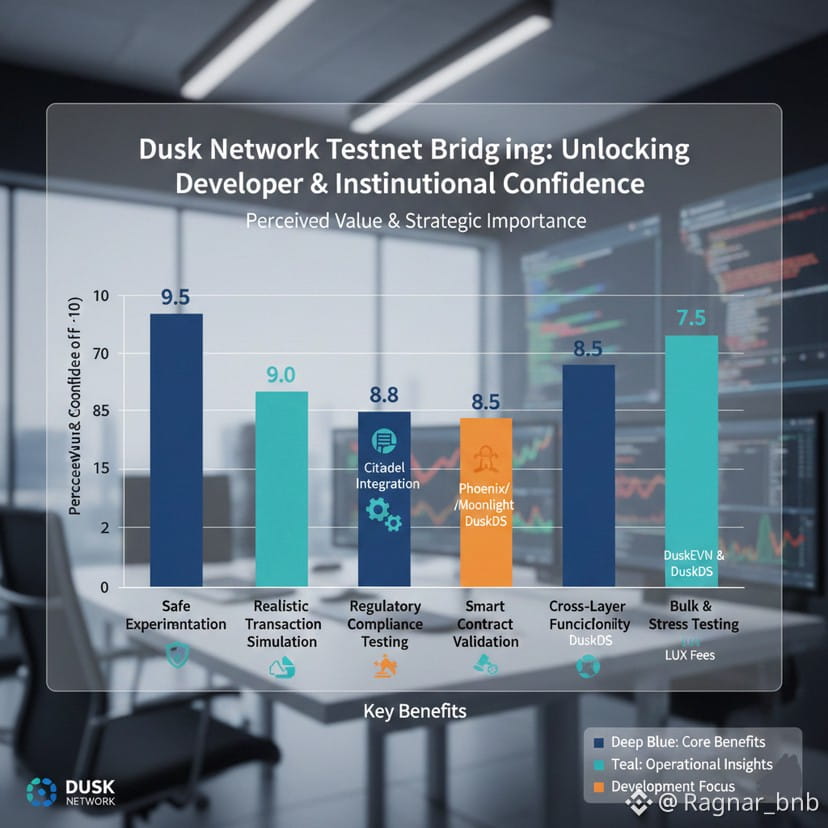
I remember reading how you could move DUSK tokens from ERC‑20 or BEP‑20 to the Dusk testnet. This let you pretend you were doing real deals in a safe space. It was clear the Dusk team had put a lot of thought into making the testing experience both real and secure.
The testnet bridging copies what will happen on the main network later. When I used the bridge, it changed tokens from one form to another that the testnet could use directly. This keeps the token amounts the same. It lets the network check privacy and rules, even in a practice environment. For someone like me, who cares about keeping things legal, it was good to see that identity checks and ways to show only some info were built right into the testnet bridge. Every fake deal I tried had to follow those rules, just like on the real network.
Bridging became super handy for testing smart contracts. I put a simple token transfer contract on the testnet and ran bridged assets through it. I could see how Phoenix and Moonlight deals worked, how the network checked privacy, and how it recorded changes. The way the system was set up made sense during this. Compute took care of making the deals, while settlement needed only proof. This made it easier for me to focus on the contract, without stressing about glitches.
The bridge also lets you test things across layers of the network. DuskEVM and DuskDS are connected so developers can try tough stuff. Think tokenized securities transfers or private settlements, without needing to wait for the main network to be ready. I figured out that bridging doesn’t just move tokens—it also copies how the whole network acts, but in a safe way. Watching the testnet update in real-time let me be sure that the real bridging would work as it should.
The bridge is also great for testing heavy loads. I used a bunch of fake accounts and different kinds of deals to see how fees (in LUX) are figured out and how staking or provisioner roles work with bridged assets. This hands-on testing is super useful for developers and companies who need to know how things perform, how much deals cost, and how privacy works before they deal with big funds on the real network.
I think the testnet bridge is also like a school. It makes you learn about rules, verifying identities, and how private deals work before you even touch real money. It's like a playground with real rules, real actions, but where it's safe to fail. I can imagine companies using this to train their people or make sure their internal steps work before they put real cash on the line.
The identity proof stuff also made me appreciate how the network handles legal stuff. Every bridged deal needed proof. I had to fake showing only some data and make sure permissions matched who was allowed to do what based on their roles. This wasn't just going through the motions. It gave me a real sense of how privacy and rules can work together on Dusk.
Overall, messing with the testnet bridging system helped me see how carefully the Dusk Foundation had planned its way of doing tests. It lets people who build things and companies test, check, and learn in a setting that's real but still controlled. I could see that bridging does more than just tech testing—it builds confidence, makes people want to join in, and shows that Dusk can handle complicated, legal financial stuff. I left feeling sure that when mainnet bridging is live, it will run without a hitch, supporting private transfers, rules, and modular execution that stays the same every time.
To sum it up, the testnet bridging for funds and assets is way more than a tech tool. In my opinion, it's a key part of how the Dusk Network gets people on board, tests itself, and makes sure things work. It gives you a real place to play around to learn how privacy, rules, and modular design work together, while giving developers and companies a safe spot to try out complex financial deals. Bridging is where the rubber meets the road, and for me, it was a must-do to get why the Dusk Network matters, both in how it works and what it can do.