
Vanar Chain is one of those projects that looks straightforward on the surface, but reveals a much larger ambition the deeper you go. At first glance, it fits neatly into the “consumer-friendly Layer 1” category. In reality, Vanar is positioning itself as something closer to an AI-native technology stack, with blockchain as only one part of the equation.
From the beginning, Vanar has been designed around real-world adoption. The team’s background leans heavily into gaming, entertainment, and brand ecosystems, and the goal has always been practical rather than speculative: onboard everyday users into Web3 through products they actually want to use. This focus shows up clearly in Vanar’s long-standing ties to mainstream verticals like gaming, metaverse experiences, AI, sustainability, and brand solutions. Projects such as Virtua Metaverse and the VGN games network are often cited as examples of this consumer-first route to adoption.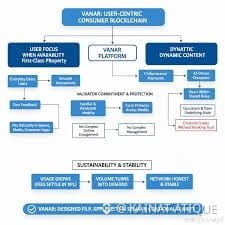
Where Vanar’s current direction becomes more interesting is in how it is reframing its identity. Rather than competing purely as a faster or cheaper blockchain, Vanar is now presenting itself as an AI-native stack. In this model, Vanar Chain functions as the transaction and settlement layer, while higher-level intelligence is handled by two core components: Neutron and Kayon.
On Vanar’s official stack overview, Neutron is described as a semantic compression layer. It is designed to take large data inputs—up to 25MB—and compress them down to roughly 50KB using a combination of semantic, heuristic, and algorithmic techniques. The output of this process is what Vanar calls Neutron Seeds: compact, verifiable data objects that live fully onchain.
The significance of Neutron is not the compression ratio itself. The real value lies in what these Seeds enable. By turning raw information into small, structured, and verifiable onchain objects, data becomes something applications and AI workflows can actively work with, rather than simply reference offchain. This shifts data from passive storage into an actionable resource that can be queried, reused, and built upon.
Sitting on top of Neutron is Kayon, which Vanar positions as its reasoning and logic layer. Kayon is designed to handle contextual reasoning, natural language interactions, and compliance-oriented logic across Neutron data, blockchains, and even enterprise systems. If Neutron represents memory, Kayon represents reasoning built on that memory.
This architectural shift highlights Vanar’s broader thesis. Most Layer 1s are still competing along the same axes: faster blocks, lower fees, higher throughput. Vanar’s counterpoint is that execution is no longer the scarce resource—intelligence is. That belief is reflected in the project’s own language, which increasingly moves away from a pure blockchain framing toward a full technology stack narrative.
To make this stack usable beyond developers, Vanar is also emphasizing product surfaces that connect the technology to everyday workflows. One example is My Neutron, which is presented as a consumer-friendly entry point into the Neutron system. The process begins with capturing information, moves through AI-driven semantic processing and context injection, and then compounds intelligence over time. Rather than exposing raw infrastructure, My Neutron is positioned as a practical tool that normal users can interact with.
Another quiet but important detail in Vanar’s approach is its focus on predictable economics. Consumer products—especially in gaming, brands, and AI-driven experiences—cannot scale if costs fluctuate wildly. Fee spikes and chaotic gas markets are a non-starter for mainstream adoption. Vanar emphasizes fixed and predictable fees designed for AI workloads and real-economy use cases such as PayFi and tokenized real-world infrastructure. This kind of cost stability is easy to overlook, but it is critical for products that aim to reach millions of users.
The token fits into this picture in a fairly straightforward way. VANRY currently exists as an ERC-20 token on Ethereum, with 18 decimals, under the contract address
0x8DE5B80a0C1B02Fe4976851D030B36122dbb8624. Etherscan summarizes VANRY as the official token of the Vanar blockchain, associated with a low-cost Layer 1 designed for entertainment and mainstream use.
Long term, what VANRY becomes depends entirely on execution. The intended role, however, is clear. Rather than existing purely as a speculative asset, VANRY is meant to function as the fuel for network activity, a security component through staking or delegation, and the primary value-capture mechanism if Vanar’s applications see real usage at scale. The way Neutron and Kayon are packaged suggests a push toward usage-driven demand through applications and subscriptions, rather than liquidity-driven attention alone.
Recent updates from Vanar reinforce this direction. Weekly recaps throughout January 2026 consistently emphasize that the intelligence layer is becoming the product, and that Vanar wants to be understood as more than just a blockchain. While there has not been a brand-new official blog post in the last 24 hours, a newly published community analysis has resurfaced the Neutron narrative, once again highlighting the 25MB-to-50KB compression claim. While not an official roadmap update, it signals that the narrative is actively spreading and being discussed.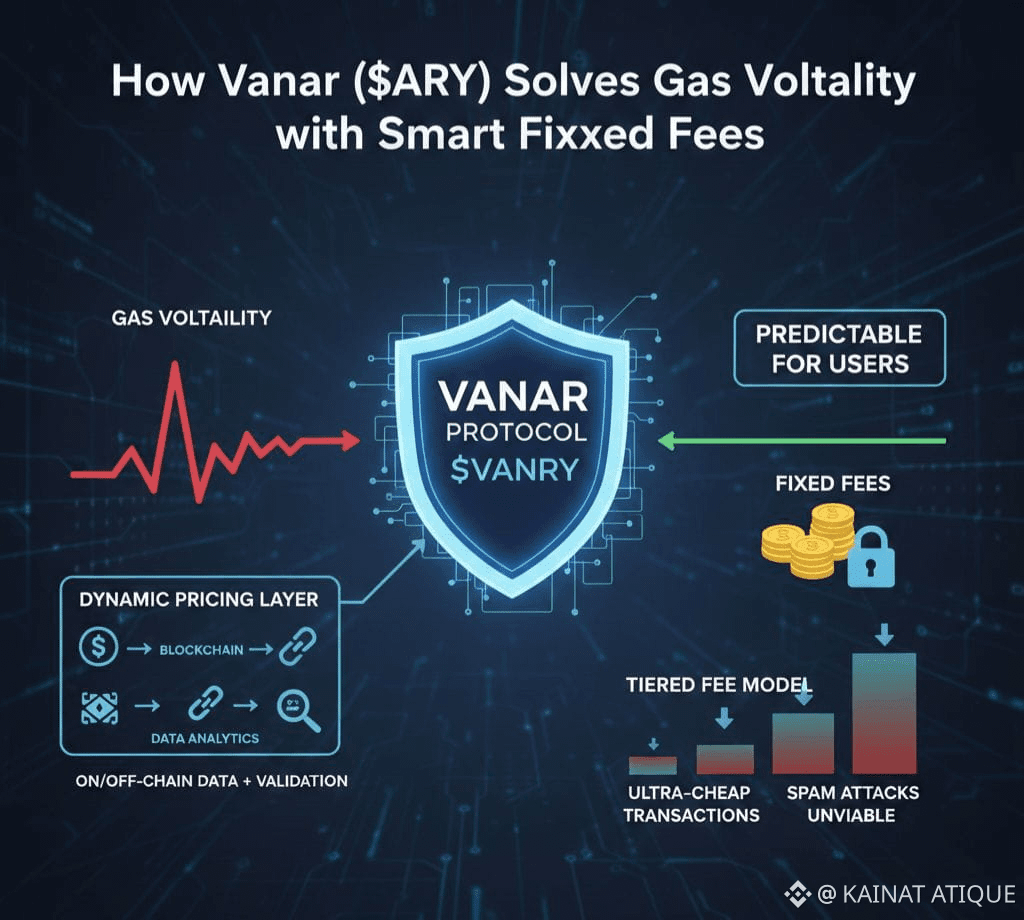
Looking ahead, the next real unlock for Vanar will be moving from intelligence into automation and workflows. Diagrams and concepts only go so far; the real test will be whether Vanar ships tools that developers can integrate into real products. Alongside that, proof through usage will matter most. Neutron Seeds need live applications built on them, and Kayon needs integrations where reasoning and compliance logic are used in practice, not just described in theory.
Vanar is not trying to win by being just another fast chain. It is attempting to make onchain data useful, searchable, and actionable, then layer reasoning on top, and eventually push that intelligence into automation and industry workflows. If that full stack comes together, the project becomes less about narratives and more about infrastructure that real products can rely on. The best way to track progress is simple: shipped layers, real integrations, and visible usage of Neutron and Kayon in live applications.
