

Traders love to talk about “privacy” like it’s one clean switch: on or off, hidden or exposed. In real markets, that’s fantasy. Your broker, your exchange, your auditor, and your regulator don’t all get the same view, and they shouldn’t. That’s why Dusk’s take on privacy feels more practical than idealistic: it treats privacy as controlled visibility, not total darkness. The idea is simple keep sensitive details confidential by default, but make it possible to prove what needs proving when the situation demands it. That “selective disclosure” mindset is a big part of why Dusk keeps popping up in trader chats again.
If you’ve traded long enough, you’ve seen how “pure privacy” narratives collide with reality. Fully opaque systems struggle the moment institutions enter the room, because institutions live and die by compliance. Dusk positions itself as privacy-enabled and regulation-aware, aiming for financial workflows where confidentiality and reporting can coexist on-chain. In plain terms, that means you can transact or manage assets without broadcasting every detail to the entire world, while still being able to satisfy rules like KYC/AML or disclosure requirements. That’s not cypherpunk idealism; it’s closer to how real capital markets already function privacy for counterparties, visibility for authorized parties.
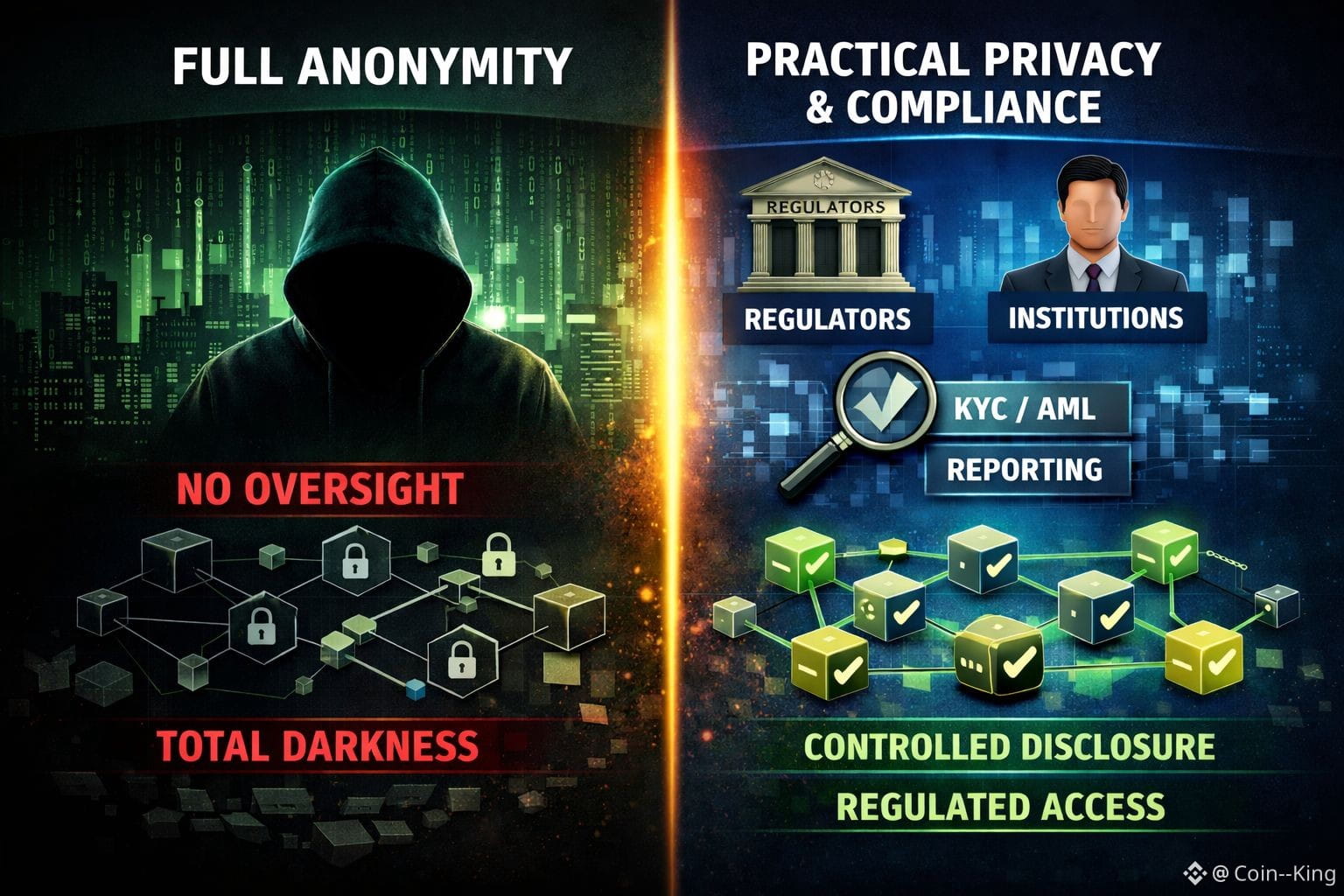
The technical engine behind this practicality is zero knowledge proof tech cryptography that lets you prove something is true without revealing the underlying data. If that sounds abstract, think of it like showing a bouncer a stamp that proves you’re over 18 without handing over your full ID. Dusk’s ecosystem leans into this with “confidential smart contracts,” meaning code can enforce rules and settle outcomes while keeping certain inputs private. Under the hood, Dusk has open-source components like its Phoenix transaction model, built around a UTXO style design (similar in concept to Bitcoin’s “unspent outputs,” rather than account balances), which can make privacy patterns more natural because you’re spending discrete chunks instead of updating a public account state.
So why is this trending now, specifically? Part of it is timing. Europe’s crypto regulation (MiCA) has been moving from theory to enforcement reality, and the market is paying attention to which chains are building with compliance in mind rather than treating it like an afterthought. Dusk has been publishing around that regulatory shift and framing privacy as the missing piece for on-chain finance that institutions can actually use. When a narrative lines up with an external catalyst regulation, listing access, and real integrations traders notice.
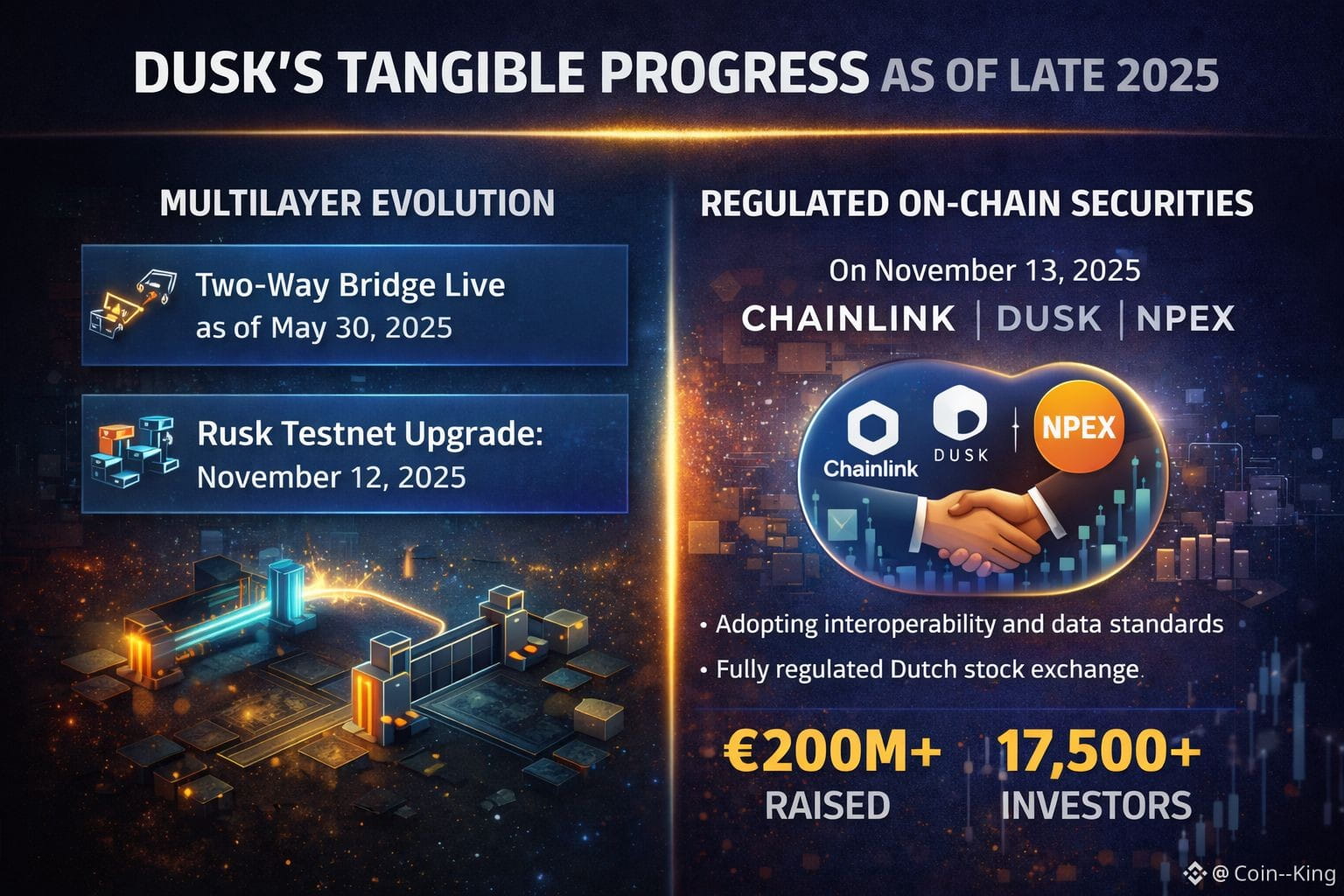
Progress wise, the last year has had tangible milestones instead of vague promises. In 2025, Dusk talked publicly about architectural evolution, including a move toward a multilayer approach and shipping infrastructure like a two way bridge (live as of May 30, 2025), which matters because liquidity and connectivity are oxygen for any L1 thesis. On the “are they actually building?” front, there were testnet-level upgrades too CoinMarketCal notes a Rusk testnet upgrade on November 12, 2025, aimed at improving speed and stability and reducing costs via unified layers, the kind of plumbing work you want done before serious mainnet expectations get priced in.
But the clearest “practical privacy” signal is how Dusk keeps tying privacy to regulated asset flows instead of retail anonymity. A concrete example: on November 13, 2025, Chainlink, Dusk, and NPEX announced adopting Chainlink interoperability and data standards to bring regulated European securities on-chain. NPEX is described as a fully regulated Dutch stock exchange, with over €200 million raised through its platform and more than 17,500 active investors numbers that don’t prove product-market fit on their own, but they do show Dusk is aiming at real institutional rails, where selective disclosure isn’t optional, it’s mandatory.
My trader brain takeaway is this: privacy narratives that survive are the ones that map onto incentives. Institutions want confidentiality because it protects strategies, counterparties, and client data, and regulators want accountability because it protects the system. Dusk’s view isn’t “hide everything”; it’s “reveal only what’s necessary, to the right party, at the right time.” That’s a far more tradable thesis than privacy-as-ideology, because it gives developers a realistic design target and gives markets a storyline with external demand drivers. Whether DUSK’s price follows through is another debate, but as a privacy framework for on-chain finance, this is one of the more grounded approaches I’ve seen in a space that often confuses secrecy with usability.