
Finality Is Fast, but language is sluggish.
On Dusk, the state closes cleanly. Committees complete their work, certificates are issued, and the evidence is irrefutable. If correctness were the only requirement, the process would have ended long ago. But that's not the case. What hinders execution is not execution itself, but language. The hardest part is not whether something is *true*, but *how* to describe it without revealing scope, authority, or rights. Evidence is on the blockchain; authorization is elsewhere.
When Disclosure Becomes the Bottleneck
The shutdown mode requires only one sentence: classification and justification, not computation. This sentence can circulate without expanding access permissions. One entity holds the secret, another has the power to replicate the justification, and a third holds the boundaries of information disclosure. These roles do not overlap, so silence becomes the harmony. The final message is deliberately concise: a hash code, a timestamp, a link. Enough as evidence, but not enough for public dissemination.
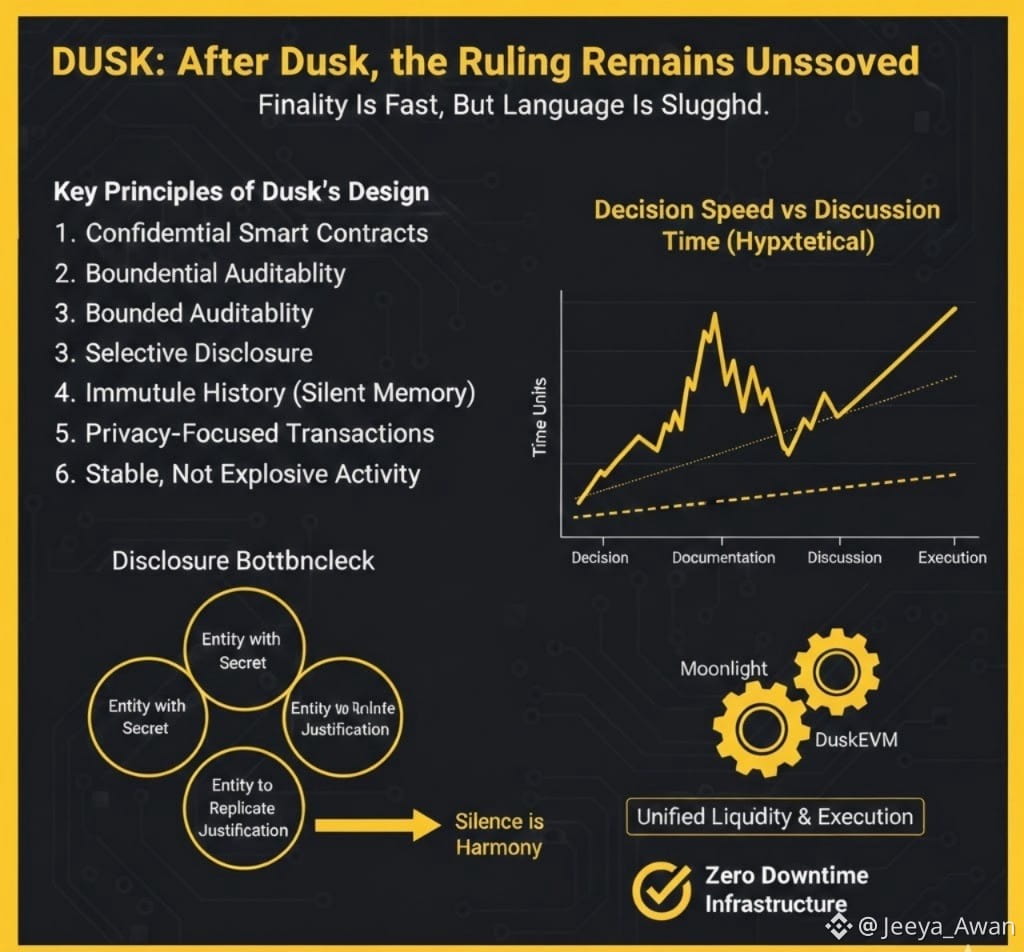
Bounded Auditability Design
The Dusk network reveals a point that most systems overlook: auditability doesn't mean unlimited interpretation of information. Once a message spreads, it cannot be retracted. Therefore, teams learn to express their opinions early, but not loudly. Certain actions are only taken after the scope of information disclosure is clearly defined and documented. This may seem conservative on the surface, but it's actually a form of risk management. Decisions are made quickly, while discussions are deliberately slowed down.
What the Network Really Remembers
You can withdraw from a committee assignment or cancel your contribution. But the behavior isn't reset. Testimony is retained, and the pace continues. When participation decreases, the network doesn't ask who *was* involved; it focuses on who attended on time. Dusk doesn't punish and then forget; it silently remembers. Reliability isn't an assertion; it's a history witnessed by consensus.
A Quiet Room-like Privacy Experience
This is why Dusk feels more like a bank meeting room than a control panel. It's not mysterious, but convenient and efficient. Transactions can remain private, yet are still verifiable when necessary. Moonlight and Phoenix coexist on the same chain, so liquidity isn't hidden in separate areas. Execution maintains a familiar pattern through DuskEVM, ensuring stable settlement and data availability. This separation isn't for show, but to ensure institutional robustness.
Infrastructure Beyond Excitement
On-chain activity is stable, not explosive. Fewer applications, fewer surprises, fewer points of failure. The focus is on data sourcing, selective disclosure, and reliability achieved with limited participation. Dusk protects the network and hides complexity from users, enabling applications to be cost-effective when needed. It's not about seeking excitement, but about ensuring zero downtime.
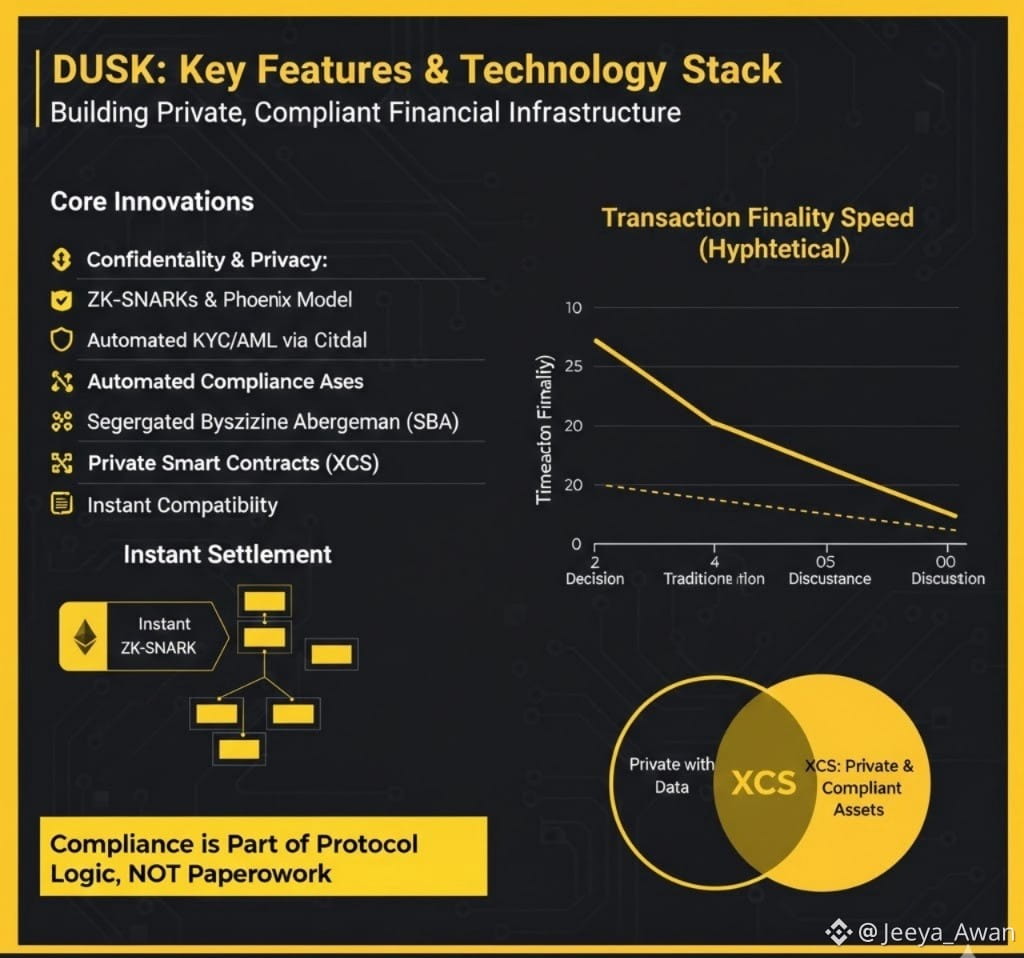
The Takeaway
Most blockchains rush to explain themselves after execution. Dusk takes the lead, forcing users to spend considerable effort digging for information before any changes occur. If it succeeds, users won't notice any innovation; they'll only see the status quo unchanged. And this is precisely how true infrastructure usually wins: operating silently, having an untold history, and a system that accurately remembers what's crucial.
