

I spent the last week (January 25–31, 2026) treating Plasma (XPL) like I would any new venue I might trade or build on: I ignored the hype threads, pulled up the explorer, read the docs, and tried to understand what problem it’s actually designed to solve. Plasma isn’t pitching itself as “the next general-purpose L1.” It’s much narrower than that, and that focus is the point.
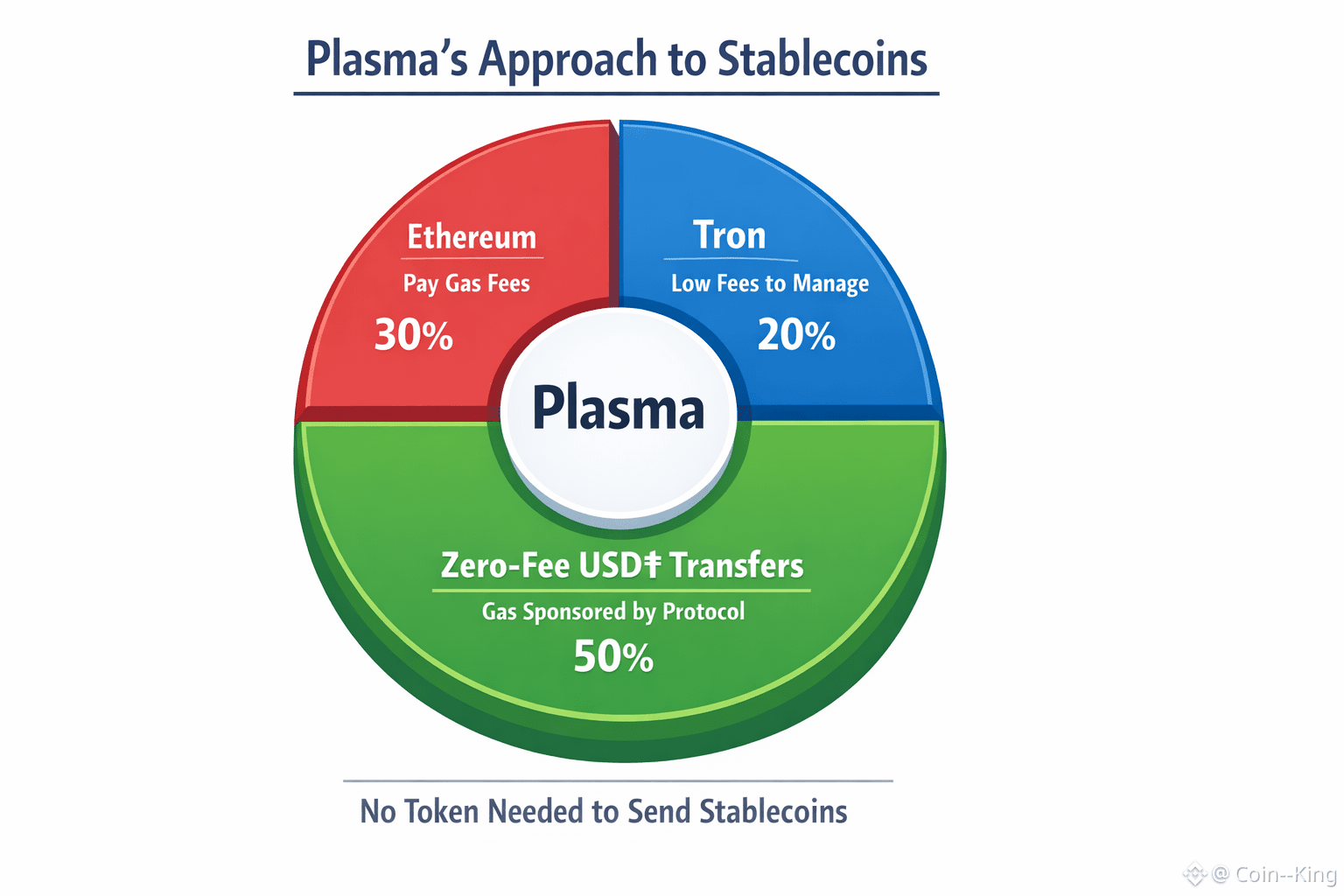
The first thing that jumped out at me was how aggressively Plasma leans into stablecoins as the main use case, especially USD₮. When you read “zero-fee transfers” in crypto, your guard should go up nothing is free forever. In Plasma’s case, the mechanism is pretty explicit: a protocol paymaster can sponsor gas for eligible USD₮ transfers so users don’t need to hold the native token just to move dollars around. That’s a very different mental model from Ethereum, where gas is always your problem, and even from Tron, where fees are usually low but still something you manage. Plasma is basically saying: for the most common action in crypto sending stablecoins we’ll make the default UX feel like fintech.
From a trader’s perspective, that design choice matters because stablecoin rails are where real flow lives. Plasma’s mainnet beta went live on September 25, 2025, and a lot of the “why it’s trending” comes down to the launch being paired with big liquidity claims and immediate exchange visibility. Multiple reports around launch pegged day one liquidity at about $2B, with Plasma positioning itself to be a top venue for stablecoin liquidity right away. If you’re used to new chains bootstrapping slowly, that’s the kind of datapoint that makes people pay attention, whether you believe it will stick or not.
I also wanted to see if the chain activity looked real or cosmetic. On Plasma’s explorer, the network stats are already “big-chain” looking: roughly 147 million transactions and a recent throughput figure around 4 - 5 TPS, with blocks showing about 1 second timing on the latest blocks I checked. TPS numbers are always slippery (different windows, different counting), but the broader takeaway is that Plasma is optimized for fast finality and repetitive payment-like actions, not expensive on chain computation.
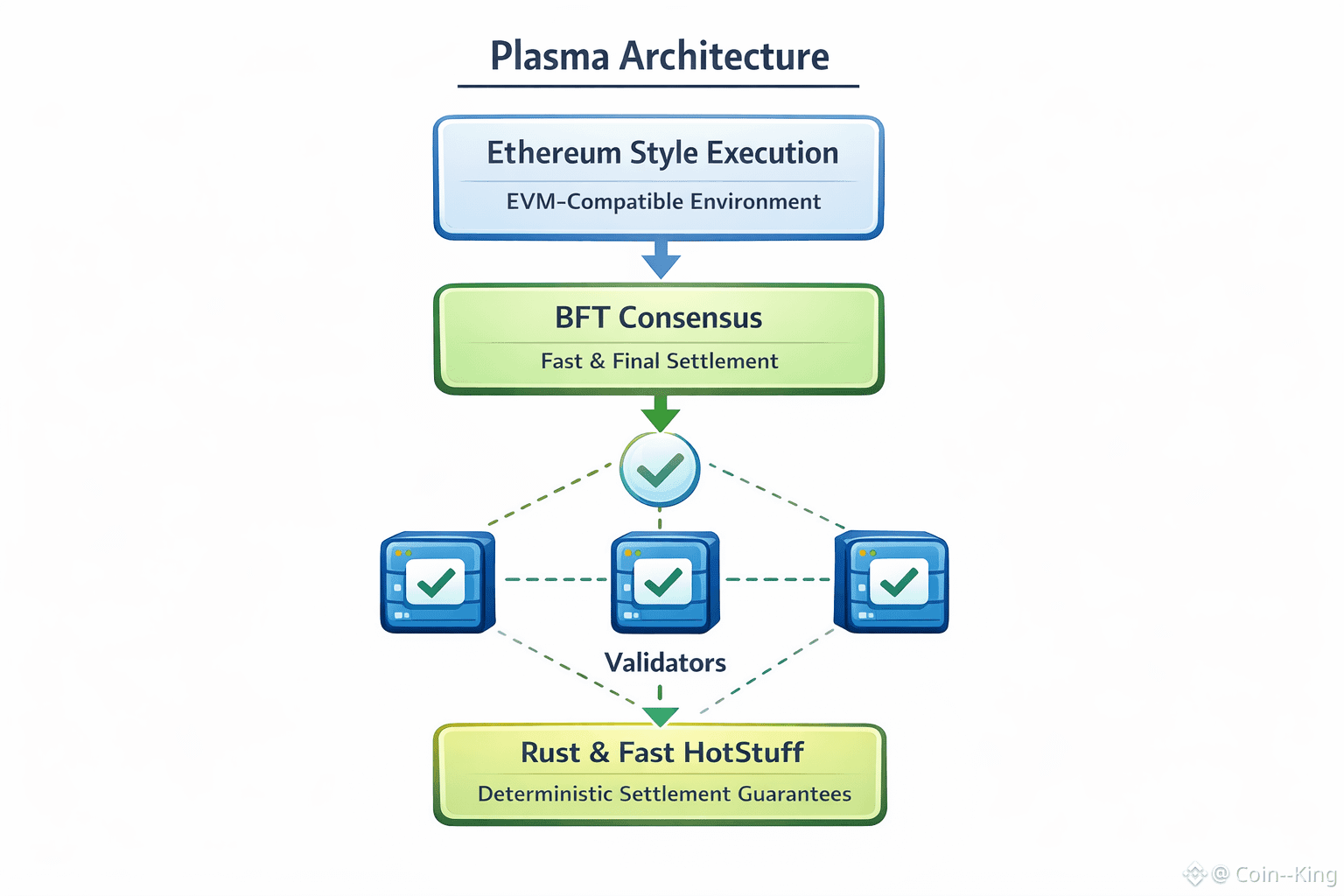
Under the hood, Plasma’s architecture reads like a deliberate mash up of what already works: an Ethereum style execution environment (so EVM tooling carries over) and a BFT consensus layer tuned for low latency finality. The docs describe PlasmaBFT as an implementation of Fast HotStuff, written in Rust, designed to provide deterministic guarantees that fit stablecoin scale settlement. That’s a mouthful, but the simple version is: BFT systems are good at quickly agreeing on “this happened” without waiting many blocks, which is exactly what you want if your main product is payments.
The other differentiator I kept coming back to is the Bitcoin angle. Plasma talks about a trust-minimized Bitcoin bridge, and while “trust-minimized” exists on a spectrum, the intent is clear: they want Bitcoin to be a settlement/security anchor and a source of liquidity without leaning fully on custodians. For builders, that combination EVM familiarity plus a Bitcoin-bridged narrative plus stablecoin-native features explains why Plasma gets grouped in a different bucket than “another EVM chain.”
Token wise, I tried to stay factual because this is where readers get emotional. As of today (February 1, 2026), CoinMarketCap shows XPL trading around $0.108 with roughly $130M in 24h volume, a market cap around $190M, and a circulating supply shown as 1.8B XPL. Meanwhile, the Plasma explorer’s own displayed “market cap on Plasma” and supply figures don’t perfectly match that snapshot, which is normal early on different methodologies, venues, and accounting. The practical point for traders is to sanity check supply and liquidity across sources before you anchor on any one number.
After a week with it, my takeaway is pretty simple: Plasma feels less like a “world computer” chain and more like purpose built payment infrastructure that happens to be EVM compatible. The bet is that stablecoin UX not flashy apps becomes the wedge. Will sponsored fees remain sustainable, and can the ecosystem avoid becoming a one feature chain? Those are the questions I’d keep on my screen. But at least Plasma is distinct: it’s not trying to do everything, it’s trying to make moving digital dollars feel boring and boring is usually what scale looks like.