The cryptocurrency market was once promoted as a revolutionary alternative to traditional finance decentralized, borderless, and immune to global economic pressure. However, recent developments suggest that the future of the crypto market is becoming increasingly insecure. This insecurity is not driven by technology alone, but by broader global financial conditions, gold and stock market dominance, and an increasingly unstable political environment worldwide.
1. Global Financial Conditions Are Working Against Crypto
The global economy is currently under significant pressure. High inflation, slowing growth, and tight monetary policies have reshaped investor behavior.
Rising Interest Rates and Liquidity Crunch
Major central banks, including the U.S. Federal Reserve and the European Central Bank, have maintained higher interest rates to control inflation. High rates reduce market liquidity and discourage speculative investments. Cryptocurrencies, which thrive in easy-money environments, suffer the most during liquidity tightening.
Risk-Off Investor Sentiment
In uncertain economic conditions, investors prioritize capital preservation over high returns. As a result, funds flow away from volatile assets like crypto and into cash, bonds, and commodities. This shift has weakened crypto demand and increased price instability.
Regulatory Pressure
Governments are tightening oversight of crypto exchanges, stablecoins, and DeFi platforms. While regulation may improve long-term legitimacy, short-term uncertainty discourages institutional participation and slows market growth.
2. Gold Market Dominance as a Trusted Safe Haven
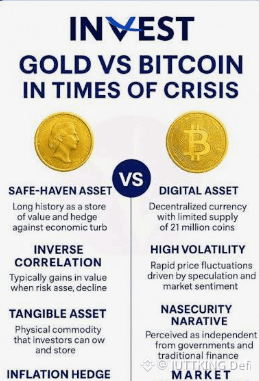
Gold has reasserted itself as the world’s most trusted store of value, directly competing with crypto’s “digital gold” narrative.
Proven Stability
Gold has preserved wealth for centuries and performs well during economic crises and geopolitical tension. Unlike crypto, gold does not rely on digital infrastructure, electricity, or regulatory approval to maintain value.
Central Bank Preference
Central banks continue to increase gold reserves to hedge against currency devaluation and geopolitical risk. Cryptocurrencies remain absent from official reserve strategies, highlighting institutional mistrust.
Lower Volatility
Gold’s relatively stable price movement makes it far more attractive for conservative and institutional investors compared to highly volatile cryptocurrencies.
3. Stock Market Dominance Limits Crypto Growth
Global stock markets remain the backbone of wealth creation and capital allocation.
Stronger Fundamentals
Equities offer dividends, earnings growth, and tangible business value. In comparison, most cryptocurrencies lack cash flow or intrinsic valuation models, making them harder to justify during uncertain times.
Capital Competition
When stock markets recover or outperform, investors prefer allocating capital to equities rather than speculative digital assets. Crypto becomes secondary rather than essential in diversified portfolios.
Increasing Correlation
Cryptocurrencies have shown growing correlation with stock indices, especially tech stocks. This undermines the belief that crypto acts as a hedge during market downturns — instead, it often falls alongside equities.
4. Global Political Instability Adds More Risk
The current geopolitical landscape is highly fragmented and unpredictable.
Geopolitical Conflicts
Wars, trade tensions, and regional conflicts increase global uncertainty. During such periods, investors reduce exposure to high-risk assets, including crypto.
Government Control Through CBDCs
Many countries are developing Central Bank Digital Currencies (CBDCs). While this signals adoption of digital finance, it also strengthens state-controlled alternatives, reducing the appeal of decentralized cryptocurrencies.
Lack of Global Regulatory Unity
Different countries apply conflicting crypto policies — from adoption to outright bans. This inconsistency limits global scalability and long-term confidence in the market.
Conclusion: A Market Under Pressure, Not Collapse
The crypto market’s future is insecure, not because the concept has failed, but because it is operating in an environment that currently favors stability, regulation, and traditional financial dominance.
Key pressures include:
Tight global monetary policy
Gold’s renewed safe-haven dominance
Stock market strength and capital preference
Political uncertainty and regulatory fragmentation
While blockchain technology continues to evolve, the crypto market must adapt to survive. Until global financial conditions ease and regulatory clarity improves, cryptocurrencies are likely to remain volatile, speculative, and vulnerable rather than a stable pillar of the global financial system.