
There is a moment that happens when understanding arrives without force. It does not come from reading documentation or studying charts. It comes from recognition. Vanar begins to make sense in this way. Not as a technical breakthrough shouting for attention but as something shaped by people who have watched how real users behave when no one is trying to impress them.
I started understanding Vanar by stepping away from what it claims to be and paying attention to why it exists. The project does not feel like it was born inside crypto culture. It feels like it arrived from outside and quietly reshaped itself to fit inside. The team behind Vanar comes from games entertainment and brands. They have spent years watching users leave the moment friction appears. That experience shows. Instead of asking people to learn Web3 Vanar seems to ask how Web3 can learn from people.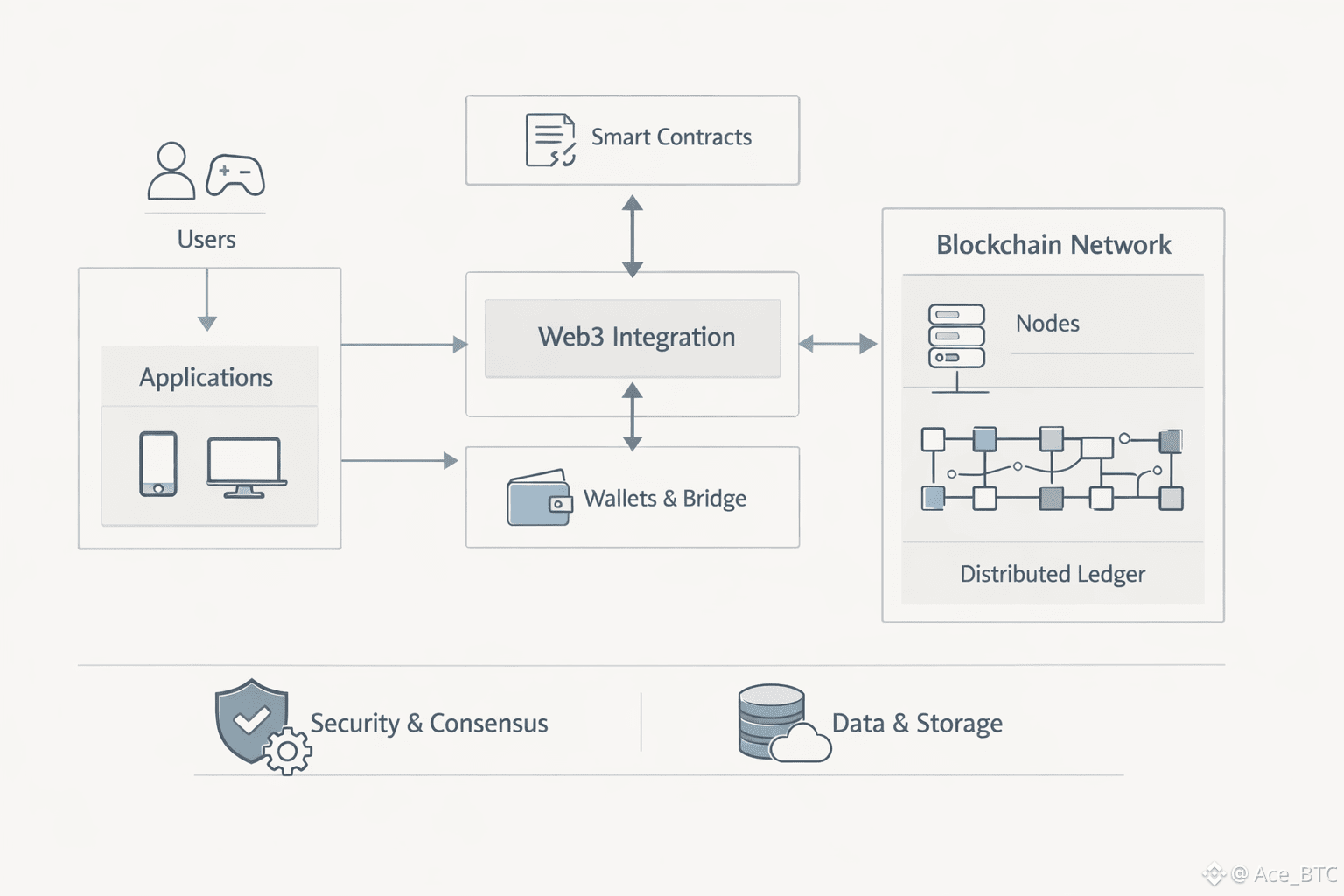
At its core Vanar is a Layer One blockchain built to support large scale consumer activity. But the system only reveals its intent when you look at how it behaves under pressure. It is designed to stay fast when usage grows. It is designed to remain predictable when activity spikes. It is designed to feel stable when many interactions happen at once. In consumer environments delay feels like failure and inconsistency feels like risk. Vanar treats those realities as fundamentals rather than trade offs.
Behind the scenes the network focuses on execution that stays smooth without demanding constant optimization from developers. Transactions are structured to settle quickly. Costs are designed to remain manageable as adoption increases. The system does not expect users to understand what is happening underneath. It simply expects them to keep going. That quiet reliability is not accidental. It reflects a belief that infrastructure should fade into the background once it works.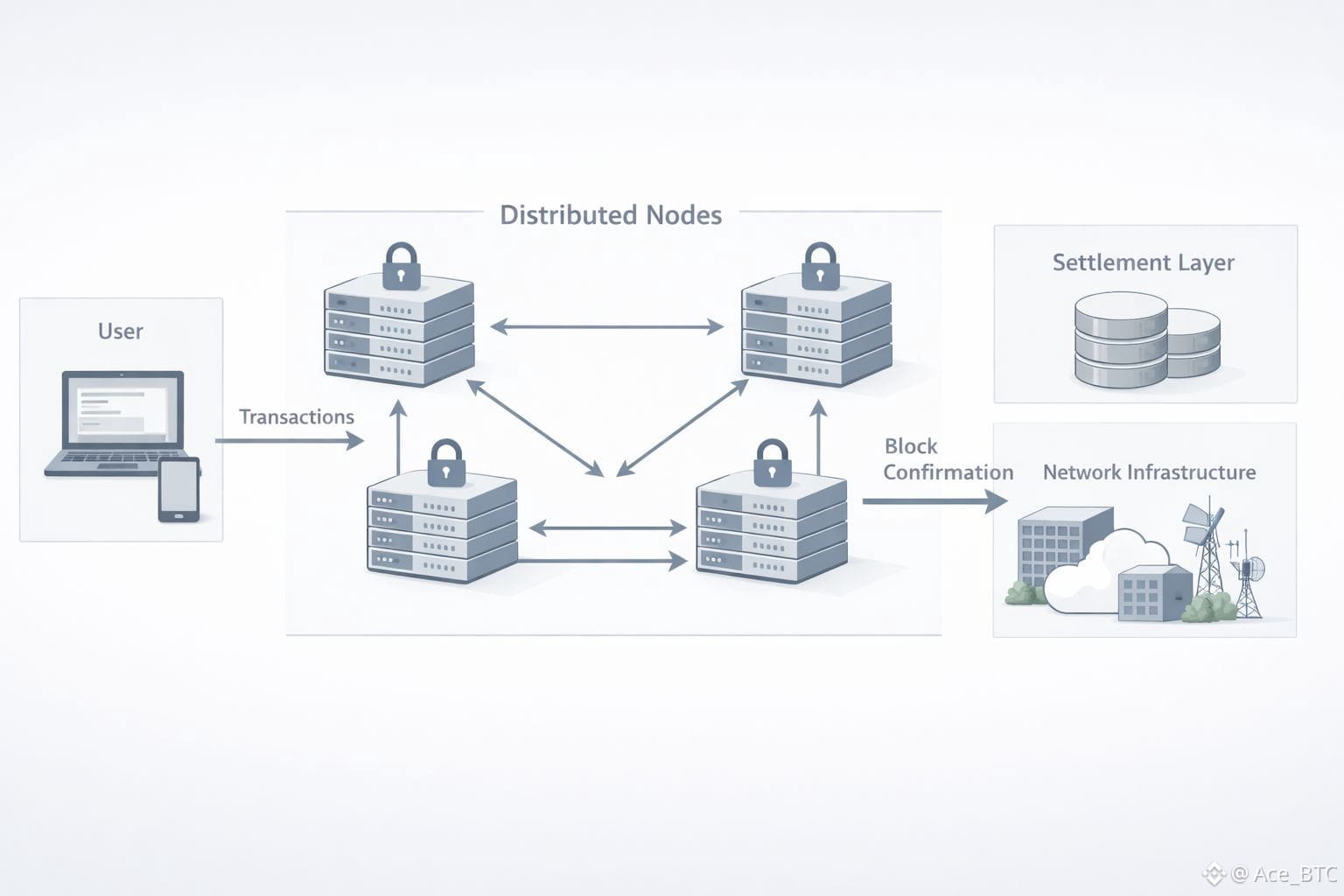
These choices make more sense when you consider the moment Vanar was shaped. Users were tired. Fees across the industry felt unpredictable. Networks slowed down when they were needed most. Interfaces assumed knowledge that most people never had. Vanar responded by choosing practicality over perfection. It did not try to solve every philosophical debate. It tried to solve the problem of usability first. That decision still defines it today.
The journey becomes clearer when you follow Vanar into real use. Gaming is one of the most honest environments for technology. Players do not forgive friction. They do not wait for explanations. If something feels slow or confusing they leave. Vanar supports gaming environments that demand constant interaction without interruption. This is where projects like the Virtua Metaverse come into focus. These are persistent digital worlds where ownership interaction and continuity exist quietly in the background. The experience remains smooth because the infrastructure stays out of sight. 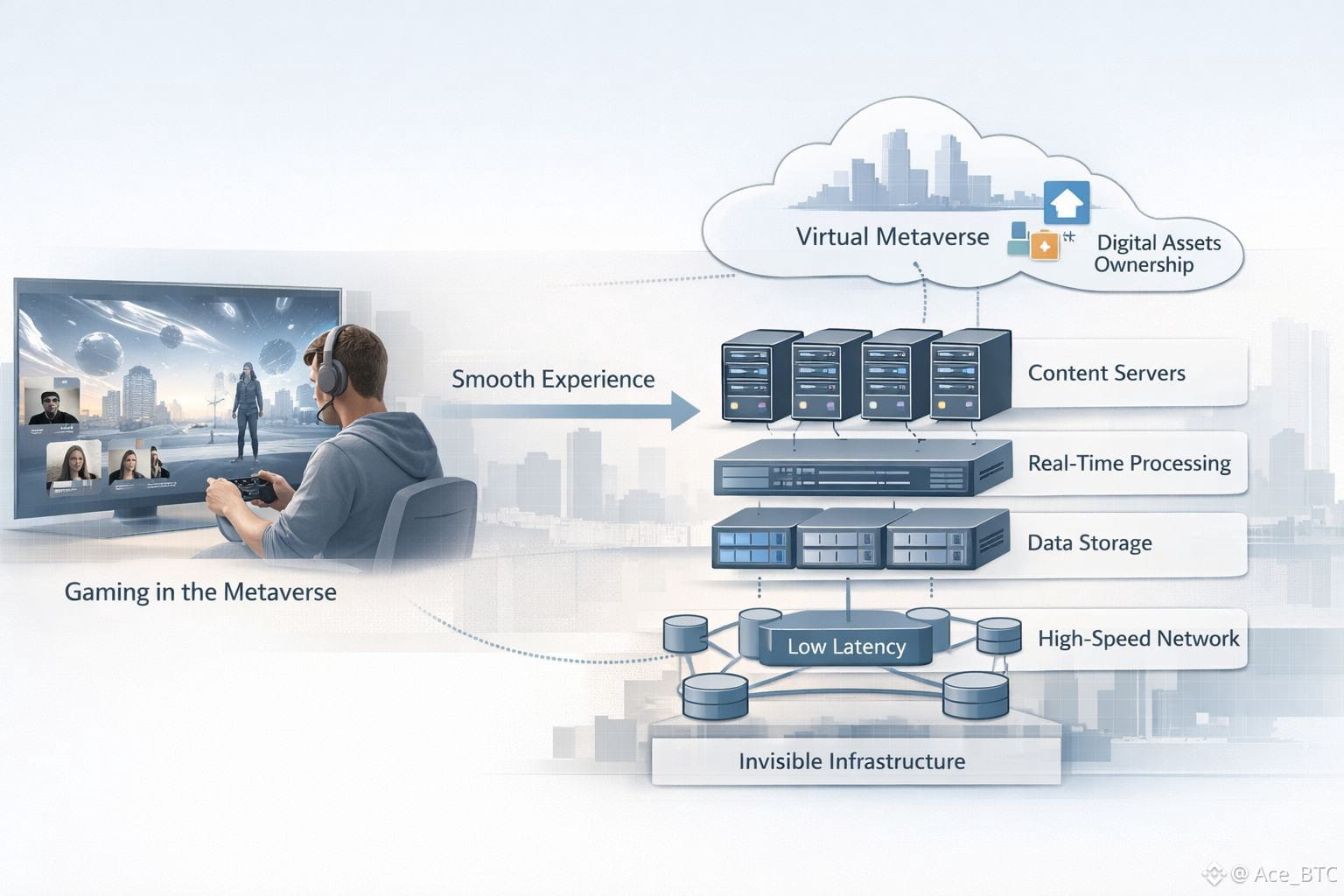
The VGN games network extends this idea further by connecting multiple gaming experiences within a shared ecosystem. Users move between environments without feeling like they are crossing technical boundaries. Developers build without worrying that growth will break the foundation. The system supports expansion instead of resisting it. As I follow these examples the pattern becomes clear. Vanar does not ask users to care about the blockchain. It asks them to care about what they are doing.
This same foundation stretches naturally into other areas. Metaverse environments rely on stability over long periods of time. Brand experiences require familiarity rather than novelty. AI driven tools need predictable execution to remain useful. Eco focused digital initiatives depend on trust and continuity. Vanar supports all of these because it was not built for a single story. It was built for many everyday stories happening at once.
The VANRY token exists within this system as a functional element rather than a spotlight. It powers activity across the network and helps coordinate participation. Its relevance grows as usage grows. Not because attention demands it but because the system depends on it. This role feels intentional. The token supports the ecosystem instead of defining it.
Growth within Vanar does not arrive loudly. It shows up through continuity. Products remain active through different market conditions. Communities stay engaged even when excitement fades elsewhere. Developers continue building instead of chasing trends. Virtua expands its digital environments. VGN continues connecting gaming experiences. New use cases appear without abandoning old ones. These are not explosive signals. They are steady ones. They suggest something being built with patience.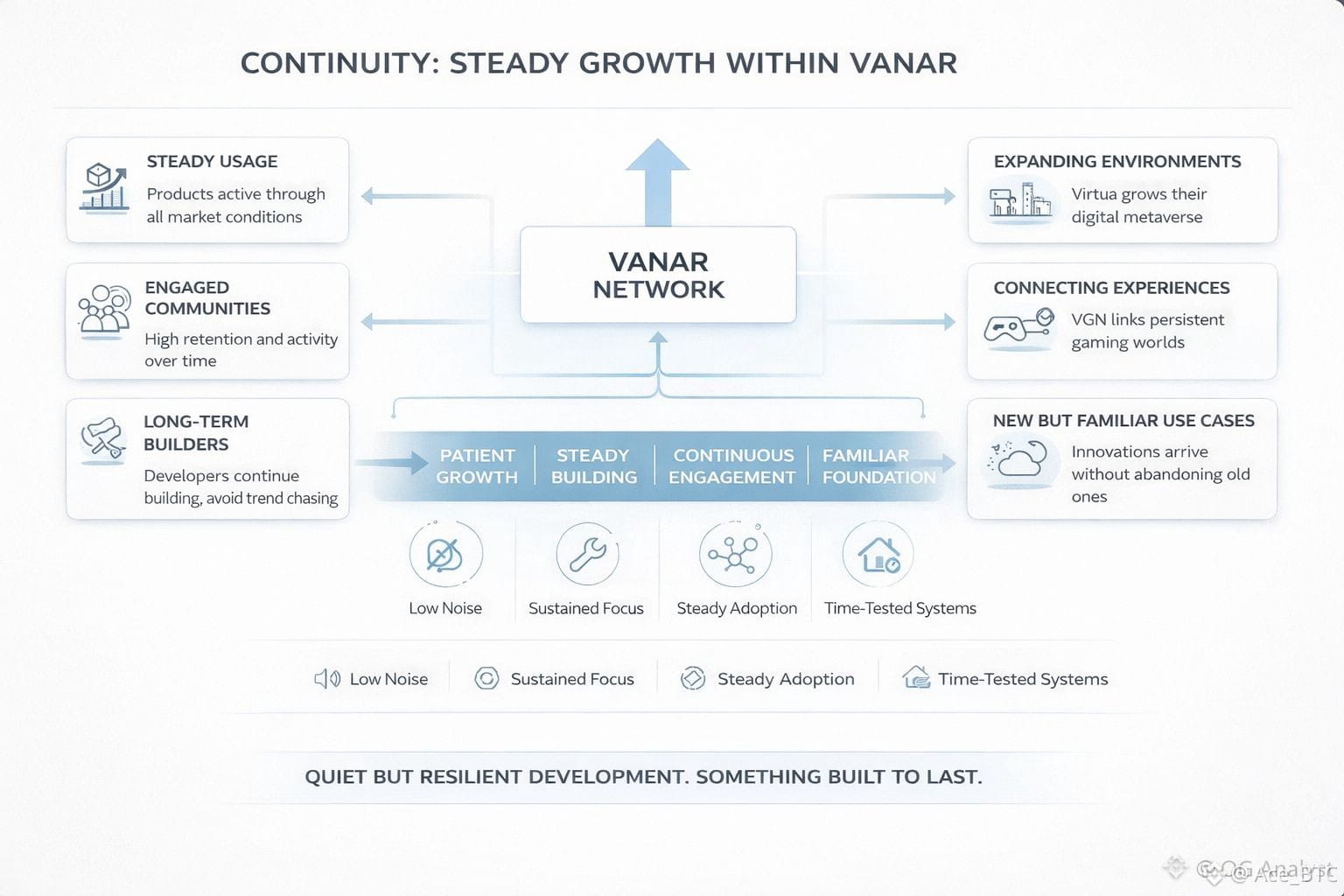
None of this removes risk. Vanar operates in competitive spaces where expectations change quickly. Gaming trends evolve. Metaverse adoption takes time. Consumer attention is fragile. Infrastructure must scale without losing stability. Early awareness of these challenges matters because it shapes better decisions. Vanar does not feel protected from difficulty. It feels aware of it.
When I think about where Vanar could go the image that forms is not dramatic. It is quiet. People playing games exploring digital worlds interacting with brands and using intelligent tools without thinking about the technology underneath. If that future arrives Vanar will not need to announce itself. It will simply exist as part of daily digital life.
Sometimes the most meaningful systems are not the ones that ask for belief. They are the ones that earn trust by staying present. Vanar feels like it is choosing that path and taking its time.
