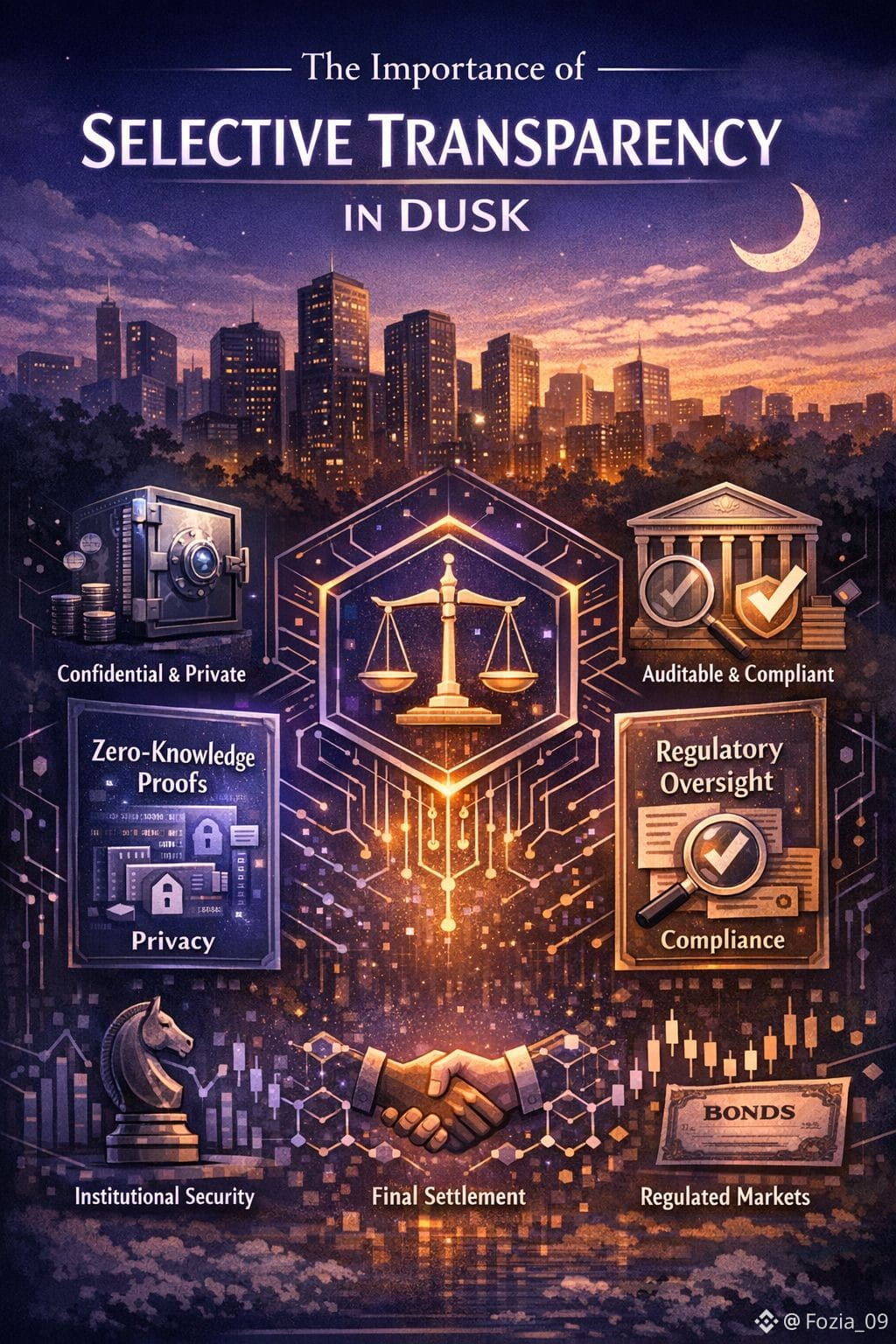
Early public blockchains lived and breathed radical transparency.Every transaction,every balance,every move out in the open,visible to anyone.The idea made sense:if everyone can see everything,you don’t have to trust a middleman.It worked,especially in those early days of permissionless experimentation.But the world’s changed. Now,as blockchain tech edges into the territory of banks,institutions,and regulators, that same openness starts looking more like a problem than a selling point.
Look at real financial markets banks,funds, exchanges.Total transparency isn’t just rare; it’s dangerous.Institutions protect their trades,strategies,and clients for good reason. Leaking that info can be costly,even catastrophic.At the same time, regulators can’t do their jobs if everything’s hidden behind a wall.They need to audit,verify compliance,and enforce accountability.Fully private systems try to fix the privacy problem, but they end up sacrificing oversight.So the real trick isn’t picking privacy or transparency it’s finding a way to control who sees what, when,and with what proof.That’s where Dusk comes in.
Dusk isn’t just another privacy chain.It’s built for financial applications that need confidentiality and compliance,not one or the other.Unlike most privacy focused blockchains,Dusk doesn’t just hide everything by default.Instead,it treats privacy as something you can dial in,prove,and manage.Data stays confidential unless there’s a genuine need for disclosure,and when disclosure happens,it’s provable and restricted.This is selective transparency and Dusk puts it at the heart of its protocol.
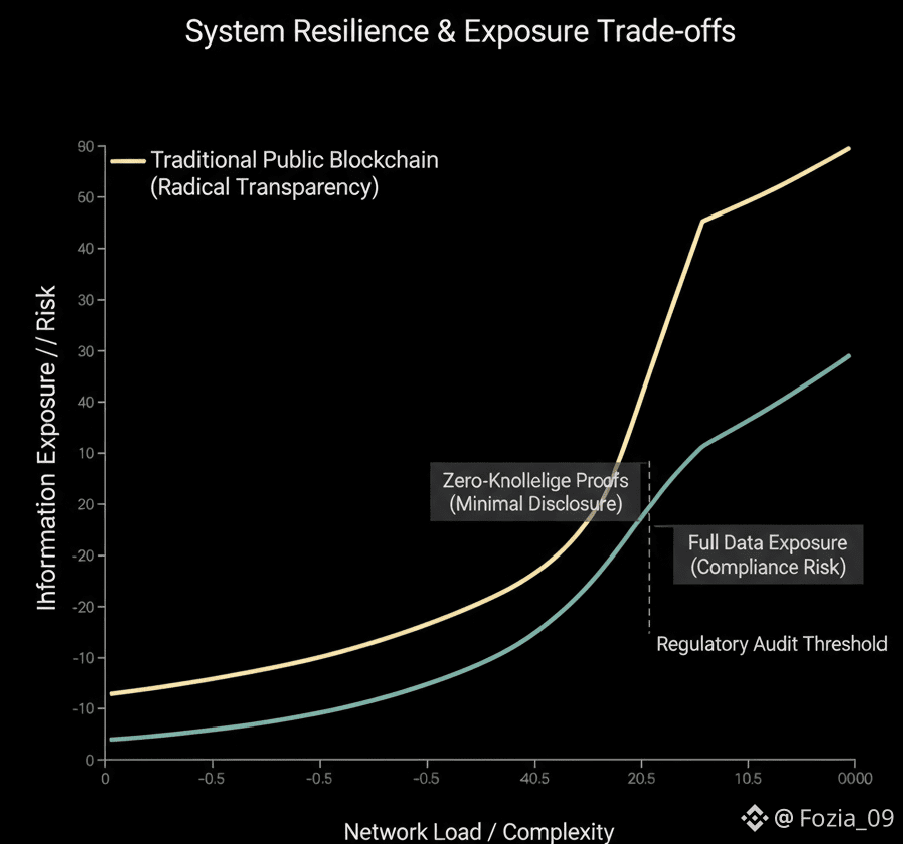
Technically,it works through layers.Asset ownership,balances,and transaction amounts can stay private,so there’s no risk of front running or leaking sensitive info.But if a regulator or auditor needs to check compliance,Dusk uses zero knowledge proofs.These proofs show that the rules are followed,but without revealing the underlying data.Even network consensus how participants agree on state changes and settlements happens without exposing sensitive details.The system proves the results,not the inputs.
Zero knowledge cryptography is the engine here,but Dusk’s take is different.It’s not about hiding users for the sake of anonymity.It’s about letting people prove correctness under strict constraints.Transactions are valid, compliant,and final,but unnecessary details stay private.That’s crucial for regulated assets like securities and bonds,where confidentiality isn’t just a perk it’s required by law.
From a market design angle,Dusk tackles three hard requirements at once.Institutions get to keep their strategies and positions confidential.Regulators get the proofs they need for enforcement.And the market gets trustworthy,final settlement.Most public blockchains only manage one or two of these at best.Dusk bakes all three into its core design,rather than tacking them on as an afterthought.
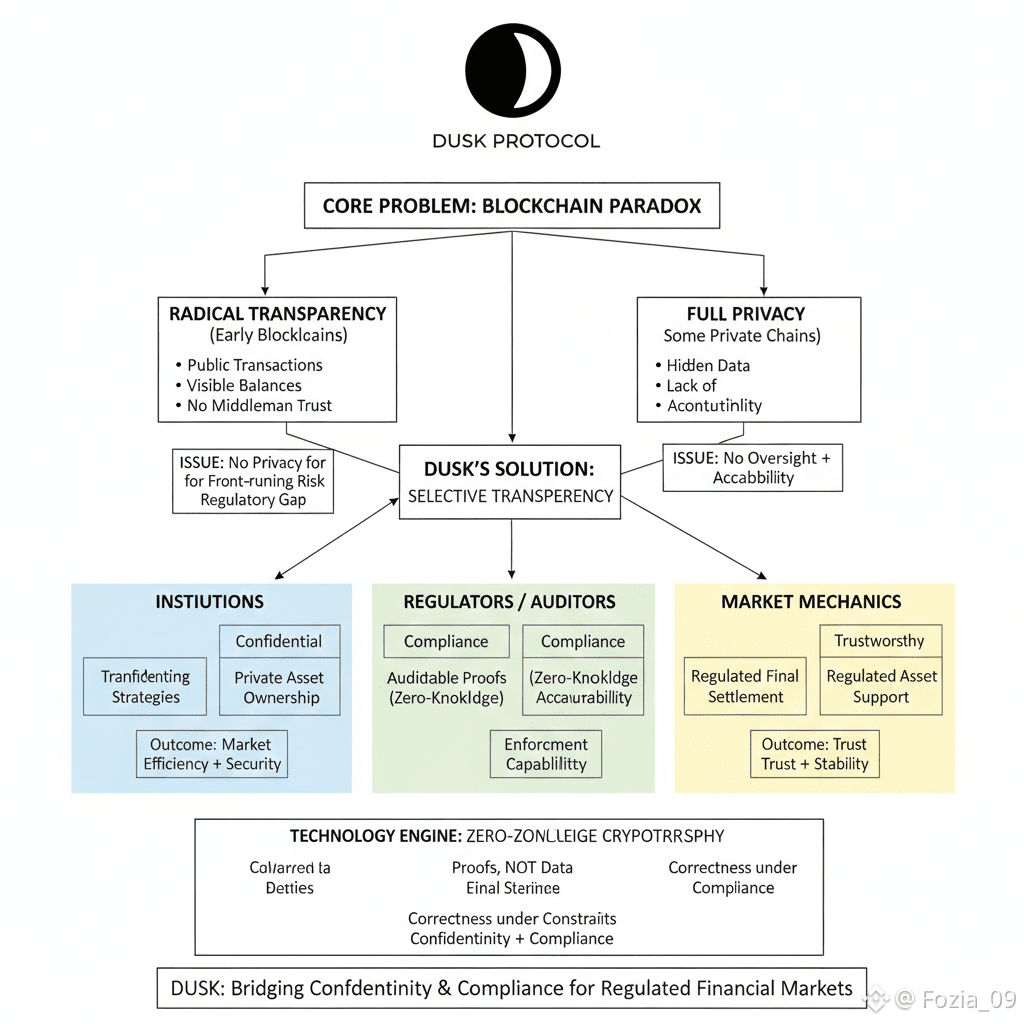
Of course,there’s risk.Selective disclosure adds layers of governance.You need clear rules about who gets to see what,and how those permissions are enforced.Get that wrong,and you open the door to abuse or centralization.The cryptography itself isn’t simple,either.Developers,auditors,and institutions face a steep learning curve. Without good tools and documentation, adoption could stall.
But the timing feels right.As tokenized real world assets catch on and institutions get serious about blockchain,radical transparency looks less like progress and more like a headache.Financial markets aren’t chasing total openness;they’re moving toward privacy with compliance.Systems that can’t offer both won’t win regulated capital.
Personally,I see selective transparency as inevitable.Total transparency is great for open source projects and ideological playgrounds, but it falls apart in real capital markets.What impresses me about Dusk is its refusal to compromise on cryptographic rigor,while still facing regulatory reality head on.It doesn’t treat regulation as an afterthought.Instead,it builds compliance and confidentiality into the protocol from the start,where they belong.