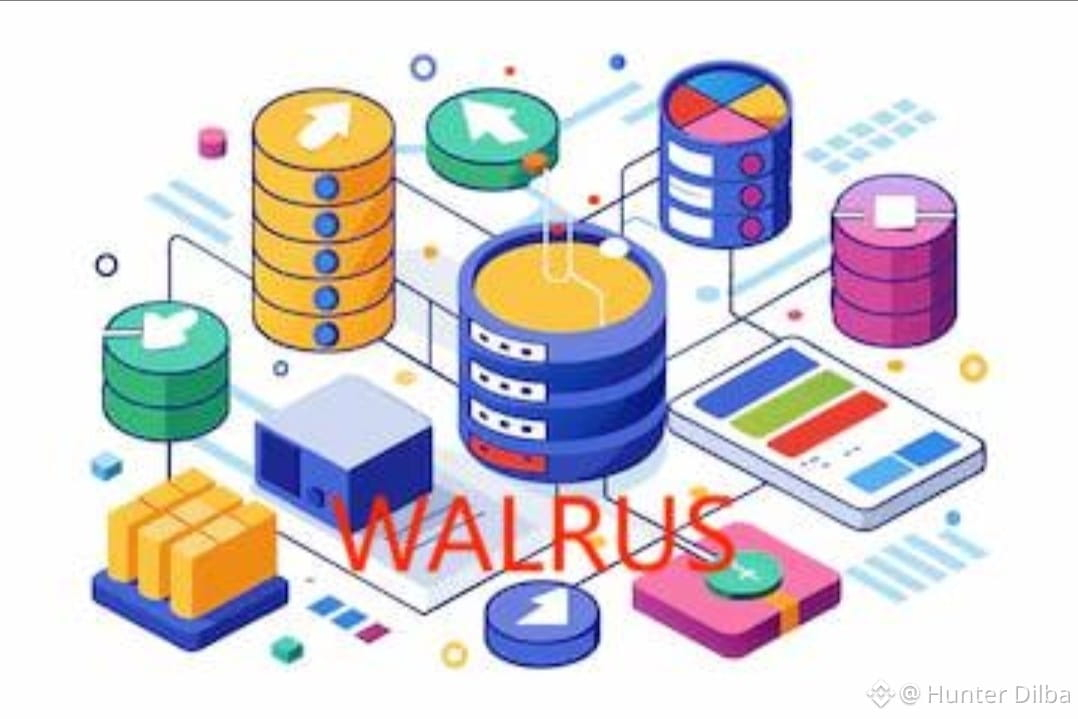
As one observes decentralized storage projects, there is a difference between those built for show and those built for longevity. At first, Walrus seems like any other storage protocol, but interacting with the ecosystem reveals that the protocol is designed for a more developed ecosystem.What began as a decentralized file storage network is steadily evolving into a data infrastructure layer that applications, analytics platforms, identity systems, and performance networks increasingly depend upon. The transition is subtle, almost easy to overlook, precisely because it does not rely on spectacle.
Observation reveals a contradiction that the broader crypto market continues to underestimate. While attention remains focused on transaction speed, token innovation, and liquidity expansion, decentralized applications increasingly fail or stagnate due to fragile data infrastructure. Walrus resolves the unobserved gap by assimilating itself across various operational systems. Walrus's partnership with analytics platforms like Space and Time gives them the capability for decentralized and verifiable data retrieval. Applications, including prediction markets partner with Walrus for completely auditable on-chain data. Initiatives like credential storage at scale point to the fact that sinkable, the data infrastructure that is compliance-sensitive, is built for the void between privacy and transparency.These integrations reveal Walrus as more than storage; it is becoming programmable data infrastructure.
The inevitability of this transition becomes clear when examining how modern decentralized systems scale. Applications handling AI datasets, identity verification, or institutional analytics require dynamic storage capacity, asynchronous network security, and low-latency access. Walrus’ technical architecture addresses these demands by allowing storage to scale according to real usage while maintaining integrity even under imperfect network conditions. Partnerships with edge computing networks further reduce latency, bridging one of decentralized storage’s most persistent performance limitations. As decentralized applications grow more complex, the demand for such infrastructure becomes less optional and more structural.
Acceptance comes when one recognizes the evolution in tech and understands the less glamorous, but critical, foundational layers of tech that determine the long-term viability of ecosystems. Walrus shows a developing path where utility garners integration, integration garners dependence, and dependence creates persistence. Instead of chasing short-term prominence, Walrus is positioning itself as a foundational persistent data layer for compliance-first, AI-driven ecosystems, and high-trust DApps.
Walrus captures a cold, but unavoidable, reality in Web3. Applications can innovate on speed, governance, or tokenomics, but without an underpinning of reliable, and scalable data, the growth is tenuous. By building systems where the primary design lens is durability and not visibility, Walrus is shaping the core protocols that future decentralized economies will be built upon.