
Non-Fungible Tokens (NFTs) are often associated with digital art, collectibles, and speculative market cycles. While these early use cases brought NFTs into the public spotlight, they do not fully explain why the technology continues to evolve and attract long-term interest.
By 2026, NFTs are increasingly understood as tools for verifiable digital ownership rather than speculative assets. Their real value lies in the ability to prove authenticity, control access, and track ownership across digital and physical systems—functions that traditional databases struggle to provide reliably.
This article examines NFTs from a practical and structural perspective: what makes them technically different from other crypto assets, how they operate on blockchain networks, and why their most important applications today extend far beyond digital art.
𝟭. 𝗪𝗵𝗮𝘁 𝗺𝗮𝗸𝗲𝘀 𝗮𝗻 𝗡𝗙𝗧 𝗿𝗶𝗳𝗳𝗲𝗿𝗲𝗻𝘁 𝗳𝗿𝗼𝗺 𝗼𝘁𝗵𝗲𝗿 𝗰𝗿𝘆𝗽𝘁𝗼 𝗮𝘀𝘀𝗲𝘁𝘀
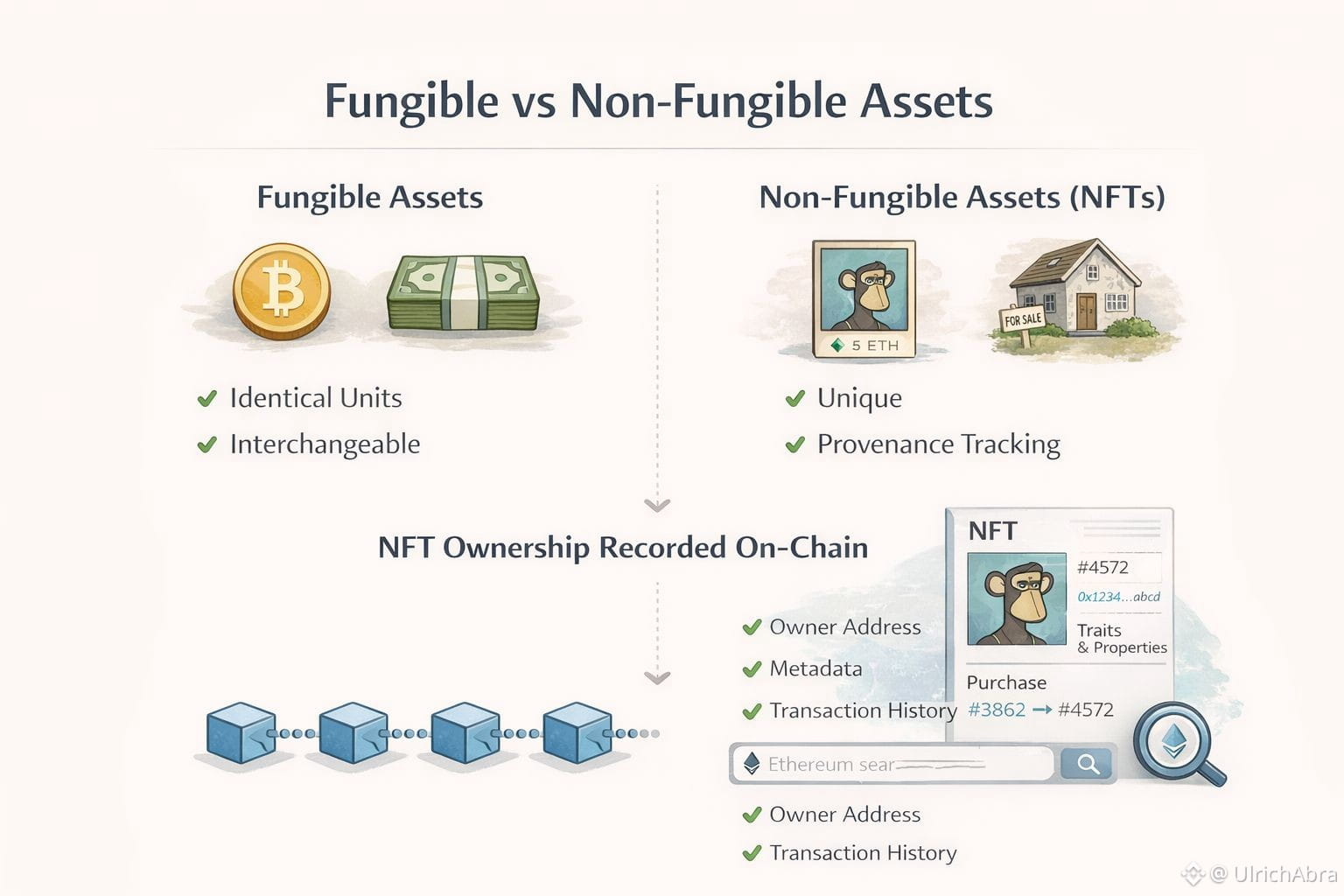
NFTs are blockchain-based tokens designed to represent unique, non-interchangeable assets. Unlike fungible tokens such as #bitcoin or #Stablecoins , each NFT carries distinct metadata that differentiates it from every other token.
At a technical level, NFTs typically follow standards such as ERC-721 or ERC-1155, which ensure:
● Uniqueness at the protocol level
● On-chain ownership verification
● Transparent transfer history
An NFT does not store the asset itself but acts as a cryptographic pointer to metadata that defines authenticity, provenance, and ownership. This distinction is crucial: while digital files can be copied, ownership records cannot be forged on a public blockchain.
𝟮. 𝗛𝗼𝘄 𝗡𝗙𝗧𝘀 𝗳𝘂𝗻𝗰𝘁𝗶𝗼𝗻 𝗼𝗻 𝗮 𝗯𝗹𝗼𝗰𝗸𝗰𝗵𝗮𝗶𝗻?
Minting an NFT involves deploying a smart contract that defines ownership rules and metadata references. Once minted:
● The NFT is assigned to a wallet address
● Transfers are executed via blockchain transactions
● Royalties can be enforced automatically at resale
Modern NFT infrastructure increasingly relies on:
● Off-chain storage (IPFS, Arweave) for efficiency
● Layer-2 and alternative chains for lower fees
● Interoperable standards enabling cross-platform use
While Ethereum remains dominant, networks like Solana, Polygon, and Base have expanded adoption by reducing cost and latency, making NFTs viable for high-frequency or consumer-facing applications.
𝟯. 𝗡𝗙𝗧𝘀 𝗕𝗲𝘆𝗼𝗻𝗱 𝗔𝗿𝘁: 𝗥𝗲𝗮𝗹-𝘄𝗼𝗿𝗹𝗱 𝗮𝗽𝗽𝗹𝗶𝗰𝗮𝘁𝗶𝗼𝗻𝘀 𝗶𝗻 𝟮𝟬𝟮𝟲
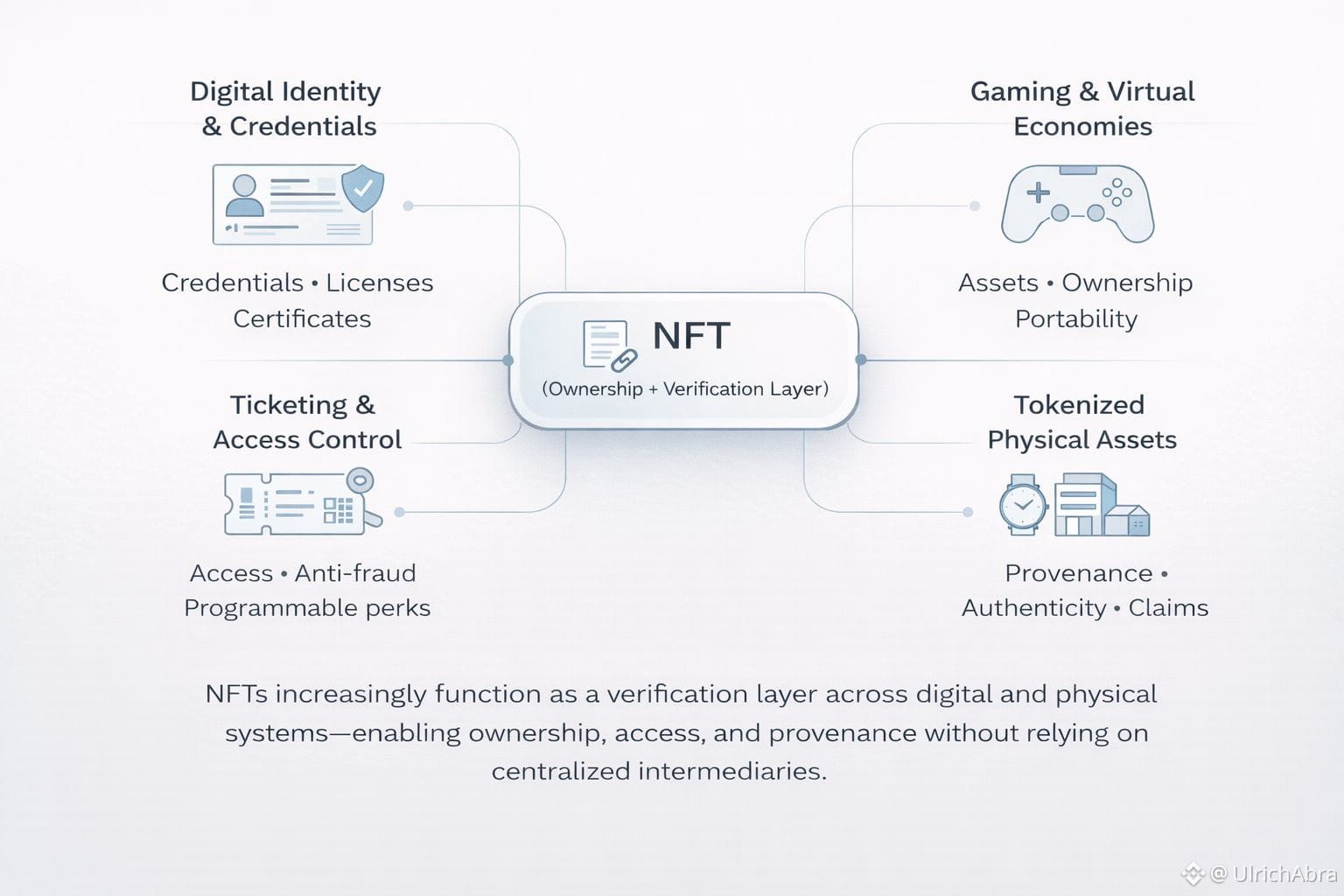
The most durable NFT use cases are emerging where verification, access control, and provenance matter more than speculation.
Key domains include:
📍Digital Identity and Credentials
NFTs are used to issue tamper-proof certifications, licenses, and academic credentials, reducing fraud and simplifying verification.
📍Gaming and Virtual Economies
In-game assets represented as NFTs allow true ownership, secondary markets, and cross-platform portability—reshaping player economies.
📍Ticketing and Access Control
Event tickets issued as non-transferable or conditionally transferable NFTs reduce counterfeiting while enabling programmable benefits.
📍Tokenized Physical Assets
NFTs increasingly serve as ownership claims for real-world items such as luxury goods, collectibles, or property records, linking physical and digital verification layers.
In these contexts, NFTs function less as speculative instruments and more as digital infrastructure primitives.
𝟰. 𝗠𝗮𝗿𝗸𝗲𝘁 𝗲𝘃𝗼𝗹𝘂𝘁𝗶𝗼𝗻: 𝗙𝗿𝗼𝗺 𝘀𝗽𝗲𝗰𝘂𝗹𝗮𝘁𝗶𝗼𝗻 𝘁𝗼 𝘂𝘁𝗶𝗹𝗶𝘁𝘆
The early NFT market was dominated by hype-driven price discovery. That phase exposed limitations: volatility, low retention, and weak fundamentals.
By 2026, the market has shifted toward:
● Utility-based valuation
● Long-term user engagement
● Integration with existing systems
Successful NFT projects now prioritize:
● Clear user benefits
● Sustainable economic models
● Regulatory compatibility
This transition mirrors earlier crypto cycles where infrastructure outlasted speculation.
𝟱. 𝗥𝗶𝘀𝗸𝘀, 𝗹𝗶𝗺𝗶𝘁𝗮𝘁𝗶𝗼𝗻𝘀
Despite progress, NFTs still face material risks:
● Market volatility: Prices remain sensitive to sentiment
● Security risks: Fake mints and malicious contracts persist
● Legal ambiguity: Ownership does not always imply IP rights
● Scalability constraints: Not all use cases are cost-effective on-chain
𝟲- 𝗛𝗼𝘄 𝗮 𝗿𝗲𝗴𝘂𝗹𝗮𝗿 𝘂𝘀𝗲𝗿 𝘀𝗵𝗼𝘂𝗹𝗱 𝗮𝗽𝗽𝗿𝗼𝗮𝗰𝗵 𝗡𝗙𝗧𝘀 𝗶𝗻 𝟮𝟬𝟮𝟲?
If you are a regular crypto user considering NFTs today, the starting point should not be price speculation, but purpose. Ask what the NFT actually represents: access, membership, identity, licensing rights, in-game utility, or participation in a broader ecosystem. Projects that cannot clearly answer this question rarely sustain value over time.
From an investment perspective, NFTs should be treated as high-risk, low-liquidity assets, not core portfolio holdings. Small allocations, aligned with projects you genuinely understand and are willing to hold long-term, are far more reasonable than short-term flipping strategies. In practice, this means prioritizing teams with a visible track record, transparent smart contracts, and communities that exist beyond price discussion.
It is also important to distinguish ownership from rights. Buying an NFT does not automatically grant commercial usage, governance power, or revenue participation unless explicitly stated in the contract or documentation. Reading terms, understanding royalty structures, and verifying on-chain data are essential habits, not optional steps.
For users interested in participating rather than investing, NFTs can serve as learning tools. Engaging with a small utility-driven NFT project can deepen understanding of wallets, smart contracts, and on-chain ownership mechanics in ways that passive token holding cannot.
In short, NFTs in 2026 reward disciplined curiosity. They are neither a guaranteed opportunity nor a fading experiment. For users who approach them with patience, research, and realistic expectations, NFTs can still offer meaningful exposure to how digital ownership is evolving, without the need to chase hype or headlines.