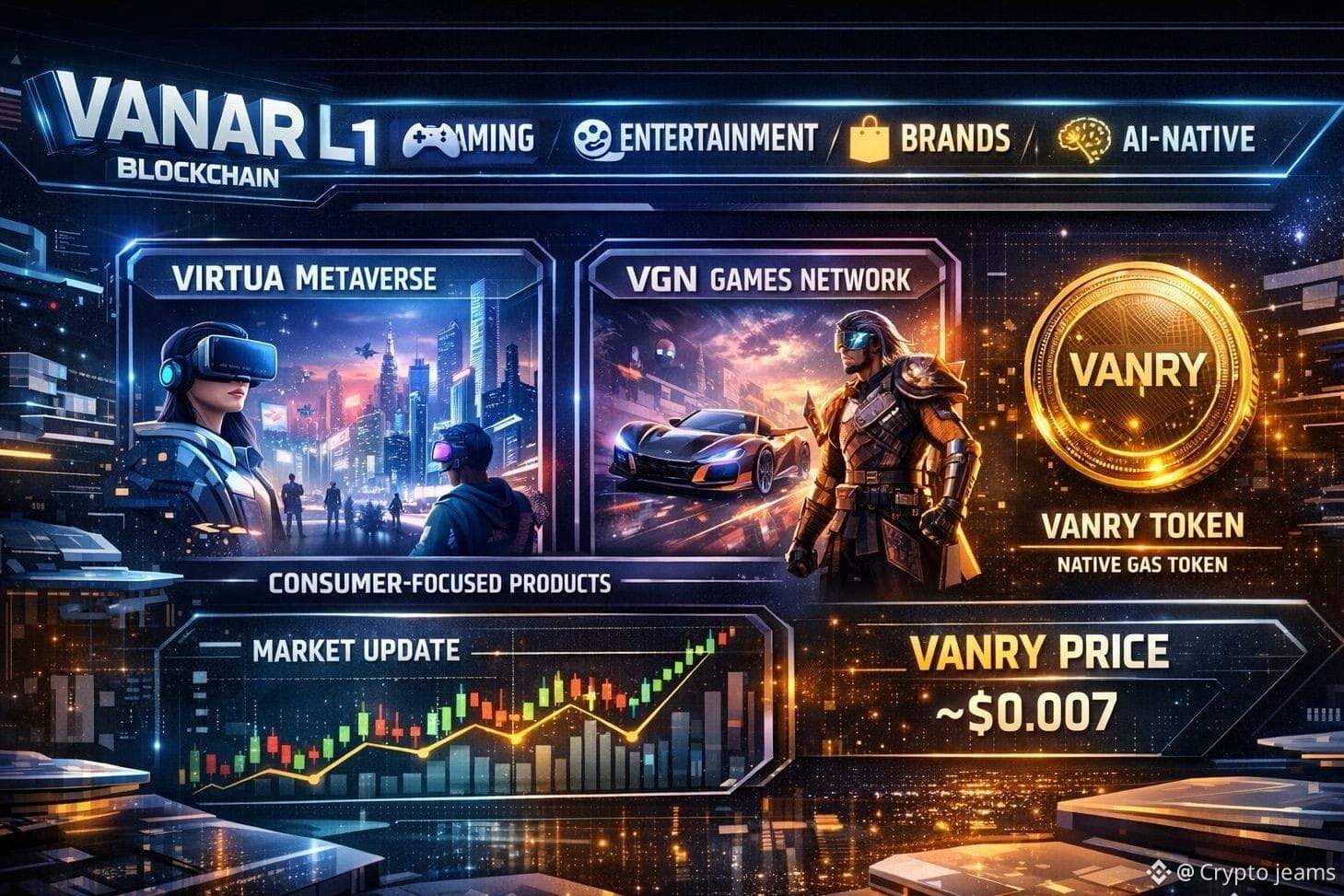
The blockchain space has become increasingly crowded, with countless projects promising to revolutionize everything from finance to supply chains. But every so often, a platform emerges that catches your attention not because of hype, but because it's solving real problems in a genuinely interesting way. VANAR Chain is one of those projects.
What makes VANAR different isn't just another technical specification or white paper promise. It's the focus on something we all care about: entertainment, gaming, and brand experiences. While other blockchains chase abstract use cases, VANAR is building infrastructure for the digital experiences we actually want to engage with.
At its core, VANAR Chain is a Layer-1 blockchain designed specifically for the entertainment and metaverse sectors. Think of it as blockchain infrastructure purpose-built for gaming studios, content creators, and brands that want to offer digital experiences without the usual blockchain headaches.
The team behind VANAR recognized something important: most people don't care about blockchain technology itself. They care about seamless experiences, whether that's playing a game, collecting digital items, or engaging with their favorite brands. VANAR's architecture reflects this human-centered approach.
The platform operates on a carbon-neutral proof-of-stake consensus mechanism, processing transactions with impressive speed while maintaining environmental responsibility. In an era where blockchain's environmental impact draws justified criticism, this matters more than ever.
But the technical specs tell only part of the story. What's genuinely compelling about VANAR is its ecosystem approach. The platform has already secured partnerships with major entertainment brands and gaming studios, creating a network effect that gives developers and creators real reasons to build there.
VANAR also introduced something called the Google Cloud for Web3 program partnership, making it easier for traditional companies to transition into blockchain-based experiences without needing to become blockchain experts overnight. This bridge between Web2 and Web3 could prove crucial as mainstream adoption continues.
Gaming remains VANAR's strongest use case. The platform enables developers to integrate blockchain features like true digital ownership, player-driven economies, and cross-game assets without sacrificing performance or user experience. Players can actually own their in-game items and potentially use them across different games built on VANAR.
Beyond gaming, VANAR is enabling brand experiences that weren't possible before. Imagine concert tickets that transform into exclusive digital collectibles, or loyalty programs where your points become tradable assets with real value. These aren't hypothetical futures; they're applications already being built on the platform.
What ultimately makes VANAR interesting is that it seems to understand a fundamental truth about technology: people adopt tools that make their lives better, not tools that require them to completely change how they think and act.
By focusing on entertainment and familiar experiences, VANAR is lowering the barrier to blockchain adoption. You don't need to understand gas fees or wallet management to enjoy a game built on VANAR. The blockchain works quietly in the background, enabling new possibilities without demanding attention.
VANAR Chain represents a maturing blockchain industry that's learning to meet people where they are. Rather than demanding users adapt to blockchain's complexities, it's adapting blockchain to serve human needs and desires.
Whether VANAR becomes a dominant force in blockchain entertainment remains to be seen. The space is competitive, and success requires more than good technology. it requires sustained execution, community building, and delivering real value to users and developers alike.
But the direction is promising. By focusing on entertainment, prioritizing user experience, and building genuine partnerships, VANAR is charting a path that could finally bring blockchain benefits to mainstream audiences without requiring them to become blockchain enthusiasts first.
And honestly, that's exactly the kind of practical innovation the industry needs more of.