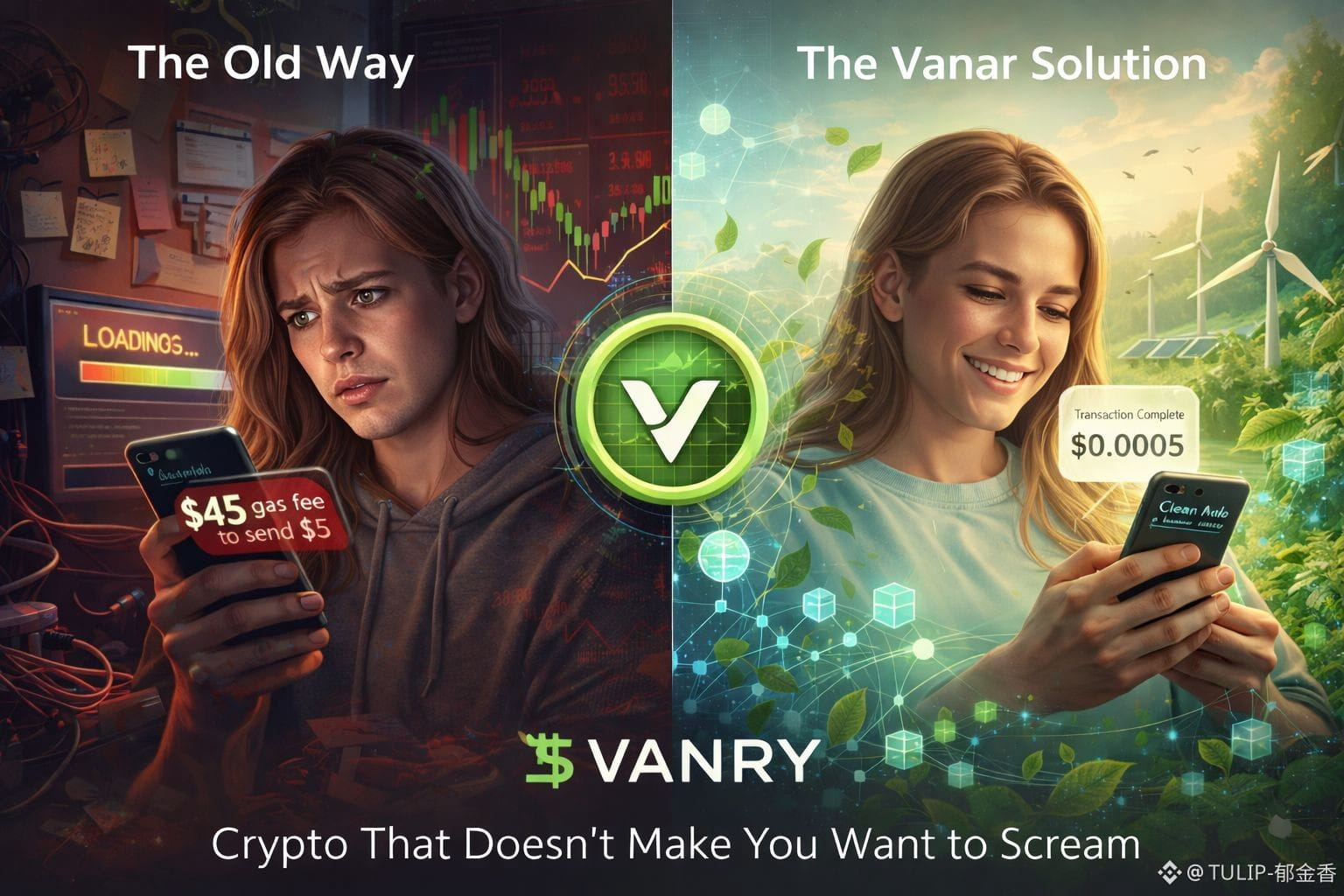
You find a cool NFT project or a game that actually looks fun. You get your wallet ready, heart pumping with that "early adopter" excitement. Then you see the gas fee. 45 to mint a30 item. Or you try to actually use a dApp and it's slower than my grandma's Windows XP computer.
@Vanarchain looked at all this mess and said "nah, we're doing it differently."
Their whole thing is being "AI-native," which sounds like buzzword bingo until you realize what it actually means. They built tools that make blockchain feel less like a clunky bank from 1987 and more like... well, like actual modern technology. What $VANRY Actually Does (In Human Terms)
Your Money Actually Works For You
Staking $VANRY isn't some complex ritual requiring a PhD in DeFi. You lock up some tokens, help secure the network, and you get paid. Simple. But here's the cool part: because Vanar has real products people actually use—games, AI tools, business apps—those fees get shared back to stakers. You're not just praying for "number go up." You're earning from real usage.
I've seen staking APYs that look like typos (900%? Really, anon?), but Vanar's model feels sustainable because there's actual revenue flowing in, not just Ponzi-math.
Fees So Low You'll Forget They Exist
I sent some VANRY to a friend the other day to test it out. Cost me less than a penny. Not "low fees" by Ethereum standards—*actually* low. We're talking0.0005 per transaction.
This matters because when fees are invisible, you start using crypto like it's supposed to be used. I can tip someone 1 worth of tokens without feeling stupid. Game items can cost0.50. Micropayments become real. It's the difference between a toll road that charges you $20 and one that's free—you actually drive on it.
The Green Thing Isn't Just Marketing
Yeah, yeah, every project claims to be "eco-friendly" now. But Vanar partnered with Google's renewable energy infrastructure and actually built tools to track energy use in real-time. Their "Vanar ECO" dashboard shows you exactly how much power the network is using.
I don't know about you, but I feel slightly less like a supervillain destroying the planet when I use a blockchain that runs on actual clean energy. Small wins.
AI That Actually Makes Sense
Most "AI + blockchain" projects I've seen are just... awkward. Like they smashed two buzzwords together and hoped VCs would throw money at them. But Vanar built something called Neuron that compresses files (like videos or game assets) by 500x and stores them on-chain permanently. No more "link rot" where your NFT points to a dead server.
And Kayon? It's basically a smart contract that can actually think . I watched a demo where it read a PDF invoice and automatically released payment because it understood the document met the contract terms. No human checking, no oracle calling some random API. Just... done.
I'm not saying it's magic, but it's the first time I've seen AI on a blockchain that didn't feel like a hack job.
Real Stuff Actually Being Built (Not Just Promised)
Here's where I get cynical: roadmaps are lies. Every project has a "coming soon" section that stays coming soon forever. But Vanar already has:
Games: Actual playable games with Unreal and Unity plugins, not "metaverse" vaporware
A wallet used by 13 million people in the Middle East (Emirates Digital Wallet partnership—real banks, real customers)
AI tools that game devs are using right now for 3D character creation
Galxe integration for loyalty programs (if you've used Web3, you know Galxe)
They even have a "Brainstorming Cohort" thing where they actively help new projects launch with funding and support. It's not just "build it and they will come"—they're actually onboarding people.