

When most blockchains talk about regulation, they usually talk around it. They frame it as an external pressure, a future risk, or something that can be handled later with wrappers, interfaces, or legal disclaimers. Dusk Network takes a very different position. It assumes regulation is permanent, unavoidable, and structurally binding. That single assumption changes everything about how a blockchain has to be designed, operated, and governed.
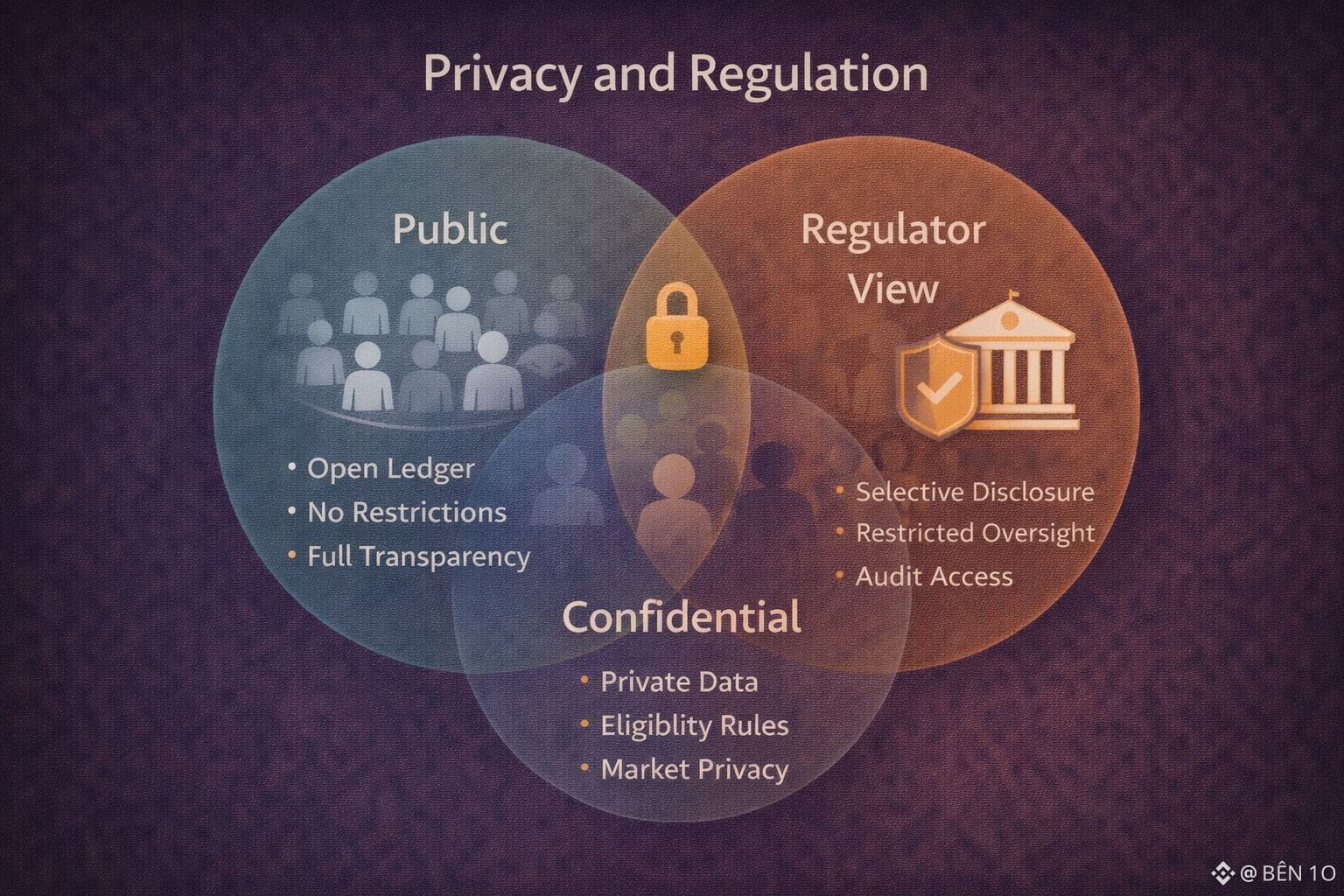 To understand what actually changes inside a blockchain when regulation is treated as a core requirement, you first have to drop the crypto-native idea that transparency is always good. Radical transparency works in experimental environments. It breaks down in real financial systems. Large institutions, regulated issuers, and professional market participants cannot operate if every action becomes public information. Strategy leaks, counterparty exposure, balance sheet signals, and internal cash flows are not just private preferences; they are legally and competitively sensitive data.
Dusk starts from this reality rather than fighting it. Instead of asking, “How do we make finance adapt to blockchains?” it asks the harder question: “What must a blockchain look like if it is expected to survive financial regulation, audits, and legal scrutiny?” The answer is not ideological privacy or blanket opacity. It is controlled systems design.
Inside such a blockchain, privacy is no longer a moral position. It becomes a configurable operating mode. Some actions are public. Some actions are confidential. Some actions are confidential to the market but provable to regulators. This means the ledger itself must be capable of expressing who is allowed to see what, and under which conditions that visibility can change. That requirement alone rules out most traditional blockchain designs.
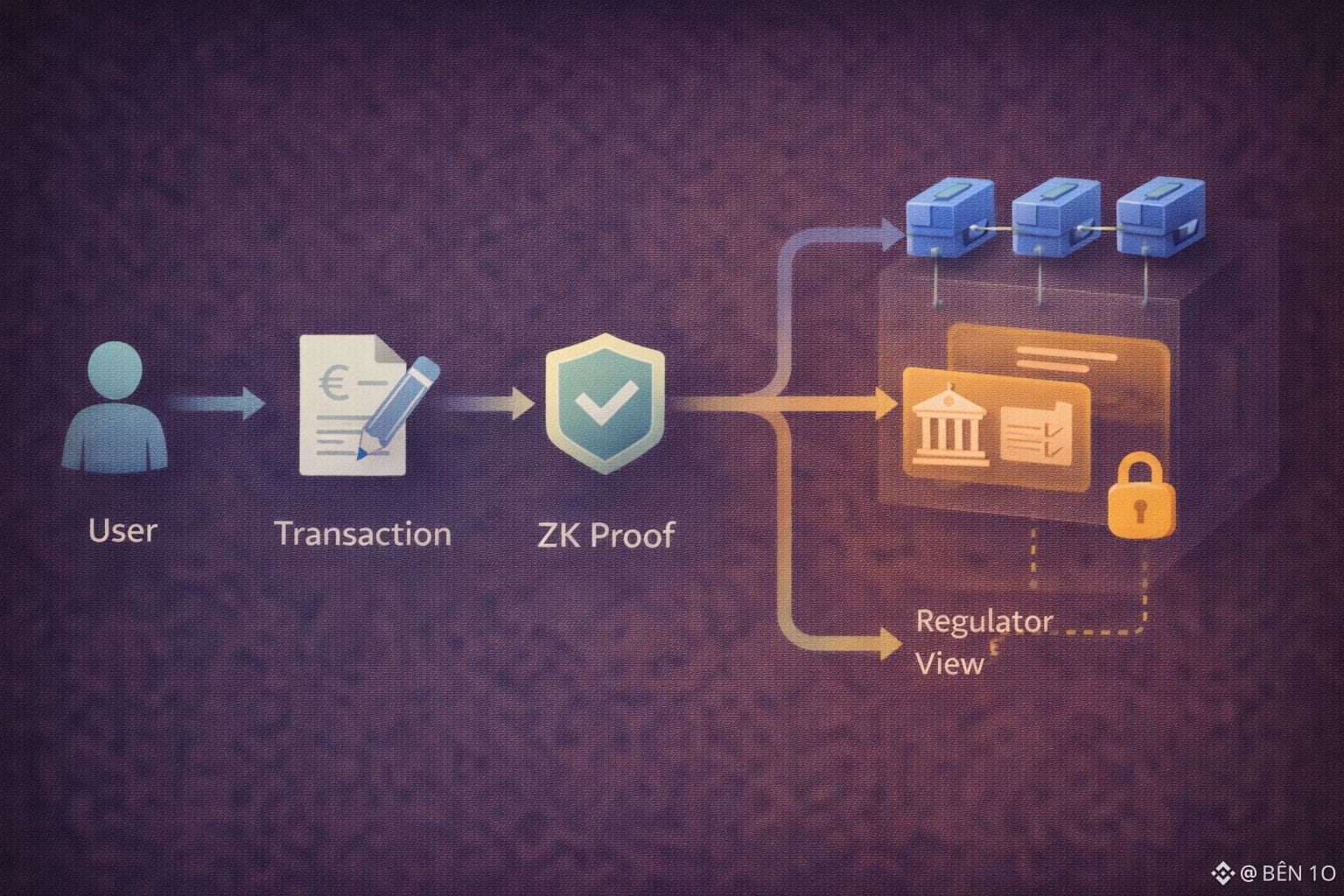 This is where Dusk’s notion of selective disclosure becomes fundamental. Transactions can be validated without revealing their sensitive components. The system can prove that rules were followed eligibility, transfer restrictions, balance sufficiency without broadcasting the underlying data. For regulators and auditors, this flips the problem. Instead of surveilling everything by default, they gain targeted access paths that can be activated when legally justified. This is far closer to how real financial oversight actually works.
Once regulation is treated as core, settlement itself changes meaning. In most blockchains, finality is treated as a technical milestone. A block is confirmed, a transaction is “done,” and the system moves on. In regulated finance, finality is not only technical. It is legal. A settlement event must be defensible after the fact. It must be timestamped, immutable, and attributable to a recognized process. Dusk’s emphasis on deterministic settlement behavior aligns with this reality. Finality is not probabilistic or socially negotiated. It is designed to be operationally reliable.
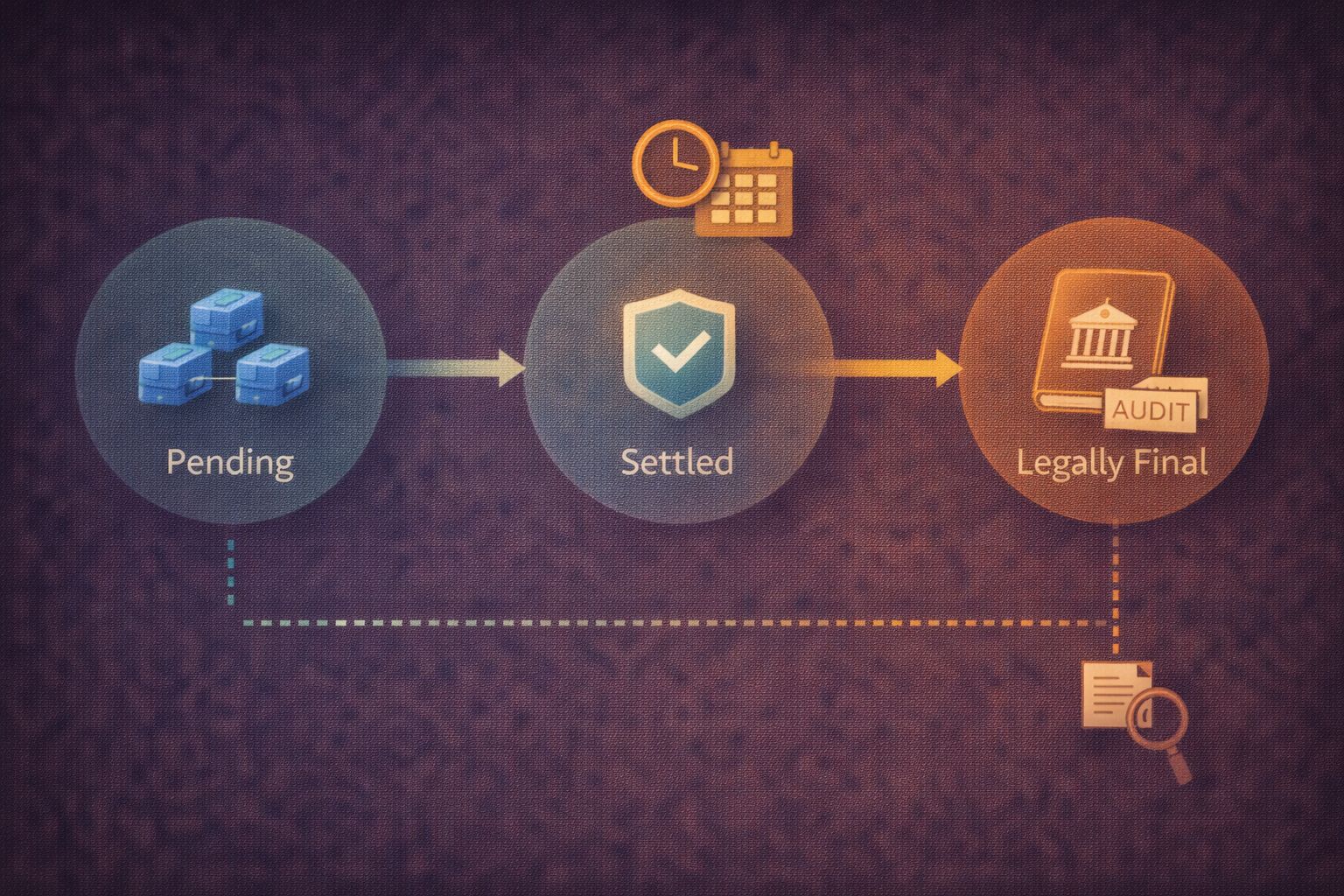 This has downstream consequences. Risk systems depend on predictable settlement. Capital efficiency depends on knowing exactly when exposure ends. Legal frameworks depend on being able to say, with certainty, when ownership transferred. A blockchain that treats finality casually cannot support regulated instruments, no matter how fast it is. Dusk’s architecture implicitly accepts that settlement is a legal boundary, not just a technical one.
Another internal shift appears in how execution is handled. Dusk does not ask developers to abandon existing standards. Its EVM-compatible execution environment acknowledges a simple institutional truth: tooling continuity matters more than novelty. Banks, custodians, and regulated service providers care less about elegant new paradigms and more about whether their developers, auditors, and compliance teams can work without friction. Solidity, known tooling, and established security patterns reduce operational risk. The innovation moves below the execution layer, into how transactions are finalized, validated, and disclosed.
Regulation also reshapes how money itself is treated on-chain. Tokens are not just assets; they are liabilities, claims, and instruments governed by law. This becomes especially visible in the context of regulated cash equivalents. Dusk’s work around euro-denominated electronic money highlights this shift. A regulated euro instrument like EURQ is not interesting because it represents fiat on-chain. It is interesting because it tests whether regulated cash and regulated assets can coexist on the same ledger without collapsing privacy or compliance.
For that to work, the blockchain must support issuance controls, redemption guarantees, reporting obligations, and audit access. These requirements cannot be patched in later. They must be enforced at the protocol level. Otherwise, the system becomes legally fragile. Once regulation is core, money rails are no longer interchangeable commodities; they are regulated infrastructure components.
Data is another layer that changes completely. Tokenized securities are not self-contained objects. They depend on reference data, price feeds, corporate actions, and official records. In speculative DeFi, oracle failures are inconvenient. In regulated markets, they are catastrophic. A compliant blockchain must therefore treat data provenance as seriously as transaction validity. Dusk’s alignment with regulated venues and data standards reflects an understanding that authoritative data is as important as decentralization.
This is where partnerships like NPEX matter conceptually, not as marketing signals. They indicate that the blockchain is being designed to plug into regulated market structure rather than replace it. Licensed venues, reporting obligations, and supervisory frameworks are not obstacles in this model. They are endpoints the system is built to connect to.
Once regulation is core, even governance changes character. Many crypto systems rely on public signaling, social pressure, and transparent coordination. That works when everything is visible. In a privacy-preserving system, governance must rely more heavily on economic enforcement, formal roles, and clearly defined authority. Staking, slashing, and validator incentives become central, because you cannot depend on the crowd to observe and react to misbehavior that is intentionally hidden from public view. Dusk’s long-duration token economics and straightforward staking model reflect this more institutional approach to network security.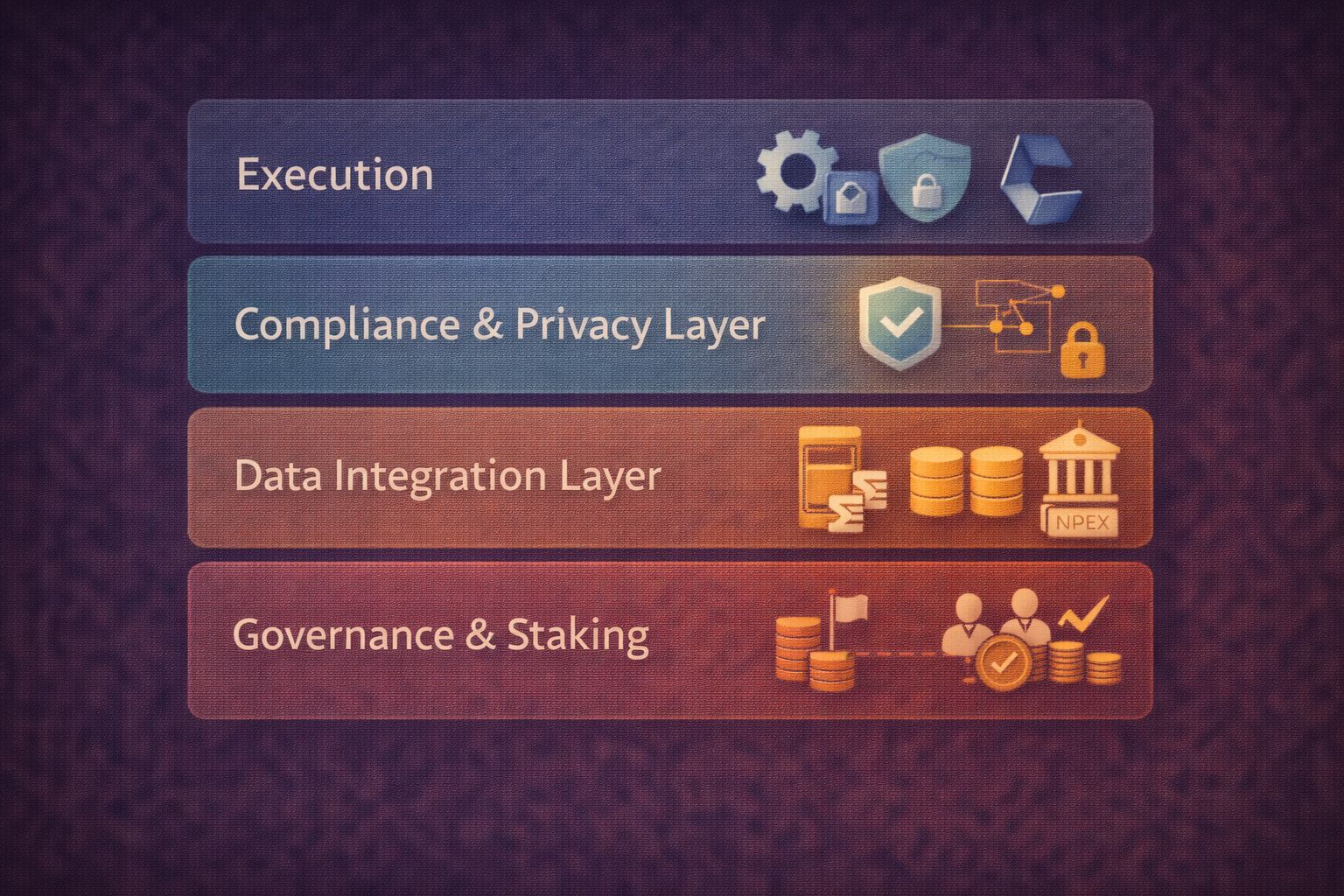 Importantly, treating regulation as core also changes expectations around growth. Regulated systems do not explode in usage. They accumulate it slowly. Pilots precede production. Compliance reviews precede scale. Transaction volumes remain modest until trust solidifies. From a crypto perspective, this looks like stagnation. From a financial infrastructure perspective, it looks normal. The question is not how fast usage grows, but whether the system behaves correctly under scrutiny.
What emerges from this design philosophy is not a privacy coin and not a general-purpose DeFi chain. It is something closer to a settlement substrate for regulated markets. A place where value can move without broadcasting strategy, where compliance is provable rather than performative, and where infrastructure behaves predictably even when nobody is watching.
If Dusk succeeds, it will not be because it outcompeted other blockchains on speed or hype. It will be because it internalized a reality most crypto systems still resist: regulation does not sit on top of markets. It shapes them. A blockchain that understands this stops being a product. It starts behaving like infrastructure.
And infrastructure, when done correctly, is quiet. It does not demand attention. It earns trust slowly, then becomes very hard to replace. That is the kind of system Dusk appears to be building and that is what actually happens inside a blockchain when regulation is treated not as a threat, but as a design constraint from day one.