

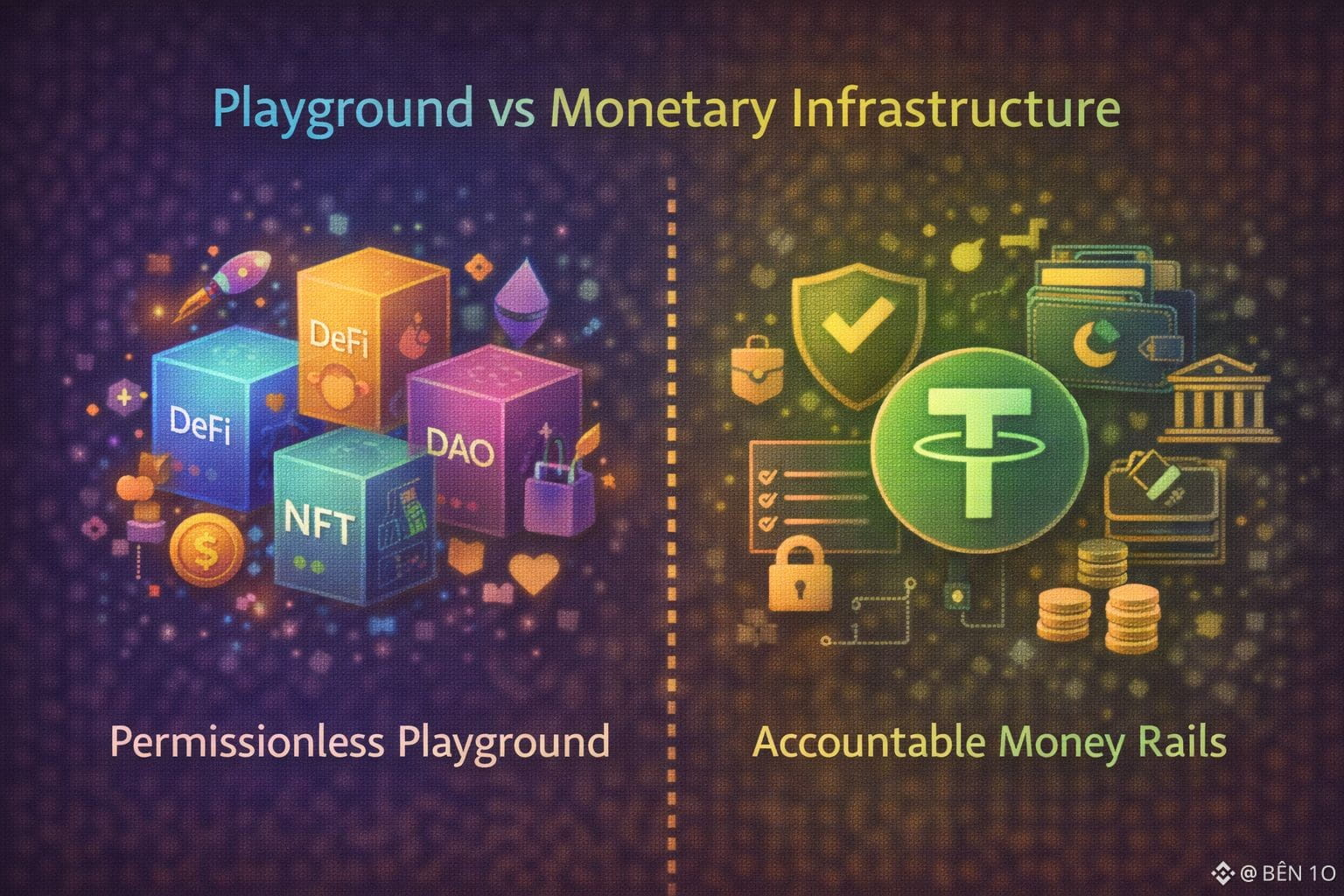
There’s a quiet shift happening in crypto, and Plasma sits right in the middle of it. For years, blockchains marketed themselves as playgrounds permissionless, composable, expressive spaces where anyone could deploy anything and experiment freely. That phase mattered. It’s how crypto discovered DeFi, NFTs, DAOs, and all the strange economic primitives that came with them. But playgrounds are optimized for creativity, not responsibility. Money, especially money that real businesses depend on, eventually demands something else: predictability, accountability, and boring reliability.
Plasma feels like a chain built with that realization baked in.
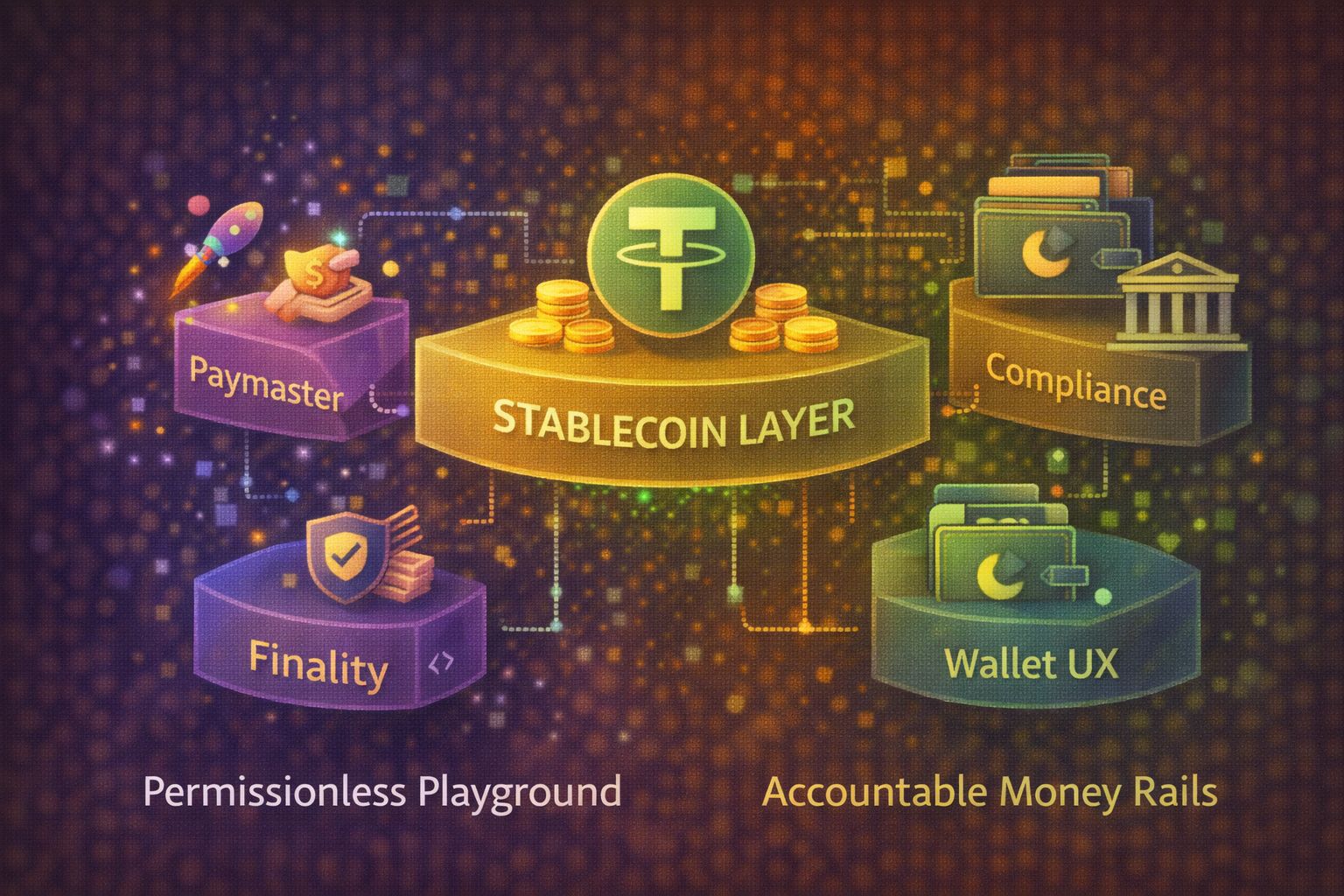
When people frame Plasma as “another Layer 1,” they miss the point. Plasma is not trying to win the general-purpose chain beauty contest. It’s making a narrower, more opinionated bet: that stablecoins are no longer an application living on blockchains, but the primary workload blockchains should be designed around. That’s a big philosophical shift. Instead of asking, “What cool apps can we host?” Plasma asks, “What does money actually need to function at scale?”
That question leads you away from vibes and toward infrastructure.
In the real world, nobody thinks about the settlement rails behind payments. Merchants don’t debate the elegance of Visa’s architecture; they care whether funds arrive on time, whether reconciliation breaks, and whether costs are predictable enough to plan around. Plasma’s design choices gasless USDT transfers, stablecoin-first gas, fast deterministic finality are all downstream of this mindset. The chain is intentionally trying to disappear behind the experience of moving money.
The gasless USDT model is a good example of where Plasma departs from both crypto idealism and Web2 naïveté. Making everything free is a fast path to spam and unsustainable economics. Making nothing free pushes users back to systems that already work. Plasma draws a sharp line: simple stablecoin transfers are sponsored via a protocol-level paymaster, while more complex activity pays fees to validators. That’s not charity; it’s prioritization. Plasma is effectively saying, “This is what the chain exists for.” If your most common action is sending USDT from A to B, that action should feel effortless. Everything else can bear cost because it’s not the core mission.
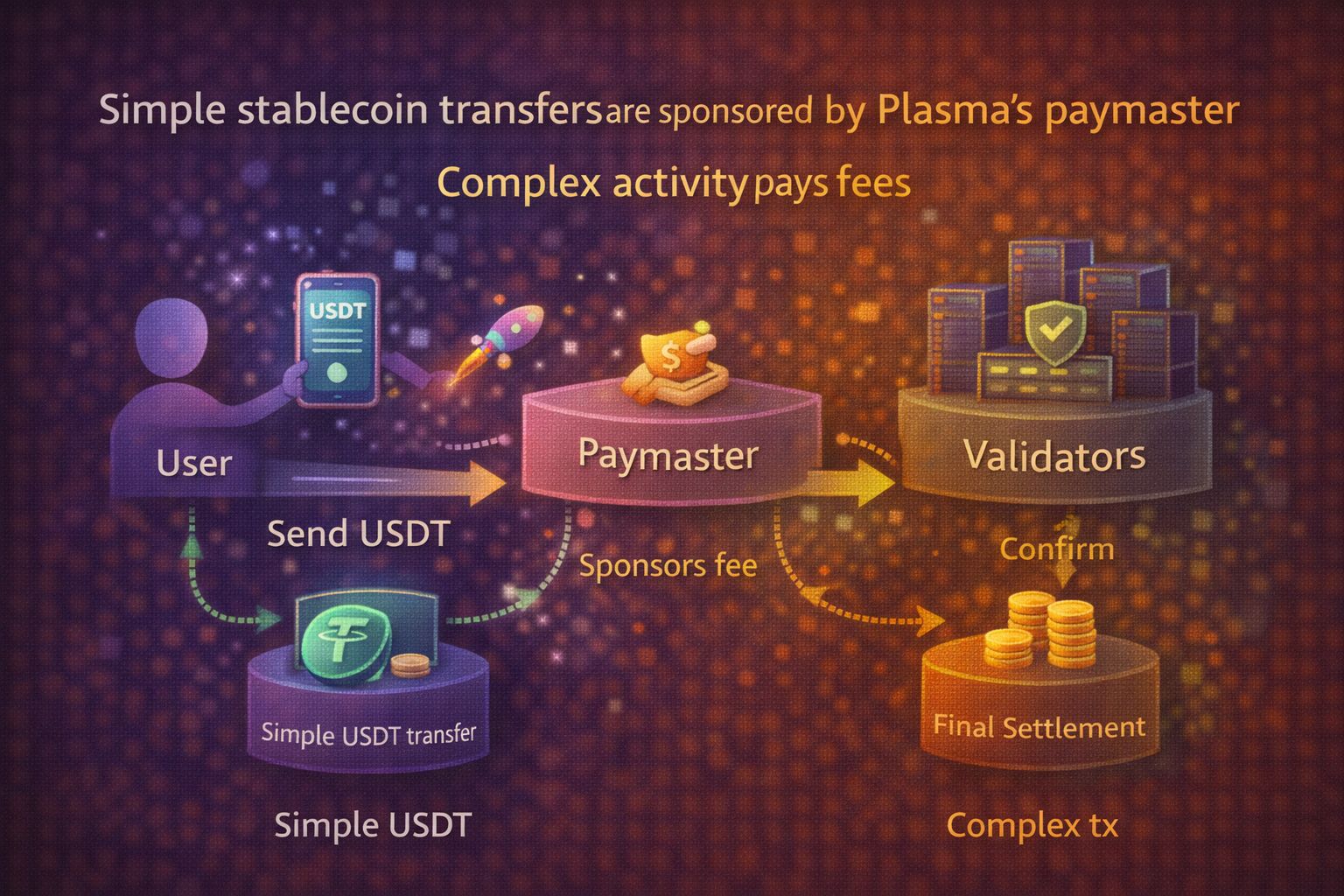
What’s more interesting is how this logic extends into gas itself. By supporting stablecoin-denominated gas letting users pay fees in USDT rather than forcing them to acquire a native token first Plasma reverses one of crypto’s most user-hostile rituals. Traditional chains demand upfront loyalty: buy the token, then you can move your money. Plasma flips that: move your money first, and the chain earns your trust later. That sounds subtle, but for payments, it’s enormous. It aligns the chain with user intent instead of forcing behavior change.
Speed, of course, is table stakes now. Every chain claims it. Plasma’s use of a BFT-style finality engine is less interesting for the headline latency numbers and more interesting for what it enables operationally. Deterministic finality changes how businesses integrate. Probabilistic confirmation might be fine for traders, but businesses automate around receipts, not probabilities. If finality is fast and reliable, you can tighten cash cycles, reduce buffers, and build workflows that assume settlement is done, not merely likely.
When you look at Plasma on-chain, the story it tells is refreshingly boring in a good way. High transaction counts, steady block cadence, and a dominant stablecoin footprint don’t scream hype; they suggest repetition. The USDT0 presence isn’t decorative. It’s gravitational. Whatever the marketing says, the ledger itself reflects a network being used primarily for moving stable value, again and again. That’s exactly what you’d expect from infrastructure designed for payments rather than speculation.
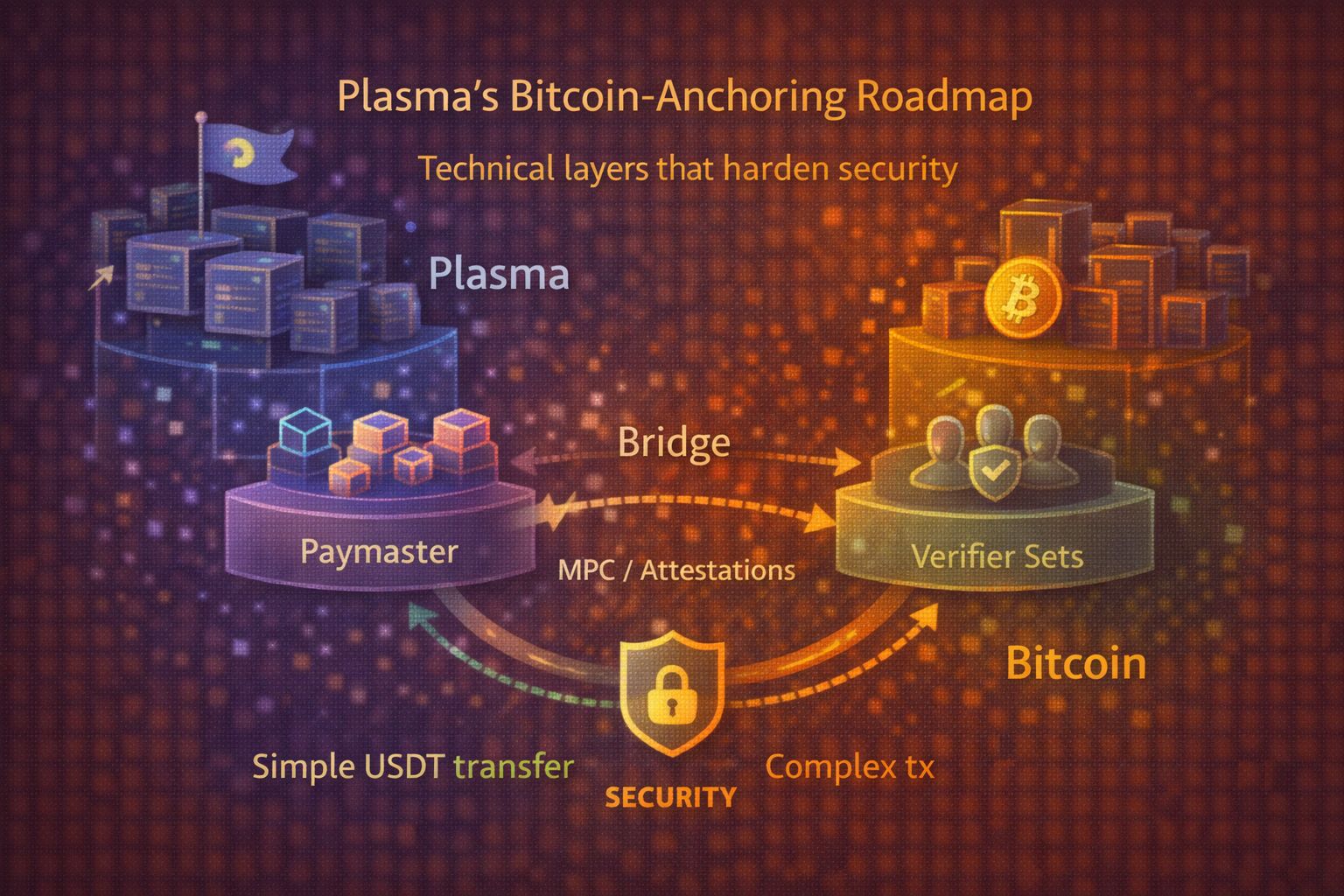
The Bitcoin-anchoring roadmap is where Plasma shows its ambition and its risk tolerance. Anchoring security assumptions to Bitcoin isn’t a silver bullet; it’s a credibility play. Payment networks eventually face political and regulatory pressure. Borrowing Bitcoin’s neutrality narrative is a way to harden Plasma’s long-term posture. But Plasma deserves credit for being explicit that this is a roadmap item, not a finished reality. Bridges are hard. MPC, attestations, verifier sets all of this introduces real operational complexity. If executed well, it strengthens the system’s resistance to coercion. If executed poorly, it becomes a new trust bottleneck. Either way, this is the part of Plasma’s story that will define whether it matures into durable infrastructure or stalls as an interesting experiment.What reinforces Plasma’s seriousness is the ecosystem forming around it. Integration with Chainalysis is not about hype; it’s about compliance visibility. KYT tooling is where regulated capital draws its red lines. Similarly, wallet distribution through Trust Wallet matters more than niche power-user tooling ever will. Payments don’t scale through Discord installs; they scale through default surfaces. Liquidity access via Rhino.fi sends the same signal: no matter how clean your architecture is, if users can’t easily bridge USDT in and out, you’re not a settlement layer you’re a demo.
Even the XPL token design fits this plumbing-first worldview. XPL is not positioned as a cult asset or a narrative vehicle. It’s the fee and security substrate for non-sponsored activity, with staking to secure the network. The choice to emphasize slashing rewards rather than slashing principal lowers early participation risk for validators, encouraging decentralization. That’s a pragmatic trade-off. It may reduce deterrence in edge cases, but it increases the likelihood of a broader validator base forming early often a bigger long-term win for network resilience.
If Plasma succeeds, it probably won’t dominate crypto discourse. And that might be the clearest sign it worked. Infrastructure that does its job well fades into the background. People don’t argue about plumbing; they argue when it fails. Plasma’s real test won’t be TPS charts or EVM checklists. It will be whether the paymaster model resists abuse without turning into a silent subsidy sink, whether stablecoin-first gas feels seamless in real wallets, and whether the Bitcoin-anchored security story survives contact with reality.
If those pieces hold, Plasma won’t feel like another chain fighting for attention. It’ll feel like something more threatening to incumbents and less exciting to speculators: a dependable monetary rail. And in payments, boring isn’t a weakness it’s the entire point.