
There’s a very familiar pause that happens when you’re about to send a stablecoin. It’s not fear, and it’s not confusion. It’s that small moment where you check the fee, think about confirmation time, and wonder if you’re using the right network. For something that’s supposed to behave like money, that hesitation feels wrong. Sending value shouldn’t require a second thought. That simple feeling is a big part of why Plasma exists.
Plasma is built around a grounded idea: stablecoins are already the most practical use of crypto. People use them for remittances, freelance payments, business settlements, and everyday transfers, especially in places where traditional systems are slow, expensive, or unreliable. This isn’t a future vision; it’s current behavior. Yet most blockchains weren’t designed with stablecoins as the main priority. They were built to do many things at once, and stablecoins just happen to live on top of that general-purpose infrastructure. Plasma flips the approach by designing the network specifically for stablecoin settlement.
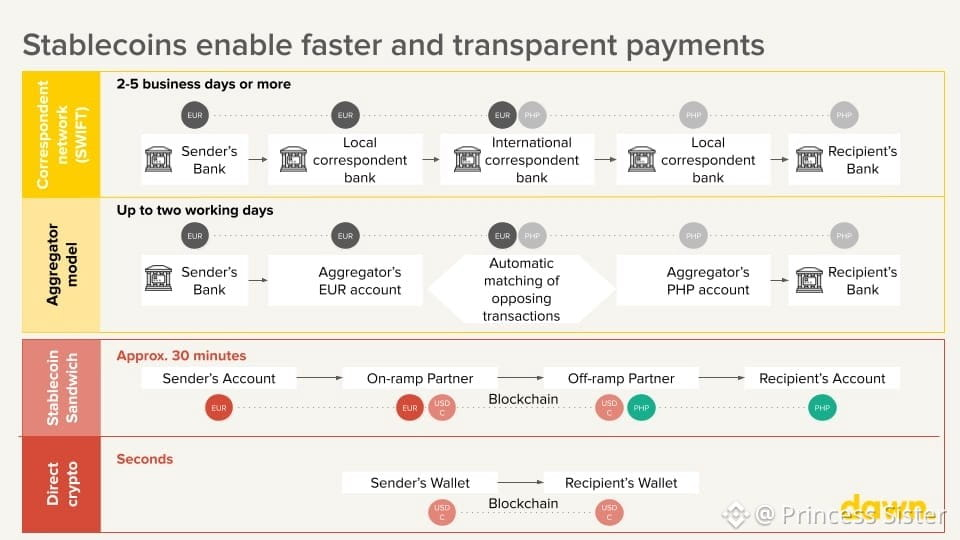
Speed matters here, but not in a flashy “look at our numbers” way. Sub-second finality means transactions feel finished almost instantly. You don’t wait, you don’t refresh, you don’t second-guess. The transfer simply completes. For a regular user, that feels reassuring and reduces anxiety. For a business, it removes friction and makes operations smoother. For institutions, it reduces settlement risk and makes timing more predictable. Fast finality isn’t about hype; it’s about trust you can feel.
At the same time, Plasma stays practical for builders. With full EVM compatibility, developers can use familiar tooling and patterns instead of rebuilding everything from scratch. That choice matters because adoption usually follows the path of least resistance. People don’t switch systems just because something is new. They switch when it’s clearly better and still easy to work with. Plasma aims to offer better settlement without forcing everyone to learn a completely different stack.
One of the most user-friendly parts of Plasma is how it treats fees. Gasless stablecoin transfers and stablecoin-first gas design address a problem many users quietly struggle with: most people don’t want to hold a separate token just to send money. In many regions, users hold stablecoins precisely because they want stability, not exposure to another asset. When fees are handled in the same currency being sent, the whole experience feels natural. You send money, and you’re done. No juggling balances, no confusion, no extra steps.
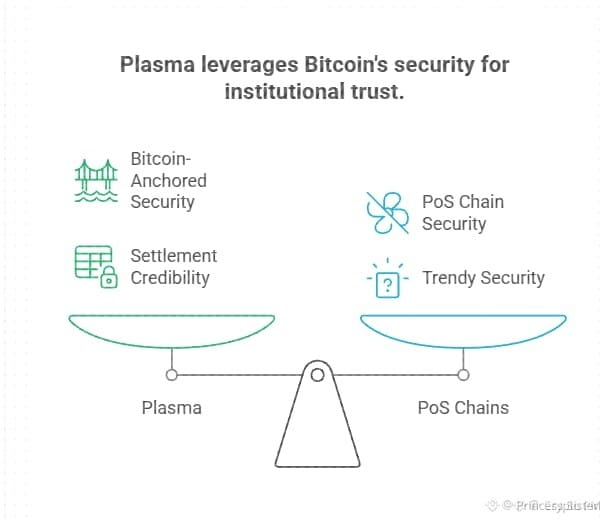
On the security side, Plasma takes a long-term view. Bitcoin-anchored security is meant to reinforce neutrality and censorship resistance by tying settlement assurance to the most battle-tested network in crypto. This isn’t about marketing or copying Bitcoin; it’s about credibility and durability. For institutions, neutrality is a serious requirement, and for everyday users, it’s a quiet promise that the rails won’t be easily controlled or changed on a whim.

 Plasma’s target users reflect how stablecoins are actually used in real life: everyday people who care about speed, cost, and reliability, and also payment providers and financial institutions that need predictable settlement at scale. Plasma doesn’t try to be everything for everyone. It focuses on doing one thing extremely well: moving stable value reliably. That might not sound exciting, but infrastructure rarely wins by being exciting. It wins by working so smoothly that people stop noticing it. And in the long run, that kind of reliability is exactly what money needs.$XPL