
Vanar Chain feels like it was designed with a very specific frustration in mind, and that frustration is how most blockchains still expect everyday users to behave like technical users, which is why so many “mass adoption” stories never leave the bubble, because people don’t wake up wanting to manage complex wallets, jump through clunky steps, or pay unpredictable fees just to do something simple, and Vanar’s whole identity is built around making the chain fit real consumer behavior instead of trying to force consumers to fit the chain.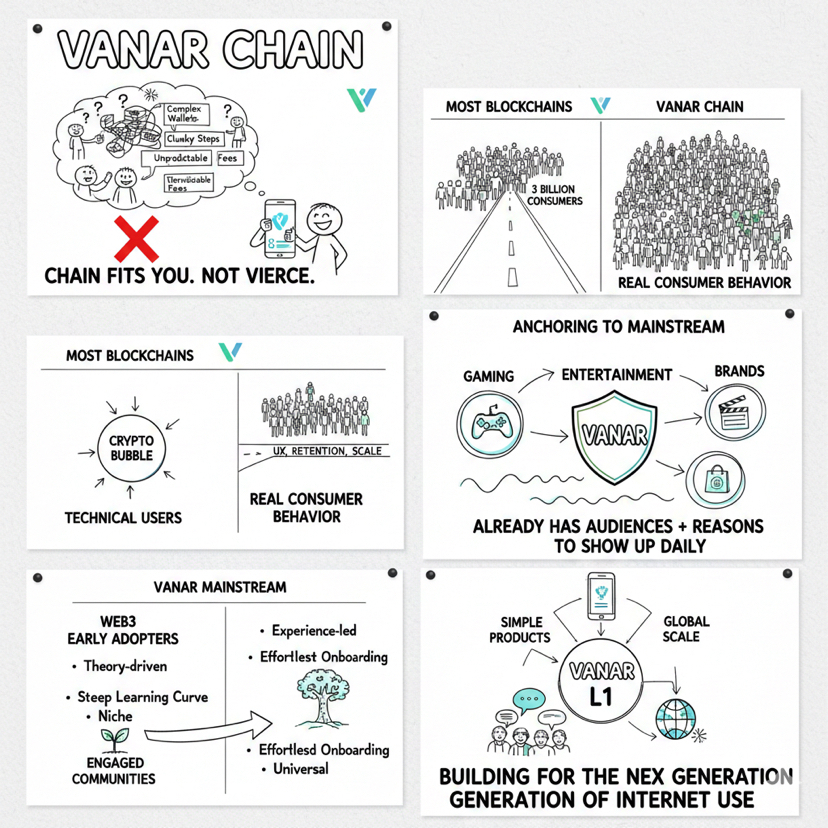
What stands out about Vanar is the way it keeps anchoring itself to mainstream distribution rather than pure theory, because the team narrative consistently leans on experience with gaming, entertainment, and brands, and that matters because those industries already understand user experience, retention, onboarding, and scale, which is exactly what Web3 struggles with when it tries to reach beyond early adopters, so Vanar positioning itself around the next “3 billion consumers” is not just a loud slogan, it’s an attempt to build an L1 that naturally makes sense for products that already have audiences and already have reasons for people to show up daily.
Under the surface, Vanar isn’t presenting itself like a chain that only offers raw blockspace and then hopes the ecosystem figures out everything else, because it’s increasingly shaped like a product stack where the chain is the foundation but the bigger idea is the set of tools and modules that help builders ship applications that feel smooth, predictable, and scalable, and that approach is important because consumer adoption usually fails when every team has to rebuild the same basics again and again, so the more Vanar can package onboarding, functionality, and infrastructure into ready rails, the more it reduces friction for developers and the more it increases the chance that real consumer apps actually stick.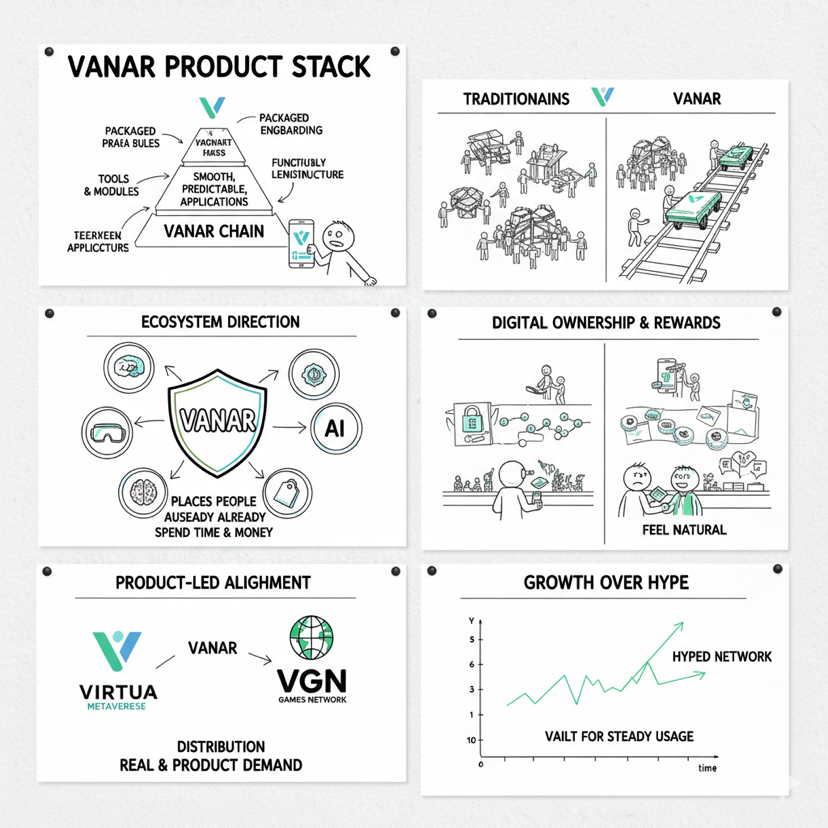
The ecosystem direction is also intentionally broad but not random, because when Vanar talks about gaming, metaverse experiences, AI, eco narratives, and brand solutions, it’s really pointing toward places where people already spend time and money, and where digital ownership and digital rewards can feel natural rather than forced, which is why names that circulate around the Vanar story, like Virtua Metaverse and the VGN games network, are meaningful in context, because they represent distribution and product demand rather than a chain that only exists on paper, and even when the market is quiet, this kind of product-led alignment tends to be the difference between a network that spikes during hype and a network that grows into steady usage.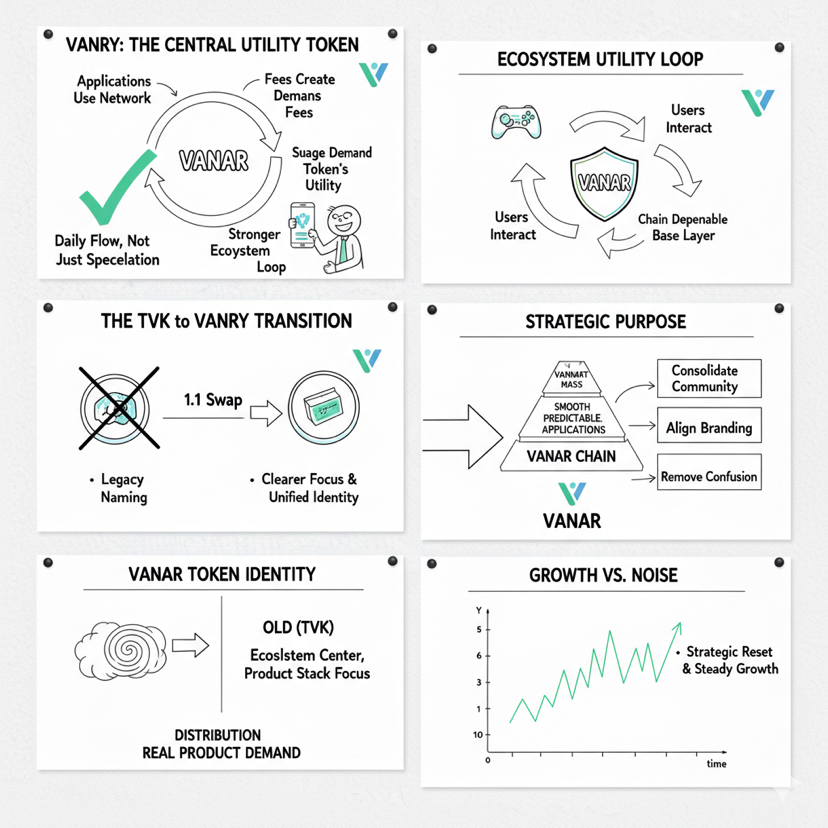
VANRY sits at the center of that plan as the token that powers network activity, and the clean way to look at it is that a consumer-focused chain needs a token that becomes part of daily flow rather than something that only matters for speculation, so the real value story for VANRY is tied to whether applications actually use the network in a repeatable way, because usage creates fees, fees create demand for the token’s utility, and utility becomes the foundation for a stronger ecosystem loop where builders ship more apps, users interact more often, and the chain becomes a dependable base layer instead of a seasonal narrative.
There is also an important context point in Vanar’s token identity, because the project made a public transition from the older TVK identity into VANRY on a 1:1 basis, and that kind of move usually isn’t done just for cosmetics, since it tends to signal a clearer focus and a more unified identity around the chain itself, which can help consolidate community attention, align branding across products, and remove confusion for new entrants who don’t want to chase legacy naming, and while token transitions always come with market noise, the strategic purpose is usually to reset the story around a single ecosystem center, which in Vanar’s case is the L1 and its product stack.
What feels especially relevant right now is how Vanar is trying to widen its lane without losing its consumer-first roots, because it has been increasingly framing itself around AI-enabled infrastructure while also touching the PayFi and tokenized settlement narrative in the way it shows up publicly, and that matters because if Vanar can connect consumer applications on one side and real value movement on the other side, it creates a stronger long-term case for why the chain should exist at scale, since consumer networks win when they make value transfer feel invisible and natural, and payment or settlement themes become powerful when they are connected to real usage rather than only conference-stage messaging.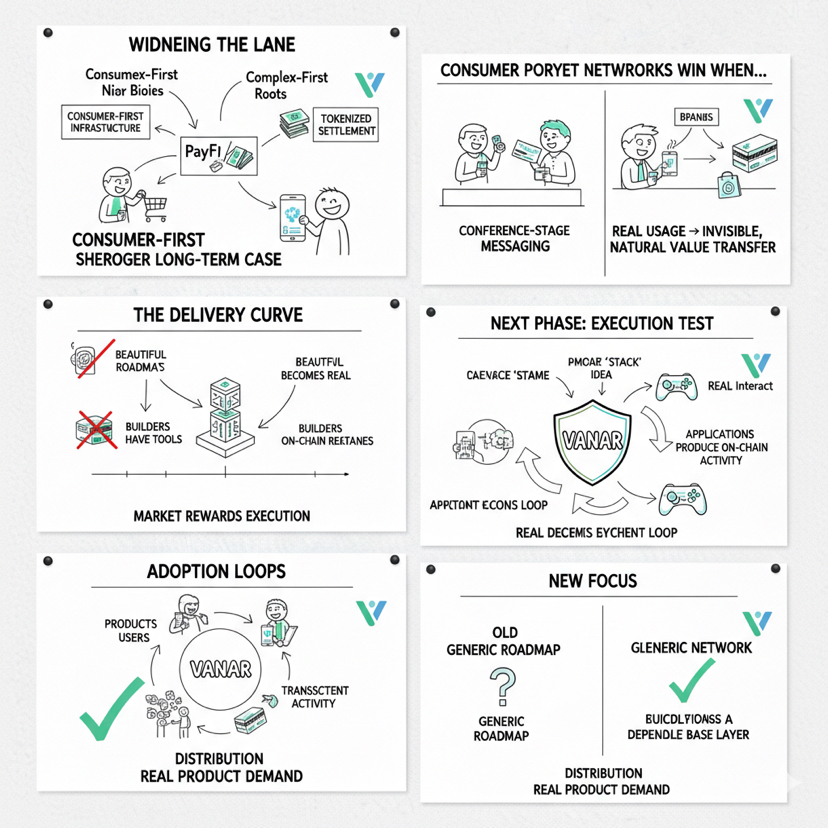
When people ask what’s next for Vanar, the answer that actually matters is not a generic promise but the delivery curve, because the market doesn’t reward beautiful roadmaps forever, it rewards the moment the stack becomes real, the modules ship, builders have tools they can rely on, and applications start producing consistent on-chain activity that doesn’t fade after marketing windows, so the next phase is basically a test of execution where Vanar has to prove that the “stack” idea is more than names on a site and that it can translate into real adoption loops where products drive users, users drive transactions, and transactions drive network relevance.
If you want my grounded takeaway focused purely on the project, it’s that Vanar is aiming at a part of Web3 that is easy to describe but hard to win, because building a chain is common but building a chain that supports consumer-grade products and mainstream onboarding is rare, and Vanar’s strengths are clearly in its choice of verticals and its push toward packaged infrastructure, but its real success will be decided by whether those verticals produce sticky apps that people use without thinking about the chain, because once that happens, the ecosystem stops needing constant explanation and starts speaking through traction, and that is the point where Vanar moves from being a promising narrative to becoming a network that feels inevitable.