
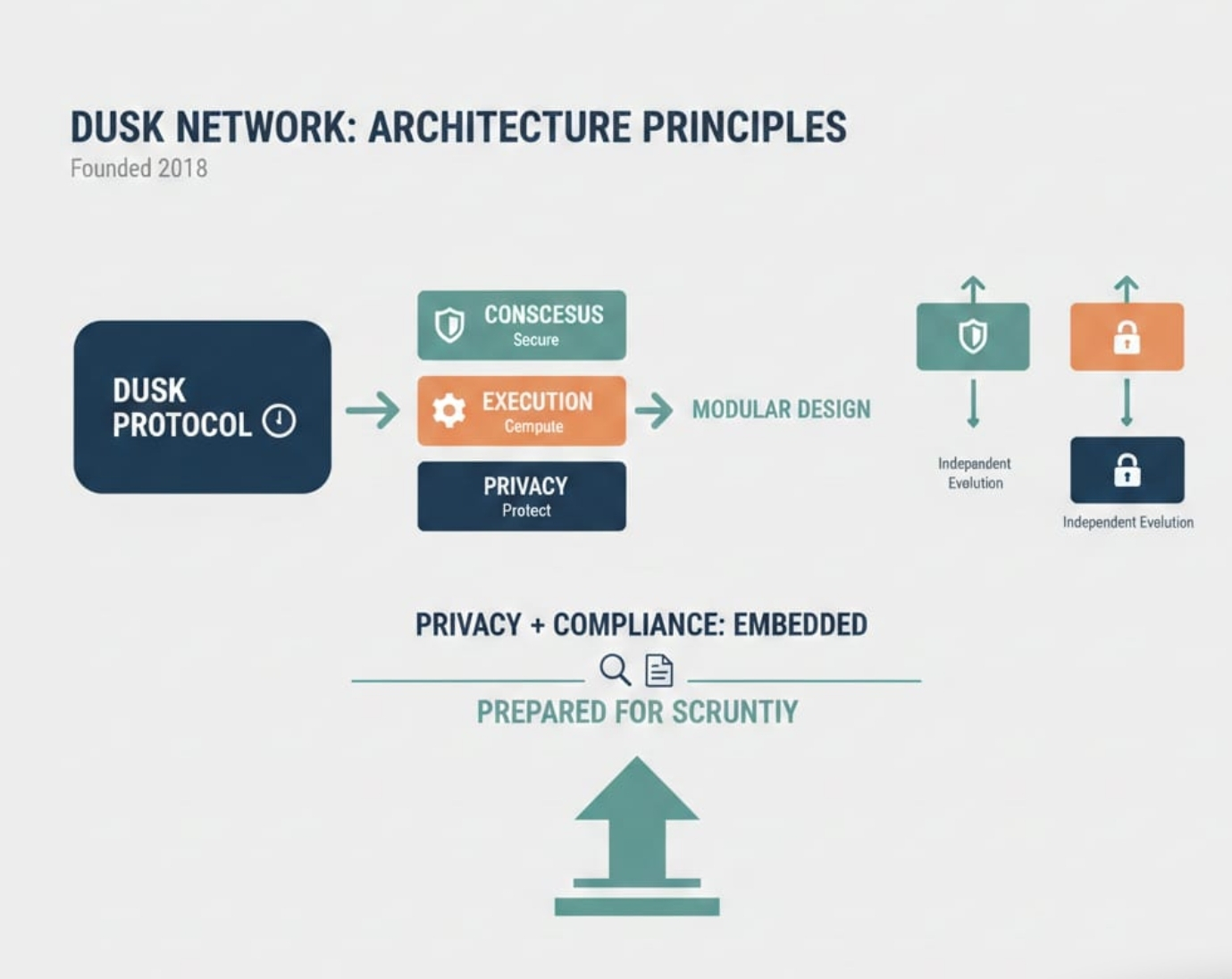
@Dusk feels like it was born from experience rather than excitement. Founded in 2018, it carries the quiet confidence of a system that understands what it is building and who it is building for. At its foundation, the network works by separating responsibilities that are often dangerously combined elsewhere. Consensus exists to secure. Execution exists to compute. Privacy exists to protect. These elements are modular by design, allowing each part to evolve without putting the whole system at risk. Privacy is not decorative and compliance is not optional. They are embedded into the protocol itself. I’m seeing an architecture that assumes scrutiny will come and prepares for it instead of avoiding it.
What makes this foundation meaningful is how naturally it translates into the real world. Finance is not theoretical. It is made of obligations, reputations, regulations, and people who cannot afford mistakes. Dusk allows institutions to issue, trade, and settle assets on chain without exposing sensitive information to the public. Transactions can remain private while still being provable when accountability is required. They’re not asking traditional finance to abandon its rules. They’re building a system where those rules can exist natively on chain. If it becomes possible to participate in decentralized systems without risking overexposure, trust starts forming quietly. We’re seeing blockchain step out of the experimental phase and into responsibility.
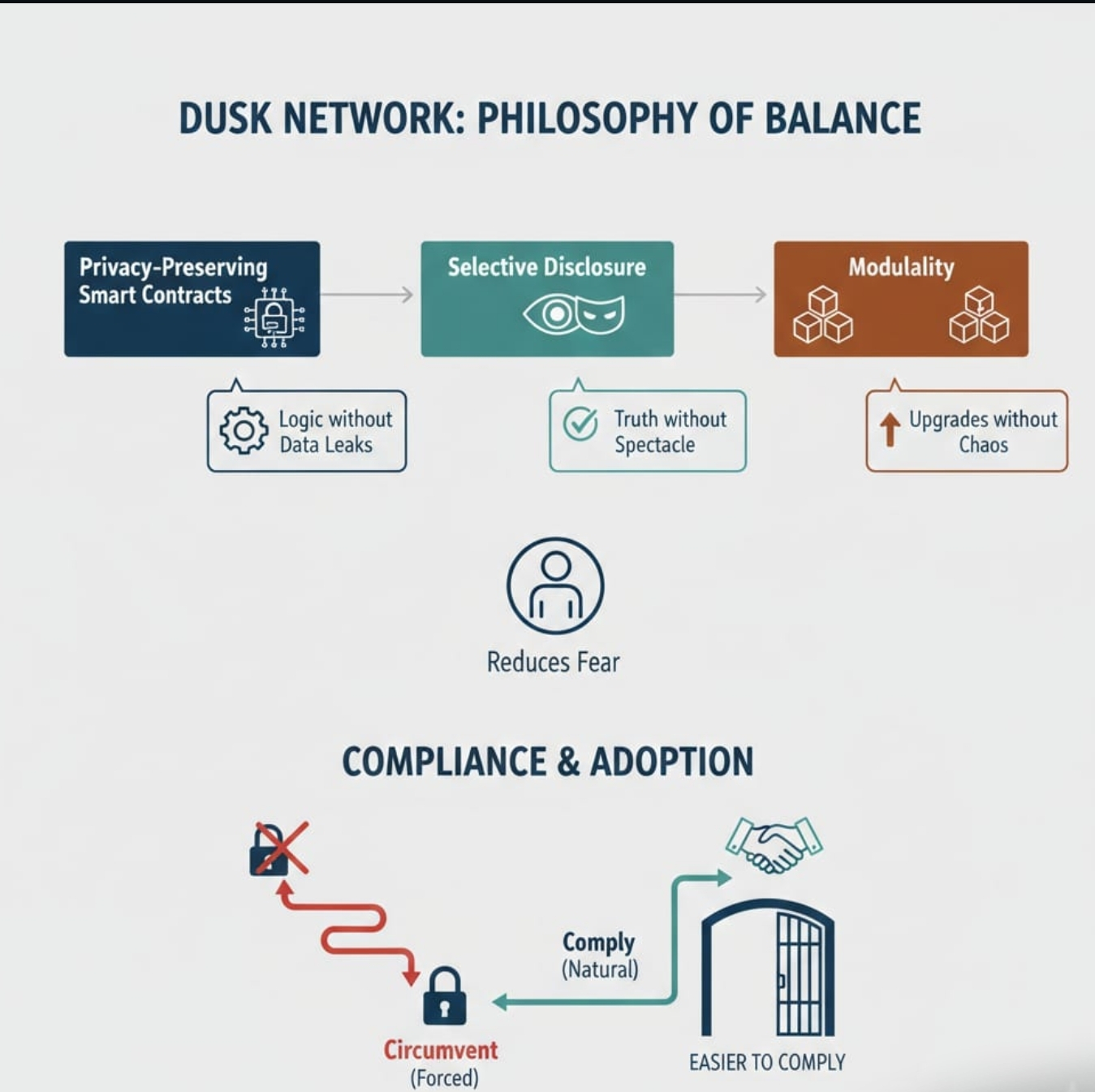
The thinking behind Dusk feels deeply human. Instead of chasing extremes, the design chooses balance. Privacy preserving smart contracts allow logic to function without leaking data. Selective disclosure allows truth without spectacle. Modularity allows upgrades without chaos. Every choice points to a belief that infrastructure should reduce fear, not introduce it. I’m drawn to how this removes ideological tension. Institutions are not framed as outdated or slow. They’re treated as careful for good reason. If it becomes easier to comply than to circumvent, adoption stops feeling forced and starts feeling natural.
Progress here does not show up as noise. It appears in quieter signals. Institutions returning after pilots. Developers staying because the tooling supports real financial products rather than demos. Tokenized assets that remain compliant throughout their lifecycle. Network stability under growth. I’m watching for consistency more than speed. Trust builds slowly and breaks quickly, and Dusk seems aware of that reality. If an exchange like Binance ever becomes part of the journey, it would simply widen access. The meaning of the network would already be defined by use, not by visibility.
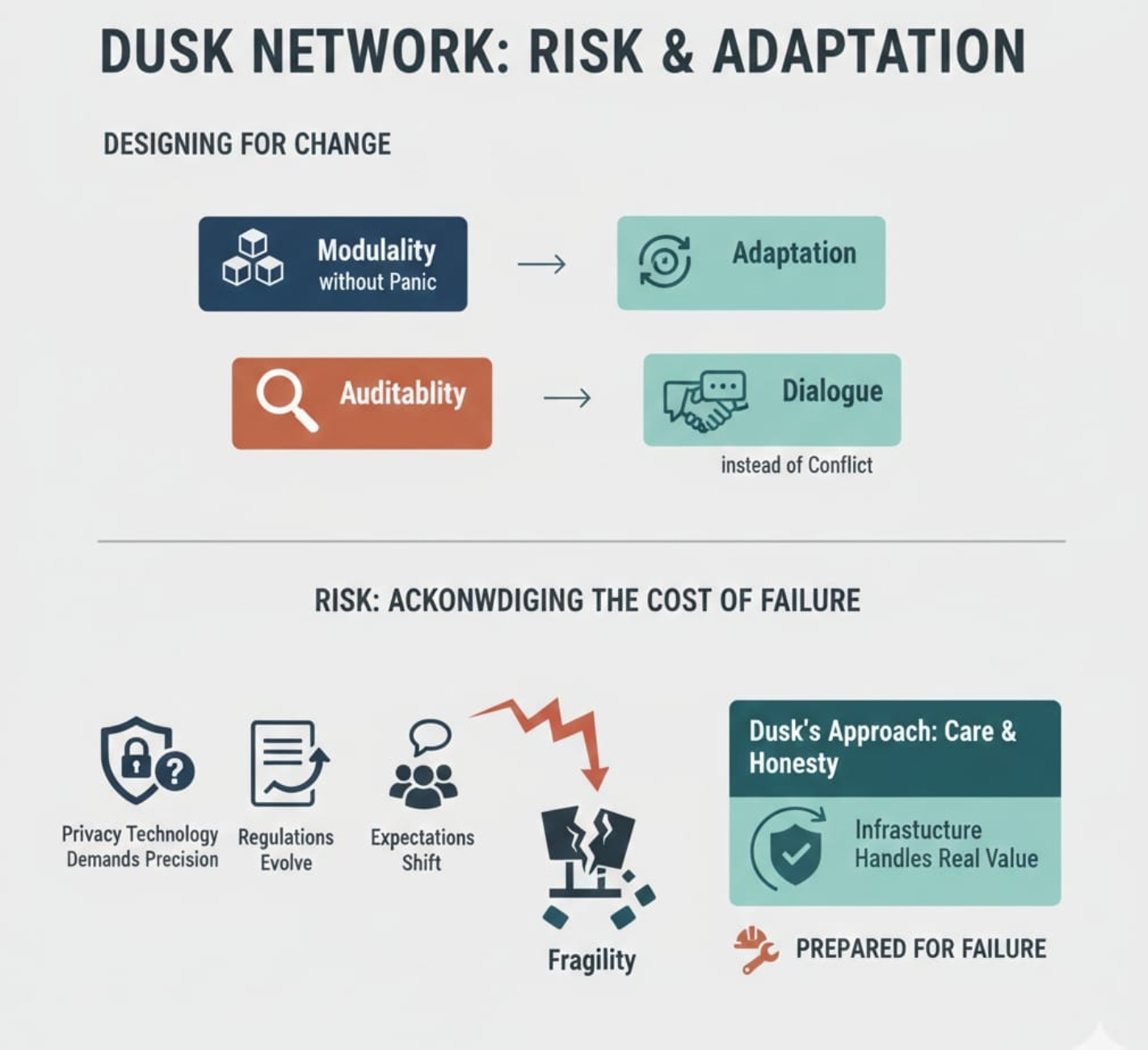
Risk is treated with respect rather than denial. Privacy technology demands precision. Regulations evolve. Expectations shift. Ignoring these realities creates fragility. Dusk addresses this by designing for change. Modularity allows adaptation without panic. Auditability allows dialogue instead of conflict. I’m convinced this honesty is not caution but care. Infrastructure that handles real value must acknowledge the cost of failure before it happens.
Looking ahead, the long term vision feels patient and grounded. As users grow more comfortable trusting on chain systems, Dusk becomes less visible and more essential. It becomes infrastructure people rely on without needing to think about it every day. We’re seeing the early shape of a network that could support real world assets, regulated finance, and human trust without asking anyone to abandon their principles. That kind of growth is slow and emotional because it is earned.
Dusk is not trying to impress. It is trying to hold weight. I’m left with a sense of calm when thinking about where this can lead. They’re building something meant to be depended on when things matter most. If it becomes part of the future of finance, it will not feel sudden or disruptive. It will feel natural, like a system that finally understood what people needed all along.