

Over the past few weeks, price action has felt strangely quiet. Not collapsing, not breaking out just moving sideways. What stood out to me wasn’t the lack of direction, but the amount of attention this kind of market still attracts. Opinions didn’t disappear. Emotions didn’t cool down. If anything, frustration quietly increased. That contrast is what made me start paying closer attention to how sideways markets are usually misunderstood.
Most traders treat sideways price action as a pause, or worse, a waste of time. The assumption is simple: if price isn’t moving, nothing meaningful is happening. That belief feels reasonable, especially for people who associate opportunity with volatility. But over time I’ve realized that this interpretation only looks correct on the surface. Beneath a flat chart, behavior continues to shift.
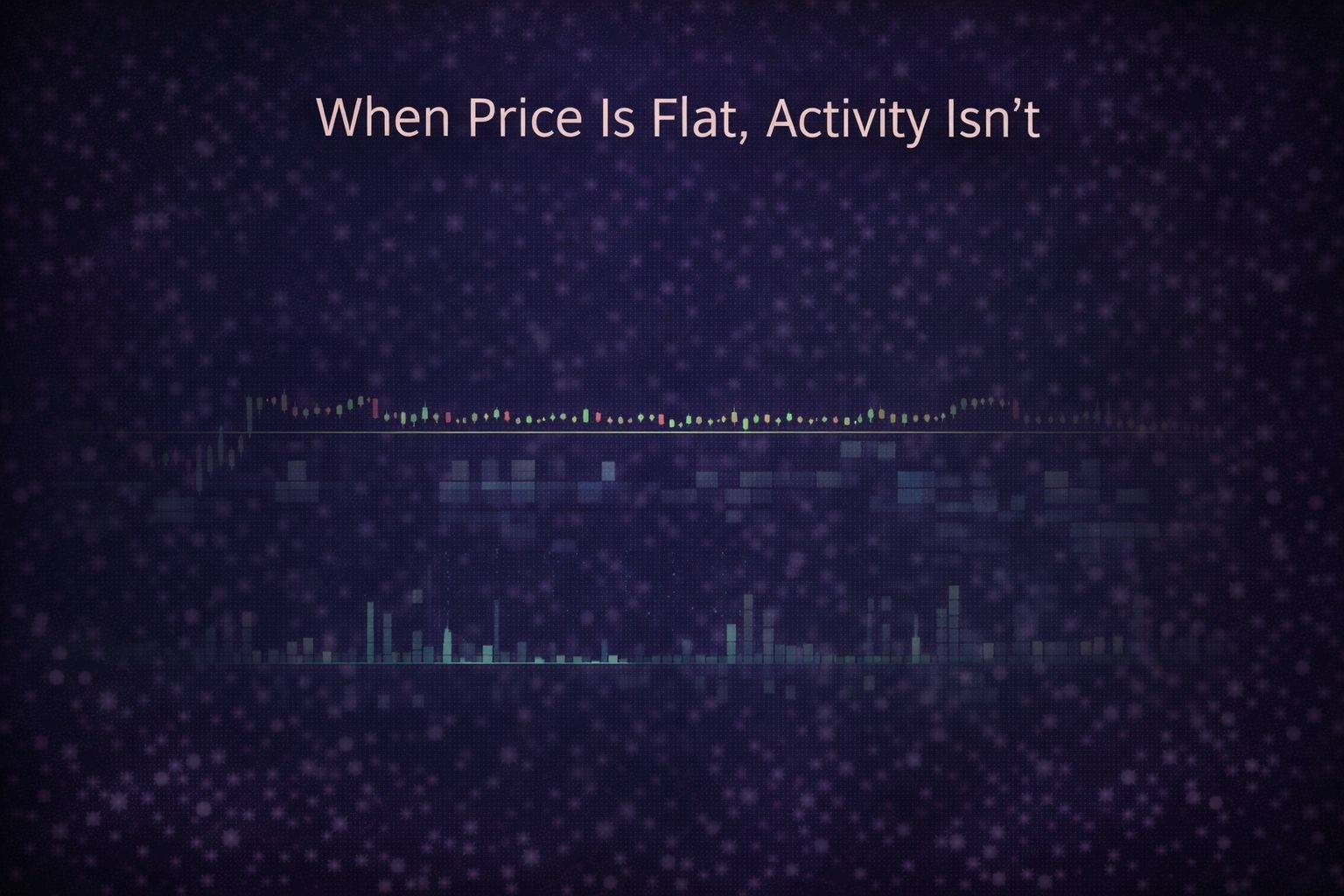
Sideways markets are not inactive markets. They’re just less expressive. Price stops providing clear feedback, but participation doesn’t vanish. Positions are still being built, reduced, or quietly transferred. The difference is that these changes happen without urgency, without headlines, and without obvious confirmation. What looks boring is often just subtle.
Liquidity behaves differently in these phases. Instead of chasing direction, it waits. Instead of competing loudly, it absorbs quietly. This is usually where patience becomes more valuable than speed not as a strategy, but as a behavior. The market tends to reward those who can remain still when there is no immediate signal telling them to act.
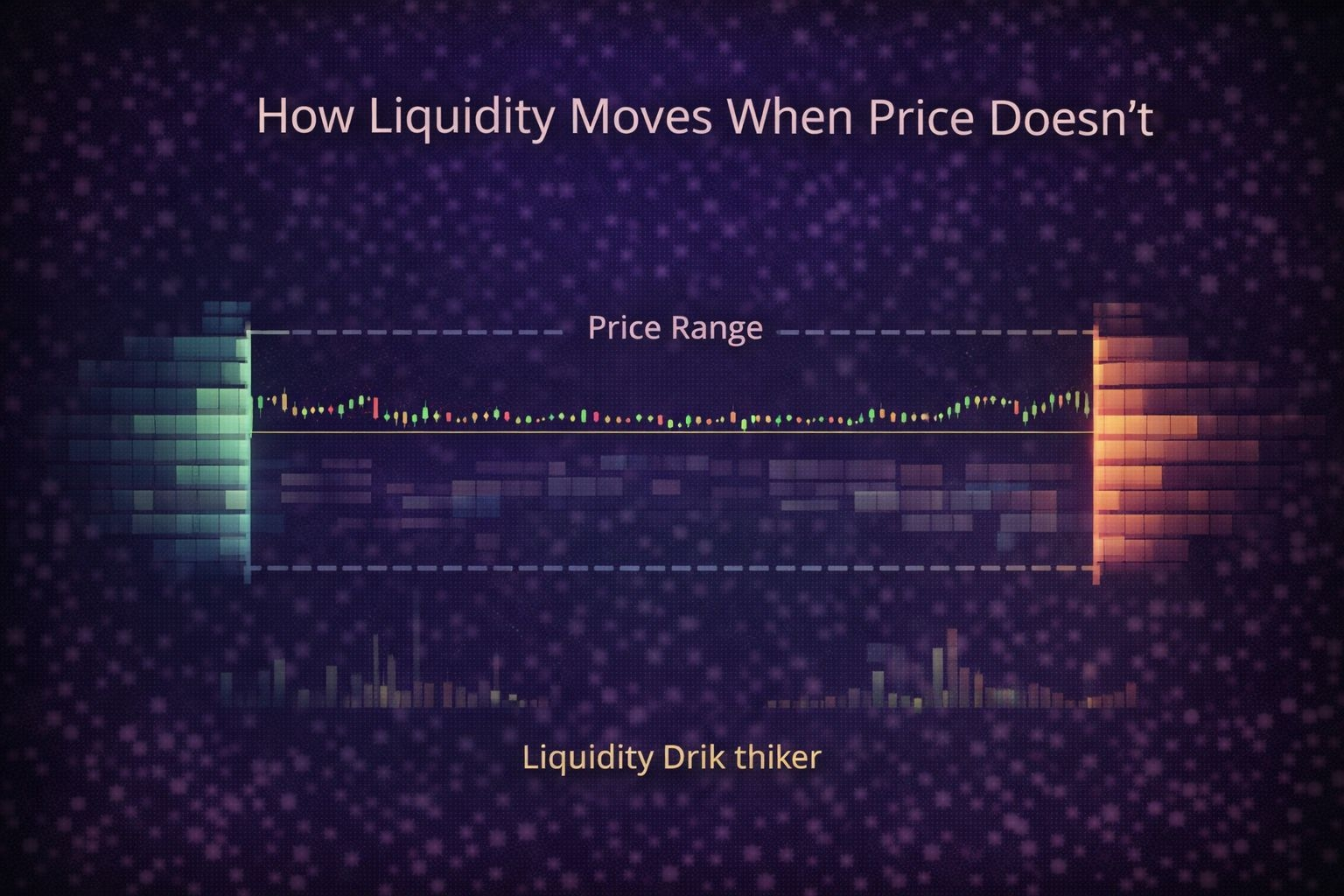
I often think of sideways markets like a quiet auction room. No one is shouting. No dramatic gestures are happening. But bids still exist, and intentions are still being measured. The real action isn’t visible until someone finally decides the price is wrong enough to move. By the time that moment arrives, much of the positioning has already been done.
Where most traders get hurt during these periods isn’t through one big mistake. It’s through a series of small reactions. Overtrading out of boredom. Changing bias too often. Responding to noise simply because silence feels uncomfortable. Sideways markets don’t usually punish aggression immediately they exhaust it.
There’s also a cost here that never appears on a chart. Time spent second-guessing. Confidence slowly eroding. Decision fatigue building up without being noticed. By the time direction finally returns, many traders are already mentally worn down, even if their account balance looks unchanged.
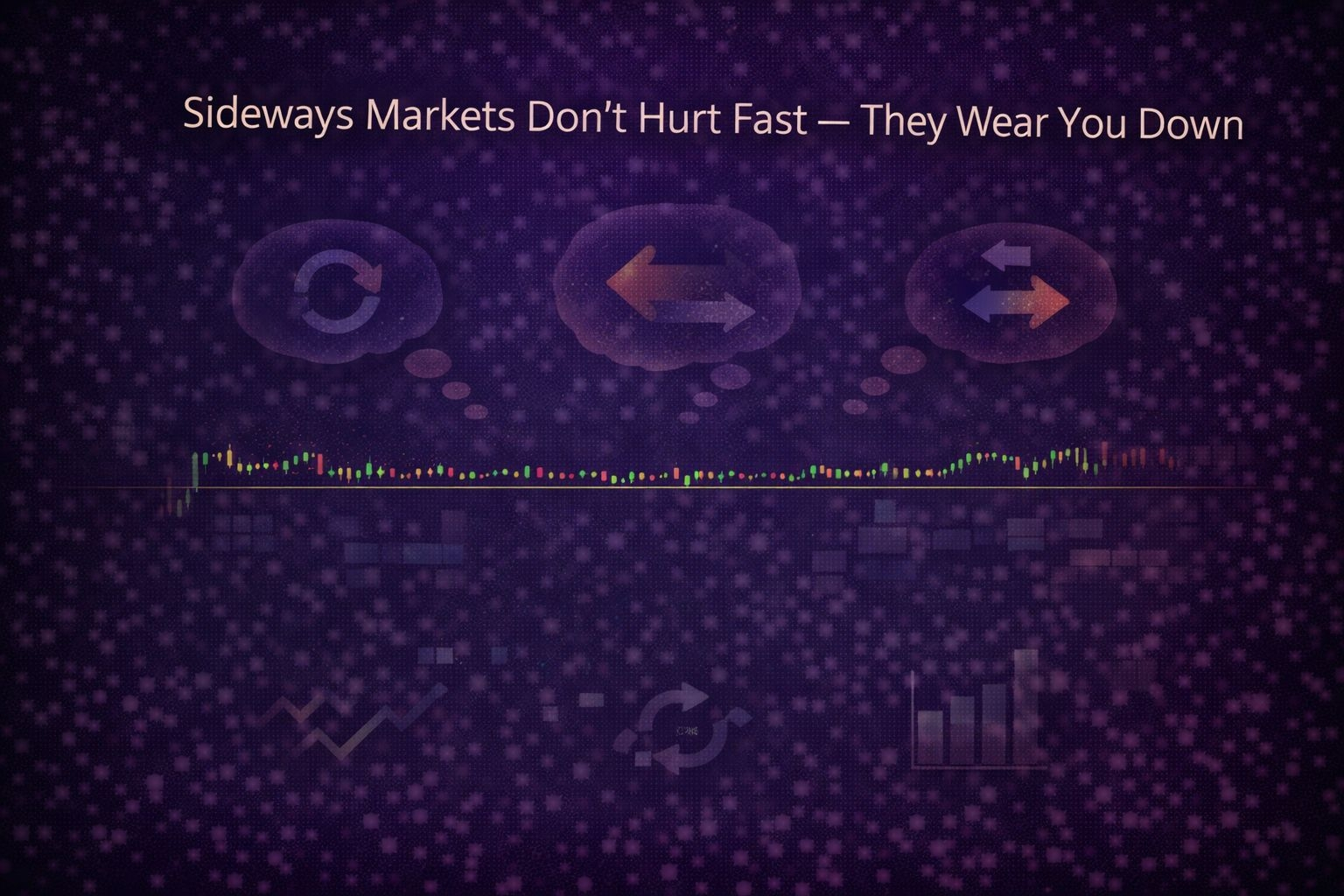
Viewed differently, sideways markets act like filters. They don’t reward excitement or conviction. They reveal who needs movement in order to feel engaged, and who can sit with uncertainty without forcing meaning onto every candle. In that sense, these markets are less about opportunity and more about exposure exposure of behavior.
When price goes nowhere, traders often move instead emotionally, not intelligently. And that reaction usually matters more than the range itself.
How do you personally interpret markets when price stops giving clear signals?