
Ever wonder why price can rip or dump in seconds with no news?
It’s usually not random. It’s leverage.
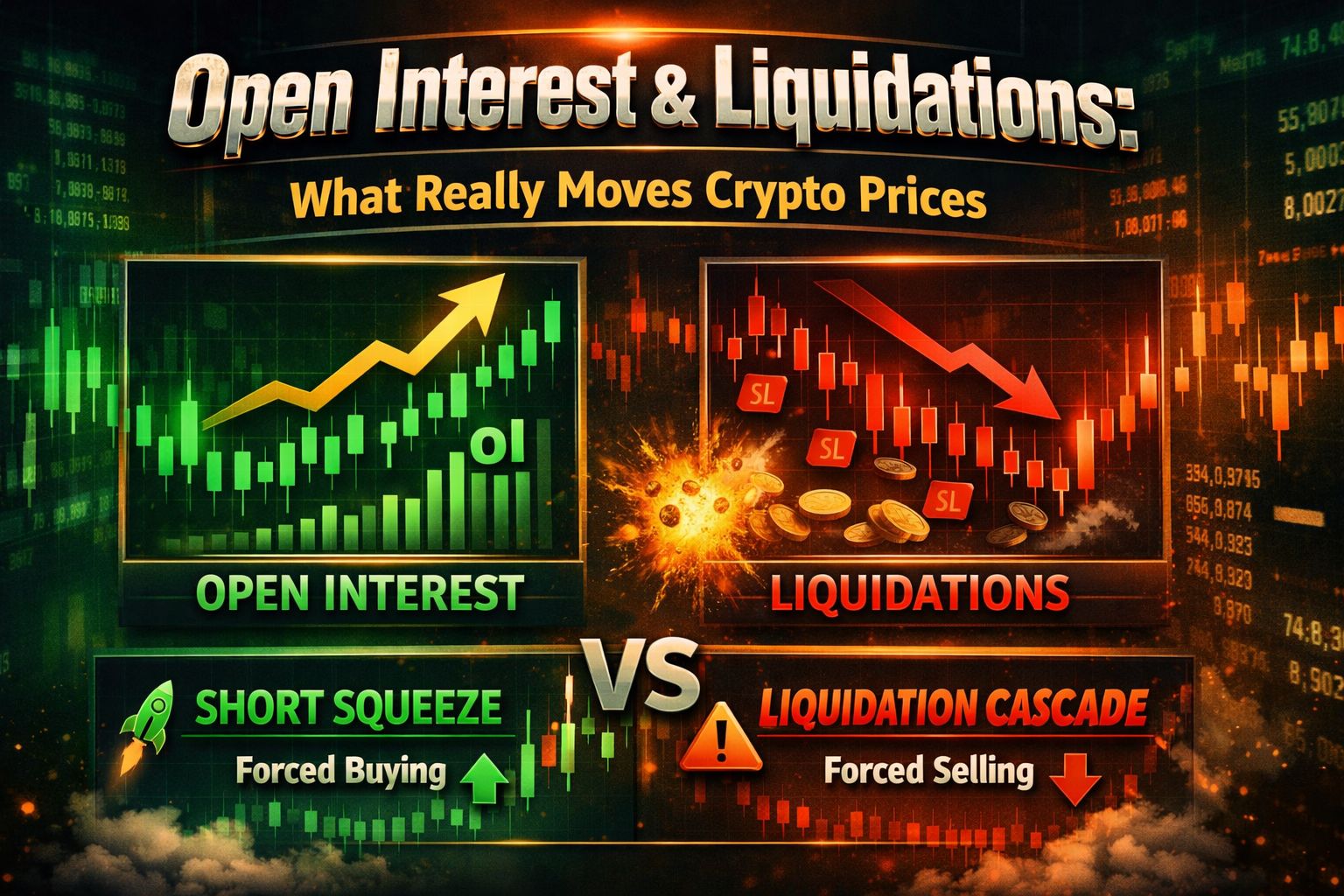
Two forces quietly drive most violent crypto moves: Open Interest and Liquidations.
📊 Open Interest (OI) shows how many futures/perp positions are open. It doesn’t tell you long or short — it tells you how crowded the trade is.
• Price up + OI rising → new leverage piling in
• Sideways price + OI rising → pressure building under the surface
• High OI = fragile market
💥 Liquidations are forced exits.
When price moves against over-leveraged traders, exchanges auto-close positions. That forced buying or selling pushes price further, triggering liquidation cascades.
📉 Long squeeze: Too many longs → small drop → forced selling → waterfall
📈 Short squeeze: Too many shorts → surprise pump → forced buying → explosive candles
👀 Context matters:
• Price pumps while OI drops → shorts getting wiped, not fresh buyers
• Price dumps while OI collapses → longs being flushed
This tells you whether a move is real conviction or just forced exits.
⚠️ Common beginner mistake:
Chasing huge candles right after a liquidation event. By then, the fuel is often gone. Volatility cools, price ranges or retraces — and late traders get trapped.
🧠 What pros do instead:
They wait.
They watch how price behaves after liquidations:
• Does it hold reclaimed levels?
• Does structure form or fail?
• Does momentum fade once forced pressure ends?
🛡 Risk management is everything.
High open interest = crowded trades. Crowded trades break fast.
Smaller size, controlled leverage, and proper stop-losses keep one liquidation wave from ending your account.
🔑 The edge:
Understanding that many violent moves are mechanical, not emotional.
Stop asking “Why did price crash?”
Start asking “Who just got forced out?”
Crypto runs on leverage. Leverage creates opportunity — and danger.
Learn how pressure builds. Learn how it releases.
That clarity alone gives you a serious edge in fast markets. 📈