
didn’t discover Plasma through a tweet thread or a shiny deck.
I ran into it while staring at a spreadsheet — the kind that looks boring until you realize it’s basically your business’s heartbeat. We were doing settlement reconciliation. Again. Numbers here, numbers there, and in the middle that cursed little gap called “expected behavior.”
That’s where systems don’t explode — they bleed. Quietly. In tiny mismatches. In edge cases. In “that shouldn’t happen” entries that somehow keep happening.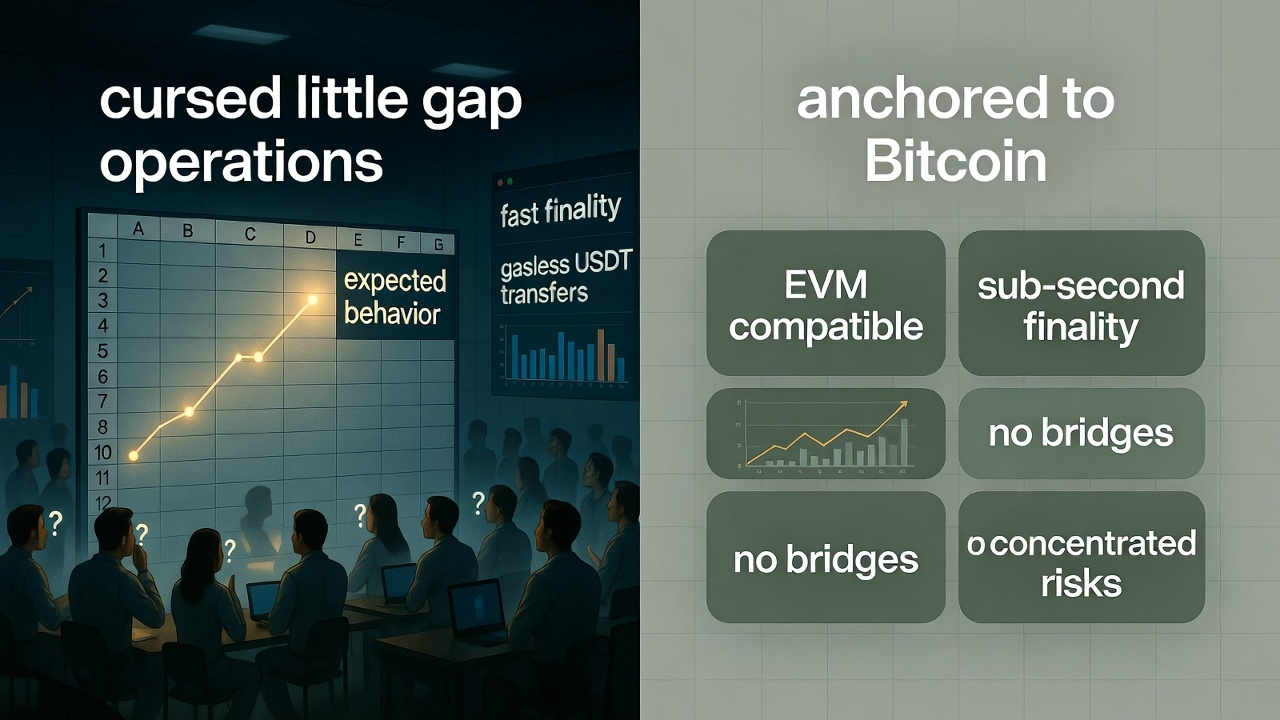
Crypto people love the idea of programmable money. And I get it. It’s elegant. It’s clever. It’s fun when you’re building experiments.
But payments are not an experiment.
Salary runs don’t want clever. Remittances don’t want composability. Merchants don’t want optionality. Treasury doesn’t want surprises.
They want one thing: certainty.
We learned this the hard way. Every time we added more “power,” we also added more ops work — the annoying kind. Late-night checks. Slack messages that start with “something weird” and end with “we’ll patch it.”
And then there’s the moment every payment system hits: a real user tries to send a small amount to someone — and gets blocked because they don’t have the extra token needed for gas.
They didn’t mess up. They just didn’t know they were supposed to carry an additional asset to move their own money.
That’s when crypto design stops feeling “innovative” and starts feeling like a scavenger hunt.
Plasma felt like the opposite of that.
Gasless USDT transfers and stablecoin-first gas aren’t flashy. But if you’ve ever operated payments, you know why they matter: it’s one less thing that can break. One less “please buy this token first” step. One less failure mode hiding inside the user journey.
And sub-second finality? That’s not about speed as a flex. It’s about closing the loop.
Because “pending” isn’t neutral. Pending makes people do dumb things: they retry, they double-send, they panic, they call support, they promise merchants money that isn’t settled yet.
Fast finality isn’t marketing. It’s fewer human-made messes.
What also stood out to us: Plasma feels built by someone who’s been in the uncomfortable meetings — the quiet risk ones. The ones where nobody wants to say “this feels unstable,” but everybody is thinking it.
EVM compatibility wasn’t a badge either. It was relief. Same tooling, same audit habits, same muscle memory. Fewer unknowns on day one — and day one is where you make the mistakes that haunt you.
Security-wise, the Bitcoin-anchored posture landed as “we want this to hold steady under pressure.” Not a magic shield — nothing is — but the intent matters, especially if you’re building for places where stablecoins are everyday infrastructure, not a novelty.
We’re not naïve though. Bridges are still concentrated risk. Migrations drift. Upgrades drift. Humans drift. Systems rarely fail loudly at first — they drift quietly until you’re suddenly in incident mode.
So the question isn’t “can we eliminate risk?” You can’t. The question is “where does risk live, and how predictable is it?”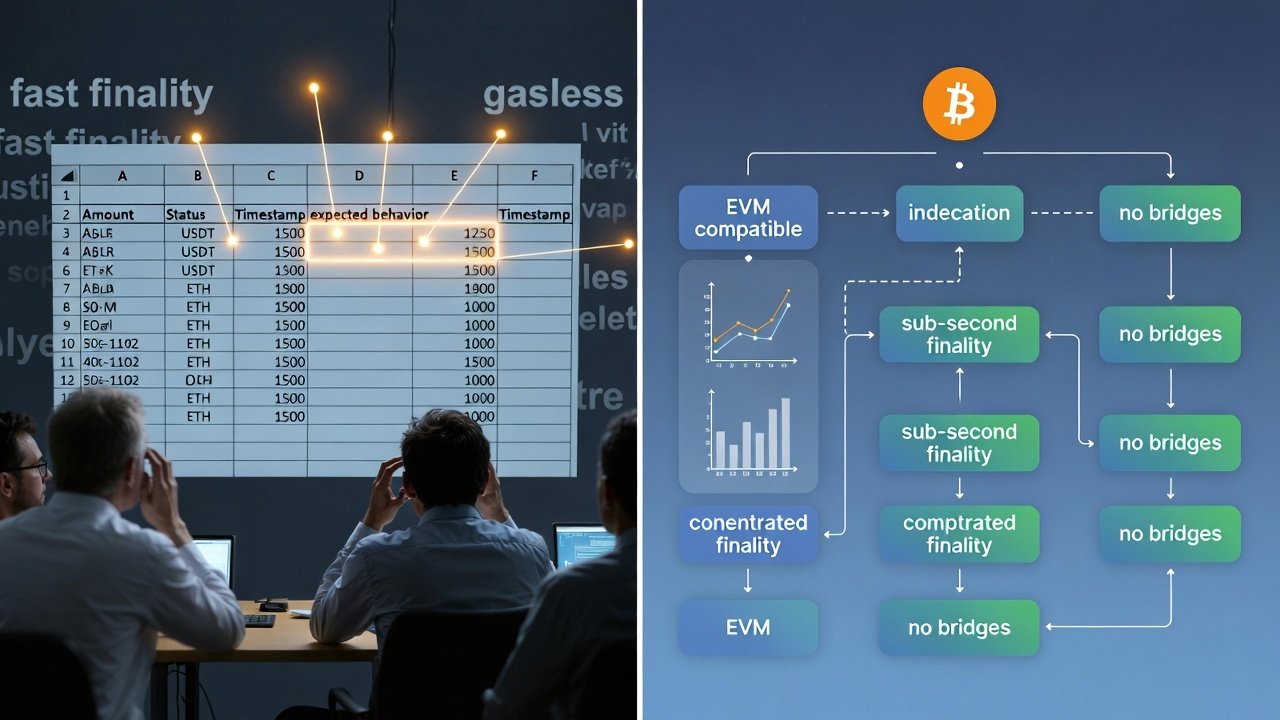
That’s why we started calling Plasma “boring” — on purpose.
Not as an insult. As a goal.
Boring means fewer weird states. Fewer midnight escalations. Treasury doesn’t need rituals. Compliance doesn’t need guesswork.
Plasma doesn’t feel like it’s trying to reinvent money. It feels like it’s trying to make money stop feeling experimental.

Artigo
Payment Ops Perspective: What Plasma Gets Right
Aviso Legal: inclui opiniões de terceiros. Não se trata de aconselhamento financeiro. Poderá incluir conteúdos patrocinados. Consulta os Termos e Condições.