

@Plasma $XPL starts from a very human place. The simple moment when someone opens a wallet to send USDT and hopes it reaches the other side without delay, confusion, or extra cost. No one in that moment is thinking about consensus models or virtual machines. They are thinking about time, certainty, and ease.
Most blockchains were built as powerful general systems. They can do many things, but they often ask users to understand too much. Gas fees change. Confirmations take time. Interfaces feel technical. Plasma looks at this reality and chooses a narrow focus. It is a Layer 1 shaped around stablecoin settlement so the experience of sending value feels natural instead of technical.
Under the surface Plasma keeps things friendly for builders through EVM compatibility using Reth. This means developers can work with familiar tools and patterns without learning an entirely new environment. At the same time PlasmaBFT is designed for sub second finality so transactions can confirm extremely fast. Speed here is not for show. It matters because payments lose their meaning when they feel delayed.
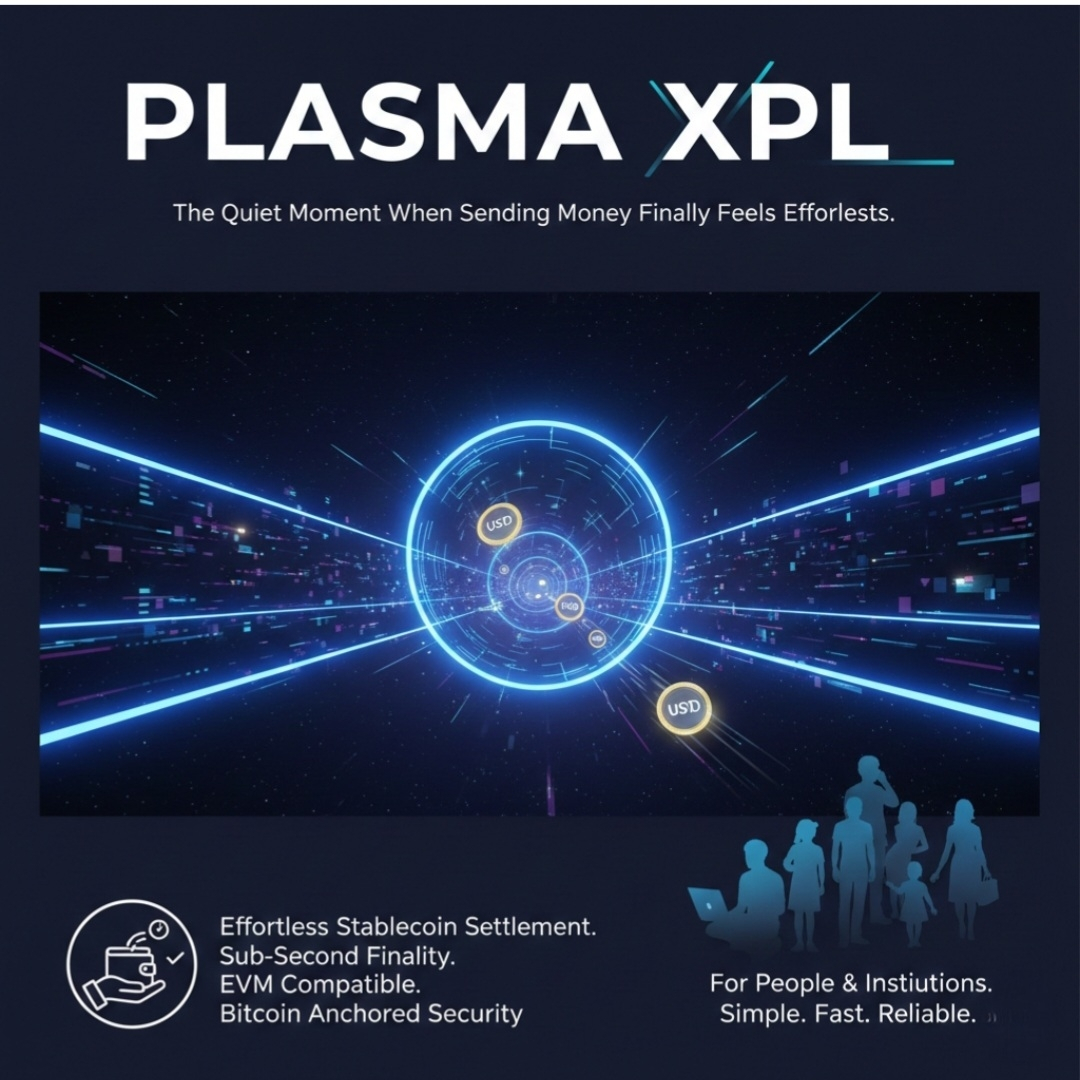
The design choice that feels most personal is stablecoin first gas and gasless USDT transfers. This is an attempt to remove the step that usually interrupts users. People should not have to stop and think about holding another token just to move the one they already trust. By placing stablecoins at the center Plasma tries to make the chain invisible during the action that matters most.
There is also the idea of Bitcoin anchored security. The intention is to increase neutrality and make the network harder to pressure over time. This is not about adding complexity. It is about protecting the simple act of transferring value from external influence so users and institutions can rely on it with confidence.
Plasma begins to make more sense when you look at who it serves. In many regions stablecoins are already part of daily life. Freelancers get paid in them. Families use them for remittances. Small businesses accept them for cross border trade. These users are not searching for advanced features. They want reliability that feels as normal as sending a message.
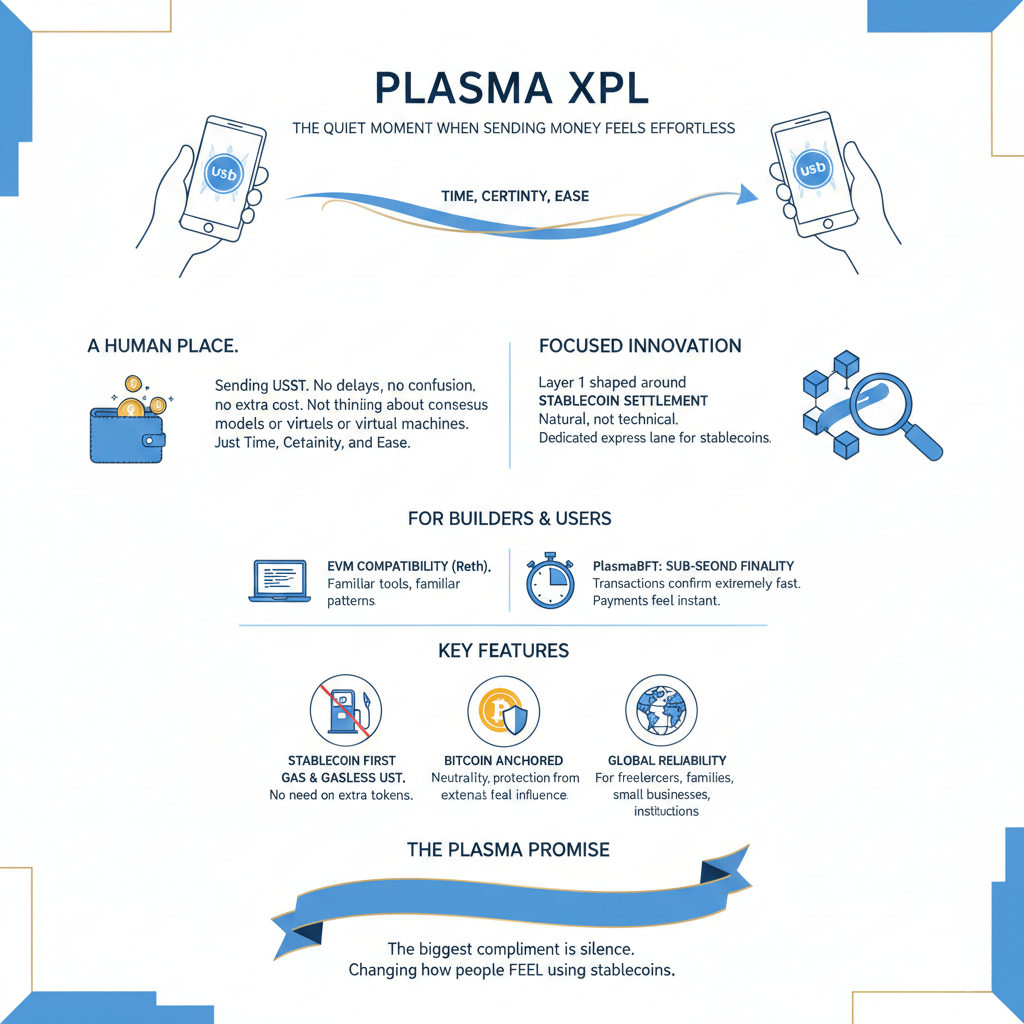
Institutions in payments and finance look for the same qualities at a different scale. They need predictable settlement, fast confirmation, and a system that does not introduce unnecessary friction. Plasma positions itself as a settlement rail that can quietly support this flow of value without demanding attention.
A helpful way to see Plasma is to imagine a dedicated express lane built only for stablecoins. Other chains are wide highways with many exits and routes. Plasma is the smooth lane where one specific type of traffic can move without interruption. The goal is not to impress users with complexity. The goal is to let them forget the complexity exists.
If Plasma succeeds the biggest compliment it may receive is silence. Users will not talk about how the chain works. They will simply notice that sending stablecoins feels easy, fast, and stress free. Builders will appreciate the familiar environment. Institutions will value the reliability. Everyday users will only feel that something which used to be slightly frustrating has become effortless.
In the end Plasma XPL is not trying to change how people think about blockchain. It is trying to change how people feel when they use stablecoins.