When I first learned about Plasma, what struck me the most was not the technology itself, but the thoughtfulness behind it. This is a Layer 1 blockchain that is built entirely around stablecoins, not as an afterthought, but as the very core of its existence. Unlike most blockchains that try to be everything for everyone, Plasma focuses on what people truly need: a reliable, fast, and simple way to send, receive, and store stable value. That focus makes it feel different right from the start. It becomes clear that the team is not building just for hype or for technical achievement—they are building for real people in real life.
Stablecoins have become part of everyday life for millions of people. They are used to send money to family, pay freelancers, make purchases, or simply store value safely in uncertain economic environments. Yet most blockchains treat stablecoins like guests, forcing users to deal with volatile fees, confusing token requirements, and slow confirmation times. Plasma asks a simple but revolutionary question: if stablecoins are already what people rely on, why not design a blockchain where they come first? That approach makes everything feel human and intuitive. It meets people where they are instead of asking them to adjust to complicated systems.
Plasma is fully compatible with Ethereum tools, meaning developers can bring over smart contracts, wallets, and applications they already know. Under the surface, the blockchain uses a highly optimized consensus system that finalizes blocks extremely quickly. For everyday users, this creates an experience that feels immediate and trustworthy. When you send money, it settles almost instantly. There is no waiting, no uncertainty, and no anxiety about whether it will go through. That feeling of certainty transforms payments into an experience people can trust and rely on in daily life.
One of the most impactful features of Plasma is gasless stablecoin transfers. Anyone who has onboarded friends or family into crypto knows how confusing it can be to explain gas tokens. Plasma removes that friction entirely. Users can send stablecoins without needing to hold a separate token for fees. Fees can even be paid in the same stablecoin being transferred. While it may seem like a small feature, its effect is profound. It removes hesitation and fear, making sending money as natural as handing someone cash. The technology fades into the background, and the experience becomes human again.
Plasma also allows fees to be paid in stablecoins, creating predictability that is critical for both individuals and businesses. When fees are stable, people can plan, budget, and act confidently. Payroll systems, remittance applications, and merchants can operate without worrying about fluctuating costs, making operations smoother and more reliable. This feature brings peace of mind and builds trust. It allows people to focus on the purpose of money—moving it, using it, and managing it—without being distracted by technical complications.
Another remarkable aspect of Plasma is its Bitcoin-anchored security. For many users and institutions, Bitcoin represents neutrality, stability, and resistance to censorship. By anchoring part of its system to Bitcoin, Plasma adds an additional layer of confidence. In regions where access to financial systems can be limited or uncertain, this creates reassurance. Users feel that the system is not only fast and cheap, but also secure and fair. It shows that the team is designing for trust and reliability in the real world, not just for abstract technical ideals.
Plasma’s focus is clear. It is built for everyday users in regions where stablecoins are already widely adopted, as well as for businesses and institutions that require fast and predictable settlement. Both groups benefit from quicker transactions, smoother operations, and stable costs. The clarity of this vision makes the system feel honest, grounded, and realistic. It is not trying to do everything; it is trying to do the right things exceptionally well.
Even though users are at the center of the design, developers are not overlooked. Plasma keeps familiar tools, wallets, and libraries, reducing the learning curve and making deployment easier. Developers can build applications without navigating complicated workarounds or gas abstractions. This simplicity encourages creativity, allowing engineers to focus on solving real-world problems rather than wrestling with technical limitations. The result is a cleaner, more intuitive experience for end users, and a faster path for developers to bring ideas to life.
Of course, Plasma is not without trade-offs. Fast finality and stablecoin-focused design rely on a somewhat permissioned validator set in the early stages. This may raise questions about decentralization. However, the team is transparent about this and plans to gradually expand openness as the network matures. That honesty is important because every real-world system faces trade-offs. What matters is a clear roadmap toward improvement and a continued focus on serving users.
The real impact of Plasma becomes clear when imagining its use in everyday life. A small business could pay employees every week in stablecoins, with funds settling immediately and predictably. Families could receive remittances from abroad without waiting days for confirmation or worrying about volatile fees. Merchants could accept stablecoin payments with confidence, knowing that costs are predictable and settlement is fast. Plasma has the potential to remove friction and make financial experiences feel natural, human, and reliable.
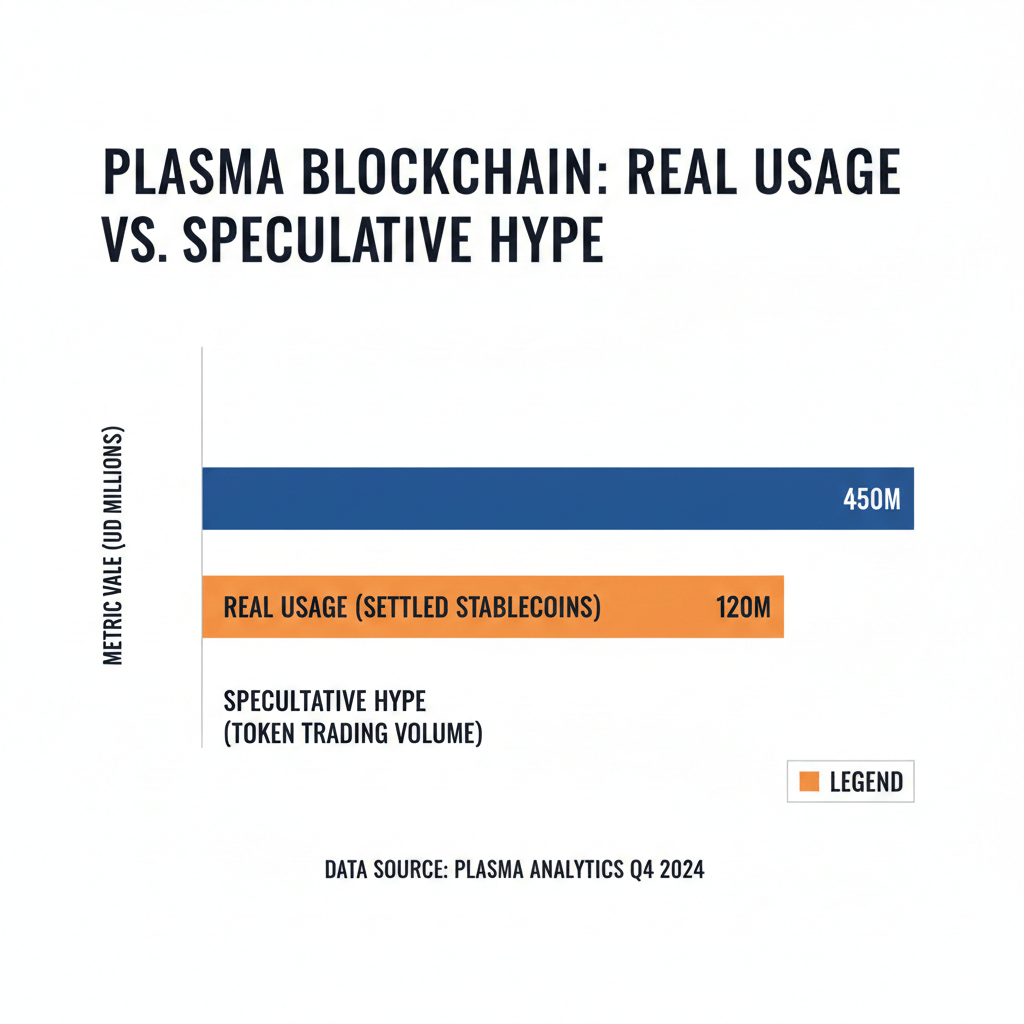
What excites me most about Plasma is how human it feels. It is not chasing hype or trends. It focuses on making money movement simple, dependable, and intuitive. Stablecoins are quickly becoming the digital cash of our era, and they deserve infrastructure that treats them with care. Plasma feels like that foundation. If it succeeds, it will become more than just a blockchain. It will become invisible financial infrastructure that helps people live with confidence, move money safely, and focus on what truly matters. It becomes a system that respects humanity, not just technology.