

When I started looking deeper into Walrus recently, what stood out was not loud announcements or aggressive marketing. Instead, it felt like a project moving steadily in the background, focusing on one core idea: making decentralized data availability faster, more private, and easier for real applications to use. In a space where many networks compete for attention through hype cycles, Walrus appears to be building infrastructure that grows through utility rather than noise.
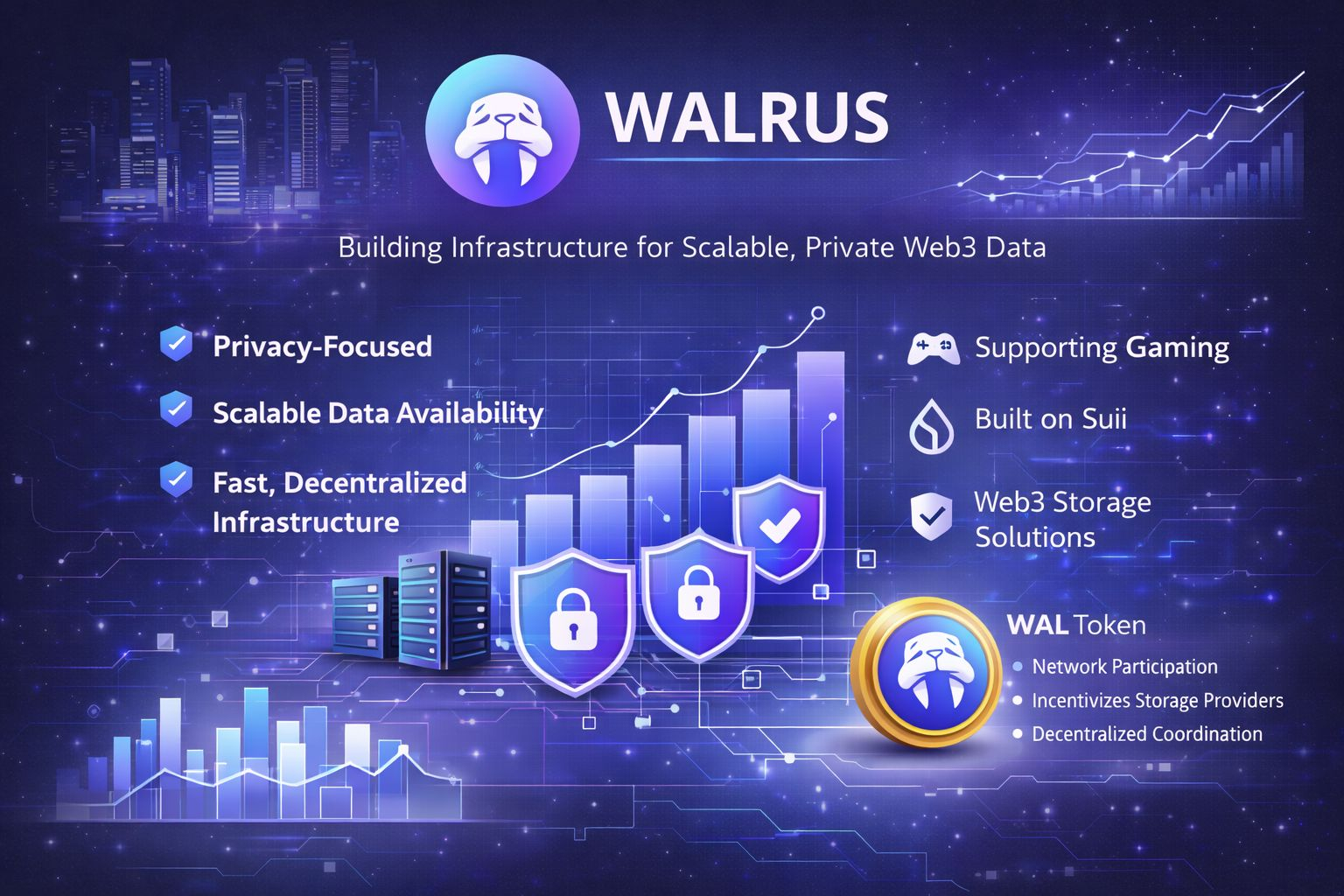
The latest discussions around the ecosystem highlight how Walrus is positioning itself as a foundation for scalable Web3 environments. Rather than acting as a traditional DeFi platform, it focuses on supporting applications that require reliable data layers. This includes gaming ecosystems, decentralized storage solutions, and applications that need secure interaction without exposing every detail publicly. As more builders explore these areas, Walrus becomes relevant as a technical backbone instead of a front-facing product.
One of the most interesting aspects of Walrus is its relationship with the Sui blockchain ecosystem. By operating within a high-performance environment, Walrus aims to distribute large amounts of data efficiently while maintaining privacy-first principles. This balance is becoming increasingly important because modern decentralized applications require both speed and confidentiality. Projects that solve only one side of this challenge often struggle to scale, but Walrus attempts to combine both into a single infrastructure layer.
The WAL token plays a practical role within this system. Rather than existing purely as a speculative asset, it supports network participation, incentivizes storage providers, and helps maintain decentralized coordination. As adoption grows, the relevance of WAL increases alongside real usage rather than market narratives alone. This alignment between token utility and infrastructure development suggests a long-term strategy focused on sustainability.
Recent ecosystem updates also point toward a broader shift in how decentralized storage is perceived. Instead of treating storage as a separate layer, Walrus integrates it directly into application workflows. This allows developers to build products where data handling feels seamless to users. From my perspective, this is where the project’s design philosophy becomes clear. Walrus does not try to make users aware of every technical process. Instead, it creates systems that operate quietly, allowing applications to feel natural and intuitive.
Another reason Walrus stands out is its approach to privacy. Many Web3 platforms emphasize transparency, but real-world adoption often requires selective visibility. By introducing privacy-focused interactions without sacrificing performance, Walrus aligns itself with the evolving needs of decentralized finance and digital identity systems. As regulatory conversations around blockchain continue to grow, infrastructure that supports both privacy and accountability may become increasingly valuable.
Looking ahead, Walrus appears to be moving toward a more mature phase of development. The focus is shifting from experimentation toward practical integration with real applications. Builders are exploring how decentralized data availability can support immersive digital worlds, secure financial systems, and scalable consumer platforms. This direction suggests that Walrus is not simply reacting to market trends but preparing for a future where data infrastructure becomes as important as transaction speed.
From a personal viewpoint, what makes Walrus interesting is its quiet consistency. It does not attempt to dominate headlines, yet its role becomes more noticeable as Web3 applications evolve. As the industry moves beyond early experimentation, networks that provide reliable, privacy-friendly data layers may become essential. WAL represents that idea growth through infrastructure rather than hype.
In a rapidly changing blockchain landscape, Walrus feels like a project built for the long term. By focusing on decentralized data availability, performance, and privacy, it positions itself as a foundation for the next generation of Web3 experiences.