
Over the past few months I’ve been following a bunch of updates about Vanry (also known as Vanar Chain) and honestly, the evolution has been one of the more interesting developments in the blockchain space. What started as an ambitious gaming and entertainment blockchain has quickly shifted into something much more foundational a fully AI‑native layer one network with real technological depth and emerging products you can actually interact with today. Let’s walk through what Vanry is now, what it’s building, and why all of this matters in a way that feels human and practical, not just hype.
From Gaming Focus to AI‑First Vision
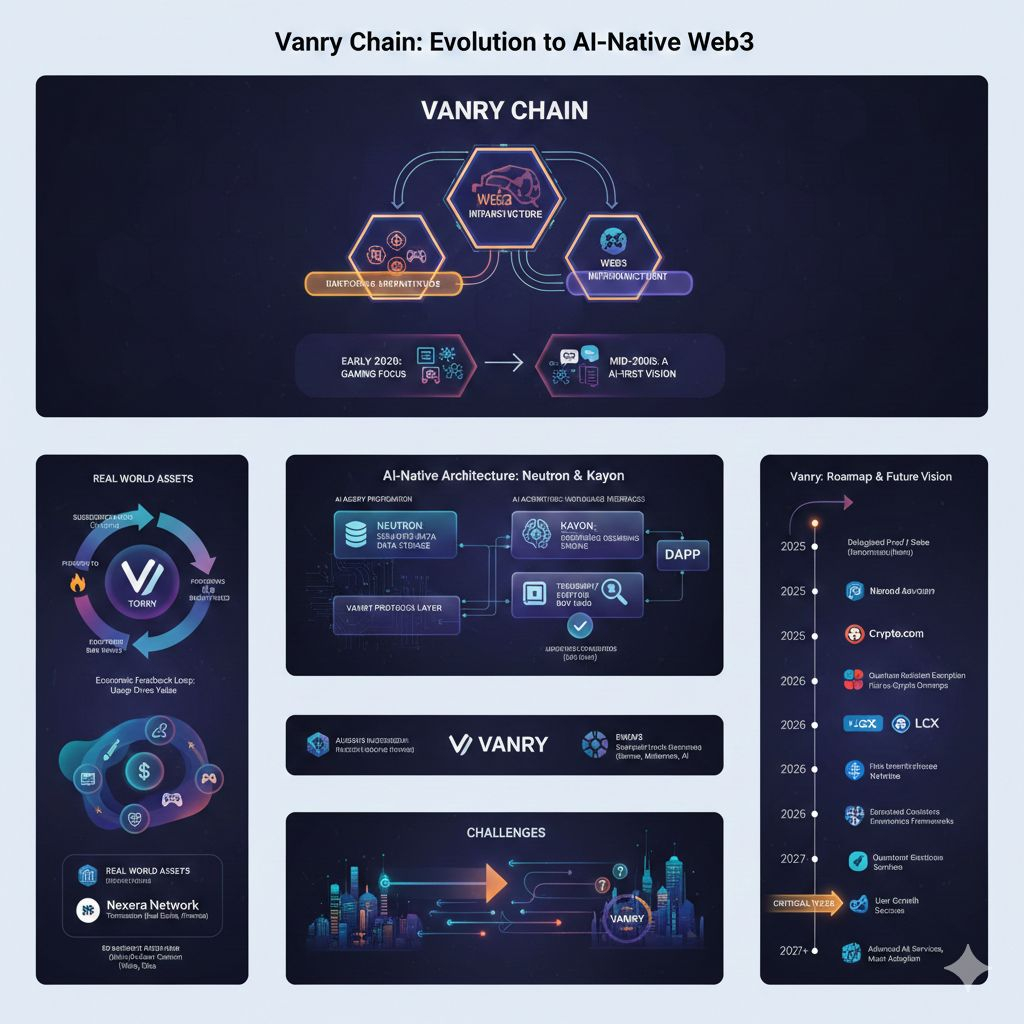
Vanry Chain initially made waves as a blockchain tailored to gaming, entertainment, NFTs, and immersive digital experiences. This is reflected in projects like Virtua Metaverse and VGN Games Network built on the chain, where microtransactions and in‑game economies could run smoothly with low fees and quick confirmations. But as the ecosystem matured, the team started pushing a broader, deeper vision one that places artificial intelligence at the core of the blockchain itself.
Instead of merely adding AI on top through oracles or external services, Vanry aims to bake intelligence into its protocol layer. That means infrastructure that can do more than move tokens it can reason, compress and store data efficiently, and respond intelligently to queries. When you think about what real AI + blockchain integration would look like, this is the sort of architecture people are talking about.
What Does AI‑Native Really Mean?
This is where the jargon can get heavy, so let me break it down the goal isn’t to slap AI onto a blockchain in a gimmicky way, but to redefine how data is handled onchain so that decentralized applications can actually use intelligent logic without relying on external servers. At least that’s the narrative the Vanry team is pushing, with some concrete pieces already in motion:
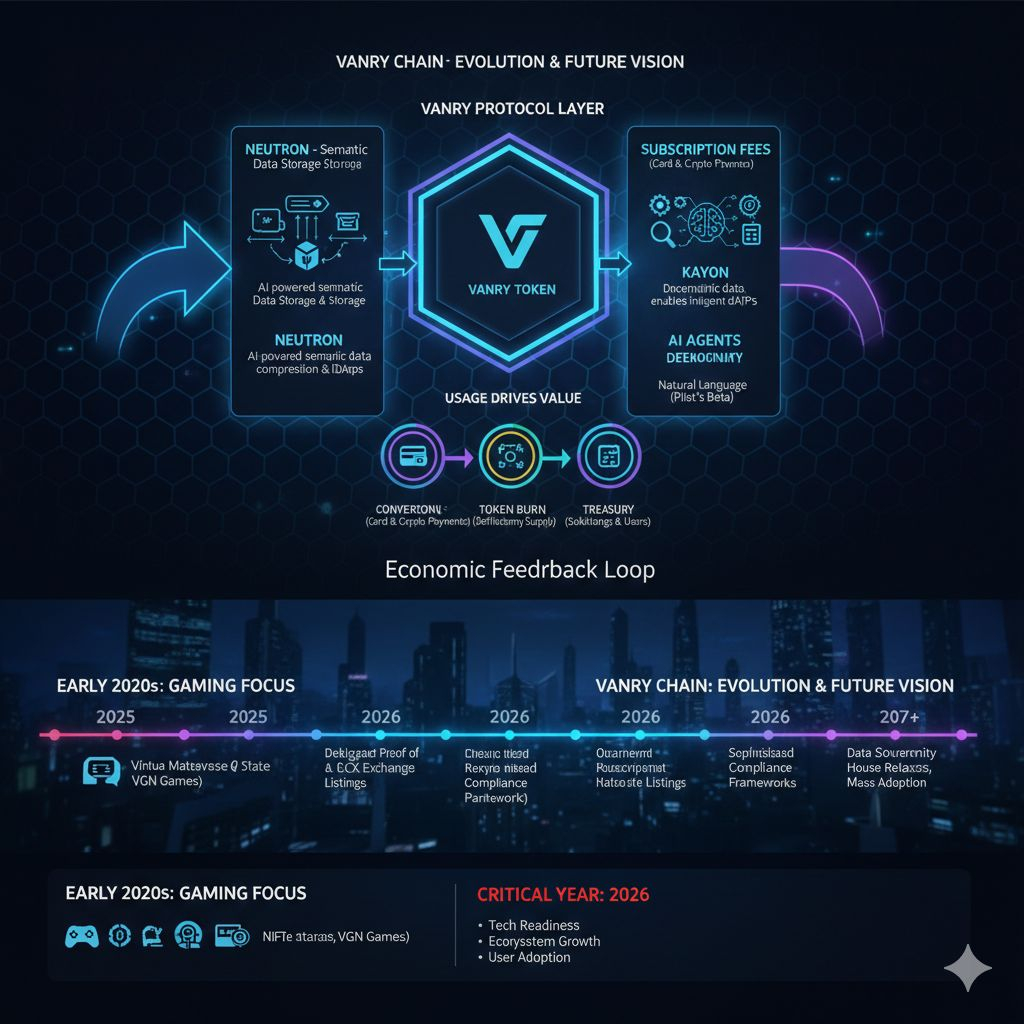
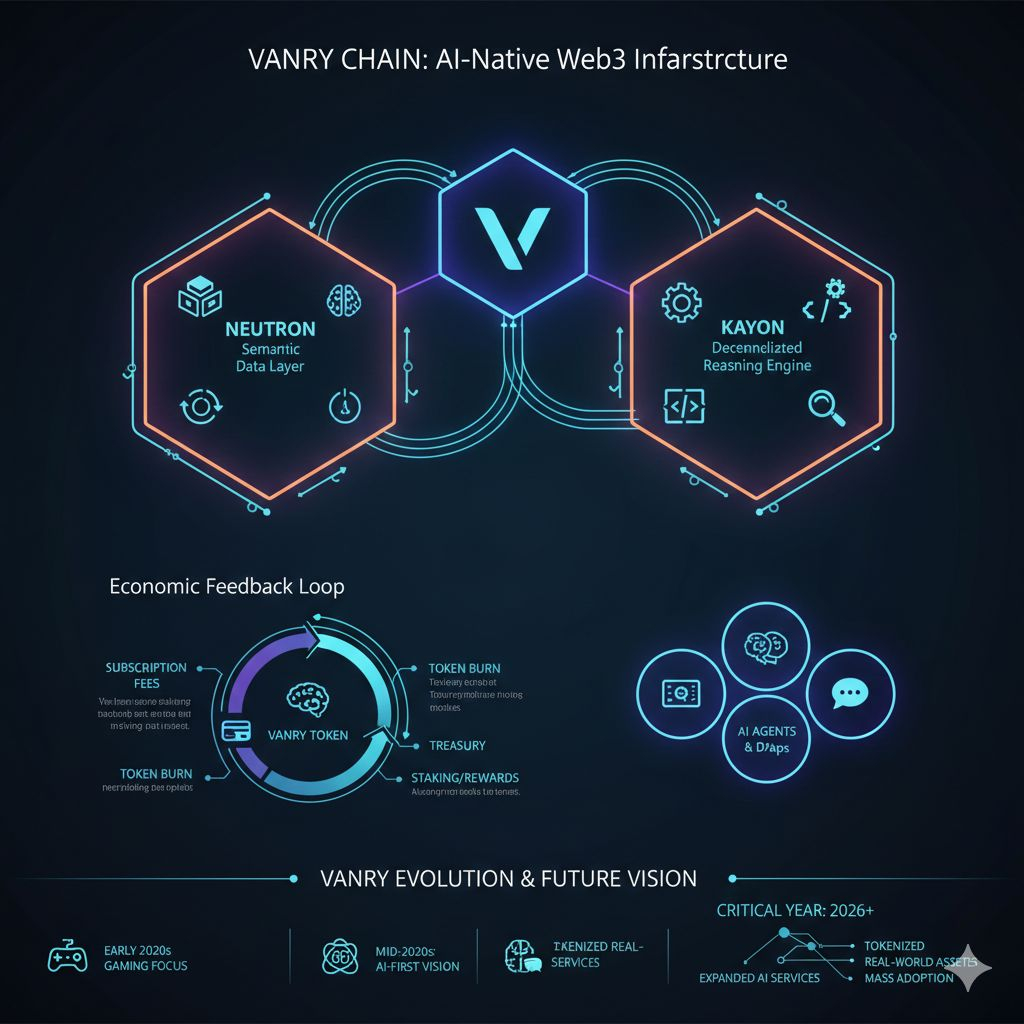
Neutron – A semantic data compression and storage layer that drastically reduces the size of uploaded content, potentially allowing things like video and large structured data to live directly onchain. This means AI models don’t have to jump off‑chain to fetch stuff you care about.
Kayon – The decentralized reasoning engine that can query semantic data stored by Neutron. This gives apps the potential to make smarter decisions, like automated DeFi strategies, semantic searches, or self optimizing protocols.
AI Agents Integration – Early sandbox testing with natural‑language interfaces where users can ask questions or trigger actions simply by typing, much like how you’d interact with an assistant. Some of this came through early integrations like Pilot’s beta.
Some of this sounds futuristic, and to be fair, the real test will be adoption, but the step from theory to usable products is visible and growing.
Real Products and Infrastructure Updates
What makes this story more real for me is seeing actual products rolling out, not just promises.
I saw a post the other day about myNeutron v1.1 going live, complete with a monetization engine that supports card and crypto payments, subscription unlocks, and even rewards for content creators. That’s not vaporware that’s an early sign of actual users and revenue, even if adoption is still early.
One aspect people often miss is how this ties back into the VANRY token economy. Instead of a token that’s only speculative, Vanry is trying to tie usage directly to token demand: subscription fees convert into VANRY, portions of that get burned, part goes into a treasury, part funds further development, and some goes into staking and rewards. It’s an economic feedback loop that grows with real product usage.
This is a pretty big shift from the early days when Vanry was just another blockchain ecosystem with gaming and entertainment modules. Now the dialogue includes AI services, tokenized real world assets, onchain semantic identity, and subscription‑driven revenue.
Network Evolution and Consensus
Under the hood, Vanry runs as a modular layer one chain designed to scale and operate with low transaction fees and fast confirmations something essential if you want mainstream applications, gaming, and AI services to work smoothly together.
Among the noticeable upgrades was the introduction of Delegated Proof of Stake (DPoS) around early 2025, this allows for trusted validators to participate in consensus, offering improved scalability and giving holders the ability to stake and participate in securing the network.
There are also projects around readable human‑friendly wallet names and stronger identity layers, a move that feels subtle but is really important for mass adoption nobody wants to deal with giant hexadecimal addresses forever.
Let’s Talk Partnerships and Ecosystem Growth
Anyone reading crypto news knows that hype partnerships come and go, but a few tangible collaborations are worth mentioning because they align with Vanry’s long‑term infrastructure goals:
Nexera Network – A strategic partnership aimed at tokenizing real‑world assets like real estate and financial instruments directly on Vanry, showing a clear play into decentralized finance and compliance.
Exchange Listings – Listings on platforms like Crypto.com and LCX expanded access for users to buy and trade VANRY with fiat, which matters if the goal is global reach.
When a project partners with middleware solutions for real world assets or gets regulated exchange exposure, that’s a signal it’s thinking beyond just speculative token markets.
Creative Ecosystem and Adoption
What’s also interesting is how Vanry brings creativity into the Web3 growth story. It’s not just blockchain engineers building nodes they’re thinking about user experience, emotional connection, and storytelling as part of the ecosystem that drives adoption and not just technical specs on paper.
I keep thinking about that because most blockchain projects focus on TPS or fees or consensus mechanisms, forgetting that normal users want meaningful experiences. Games, metaverse worlds, and smart AI interactions help pull non technical people into what Web3 can actually feel like, not just be.
Challenges and What’s Next
Despite all this progress, it’s fair to say Vanry is still in an early phase compared to giants in the space. Real adoption will depend on developers building on the chain, actual usage growth, and whether the AI‑native vision turns into workflows that ordinary users not just technologists can appreciate.
2026 seems like a critical year, with roadmap items including a quantum resistant encryption layer, expanded subscription services, and sophisticated compliance frameworks for real world assets. These aren’t small projects they’re foundational tech pieces that could elevate Vanry beyond just another blockchain.
At the same time, adoption risk exists if developers choose other ecosystems or if subscription models don’t take off, the narrative could stall. But right now, seeing actual monetization loops, products in use, and active updates is something I don’t take lightly.
Final Thoughts
When I step back and look at Vanry, it feels like a project trying to avoid the classic pitfalls of blockchain hype empty promises, shallow features, and endless token minting. Instead, it’s building infrastructure that aims to be genuinely useful: AI focused, scalable, low cost, and tied to real economic activity.
It’s still early, sure and the big question remains whether developers and users embrace the full stack beyond just transactions. But with real product releases, active monetization, partnerships, and a clear technological thesis, Vanry stands out as one of the more compelling experiments in the space today.
