
In crypto, stories change quickly, but data stays honest. When you look at on chain metrics across different market cycles, a clear pattern shows up. Most blockchains do not handle real usage very well. Plasma is being built as a response to these measurable problems, not ideas on paper.That alone is why @Plasma deserves attention from anyone who cares about fundamentals.
Congestion Is a Measurable Problem
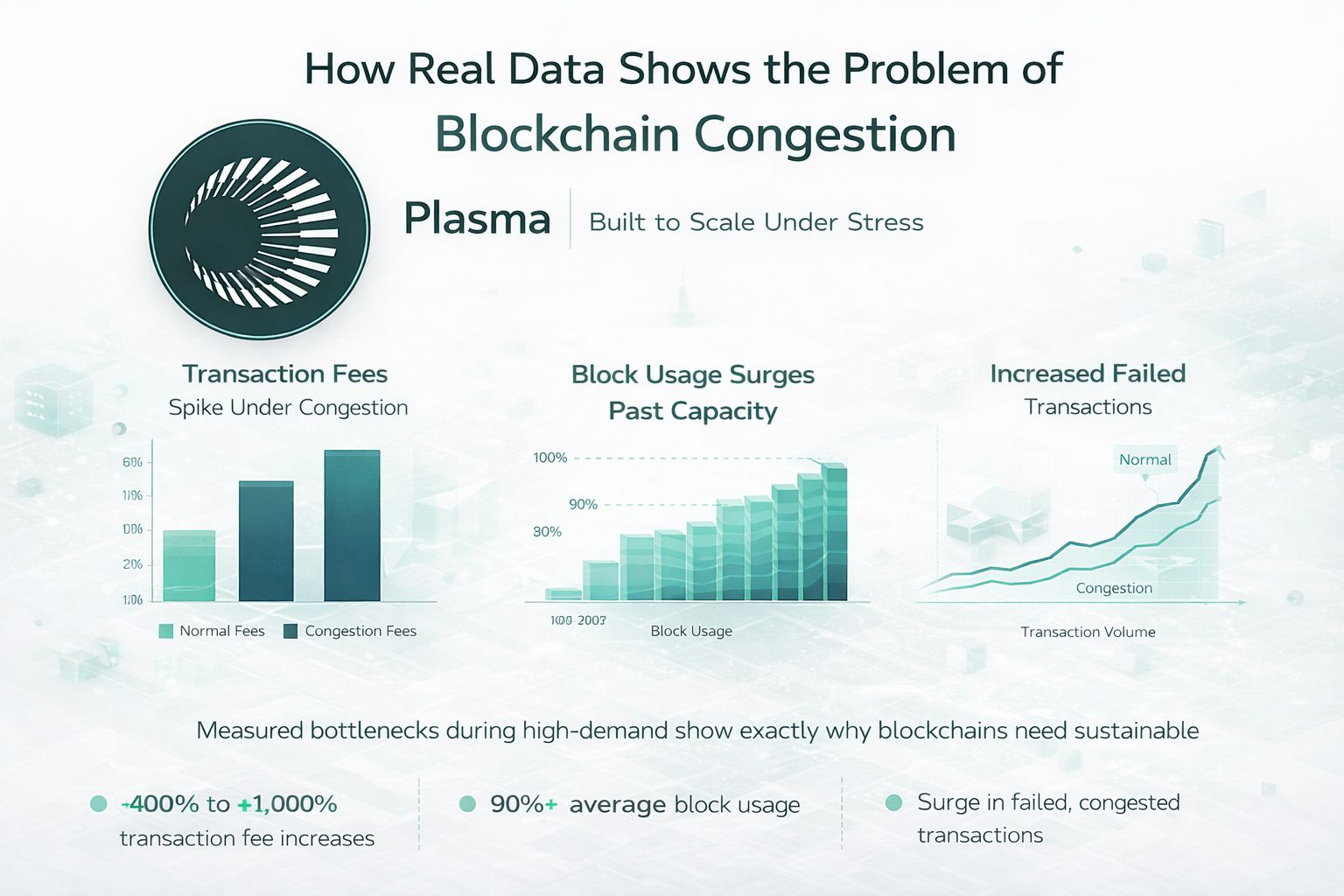
Public blockchain data shows that during periods of high demand:
• Transaction fees on major networks have jumped anywhere from 400 percent to over 1,000 percent.
• Block usage regularly pushes past 90 percent, creating long backlogs.
• Failed transactions increase sharply, especially when smart contracts are involved.
There have been multiple congestion events where users paid higher fees and still watched their transactions fail. This is not a user experience issue. It is a limitation at the infrastructure level.
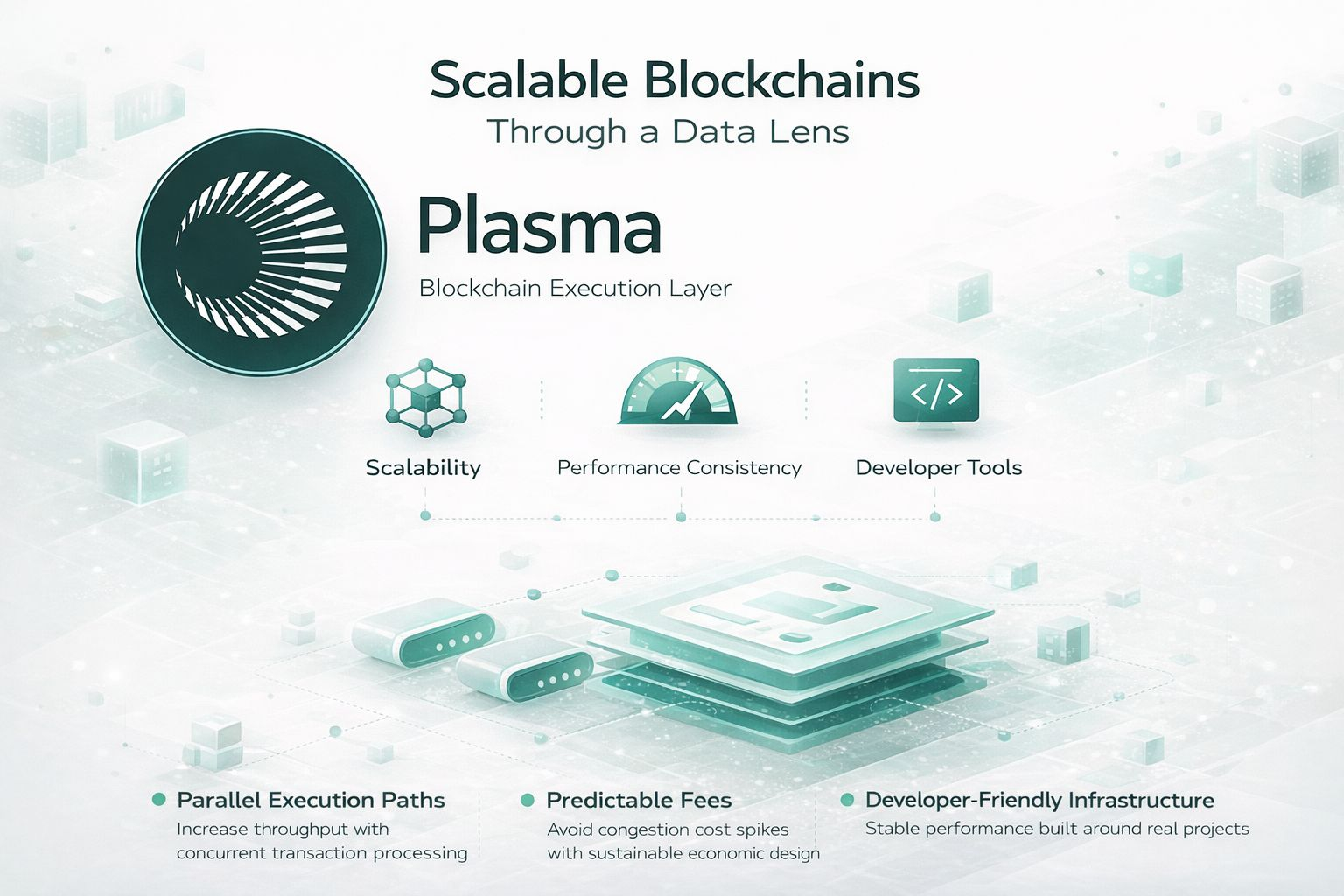
Plasma is designed with this reality in mind. Its building focuses on execution efficiency and sustained throughput so higher demand does not automatically mean unstable performance.
Sustained Performance Matters More Than Advertised Speed.
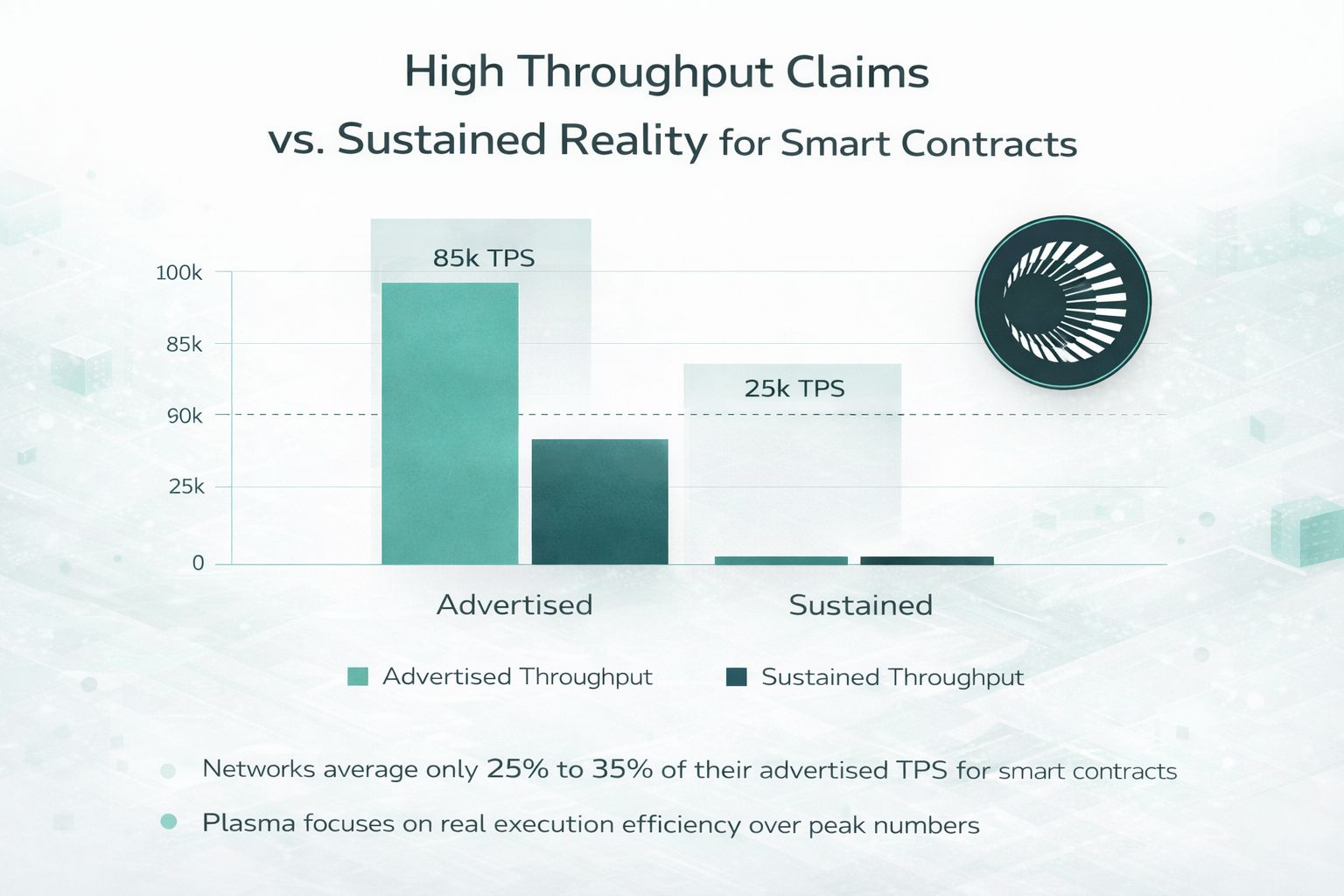
Many networks promote high throughput numbers that only exist under perfect conditions. Independent performance tracking shows that once real smart contracts are running, actual sustained throughput often drops to around 25 to 35 percent of what is advertised.
Plasma avoids this gap by designing for realistic usage. Instead of chasing peak numbers, it focuses on things that matter day to day:
• Parallel execution paths.
• Less repeated computation.
• More efficient state handling.
This allows the network to keep performance steady as activity increases. That consistency is what supports real adoption.
$XPL and Usage Based Value.
The Plasma ecosystem runs on $XPL, a utility token tied directly to protocol activity. $XPL plays a role in :
• Validator incentives and network security
• Governance decisions
• Economic coordination at the network level
Looking at historical market data, tokens with clear utility and ongoing on chain usage tend to hold up better during downturns. Assets finance by real activity usually show under long term volatility than those driven mostly by hype.
Plasma’s token design reflects lessons learned from earlier market cycles.
Developer Activity Signals Growth
Developer behavior is one of the strongest early indicators of network growth. Across open source ecosystems, consistent developer activity usually comes before user adoption, not after.
Plasma focuses on predictable execution costs and stable performance, both of which matter a lot to developers. When teams do not have to plan around sudden fee hikes or unpredictable execution, they can spend more time building products that actually work.
Over time, this creates a feedback loop :
stable infrastructure guide to active developers, better applications and growing user adoption.
User Behavior Demands Reliability
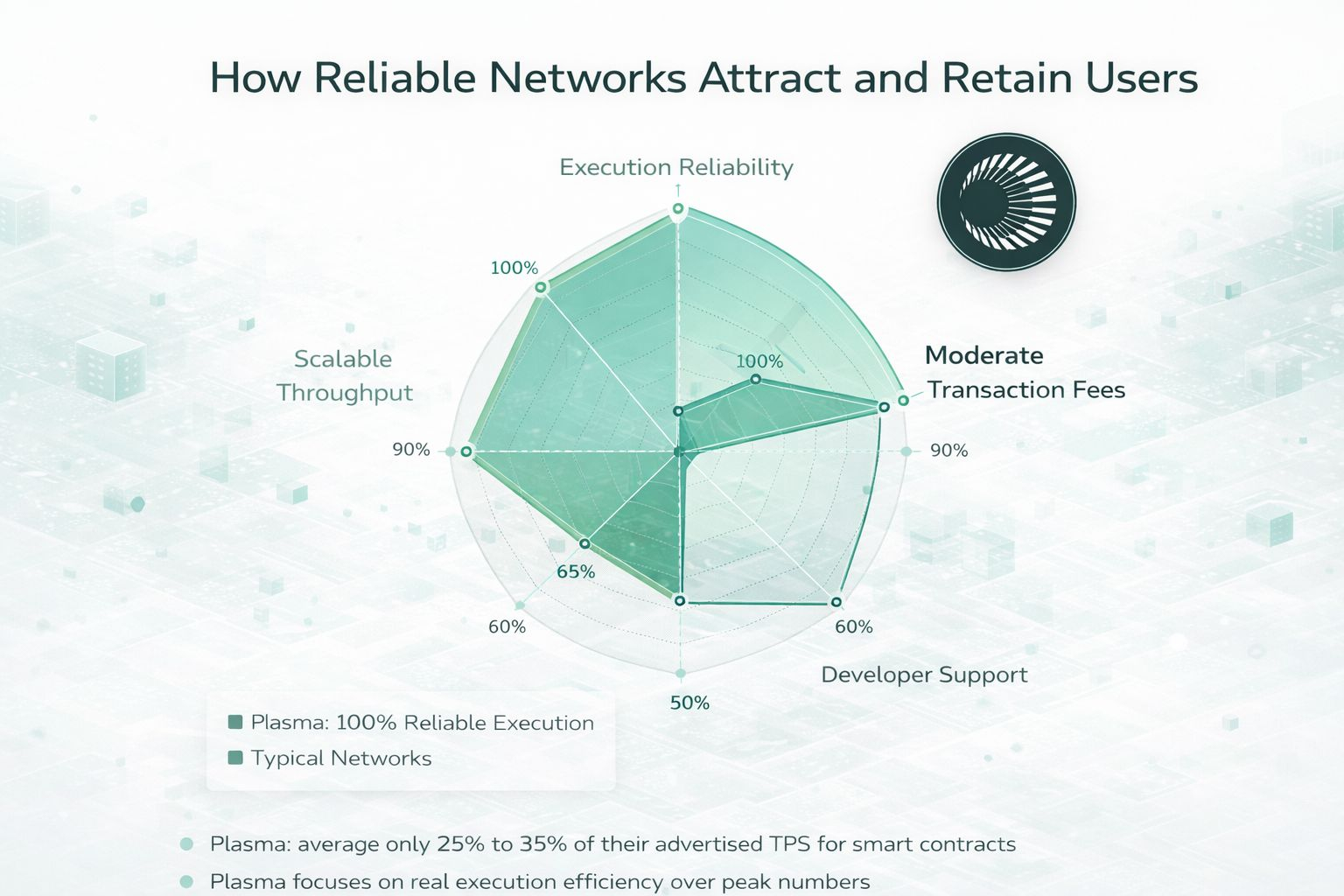
User data across Web3 platforms shows that more than 70 percent of users leave an application after one or two failed transactions. That makes reliability a requirement, not a nice extra.
Plasma’s infrastructure first approach lines up with this behavior. By keeping execution consistent and fees predictable, it reduces friction at the protocol level, where problems are hardest to fix later.
Infrastructure Usually Wins Quietly
The most important blockchain infrastructure is rarely the loudest. It is the layer that runs consistently, scales in a predictable way, and lets others build without constant issues.
Plasma is positioning itself as that kind of foundation. It is shaped by real data, built around actual constraints, and focused on long term usefulness instead of short term attention.#Plasma