

For a long time, BNB was discussed the same way most crypto assets are discussed: price cycles, upside narratives, and relative performance against the market. That framing made sense in earlier phases, when attention was driven largely by speculation. But over time, something subtle has changed. BNB’s relevance today has less to do with directional price expectations and more to do with how it functions inside an active economic system.
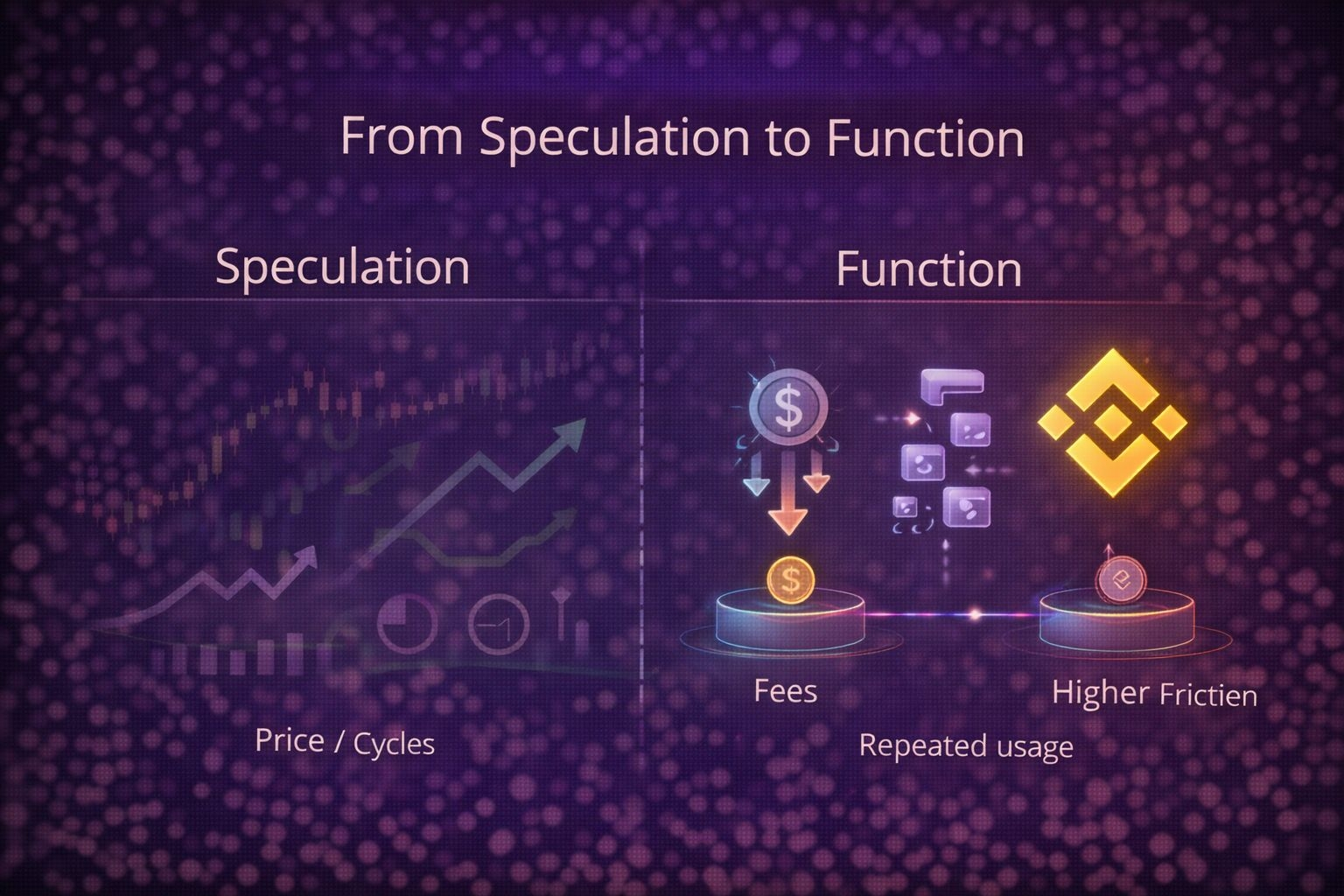
The easiest way to miss this shift is to keep looking at BNB through a purely speculative lens. When price stalls or underperforms expectations, the assumption is often that interest has faded. In reality, usage-driven tokens rarely behave like hype-driven assets. Their value proposition doesn’t depend on excitement it depends on whether they reduce friction for people who are already active.
BNB increasingly fits that second category.
Across trading, on-chain activity, and ecosystem participation, BNB functions less like a bet on future narratives and more like a tool that lowers operating costs. Trading fee discounts are the most obvious example, but they’re not the most important one. What matters is the behavioral incentive: users who are already participating find it rational to hold and use BNB because it makes their activity cheaper, smoother, and more predictable.
That distinction changes how demand forms. Speculative demand is reflexive and emotional. It accelerates quickly and exits just as fast. Cost-based demand is quieter. It builds when usage grows and contracts only when activity meaningfully declines. The latter doesn’t generate dramatic price action, but it does create consistency something speculative markets often lack.
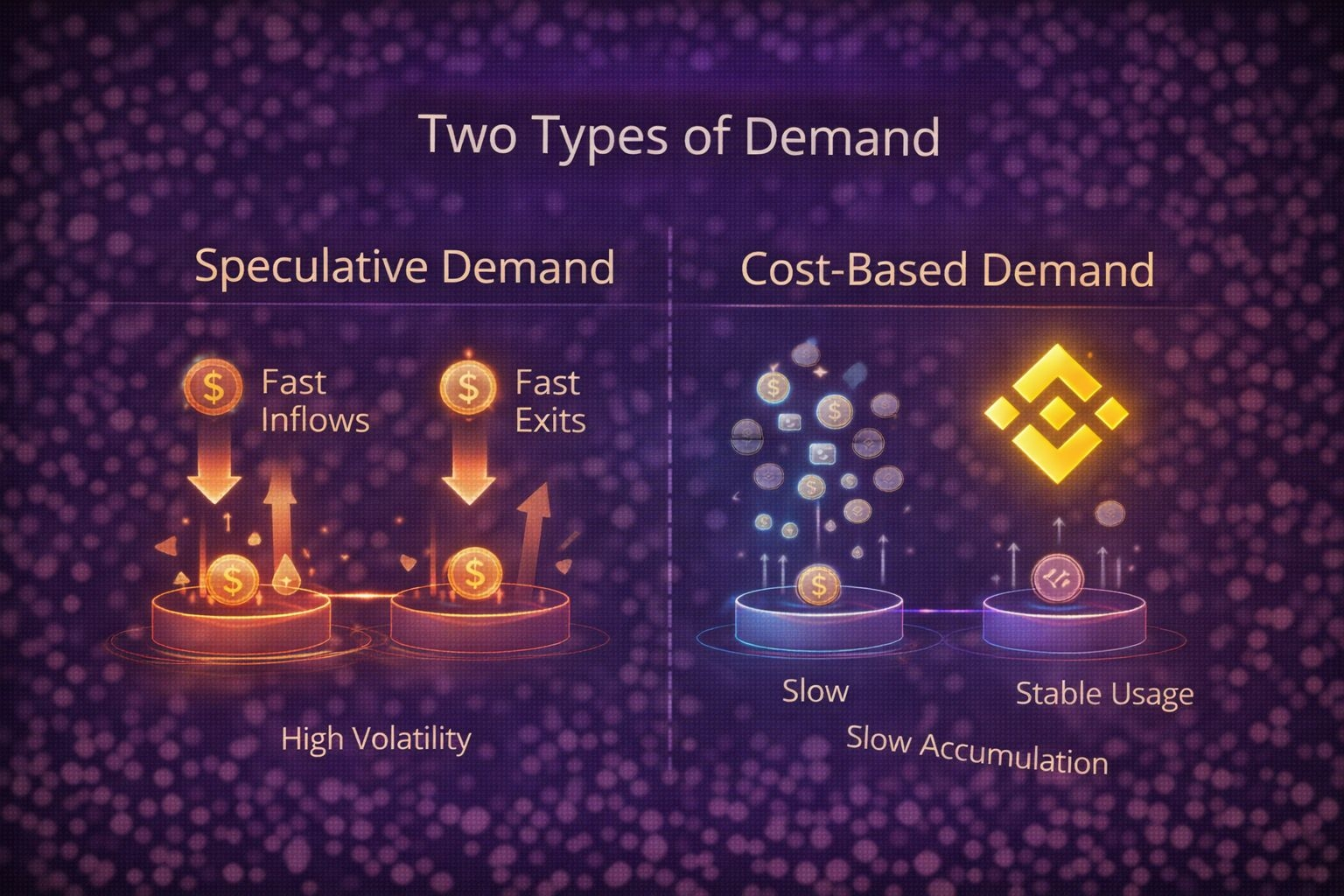
This is why BNB can feel unexciting during certain market phases. It doesn’t rely on constant narrative renewal to justify its existence. Its value is embedded in repetition: every trade, every interaction, every instance where using BNB simply makes more sense than not using it. Over time, those small decisions compound.
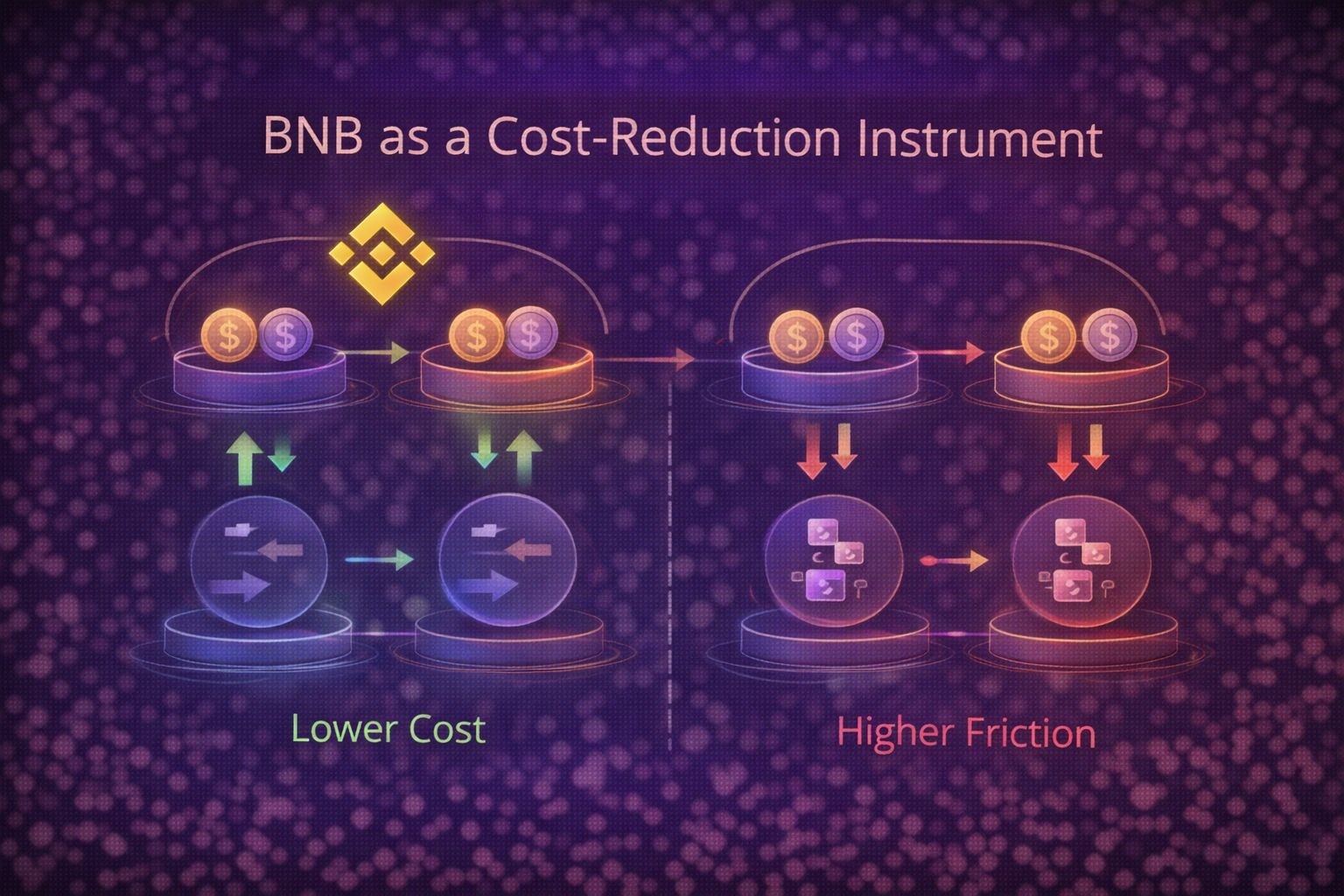
What’s interesting is how this shifts user behavior. When a token is framed as an investment, users constantly reassess whether to hold or exit. When it’s framed as a cost-reduction mechanism, the decision becomes less emotional. Selling it feels similar to selling access to a discount you actively use. That doesn’t mean users never reduce exposure but the reasoning changes.
This also affects volatility expectations. Assets driven primarily by utility rarely move the way pure narrative assets do. Their price action reflects participation levels more than sentiment swings. During periods of lower activity, they may stagnate. During periods of expansion, they benefit indirectly not because people are chasing them, but because people are using them.
There’s a broader implication here. As crypto infrastructure matures, more tokens will be evaluated less on what they might become and more on what they already do. In that context, BNB’s role looks less like a speculative outlier and more like an early example of how utility-backed demand actually behaves in practice.
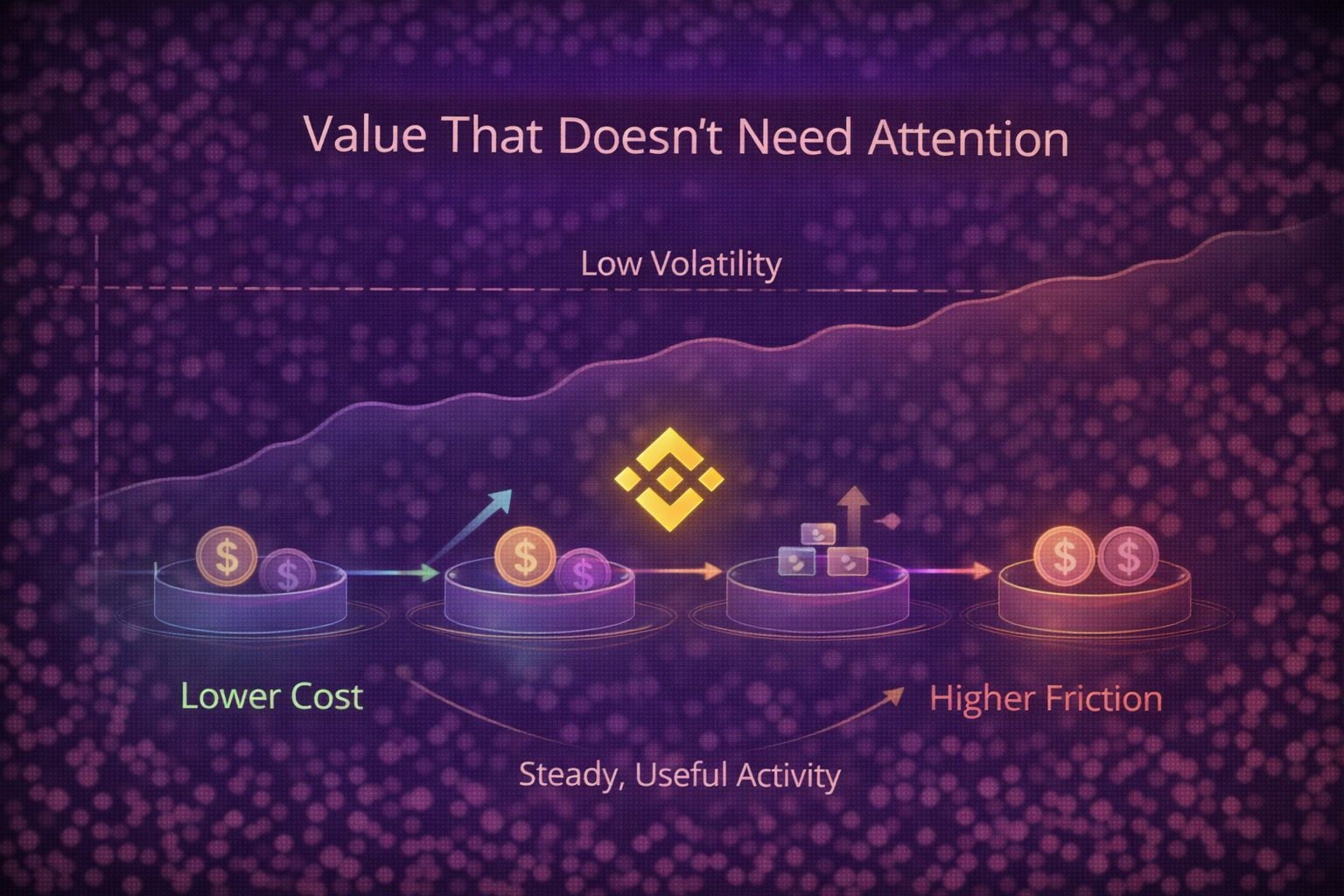
This doesn’t make BNB immune to market cycles or external risk. But it does mean that judging it purely by short-term price performance misses the point. Its primary function isn’t to tell a story it’s to reduce friction inside an ecosystem that already has volume, users, and recurring activity.
Seen this way, BNB isn’t trying to compete for attention. It’s trying to disappear into process. And in financial systems, that’s often where the most durable value sits.
How do you personally evaluate tokens that are designed to reduce costs rather than generate narratives?