
When I started looking deeper into Vanar Chain recently, what stood out wasn’t just the technology itself but the direction it is taking toward real-world adoption. Many blockchains still focus on attracting developers through complex features, but Vanar seems to be moving toward something more practical. The goal appears to be simple: make Web3 feel natural for everyday users while keeping the infrastructure strong behind the scenes.
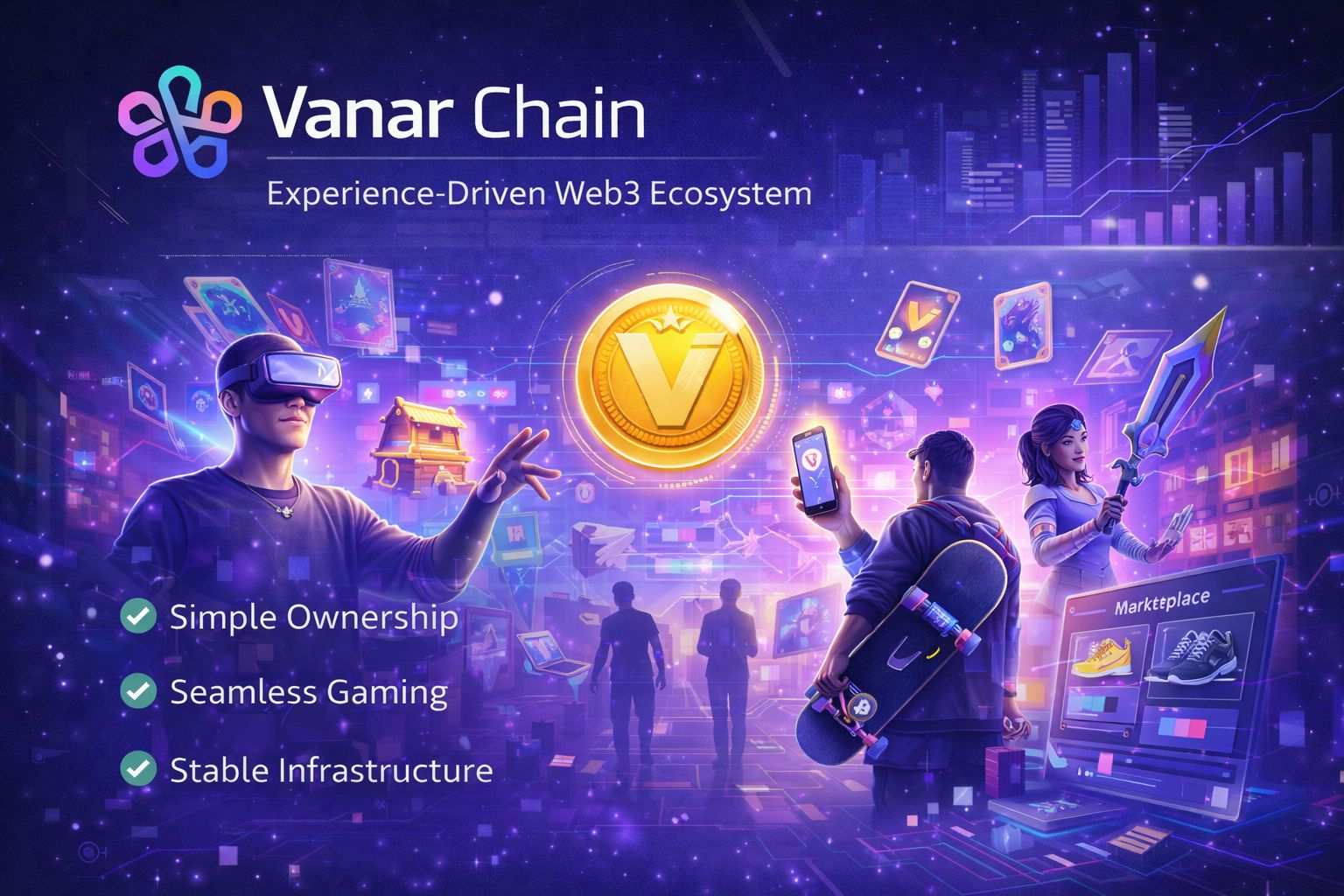
One of the latest shifts around the Vanar ecosystem is its growing focus on entertainment-driven environments and digital brands. Instead of positioning blockchain as the main attraction, Vanar allows applications like gaming, immersive experiences, and digital marketplaces to lead the user journey. This approach reduces friction because users interact with familiar environments while blockchain quietly supports ownership and transparency in the background.
The VANRY token plays an important role in this evolving ecosystem. Rather than existing only for trading, it helps power transactions, reward participation, and maintain activity across applications built on the network. As more consumer-focused platforms explore Web3 integrations, VANRY becomes a bridge connecting users, creators, and developers within a single infrastructure layer.
Another interesting development is how Vanar Chain emphasizes stability over rapid experimentation. Many networks introduce constant structural changes, which can make long-term building difficult. Vanar, however, seems focused on providing a predictable environment where projects can grow without worrying about sudden disruptions. This consistency is especially important for gaming and digital media platforms where user trust depends on reliable performance.
From a personal perspective, Vanar Chain feels different because it does not try to force users into learning blockchain mechanics. Wallet interactions, fees, and technical processes are designed to stay mostly invisible. This reflects a broader shift in Web3 where usability becomes more important than technical exposure. As adoption expands beyond early adopters, networks that prioritize simplicity may have a stronger chance of attracting mainstream audiences.
Recent updates around AI integration and cross-platform digital experiences also suggest that Vanar is preparing for the next phase of online interaction. As virtual worlds and digital identity systems evolve, infrastructure that supports persistent assets and seamless interaction becomes essential. Vanar Chain’s architecture appears to align with that direction by focusing on continuity rather than short-term experimentation.
Looking ahead, Vanar Chain seems to be positioning itself as more than just another Layer 1 network. It aims to become a foundation for consumer-driven Web3 ecosystems where entertainment, technology, and ownership merge naturally. Instead of chasing hype cycles, the project focuses on building an environment where users can engage without feeling overwhelmed by blockchain complexity.
In a space often dominated by speculation, Vanar Chain stands out by focusing on experience first. Its commitment to usability, ecosystem stability, and long-term growth suggests that the network is preparing for a future where Web3 becomes part of everyday digital life rather than a niche experiment.