

Most people don’t “adopt blockchain.” They adopt something that gives them a feeling: fun, status, ownership, convenience, belonging. A game they enjoy. A collectible that feels personal. A digital world where their items actually matter. The blockchain part is supposed to be invisible—like electricity. Nobody buys a phone because they love power stations. They buy it because it fits their life and it works every day.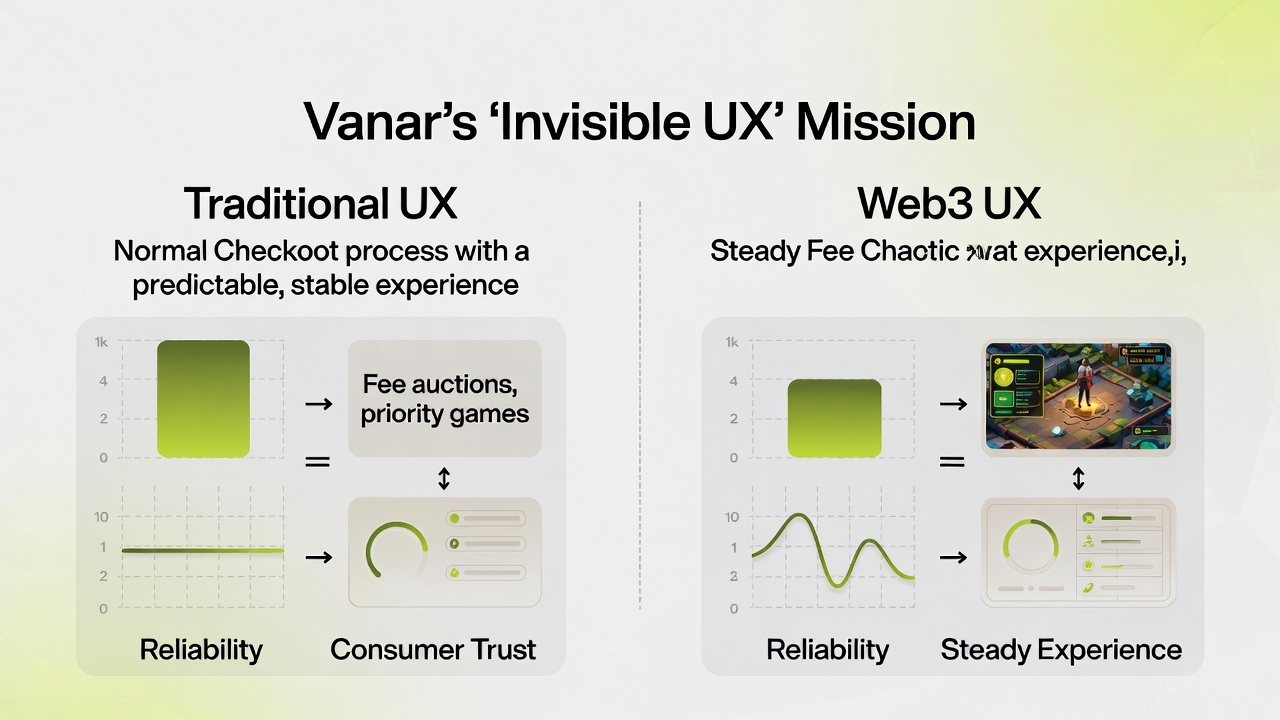
That’s the real problem Vanar is trying to solve. Not “how do we make a faster chain for crypto people,” but “how do we make Web3 behave like a normal product for normal users.”
Because mainstream users don’t have patience for weird. Crypto-native users are used to friction. They’ll shrug at failed transactions. They’ll tolerate wallet warnings. They’ll read threads about congestion like it’s part of the hobby. But everyday consumers don’t do that. If a flow feels confusing, they don’t troubleshoot. They leave. If something is inconsistent, they assume it’s unsafe. If a fee suddenly jumps, they don’t respect the market dynamics—they feel tricked.
And that emotional reaction matters more than most builders admit. Trust isn’t built by explaining how decentralized something is. Trust is built by the user feeling, repeatedly, “this works the same way every time.”
A lot of chains accidentally create the opposite feeling. They run like marketplaces rather than infrastructure. When things get busy, fees surge. When the fee market heats up, people start bidding to get included faster. The person willing to pay more cuts the line. Everyone else gets stuck waiting, or paying more than they expected, or watching a simple action turn into a small crisis.
That might be acceptable for traders. It’s a terrible experience for consumer apps.
Imagine someone buying a cheap in-game item during a live event. They click “buy,” and suddenly the transaction fee is higher than the item itself. Or they’re claiming a digital collectible after watching a show, and the app feels smooth one day but “stuck” the next. They won’t ask what a mempool is. They’ll assume the whole thing is unreliable, maybe even scammy. And once that thought enters someone’s head, you don’t win them back with a technical explanation.
This is where Vanar’s “invisible blockchain” idea becomes very practical. The goal isn’t to hide the blockchain because it’s bad. It’s to hide it because users shouldn’t need to become experts to do simple actions. The chain should do its job quietly, in the background, while the product does its job in the foreground.
The easiest way to understand the difference is to compare two real-world checkouts. One is normal: you see a price tag, you pay, you leave. The other is chaos: you arrive at the counter and the cashier says, “We’re busy today. Whoever pays more gets served first.” That second system would feel insane in daily life, but it’s essentially how fee auctions and priority games can feel on many networks during congestion.
Vanar’s positioning is closer to the first checkout: predictable, stable, designed so users don’t get surprised. The phrase that captures it is simple and repetitive for a reason: steady fee, steady experience. When you’re building products for consumers, repetition is not a weakness—it’s reliability. It’s the feeling that the system behaves the same way whether it’s Tuesday morning or a high-traffic event.
Now, when Vanar talks about gaming and entertainment, it isn’t random marketing. Gaming is one of the harshest environments you can build for. Games produce constant small actions, bursts of activity during events, and users who disappear the second something feels off. If you can survive gaming behavior, you can survive almost anything. That’s why anchors like Virtua Metaverse and the VGN games network matter in the narrative. They represent actual consumer environments where performance, consistency, and smoothness aren’t optional—they’re the entire product.
There’s also something psychologically important about gaming as a proof point: games don’t feel like “finance.” They don’t scare normal people. A user buying a skin understands what they’re doing. They don’t feel like they’re walking into a complicated financial system. So if Web3 is going to reach billions, it’s more likely to enter through experiences like gaming, entertainment, and digital ownership—places where people already spend time and money—than through abstract blockchain slogans.
At the same time, if we’re being honest, there are trade-offs in any “consumer-first” chain design. For example, early validator structures often lean on known or reputable operators. That can make sense in the early stages because stability and accountability matter a lot when you’re trying to onboard real users. If the network goes down or behaves unpredictably, the product takes the blame, not the consensus mechanism.
But that stability-first approach has a line it can’t cross. If the validator set stays permanently curated, the network risks long-term centralization concerns. So the fair critique—one that actually increases credibility—is this: starting with reputable operators can be a practical phase, but the long-term health of the chain depends on opening up over time. Reliability should not become permanent gatekeeping. It should become reliable decentralization.
This is also where the token narrative matters. VANRY, in a healthy story, isn’t “a ticker that goes up.” It’s the working token that powers the network. It exists to pay for network actions, and in staking/delegation dynamics it contributes to security incentives. The point isn’t hype; the point is function. If the chain becomes a real layer for consumer applications, VANRY’s value should be framed as usage-driven. Not everyone loves that because it’s slower and less dramatic. But it’s the kind of story that tends to age well.
And then there’s the AI angle, which is easy to ruin with buzzwords. The practical version is simple: AI becomes meaningful when it’s tied to real applications and real data that can be verified and audited. If a chain is serious about AI-native building, the proof won’t be diagrams. It’ll be working apps that use onchain data objects that are structured, permissioned, owned, searchable, and accountable. In other words: outcomes first, hype later.
When you step back, the entire Vanar thesis feels less like a crypto pitch and more like an infrastructure personality: boring in a good way. Boring like your internet connection. Boring like tapping “pay” and it just works. Boring like knowing the fee won’t suddenly surprise you, the transaction won’t randomly stall, and the user won’t be forced to learn a new vocabulary just to enjoy a product.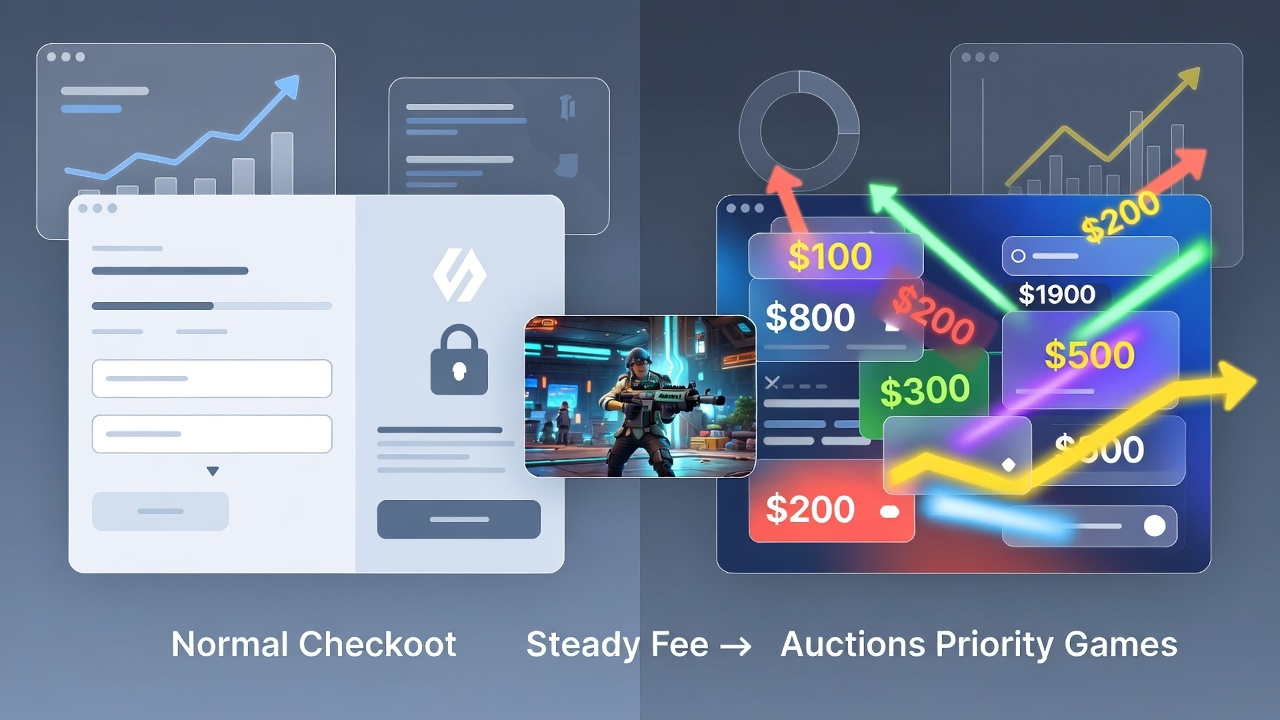
That’s what “bringing the next 3 billion consumers” really demands. Not another chain that needs users to understand it. A chain that lets users forget it exists—because the experience is finally the thing that people remember.